
Frogs of Borneo

Frogs of Borneo

Frogs of Borneo

Frogs of Borneo

Frogs of Borneo

Frogs of Borneo

Frogs of Borneo

Frogs of Borneo

Frogs of Borneo

Frogs of Borneo

Frogs of Borneo
Harlequin Flying Frog

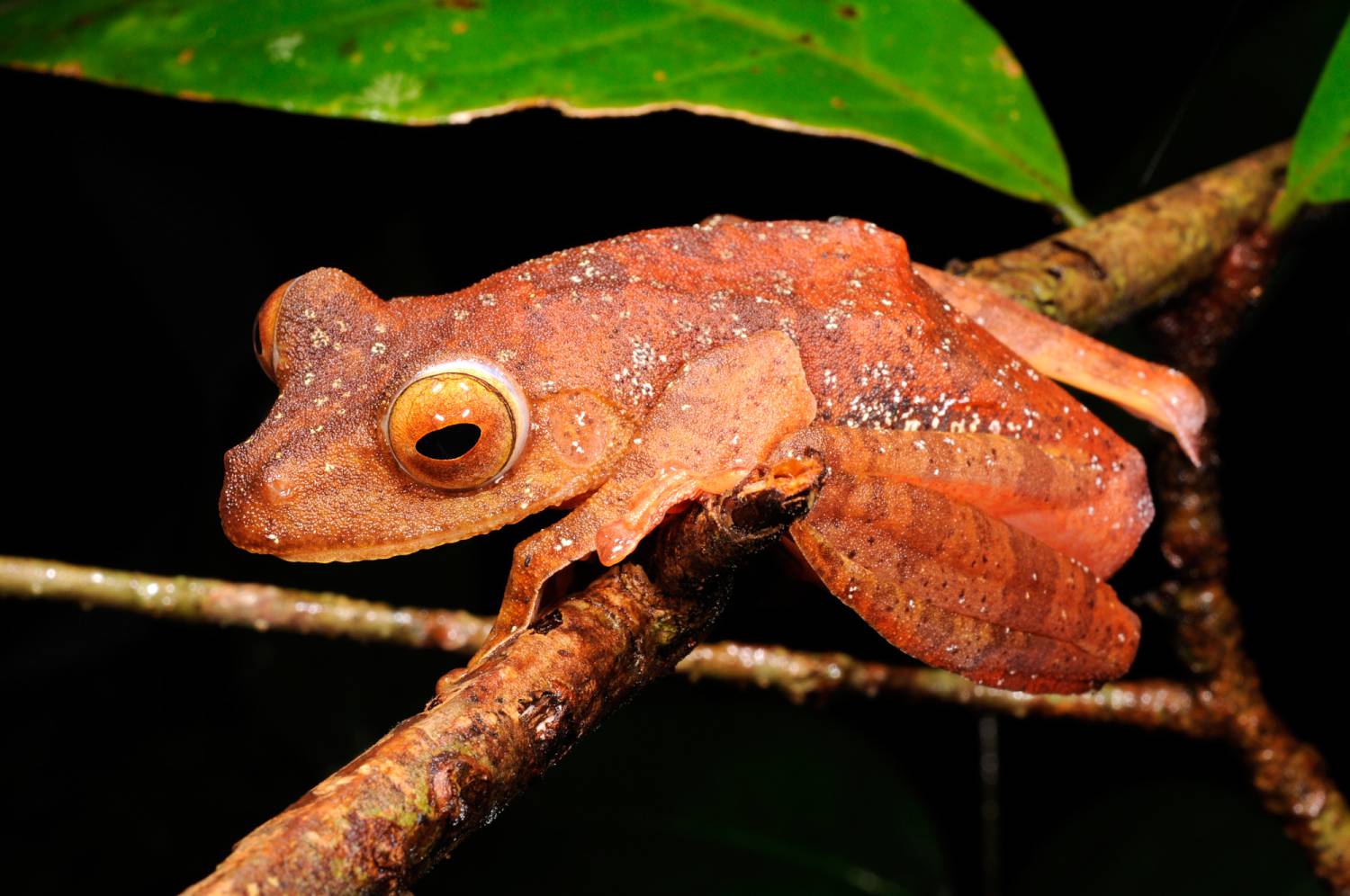
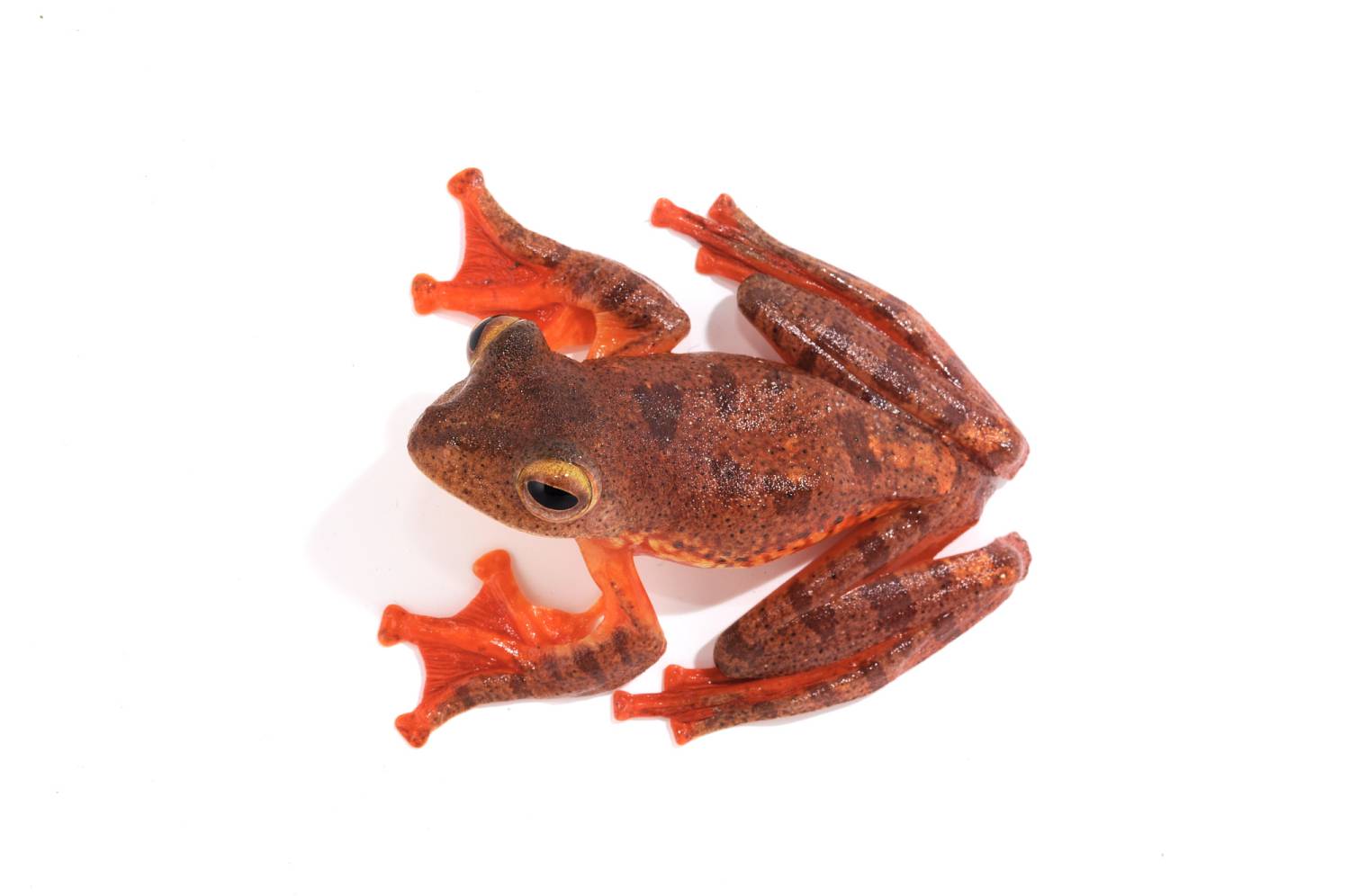
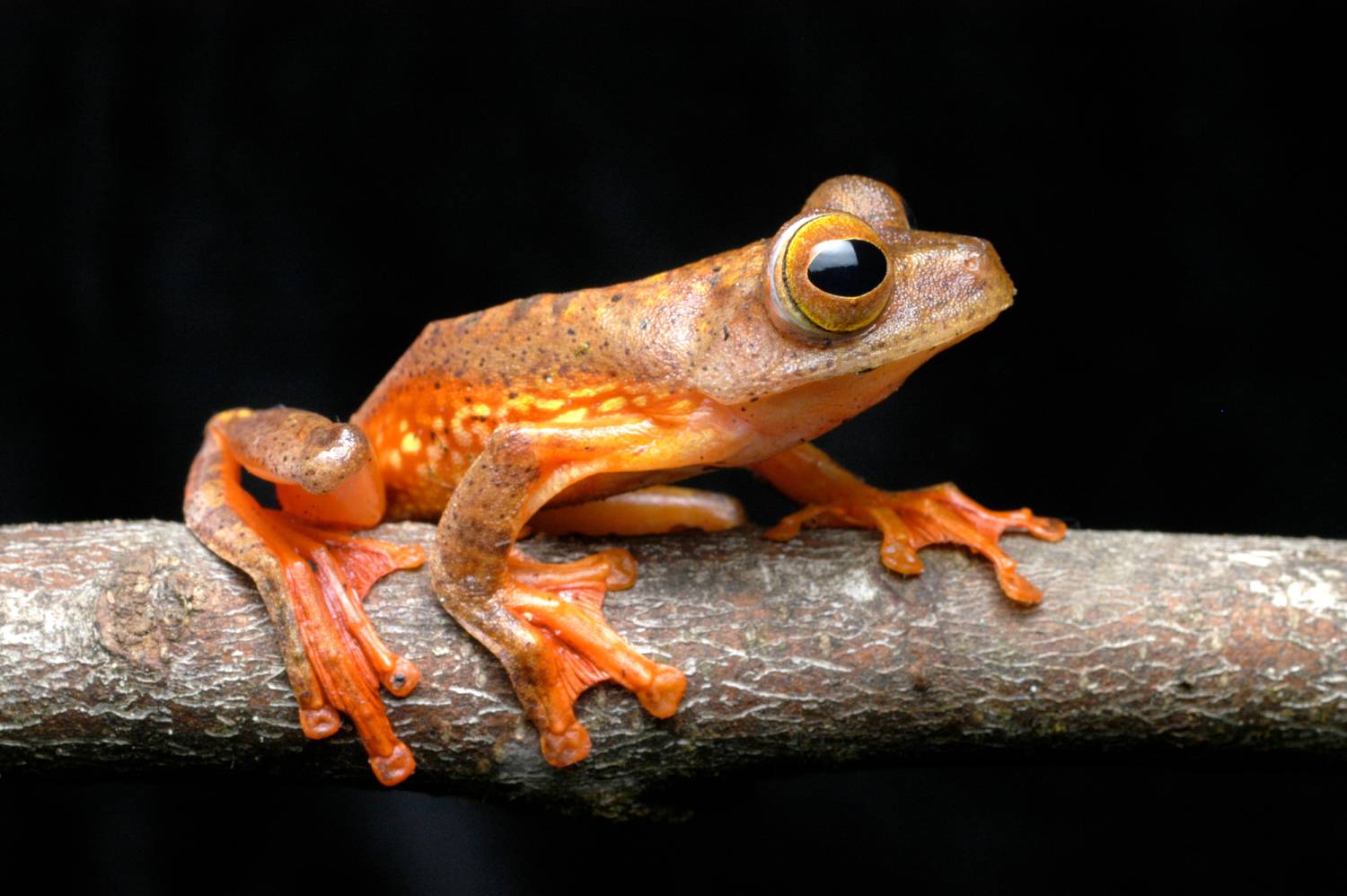
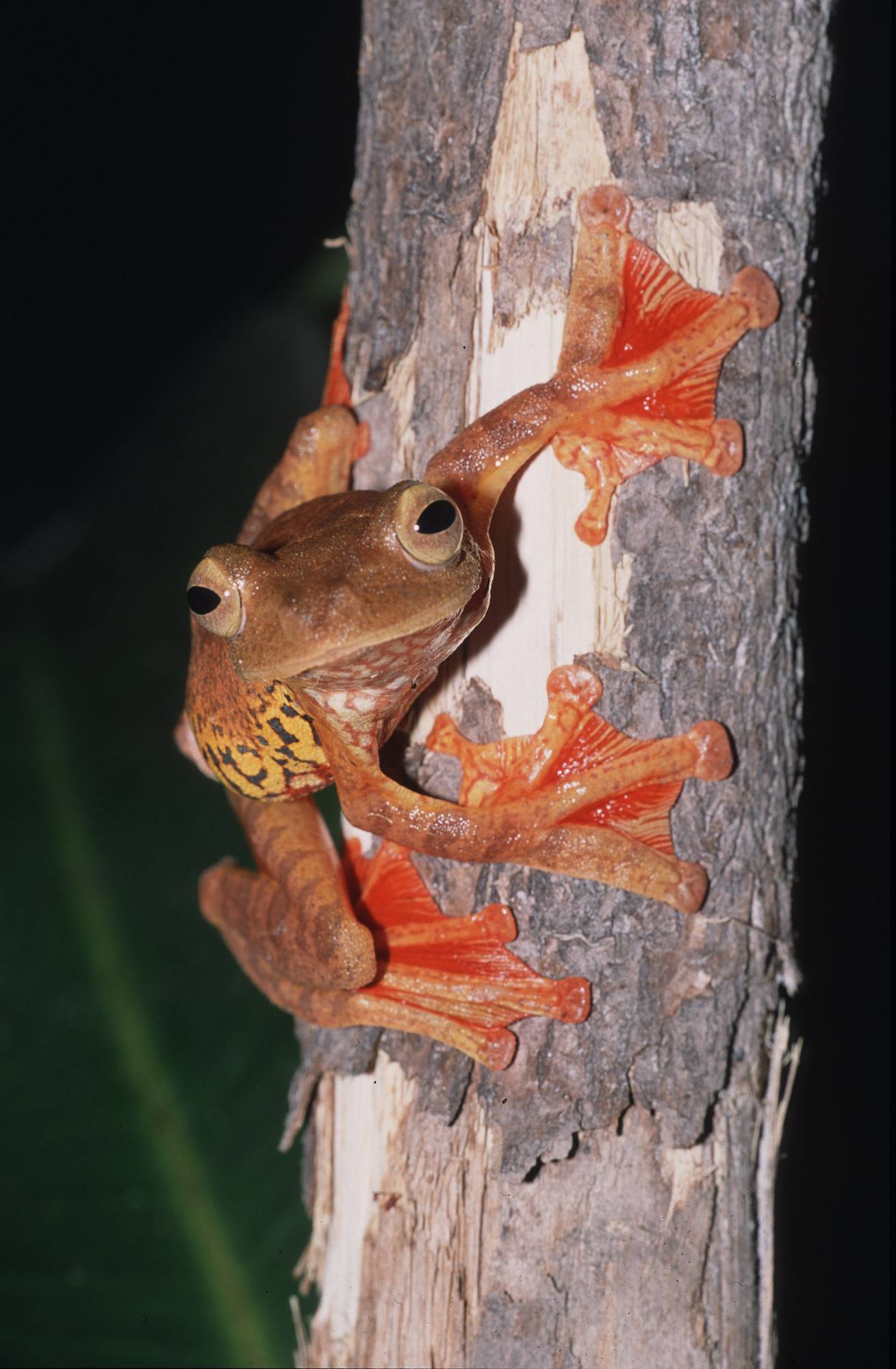
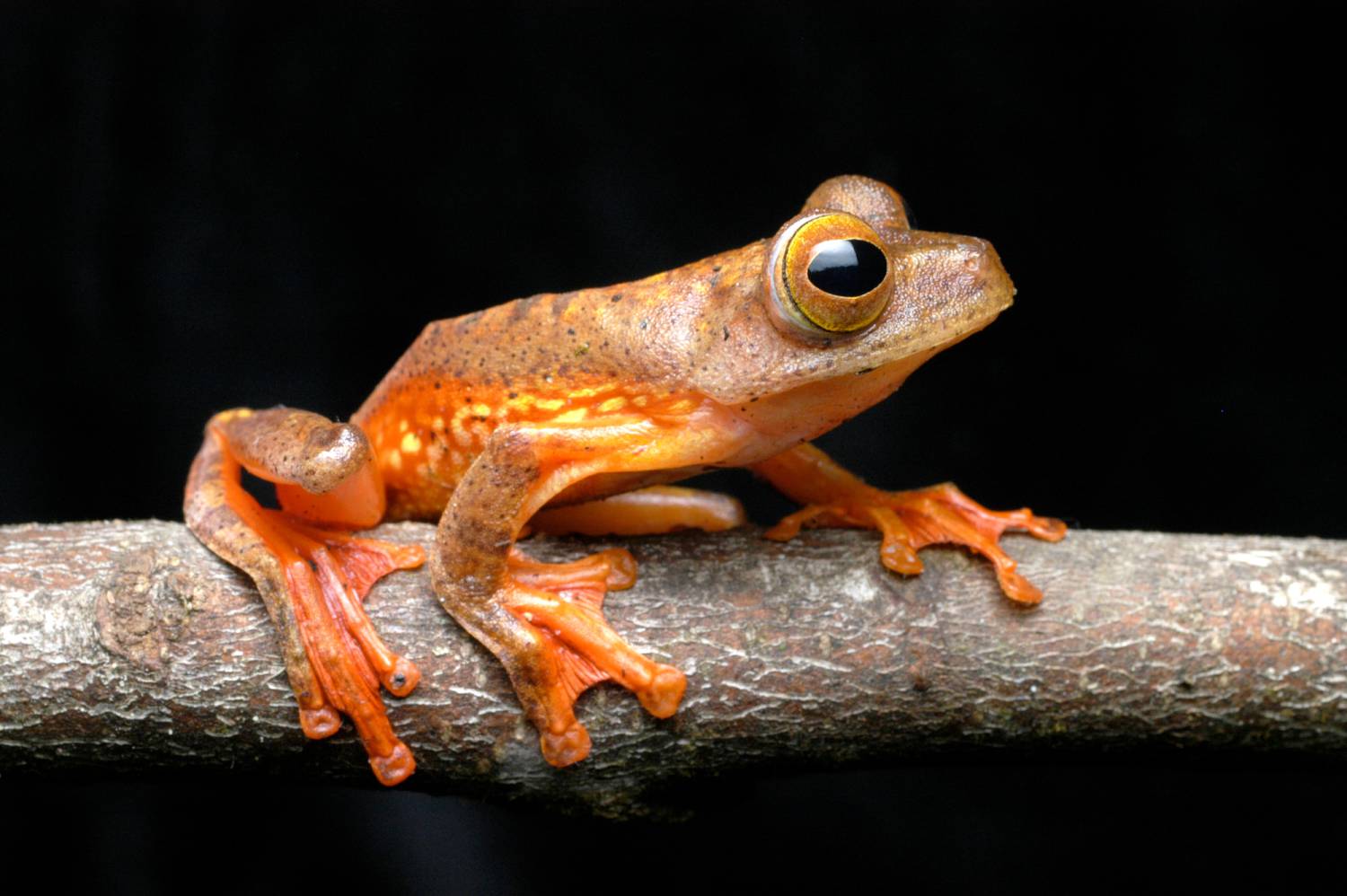
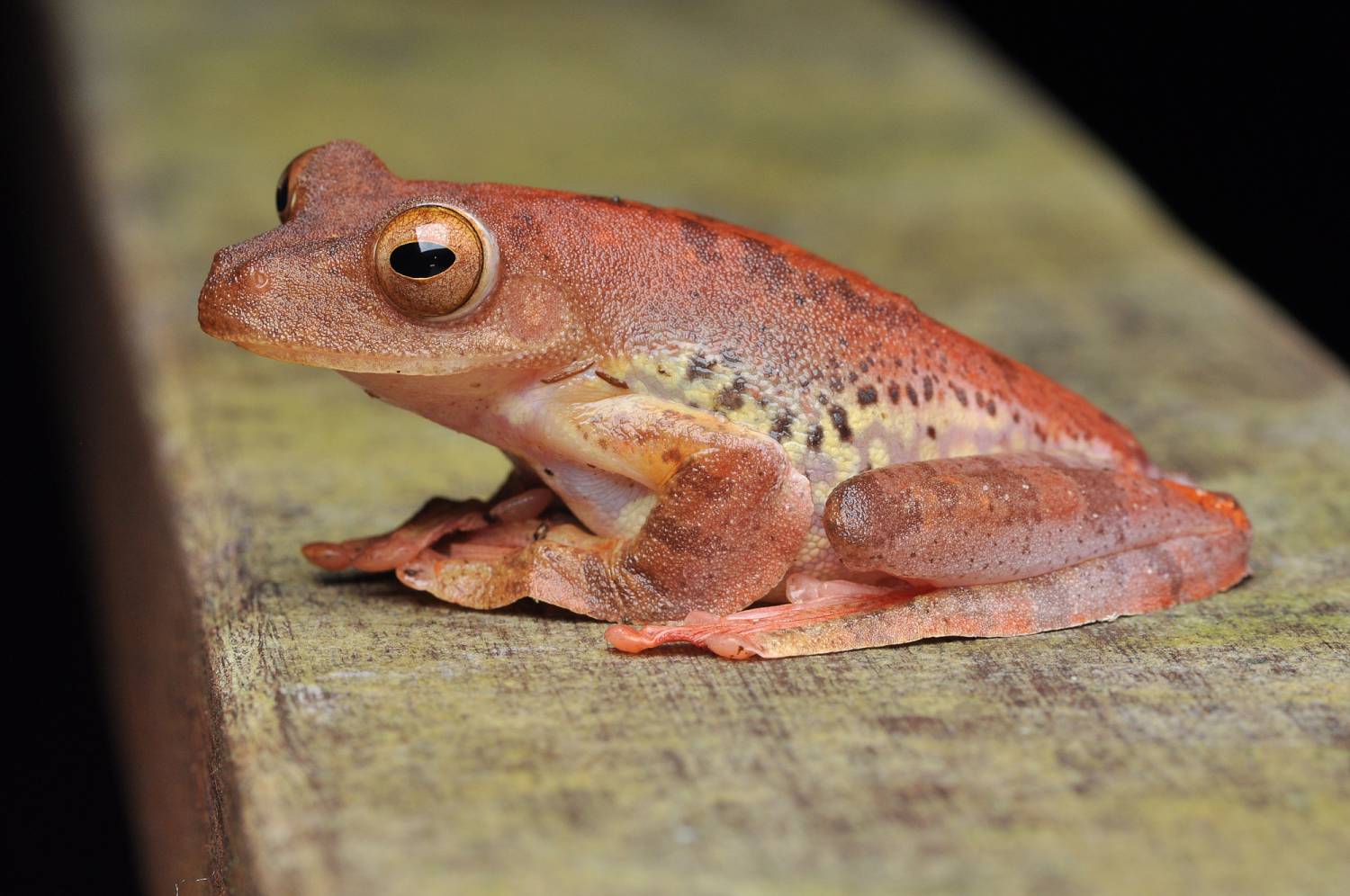
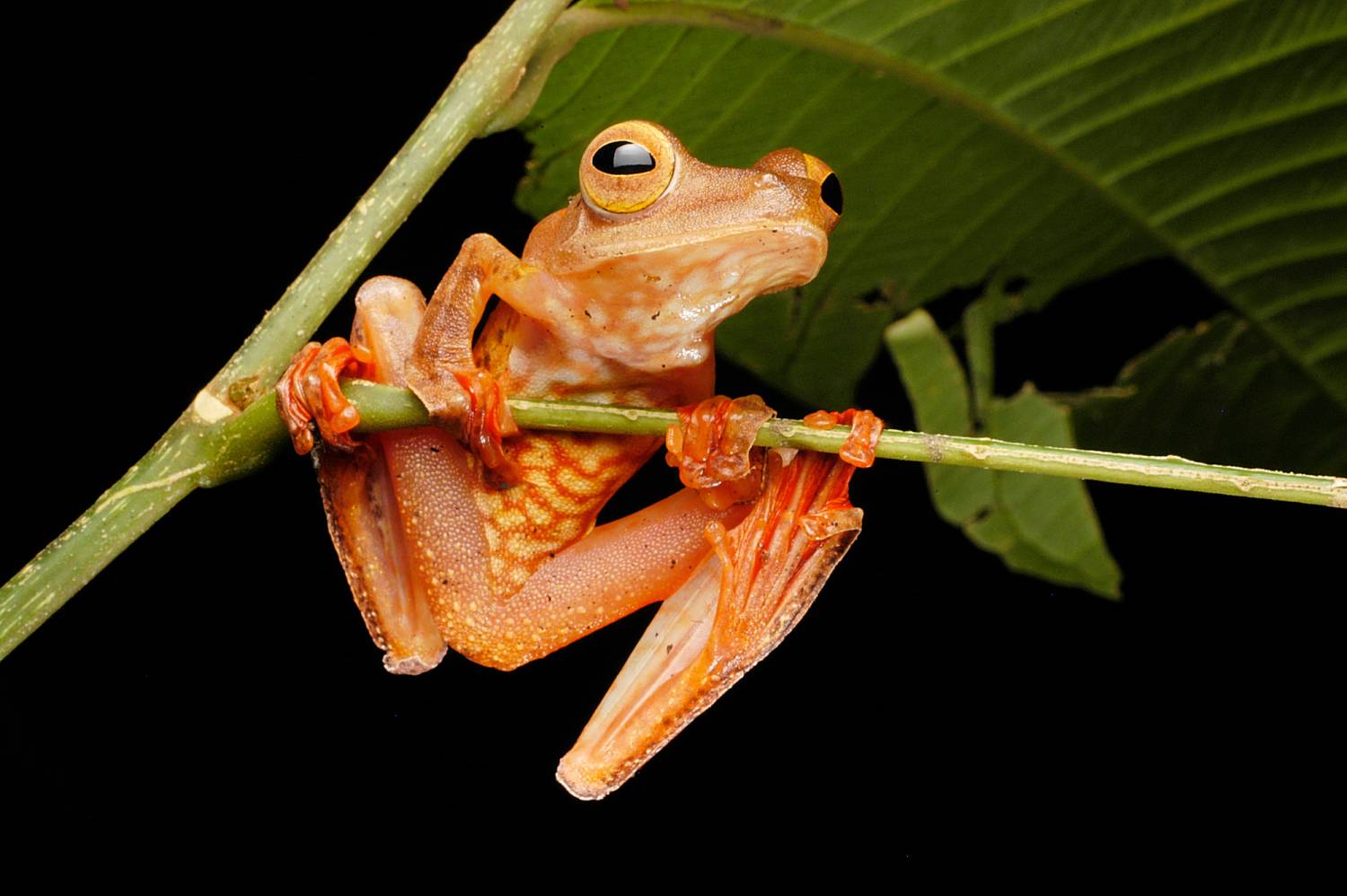
Rhacophorus pardalis is the “flying frog” most likely to be encountered by naturalists in primary and old secondary forests throughout much of Borneo. Of course, it is a glider rather than a true flier. Its moderately large size, bright red hand and foot webbing, and yellow flanks patterned with black dots make this species easy to identify. Beyond Borneo, its range includes Peninsular Thailand, Peninsular Malaysia, Sumatra, and the Philippines.
Males reach approximately 50 mm snout–vent length, while females grow to 60–70 mm. The head is moderately broad. Males are relatively slender, whereas females are more robust and have proportionally larger heads. The snout is rounded, and the canthus rostralis is indistinct and smooth. All digits bear broad, slightly truncated adhesive discs and are fully webbed. The skin is finely granular and generally smooth dorsally; the belly is coarsely pebbled. As in other flying frogs, skin extensions are present along the lateral surfaces of the forearms and feet and around the heels. The pupil is horizontal and elliptical. The eardrum is visible but indistinct, blending with the surrounding skin coloration. The supratympanic fold is weakly developed.
Dorsal coloration ranges from brown to tan in various shades, often with a reddish tint. Dark and light blotches produce a camouflage pattern that may form an X-shaped marking across the shoulders. Occasional pure white blotches and scattered small white spots add to the disruptive patterning. Dark markings commonly create diffuse banding on the limbs. The belly, underside of the thighs, and lower flanks are yellow with distinct orange-red reticulation—a pattern that inspired the occasionally used common name “Panther Frog.” The flanks usually also bear dark spots. The webbing is bright orange. The iris is typically pale golden in the periphery to more brownish or slightly reddish-brown centrally.
Although relatively common, the habits of this frog remain poorly documented because of its arboreal lifestyle. The male call is a series of soft chuckles. Eggs are deposited in a foam nest attached to vegetation overhanging a pond or other suitable body of water.
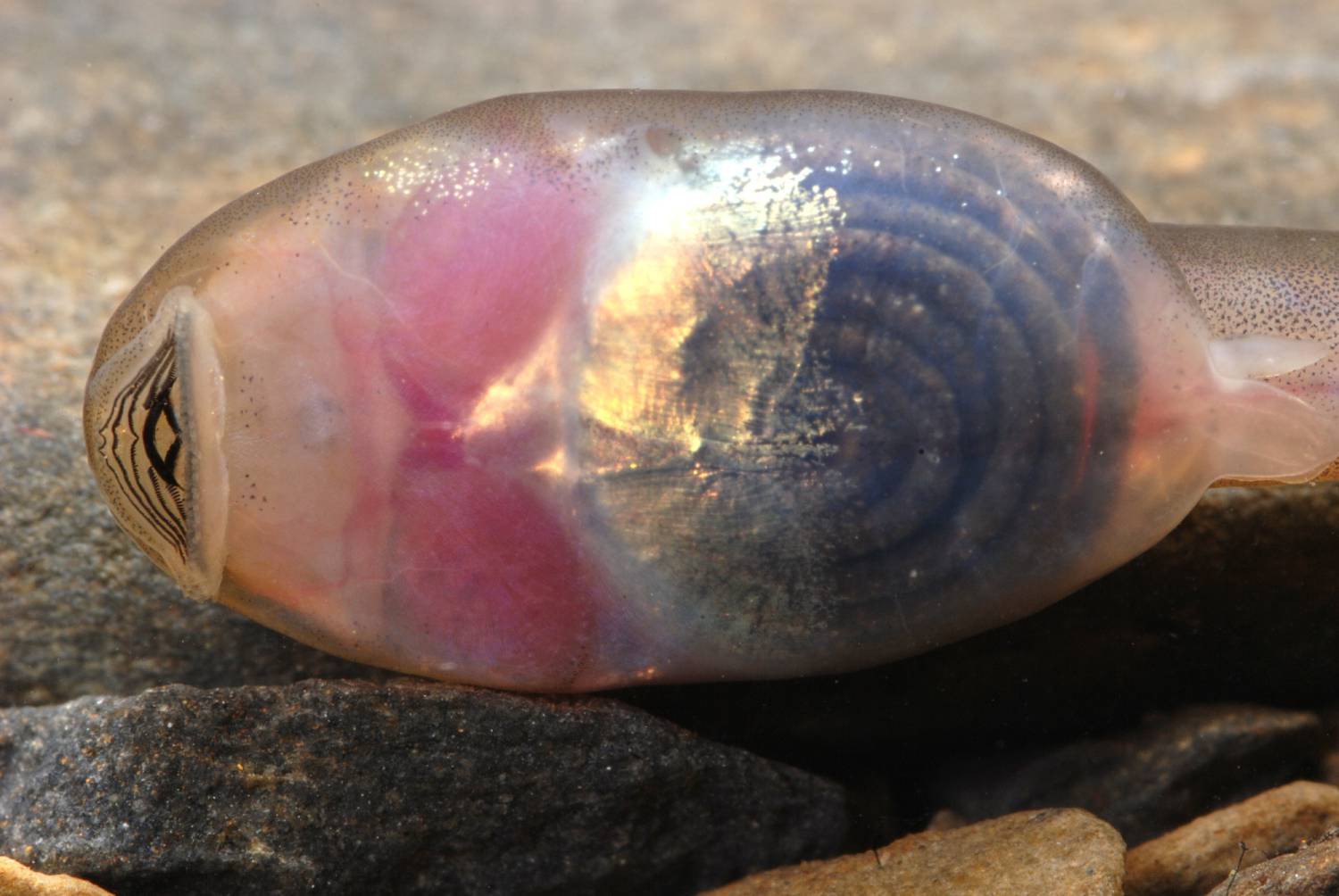
We have found tadpoles of R. pardalis in a variety of lowland forest habitats. The species uses standing water such as ponds, intermittent stream sections, or isolated stream-side pools. The size of breeding sites ranges widely, from small pig wallows only a few square meters in area to large ponds covering several hundred square meters. Tadpoles forage mainly along the bottom and grow to more than 48 mm total length. The tail is pointed. Tadpoles of some populations exhibit strikingly contrasted coloration, often with a pale patch and dark marking below the eye and dark pigment between the eyes (similar to H. raniceps but lacking glandular patches). Other populations show only pale markings on the cheeks.