
Frogs of Borneo

Frogs of Borneo

Frogs of Borneo

Frogs of Borneo

Frogs of Borneo

Frogs of Borneo

Frogs of Borneo

Frogs of Borneo

Frogs of Borneo

Frogs of Borneo

Frogs of Borneo
Borneo Flying Frog
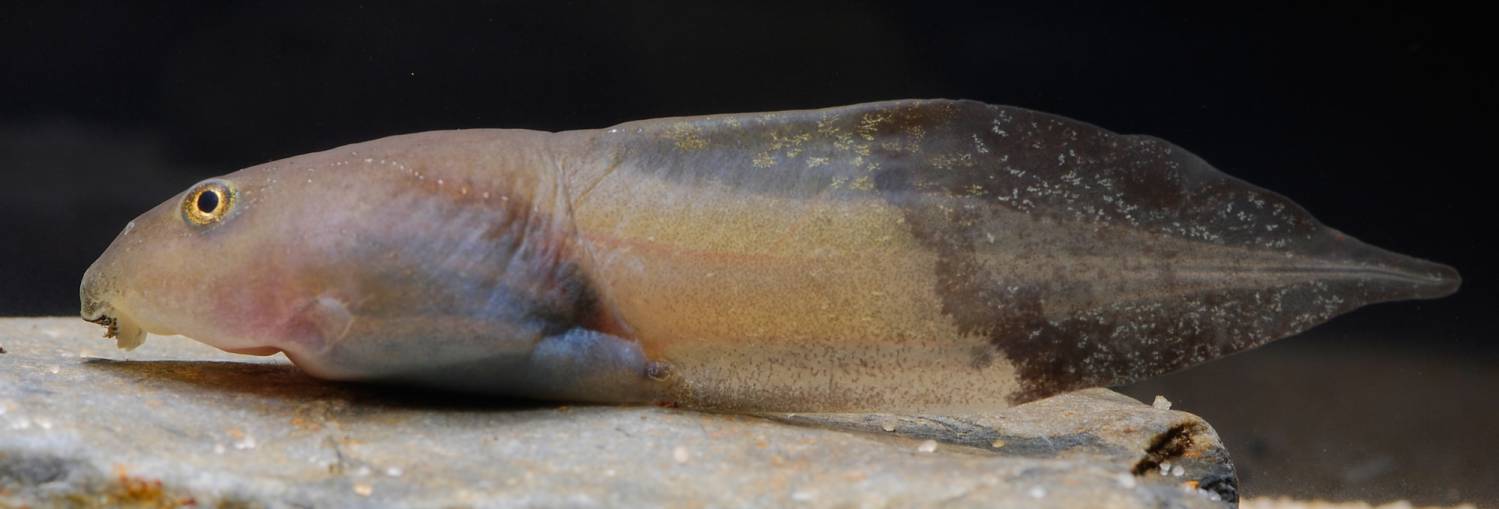
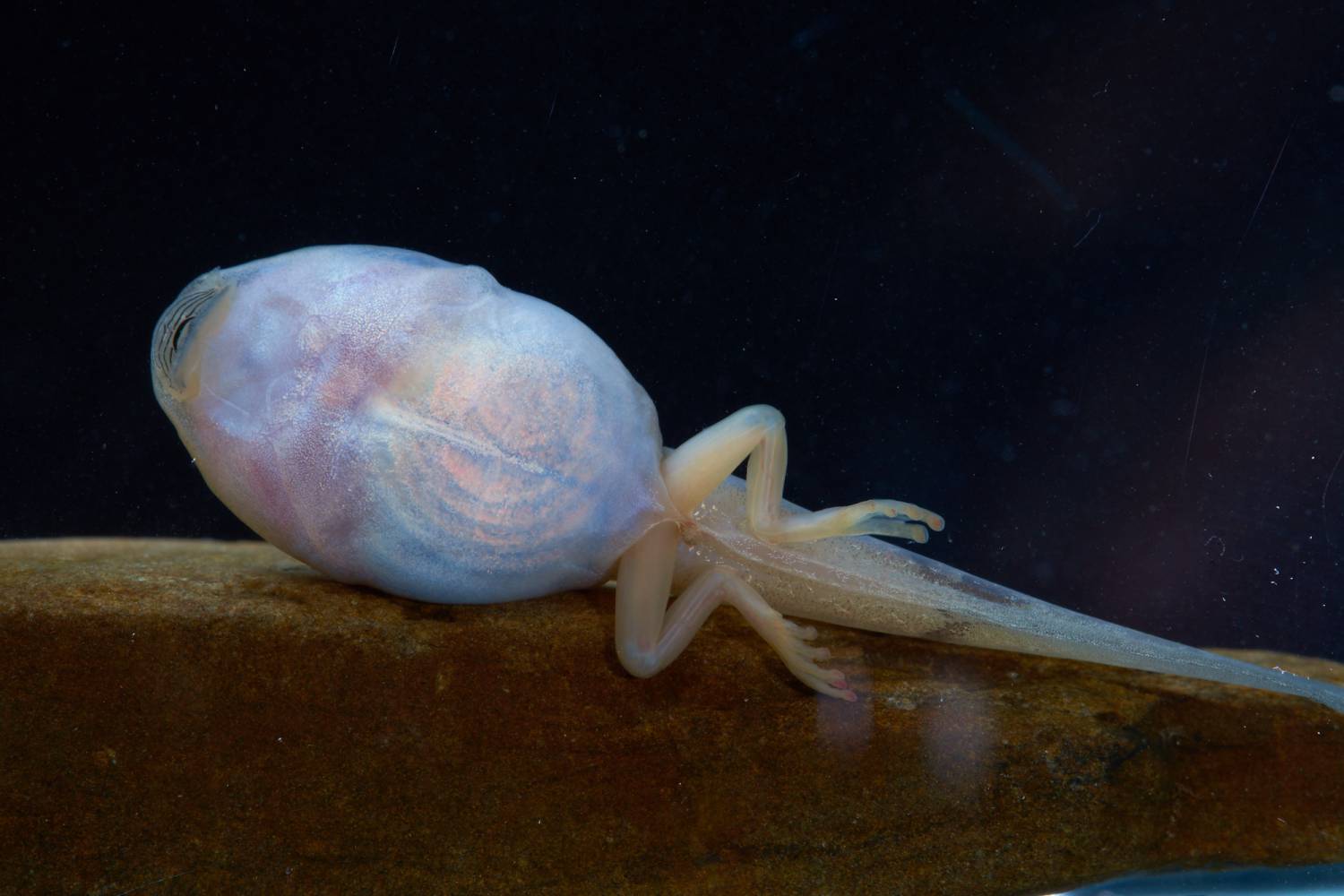
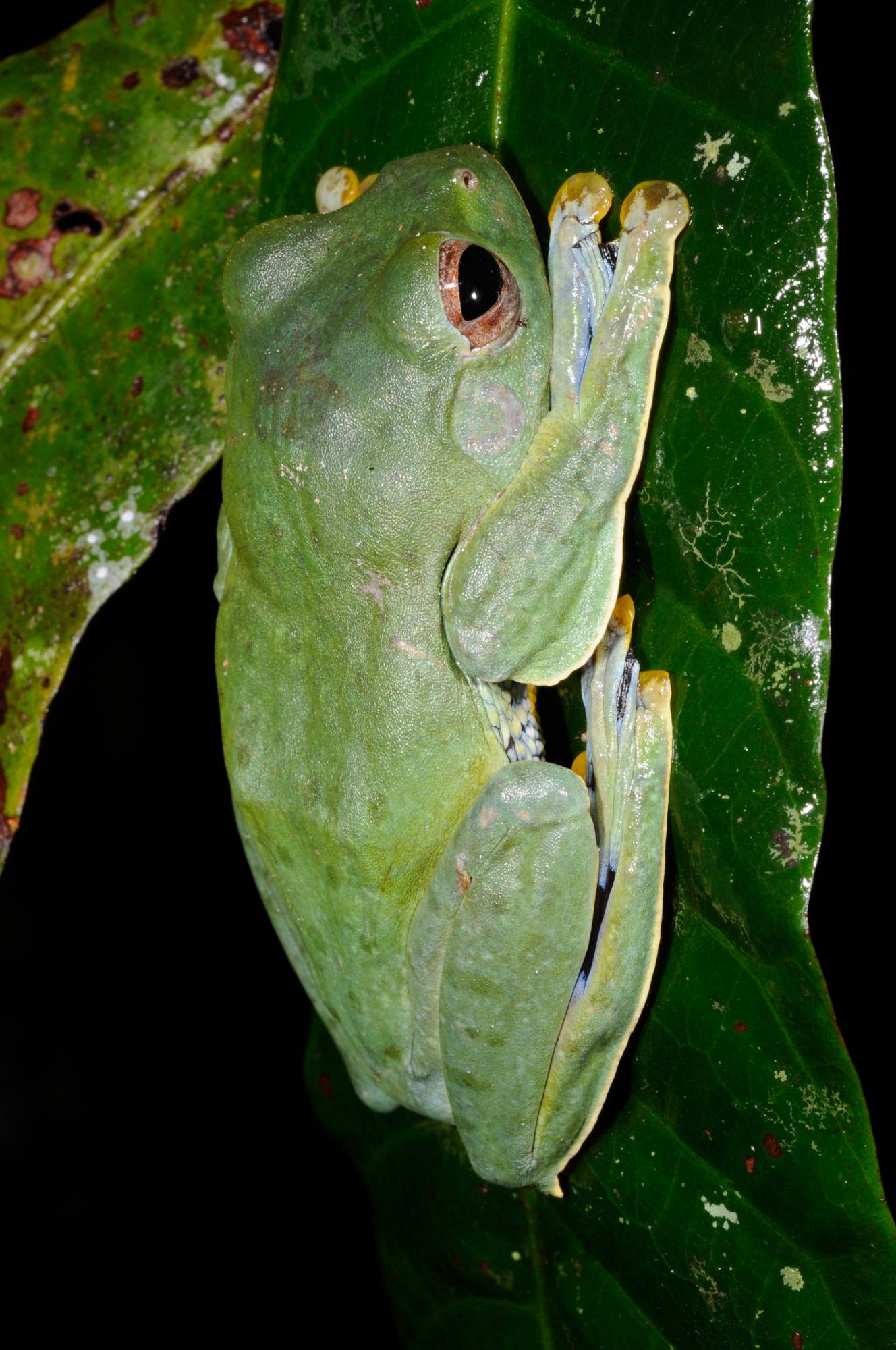
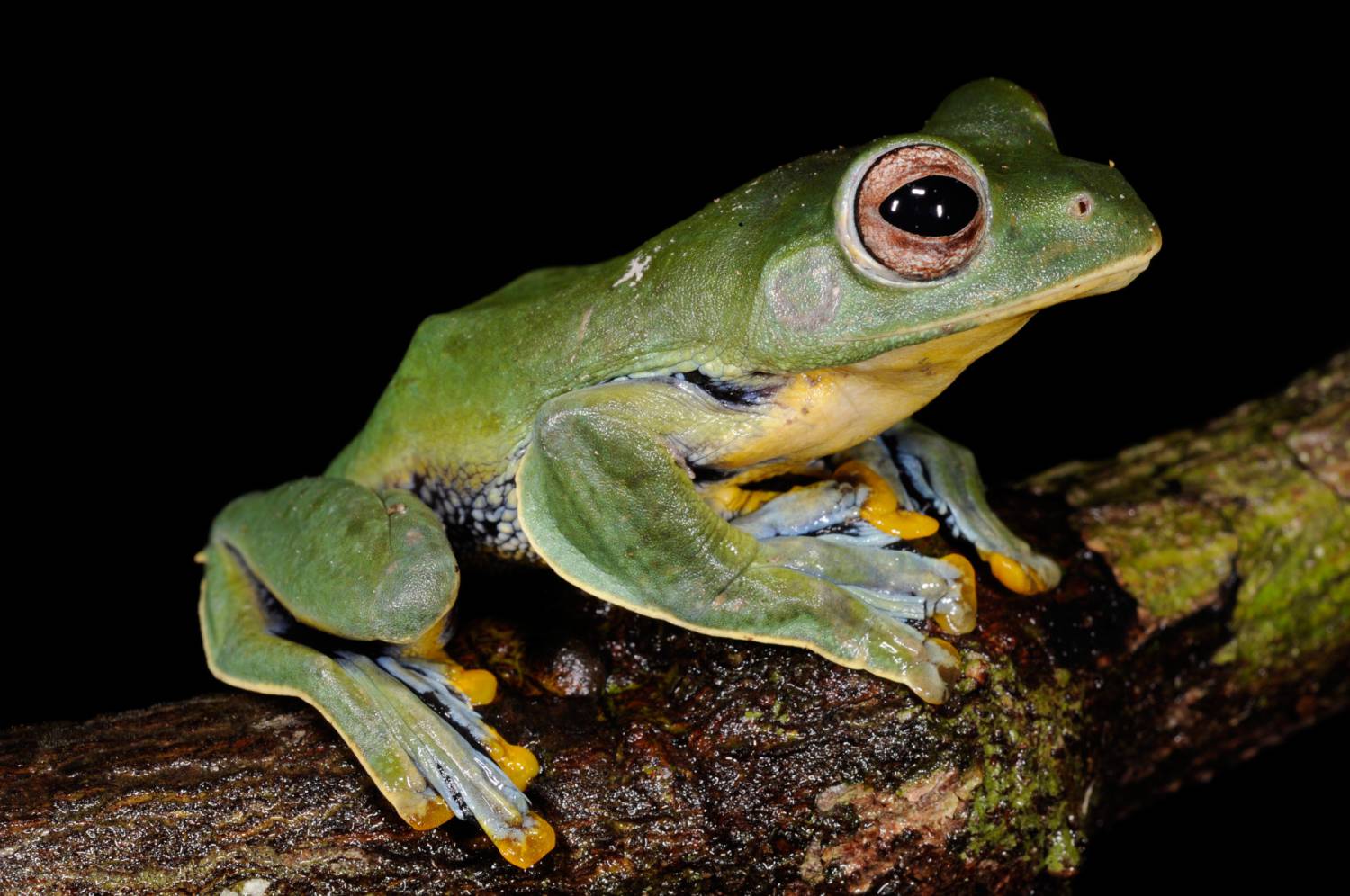
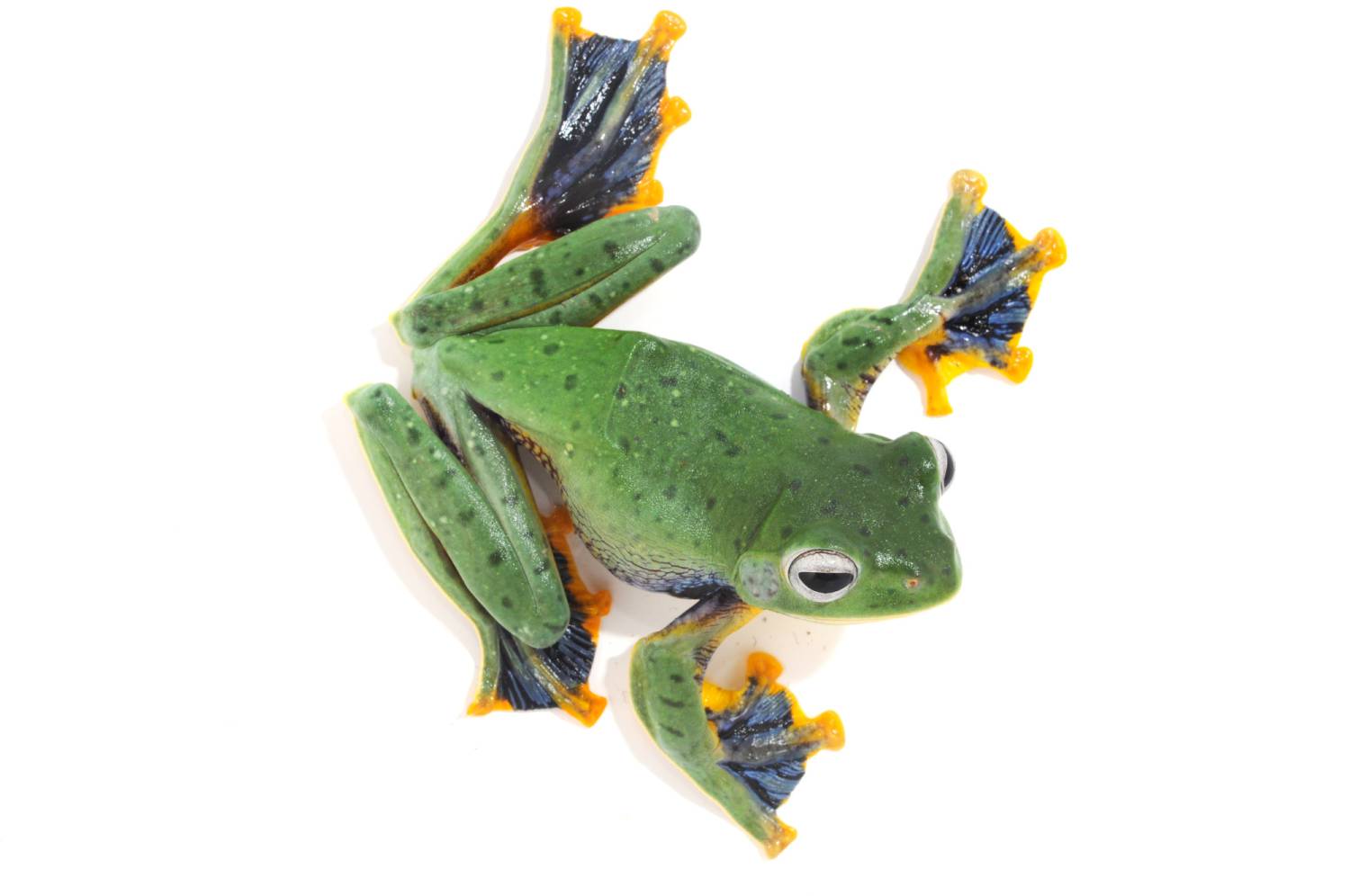
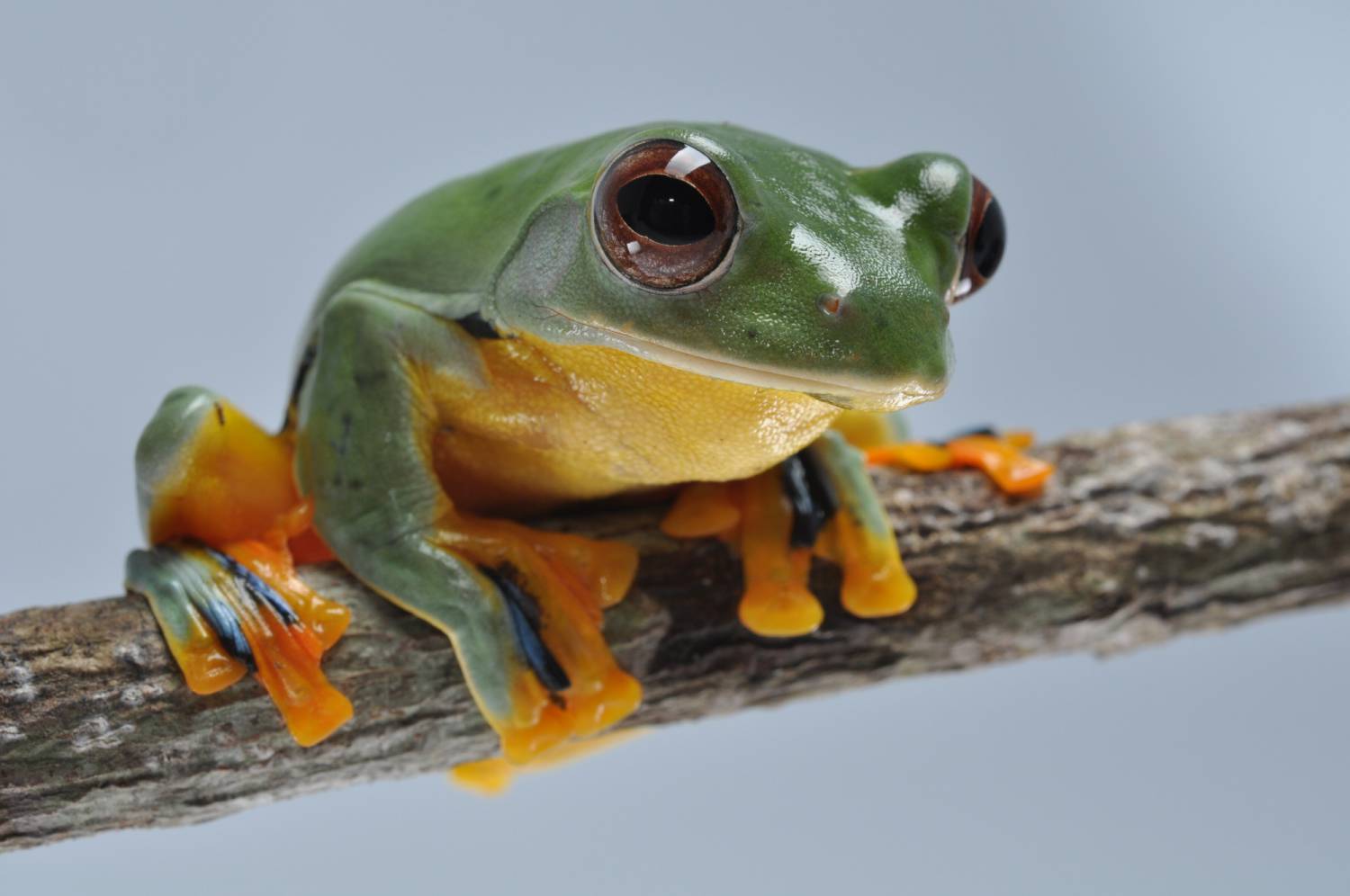
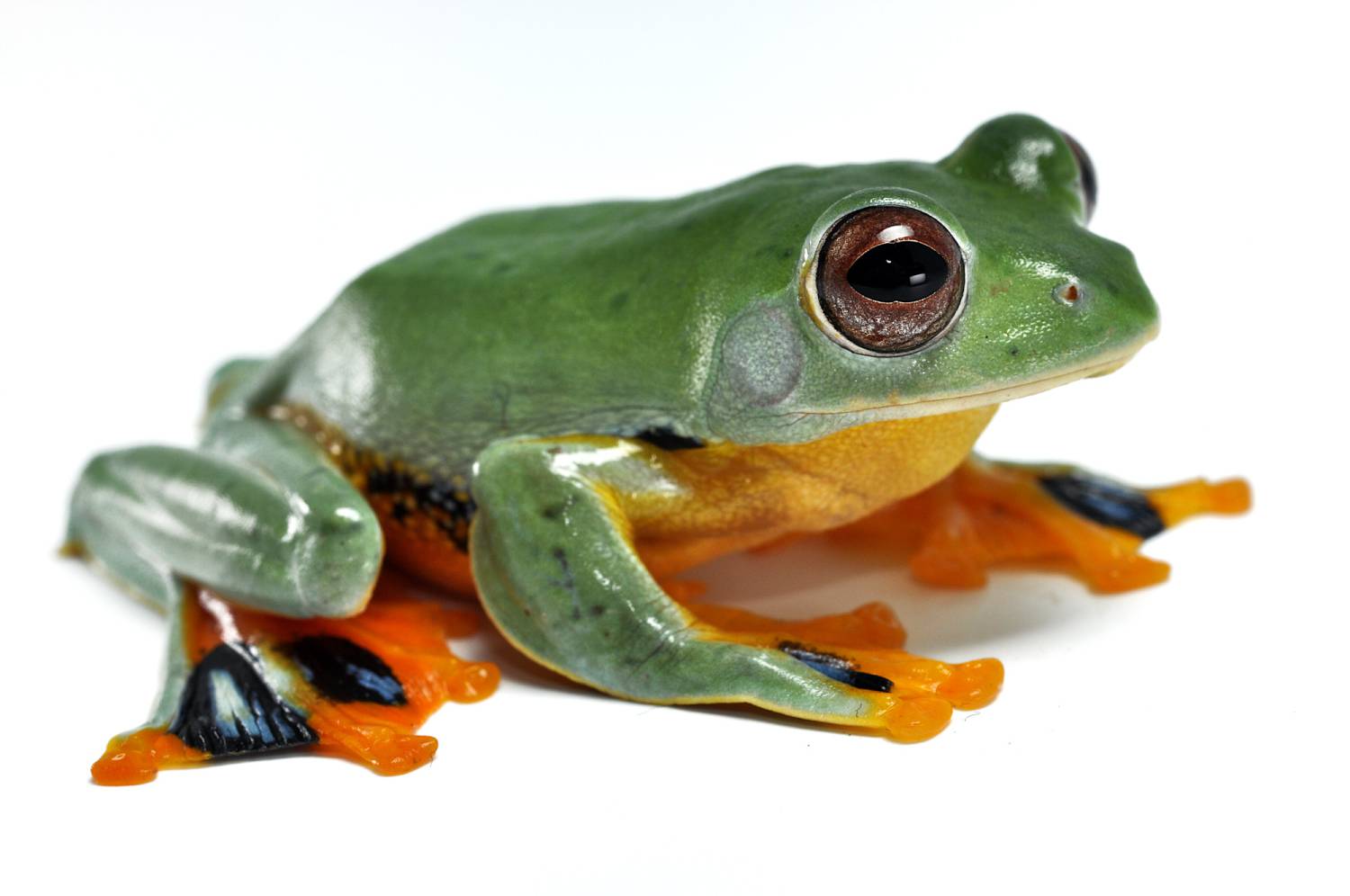
Rhacophorus borneensis is one of Borneo’s most strikingly beautiful frogs, though it is seldom seen because it lives high in the forest canopy. It was formerly treated as R. reinwardtii, but current taxonomy recognizes it as a distinct species. It is generally reported as an inhabitant of primary forest, though we have also encountered it in secondary and moderately disturbed forest. The type locality is the Camel Trophy Field Station (4°7482′ N, 116°8886′ E) in the Maliau Basin Conservation Area, Sabah, at approximately 1050 m a.s.l. Most populations, however, were reported from much lower localities.
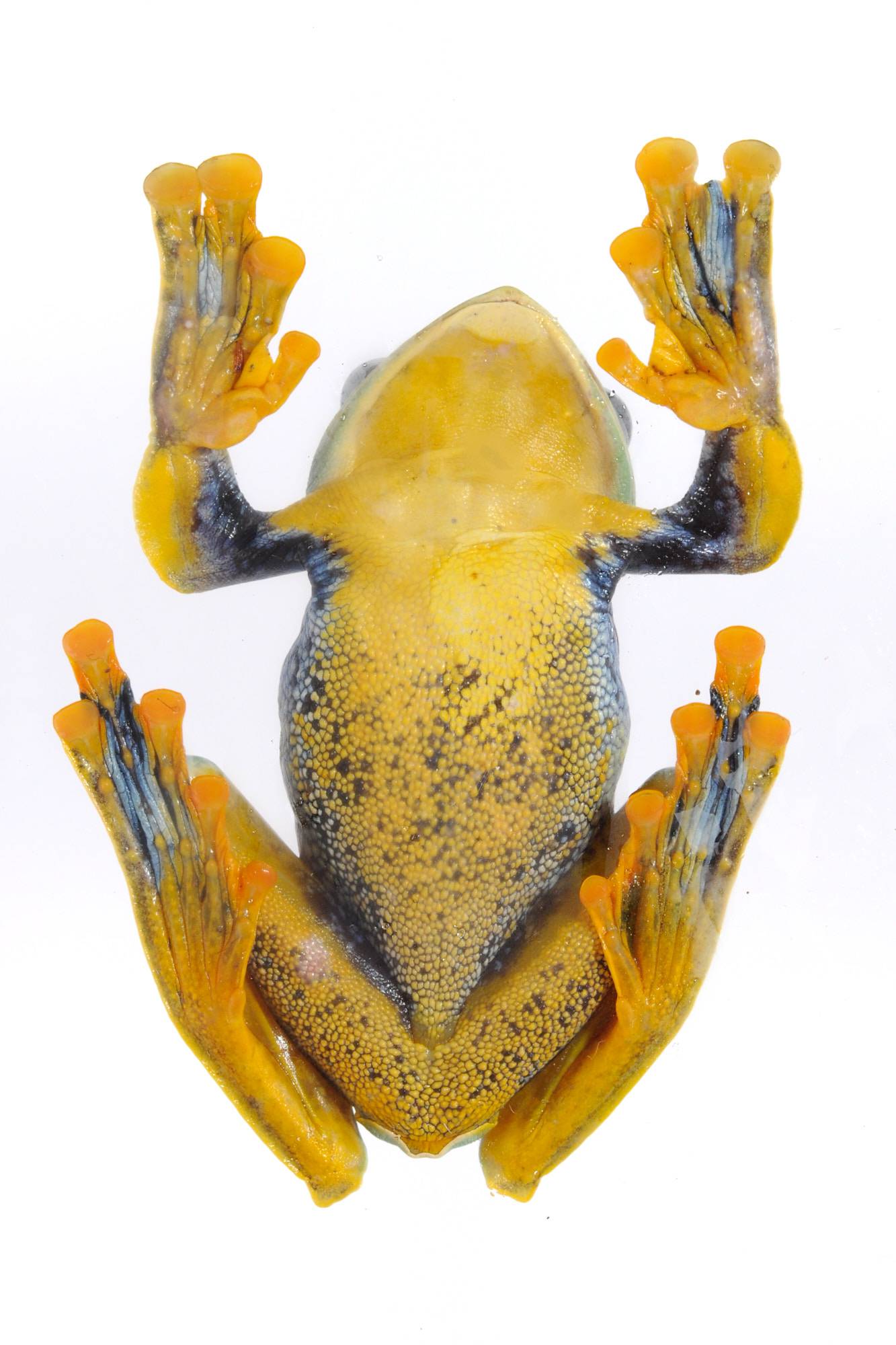
This is a medium- to large-sized species, with males reaching about 55 mm snout–vent length and females about 65 mm. The body is moderately robust. The head is broad with a short, rounded snout; the canthus rostralis is indistinct and smooth. The three outer fingers and all toes are fully webbed, and all digits terminate in large, truncated adhesive pads. The eardrums are visible but similar in color to the surrounding skin. A supratympanic fold curves around the eardrum toward the axilla. The dorsal skin is finely shagreened, becoming more pebbled along the lower flanks and ventrally. Small, rounded fleshy projections occur on the heels. A distinct skin ridge extends from the outer finger to the elbow, most pronounced along the lower arm, and along the outer edge of the foot. Additional membrane between the shoulder and lower arm expands when the frog is gliding. The pupil is horizontal and elliptical.
Dorsal coloration is uniformly green with scattered black dots. The underside, groin, and inner surfaces of the limbs are yellow to orange. The webbing is predominantly black dorsally, though the inner portions of the toes and fingers may be yellow to orange. The axilla and lower flanks have a dark background with scattered turquoise spots. The iris is greyish to brown. In metamorphs, the adult coloration is not yet fully developed; the belly is off-white rather than yellow.
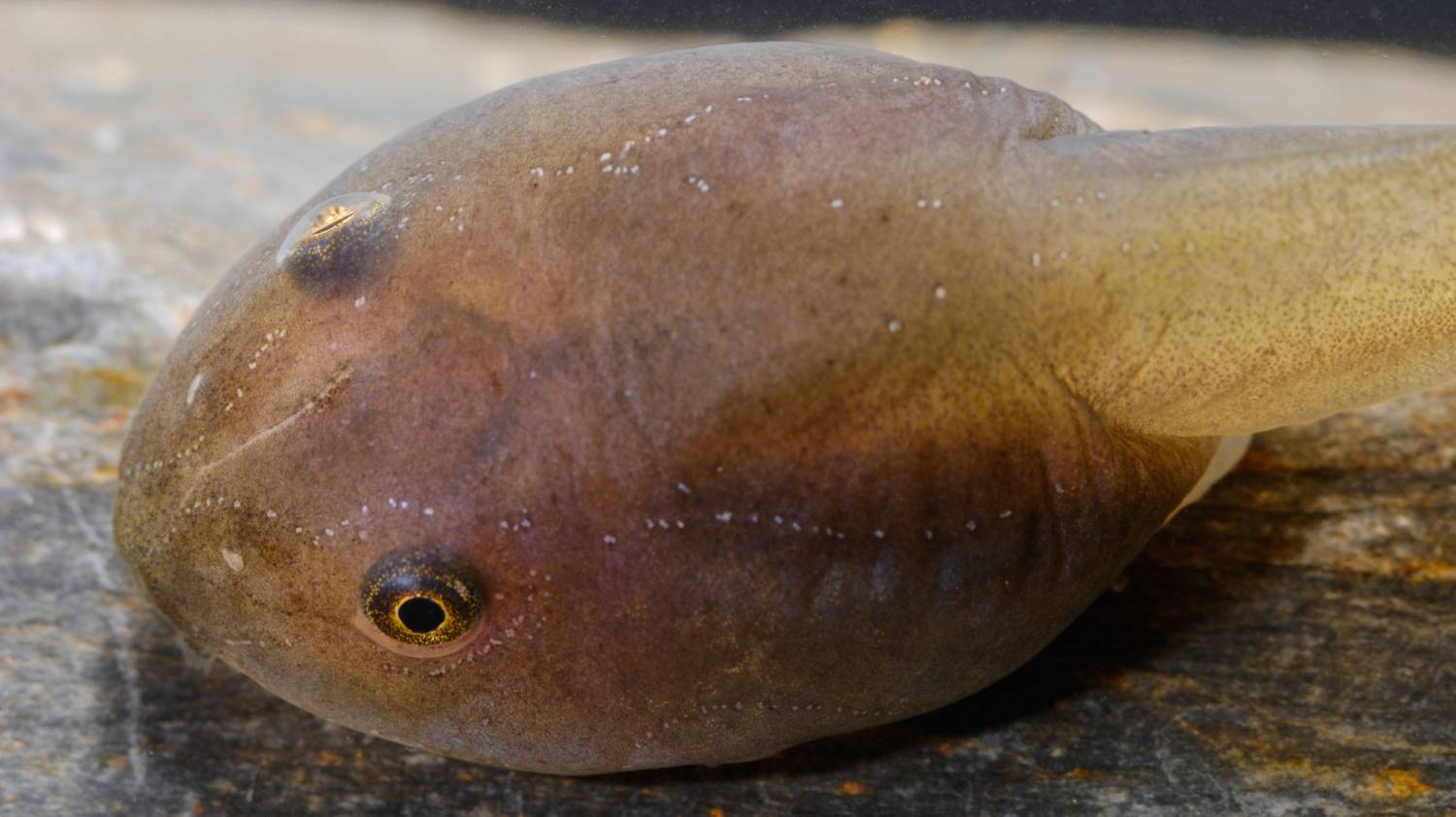
Because these frogs spend most of their lives high in the canopy, they are rarely observed by naturalists. Reproduction requires suitable semi-permanent forest ponds. Eggs are deposited in foam nests on twigs overhanging water. The male’s call is a soft, low chuckle—somewhat reminiscent of a woodpecker tapping on wood. Tadpoles are epibenthic, inhabiting the bottom layers of ponds. They grow to 50 mm or more in total length and possess a relatively tall tail fin. The posterior half of the tail is abruptly and densely pigmented, sometimes almost black (we observed color change of this part).