
Frogs of Borneo

Frogs of Borneo

Frogs of Borneo

Frogs of Borneo

Frogs of Borneo

Frogs of Borneo

Frogs of Borneo

Frogs of Borneo

Frogs of Borneo

Frogs of Borneo

Frogs of Borneo
Wallace’s Flying Frog

Rhacophorus nigropalmatus is the largest tree frog in the Bornean fauna. The original description (Boulenger, 1895) lists “Akar River,” Sarawak, as the type locality. The species is widely distributed across Borneo and inhabits primary and secondary forests, and occasionally even plantations, from the lowlands up to about 2000 m a.s.l. This is the “flying frog” famously mentioned by Alfred Russel Wallace in his 19th-century account of the Malay Archipelago.
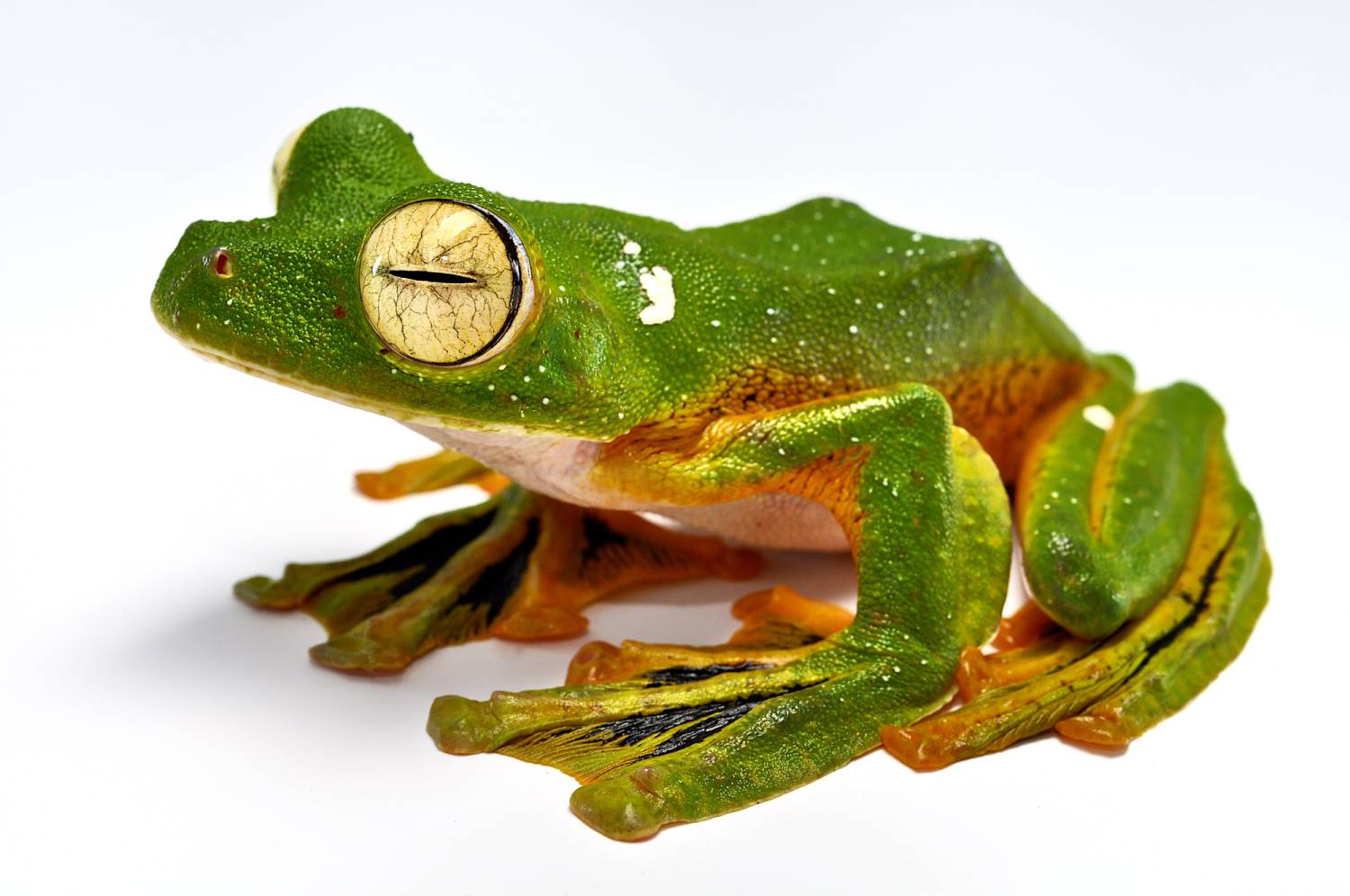
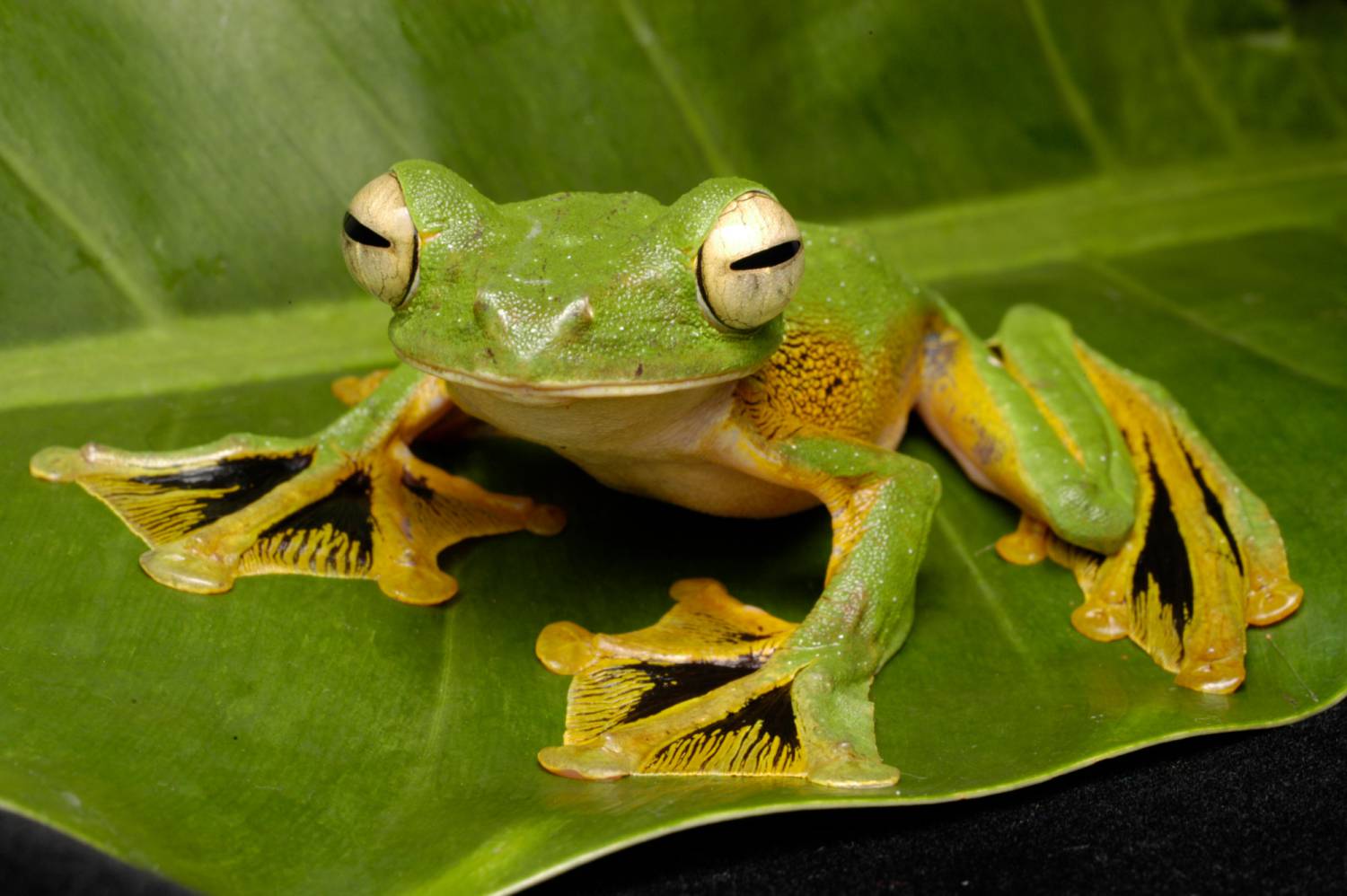
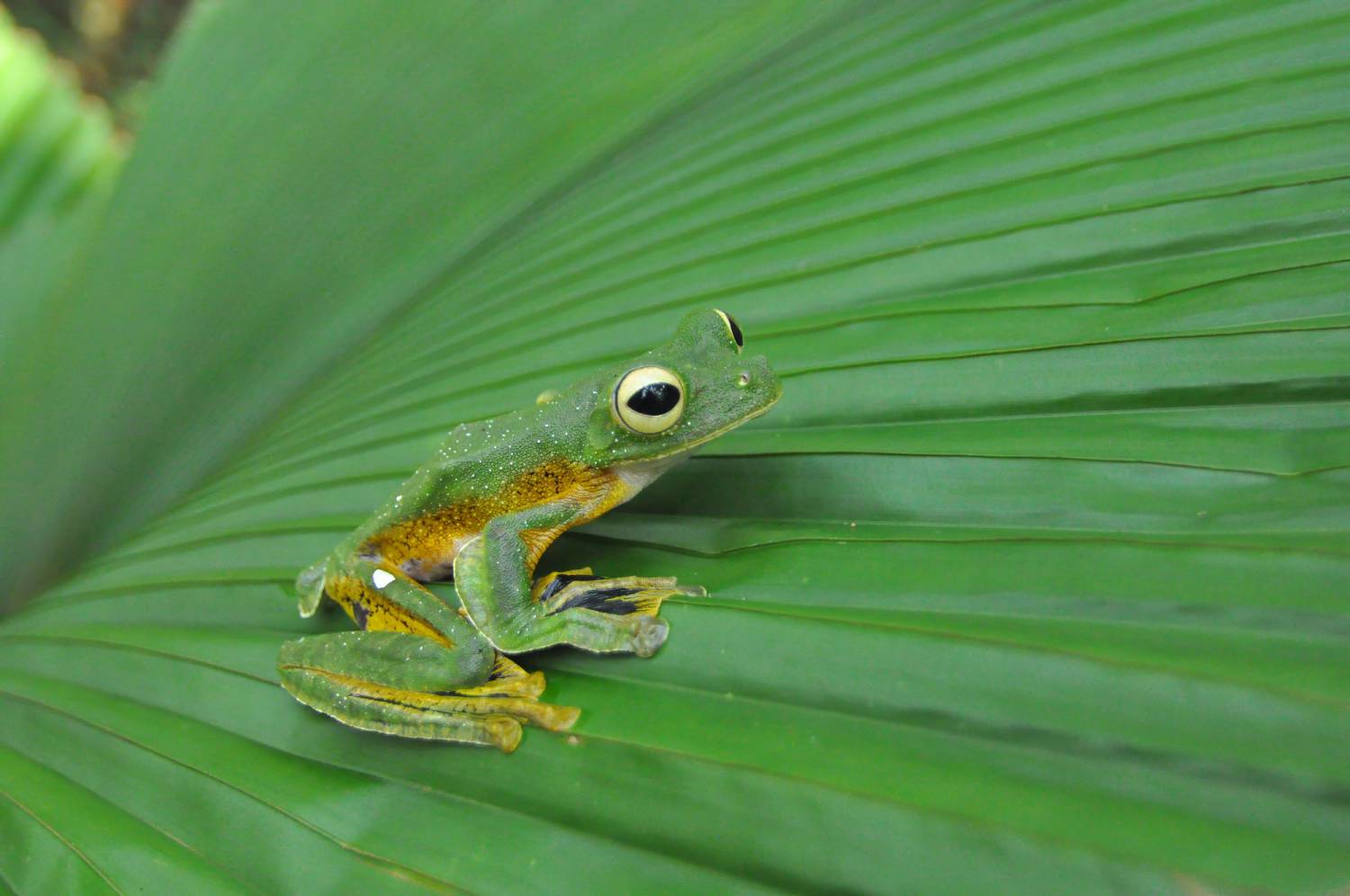
Males reach up to 90 mm snout–vent length and females up to 100 mm. The head is broad and bears large, somewhat forward-directed eyes. The snout is bluntly rounded. The body is relatively slender. The limbs and digits are long—almost disproportionately so—and the fingers and toes are fully webbed. All digits end in large, truncated adhesive pads. The outer side of the forearm carries a tall, fleshy ridge; similar, though smaller, skin expansions are present along the outer fingers, toes, and edges of the feet. The medial side of the heel also bears a skin projection. The pupils are horizontal and elliptical. The skin texture is finely granular dorsally, lower flanks and belly are more coarsely pebbbled.
This emerald-green frog is instantly recognizable by its striking coloration: the large eye has a pale yellow iris, and the limbs show bright yellow highlights that contrast sharply with the black webbing. The vivid green dorsum is sprinkled with tiny white spots and sometimes irregular white blotches.
Little is known about the species’ daily habits because it spends most of its life high in the canopy of lowland rainforest. It descends only to breed in temporary forest ponds. Inger et al. (2017) described the male’s call as “a long, surprisingly low-voiced trill, sounding like soft tapping on wood, often initiated by a single detached note.”
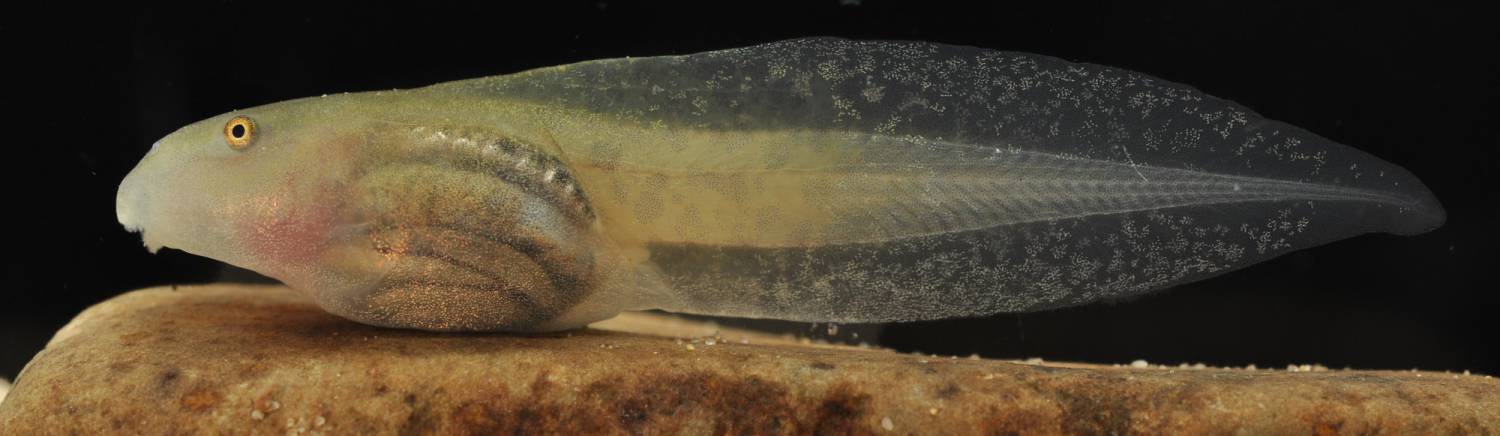
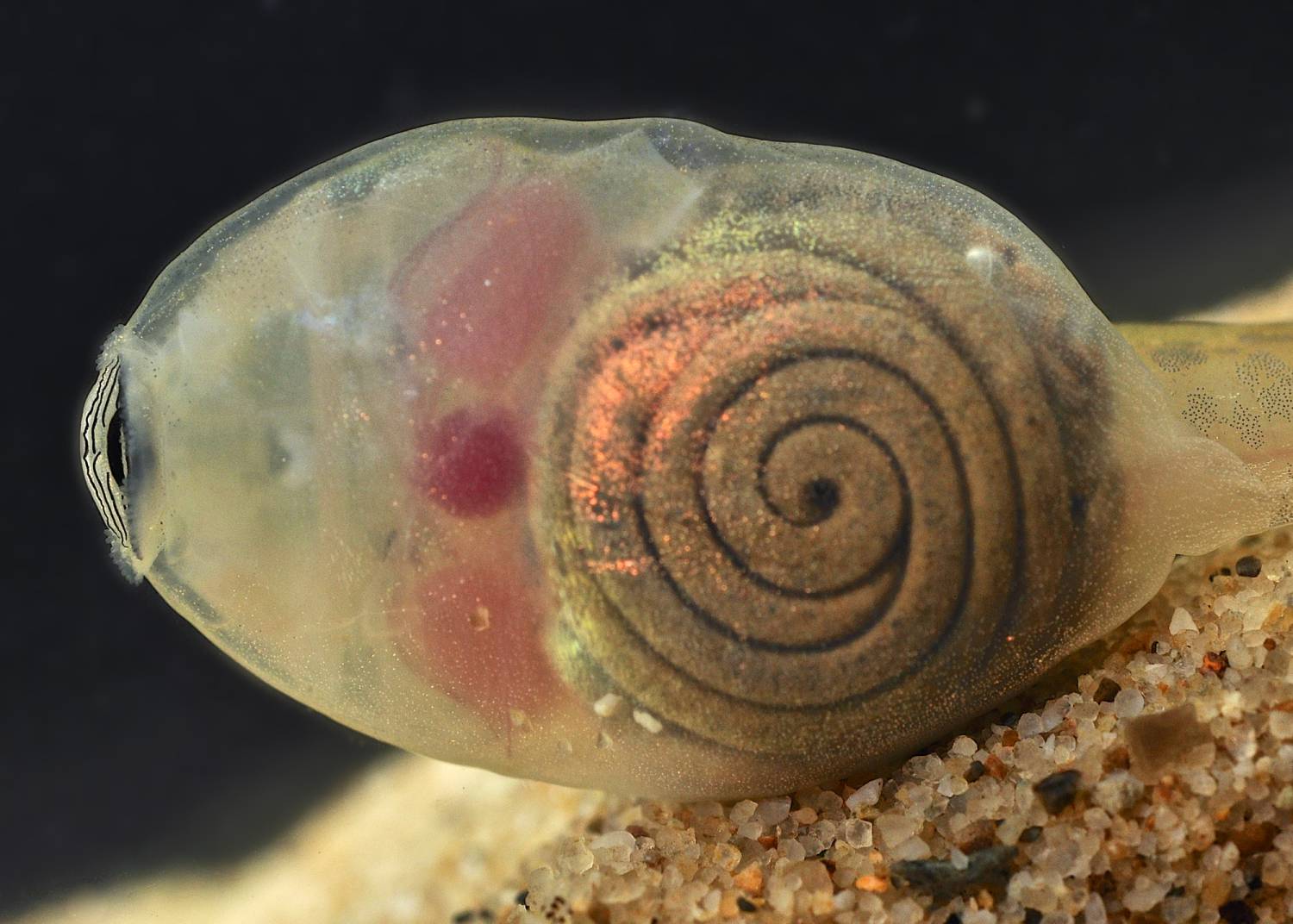
Tadpoles grow to about 55 mm total length. They are sandy brown above and mostly transparent below. They have a broad, ovoid head–trunk region and a spotted tail with a relatively tall fin. For the size of the body, the eyes appear rather small. Tadpoles are most often found in turbid, muddy water typical of pig wallows. The species seems to be particularly attracted to such mammal-created pools but may also use road ruts and ditches along muddy tracks. Tadpoles hatch from foam nests attached to vegetation overhanging the water or to muddy banks. We observed that tadpoles hid in the soft mud of a puddle during the day but came out and foraged over the bottom at night.
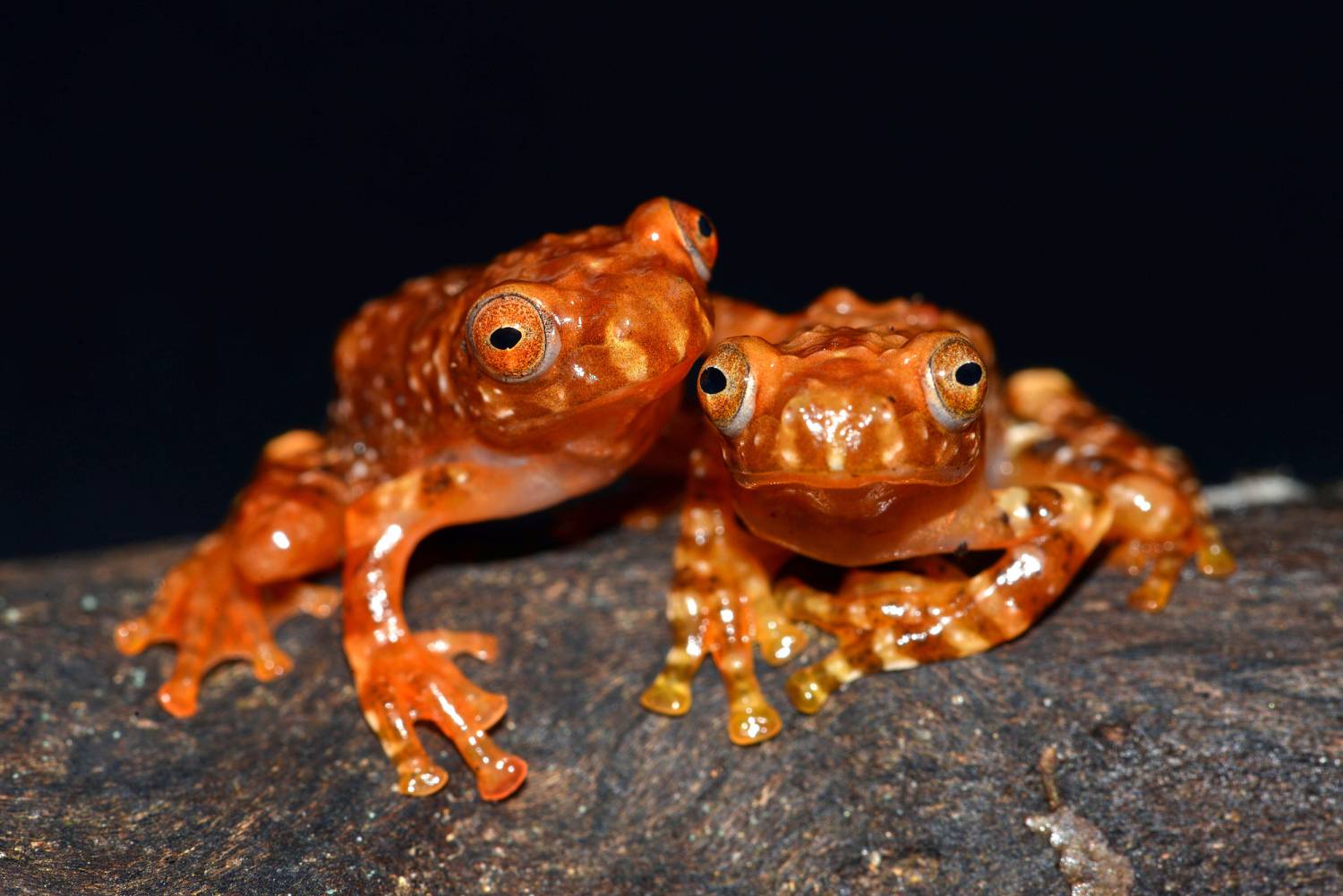
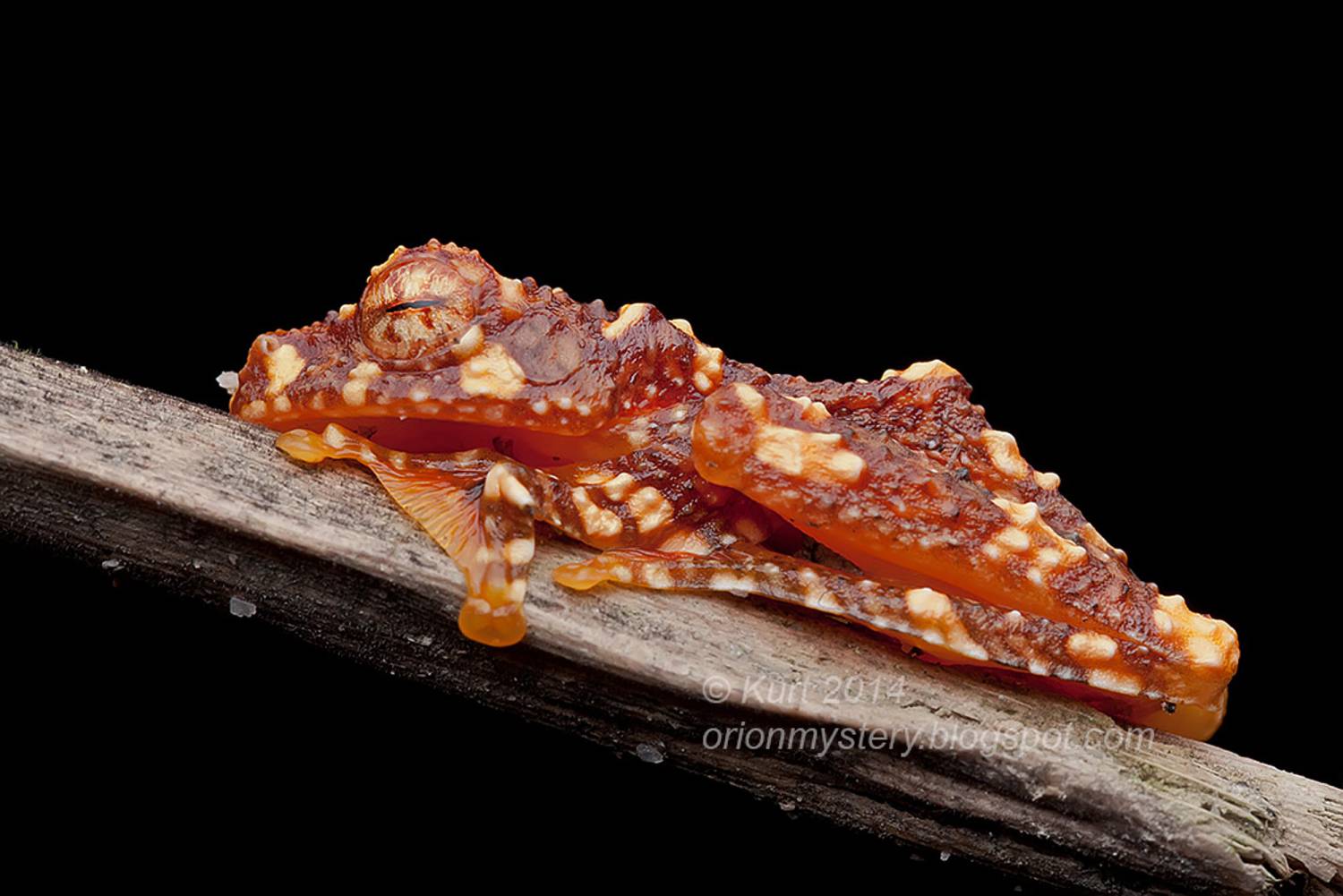
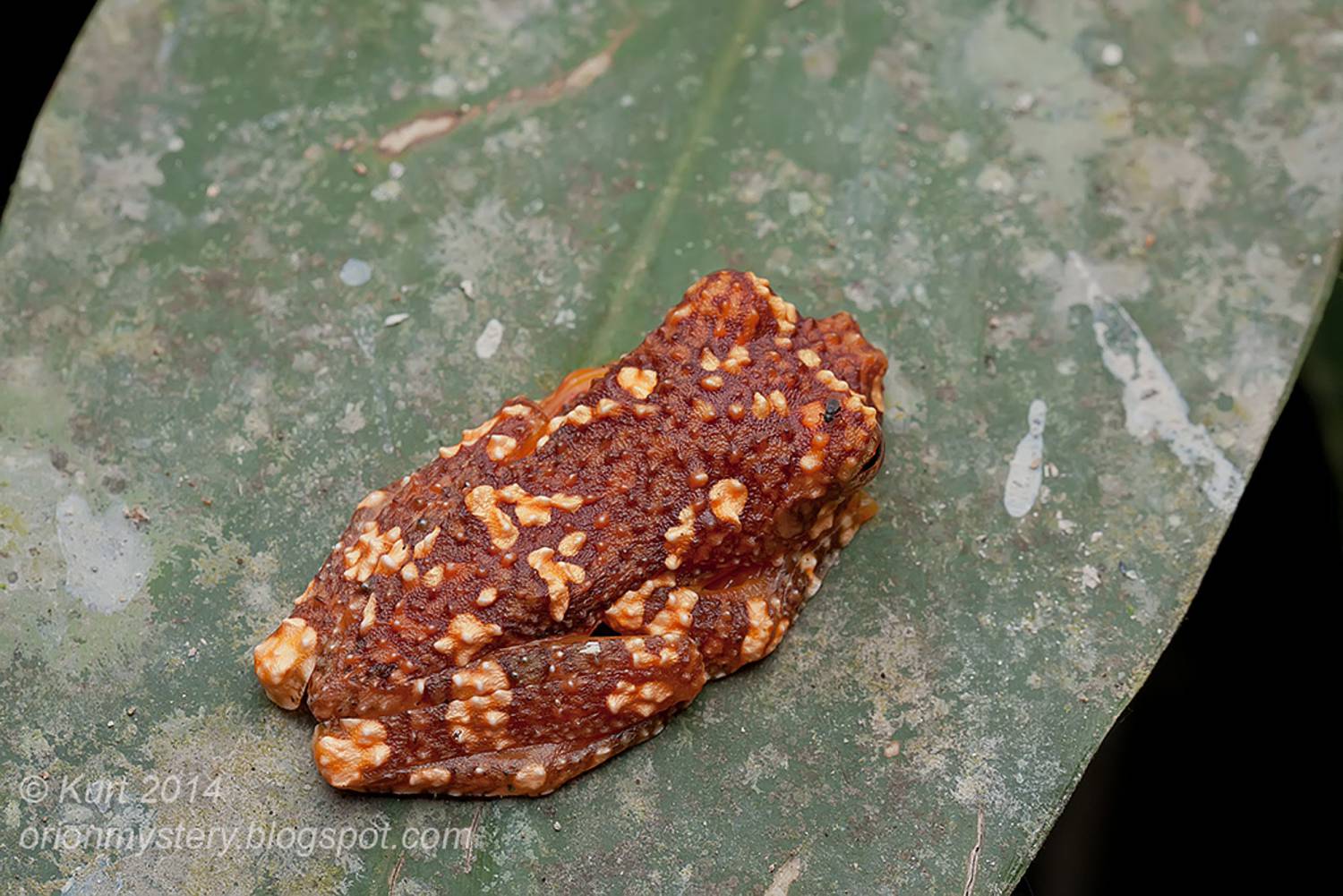
Metamorphs and juveniles look markedly different from adults. The webbing of juveniles appears less extensive than that of adults, possibly indicating differences in microhabitat use or predation pressure during early life stages.