
Frogs of Borneo

Frogs of Borneo

Frogs of Borneo

Frogs of Borneo

Frogs of Borneo

Frogs of Borneo

Frogs of Borneo

Frogs of Borneo

Frogs of Borneo

Frogs of Borneo

Frogs of Borneo
Bornean Families
Hylarana:
Sumatra Marsh Frog

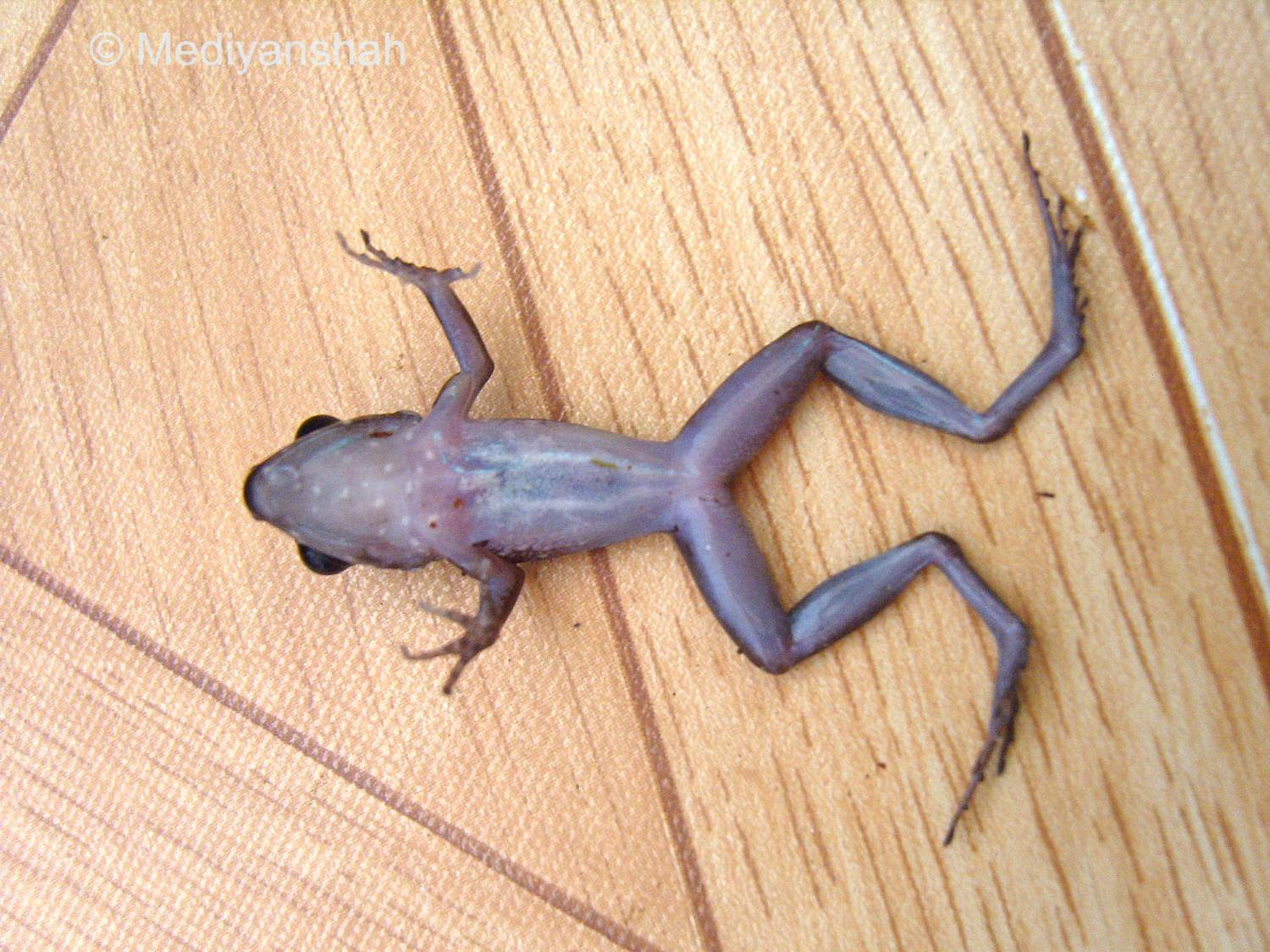
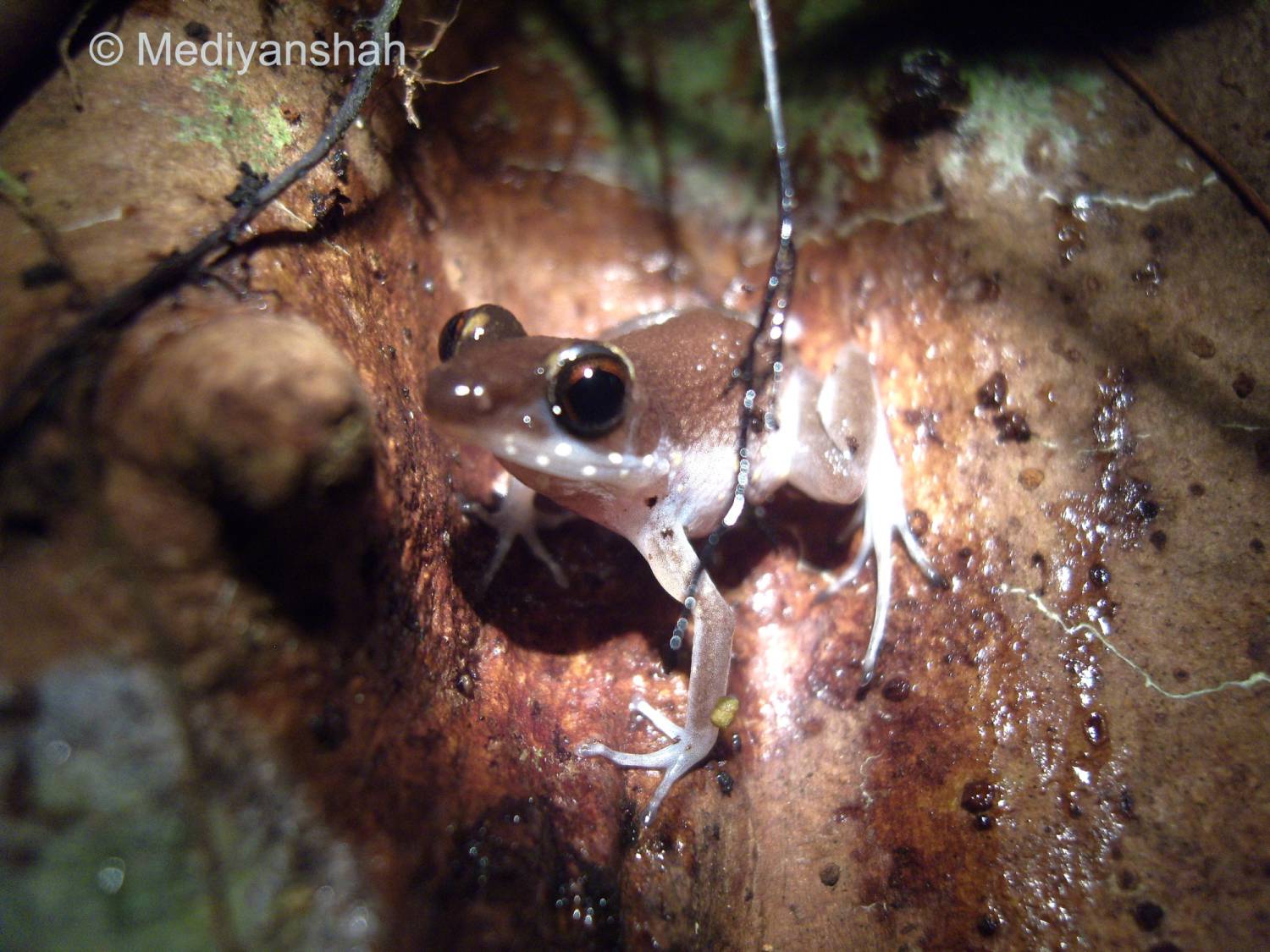
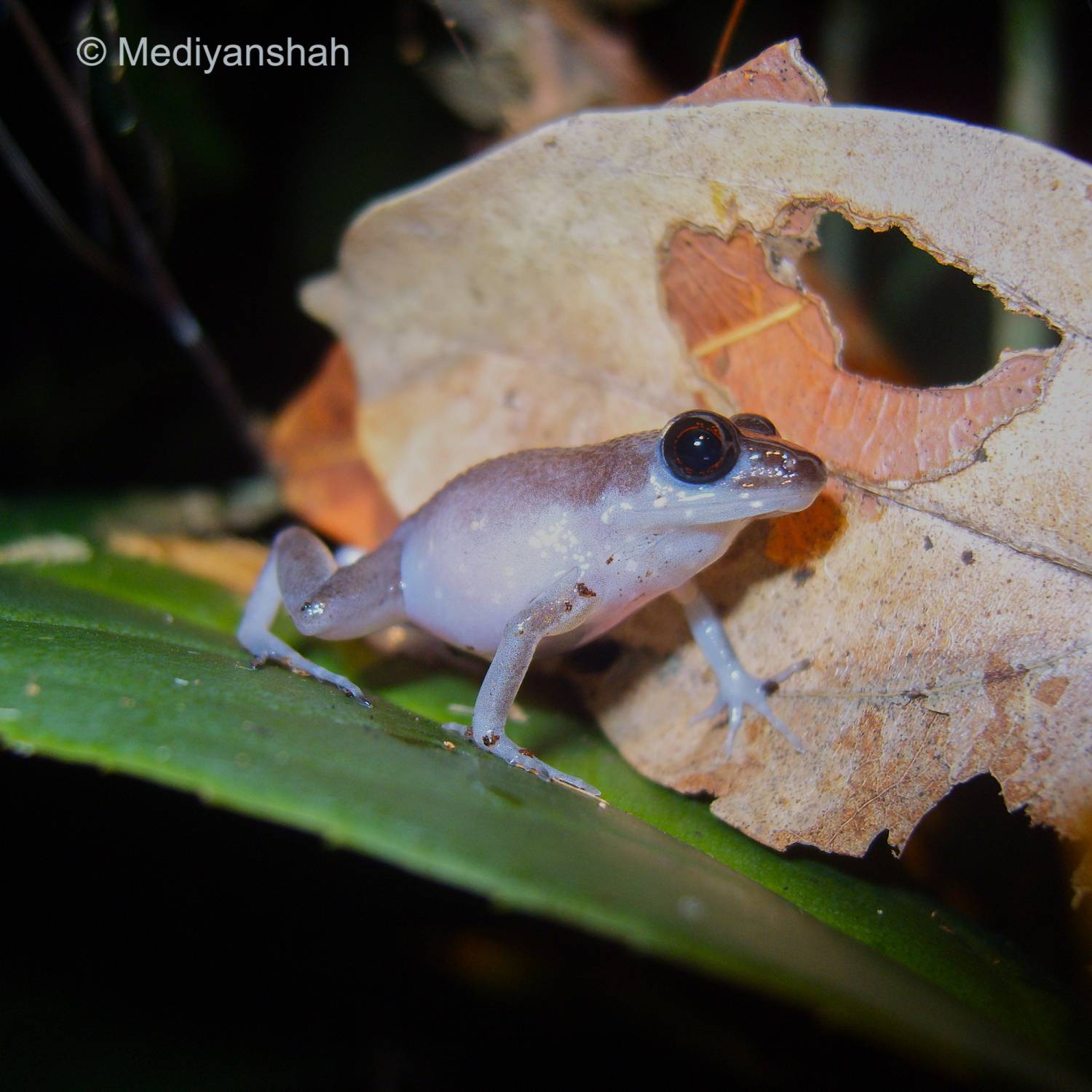
The type specimen was collected in the Giam-Siak Kecil Wildlife Reserve, near Tasik Betung Village in the Sungai Mandau Sub-district of Siak District, Riau Province, Sumatra, Indonesia (01°15'N, 101°30'E; 5–15 m a.s.l.) and was described by Matsui et al. (2012). In 2016, Mr. Mediyansyah reported a frog from a field survey in far western Kalimantan and tentatively assigned it to H. rawa (Mediyansyah 2016 Warta Herpetofauna 8(4): 11–15). The species was later also recorded from Peninsular Malaysia, again in peat swamp habitats (Chan et al. 2020). A report from Natuna Island followed (Herlambang et al. 2022).
Because of the striking congruence in diagnostic characters, we follow in tentatively identifying the Kalimantan specimen as H. rawa, representing the first record for Borneo. This assignment remains provisional, pending confirmation through future research.
This is a small-sized species of the genus Hylarana, with an adult male reaching a snout–vent length of only 26 mm. The tympanum measures about half the diameter of the eye. There is no dorsolateral fold. The hind limbs are relatively short, and when the leg is adpressed, the tibiotarsal articulation reaches only the posterior margin of the eye. The digits are long and slender, with well-developed subarticular tubercles below. The tips of the digits are slightly expanded and bear horizontal grooves. The toe webbing is poorly developed. Males lack a vocal sac. A conspicuous humeral gland covers the entire anterior surface of the upper arm in males. The dorsal surfaces of the body and limbs are smoothly pebbled in structure and uniformly brown in color, lacking any distinct markings. Underside, flacks, hand and foot are mostly pale. The throat in the Kalimantan specimen bears scattered white spots. The iris is reddish with black reticulation.
The species has originally recorded from lowland habitats, particularly peat swamp habitats. Other from that, almost nothing is known about its biology, such as reproduction or feeding preferences. Chan et al. (2020) described the call as "The call is a rapid ‘‘phwet’’ note, repeated at frequent intervals. ... Call rate for the Malaysian specimen was 132 calls per minute, whereas the Riau specimen was 253 calls per minute."