
Frogs of Borneo

Frogs of Borneo

Frogs of Borneo

Frogs of Borneo

Frogs of Borneo

Frogs of Borneo

Frogs of Borneo

Frogs of Borneo

Frogs of Borneo

Frogs of Borneo

Frogs of Borneo
Spiny Warty Tree Frog

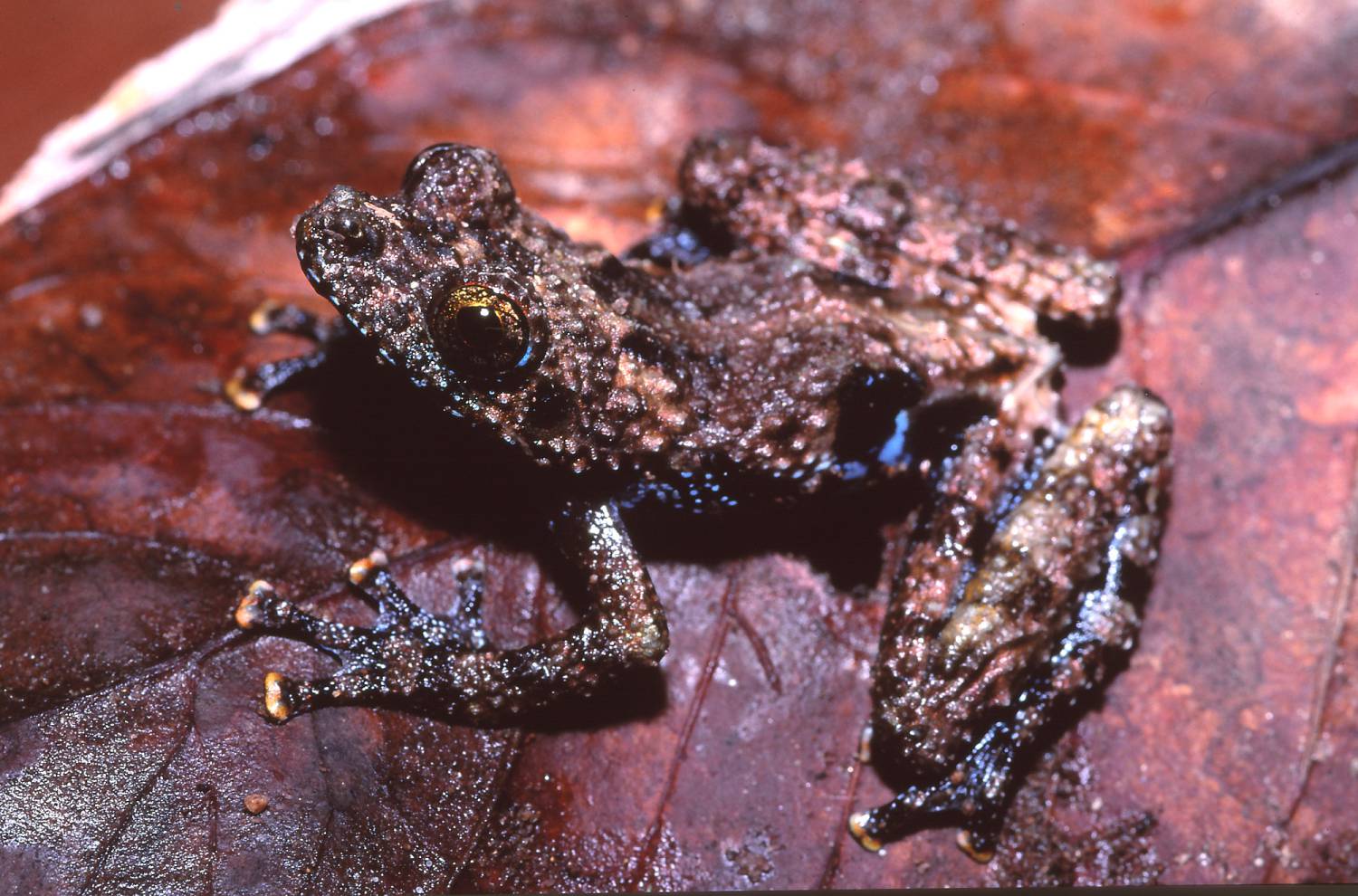
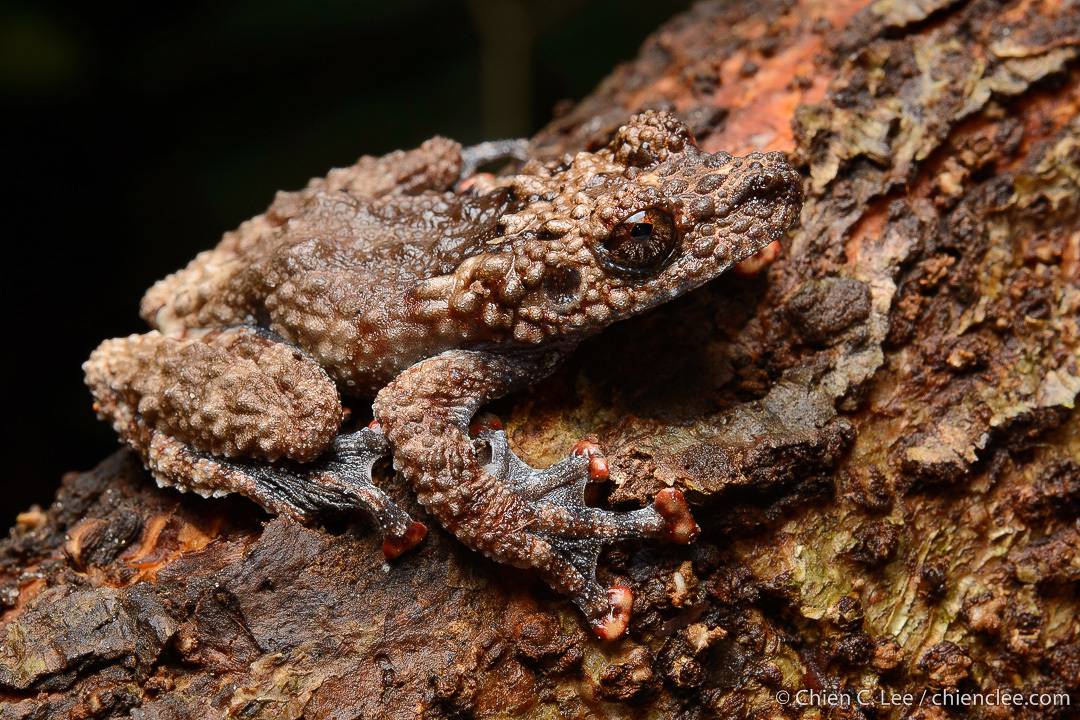

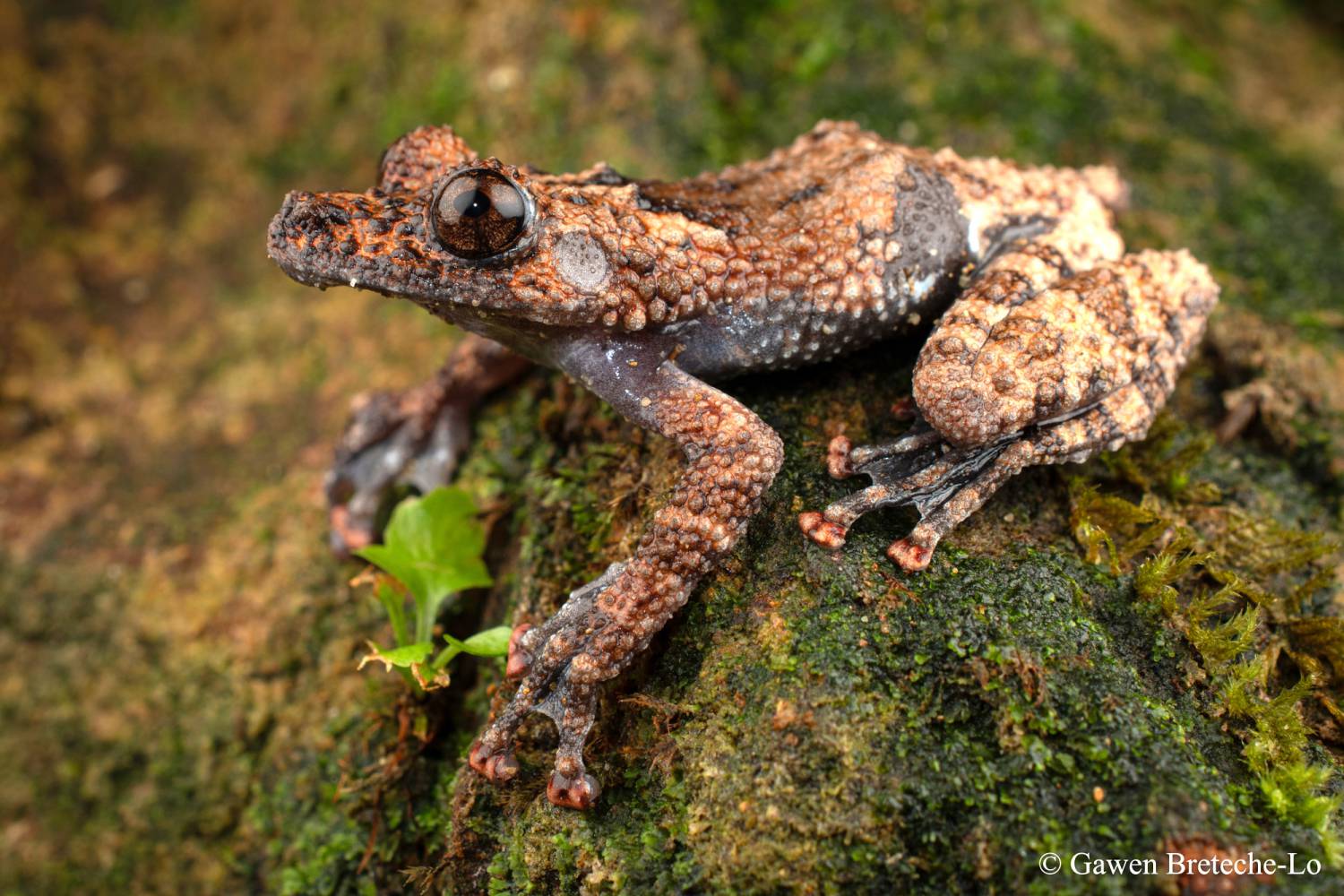
Theloderma horridum is a secretive frog that is difficult to detect in the wild due to its arboreal lifestyle, cryptic coloration, and strongly warty skin texture. On Borneo, it has been reported from the northern part of the island (Sabah) and isolated localities in Sarawak; possibly it occurs in Kalimantan too. Outside Borneo, the species is known from Peninsular Malaysia, Southern Thailand, and Pulau Tioman. The genus Theloderma is closely related to Nyctixalus, as reflected by similarities in overall body shape, tadpole morphology, and phytotelma-breeding habits.
This is a medium-sized frog, reaching approximately 40–50 mm in snout–vent length. The head is flattened in lateral view and bears large, protruding eyes. The limbs are well developed. The snout is narrowly rounded in lateral view, and a pronounced canthus rostralis is absent. All digits terminate in broad adhesive pads. The tympanum is small but distinct and clearly separated from the surrounding skin. The toes are fully webbed, whereas the outer fingers are almost completely webbed. The skin texture is strongly warty, and the dorsal warts bear whitish spines of unknown function.
In addition to its bark-mimicking warty skin, the species is characterized by very broad, orange-colored fingertips. The dorsal coloration is generally dark brown with irregular markings, while the ventral side is grey with white marbling.
Theloderma horridum is a phytotelma breeder, with tadpoles developing in water-filled tree holes. Its predominantly arboreal lifestyle high in the canopy likely explains why it is rarely encountered. Because it so effectively avoids detection through camouflage, the true abundance of this species on Borneo may be considerably higher than currently assumed.
Recent captive-breeding studies on related Theloderma species from mainland Asia have provided new insights into their reproductive biology. In these species, eggs are attached at or just above the water level within phytotelmata. Whether this reproductive mode also applies to T. horridum remains to be confirmed.