Frogs of Borneo

Frogs of Borneo

Frogs of Borneo

Frogs of Borneo

Frogs of Borneo

Frogs of Borneo

Frogs of Borneo

Frogs of Borneo

Frogs of Borneo

Frogs of Borneo

Frogs of Borneo
Filter
Rhacophrous pardalis
Although primarily lentic, this species also occurs along rivers, where reproduction takes place in pools along riverbanks or in isolated rock pools. During daytime, tadpoles remain close to the bottom and frequently shelter beneath leaf litter. At night, they become more active and less strictly benthic.
-
Family:Rhacophoridae
-
Genus:Rhacophorus
-
Ecomorph:benthic-nektonic, exotrophic, lentic
-
Waterbody Type:stagnant
-
Water Column:bottom
-
Feeding Type:feeding, generalist
-
Size:48 mm
-
Development:larva, tadpole
-
Adult:Rhacophorus
Coloration
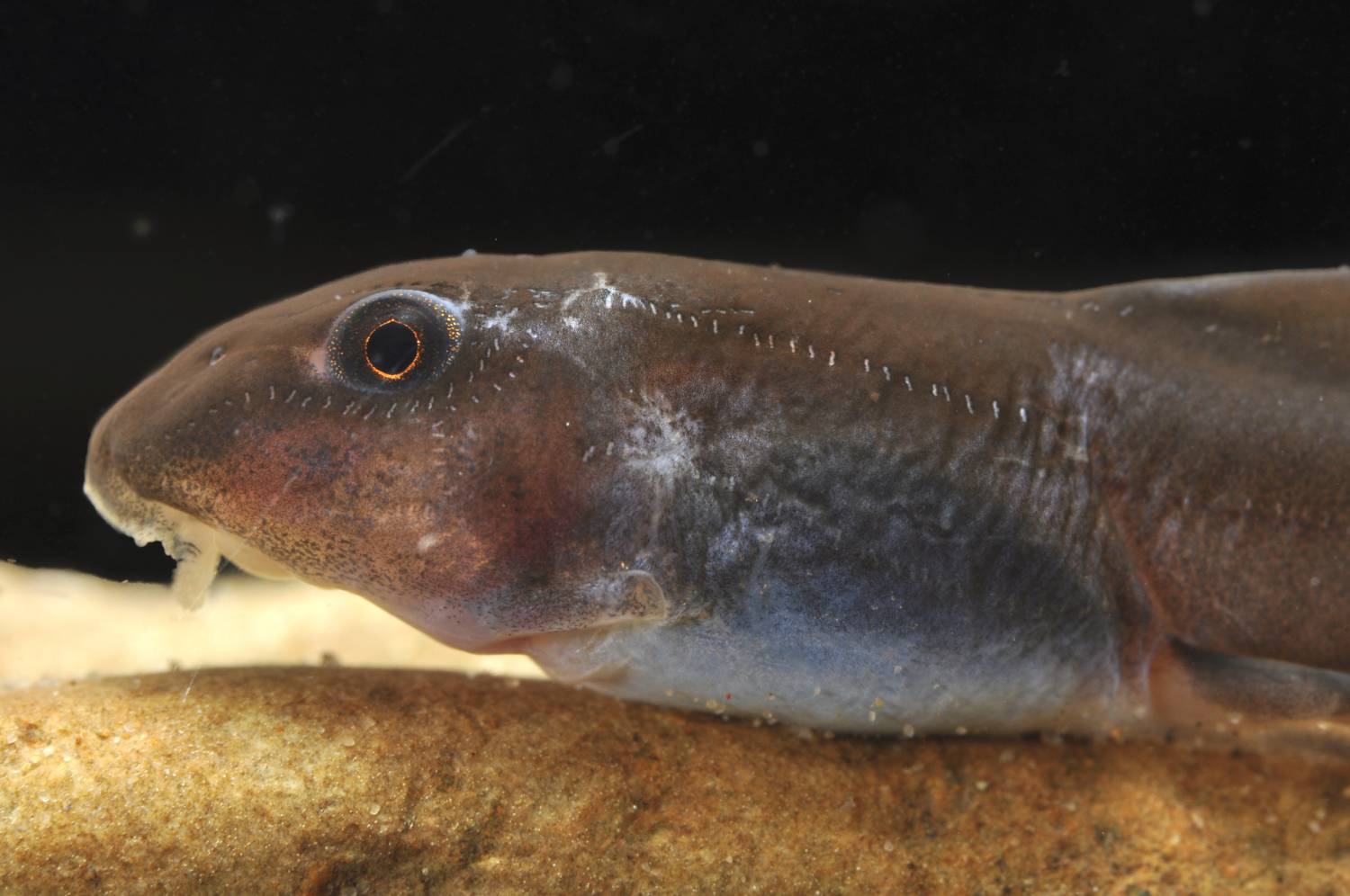
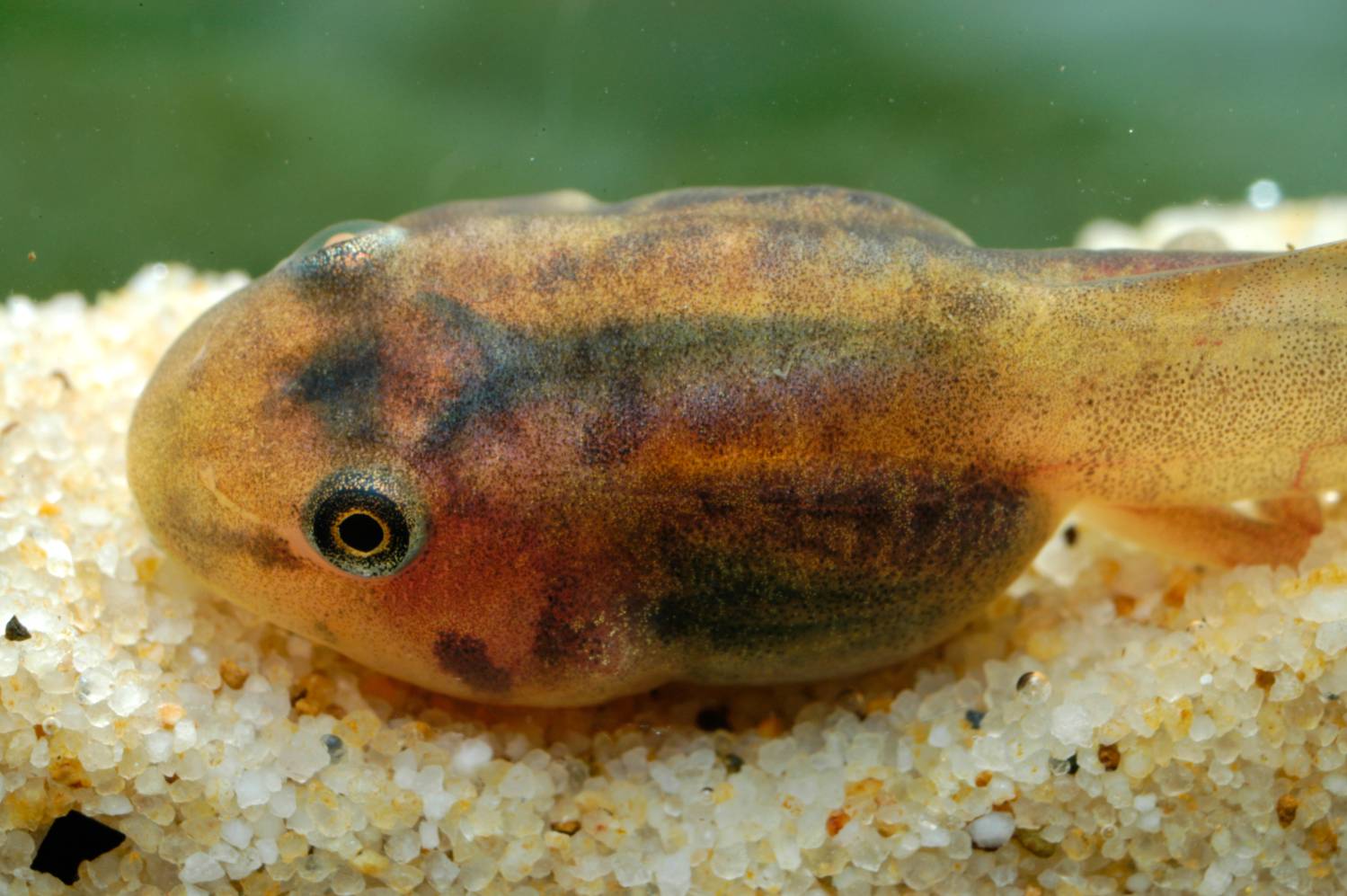
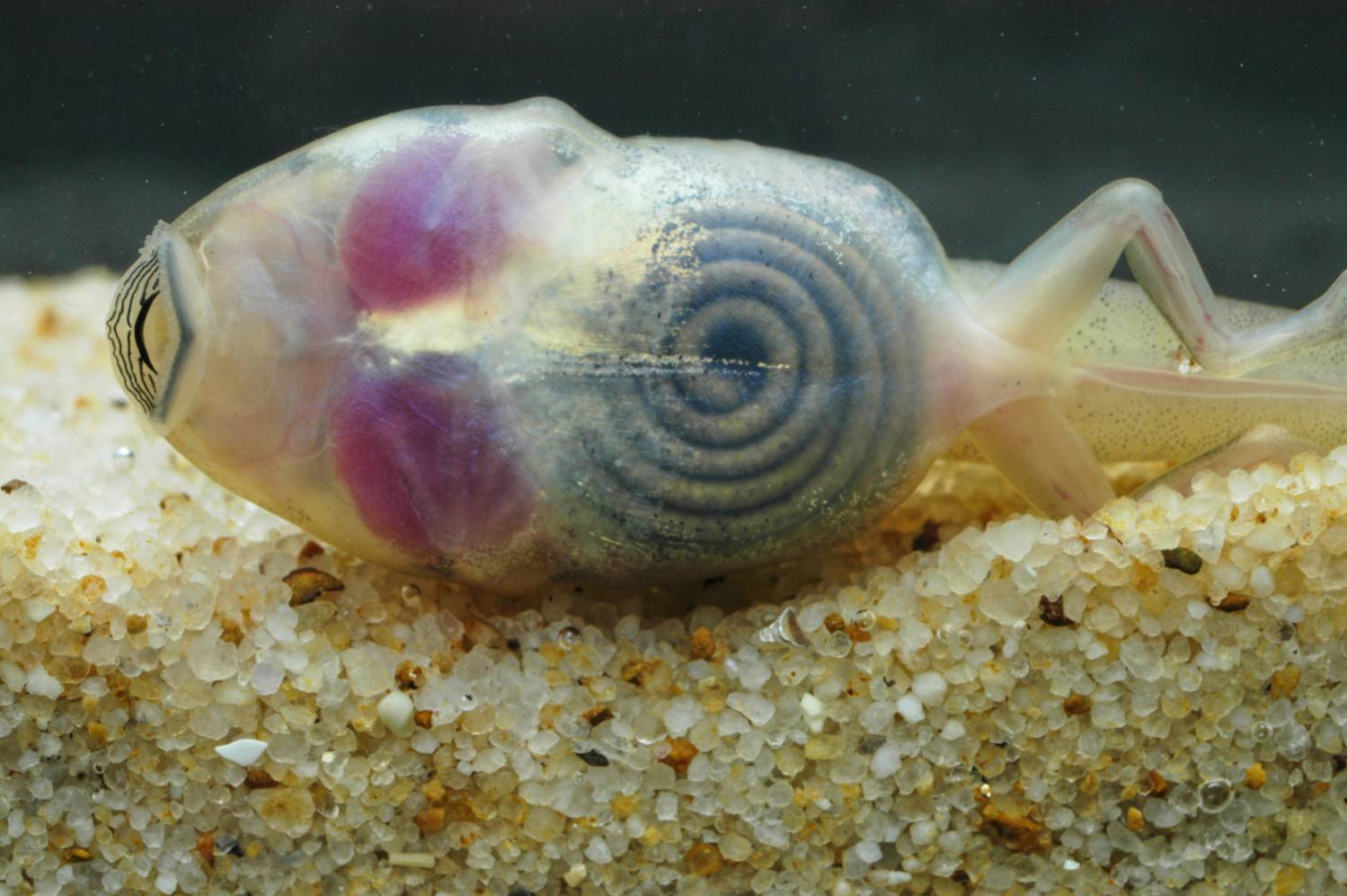
Dorsal coloration light brown to chocolate brown, typically with diffuse dark markings on the dorsum and flanks. Trunk generally darker than the head. On the head, two opposing chevron-shaped markings frame the braincase anteriorly and posteriorly; the posterior marking often extends into a dark vertebral streak. A pale area below the eye is frequently present and may bear one or two dark spots. Body pigmentation extends onto the tail but fades markedly beyond the proximal half. Tail fins largely transparent, with sparse melanophores and occasional iridophores. Ventral surface usually transparent or slightly milky; red gills and gut visible through the skin. The heart and anterior third of the abdomen covered by a silvery layer of iridophores. A median longitudinal silver streak (along the vena abdominalis) may be present. Considerable variation occurs, including paler, darker, and less contrast-rich individuals.
Snout
In dorsal view, snout rounded with slight tapering. In lateral view, moderately long, with a smooth, convex profile slightly angled at the level of the nostrils.
Oral Disc
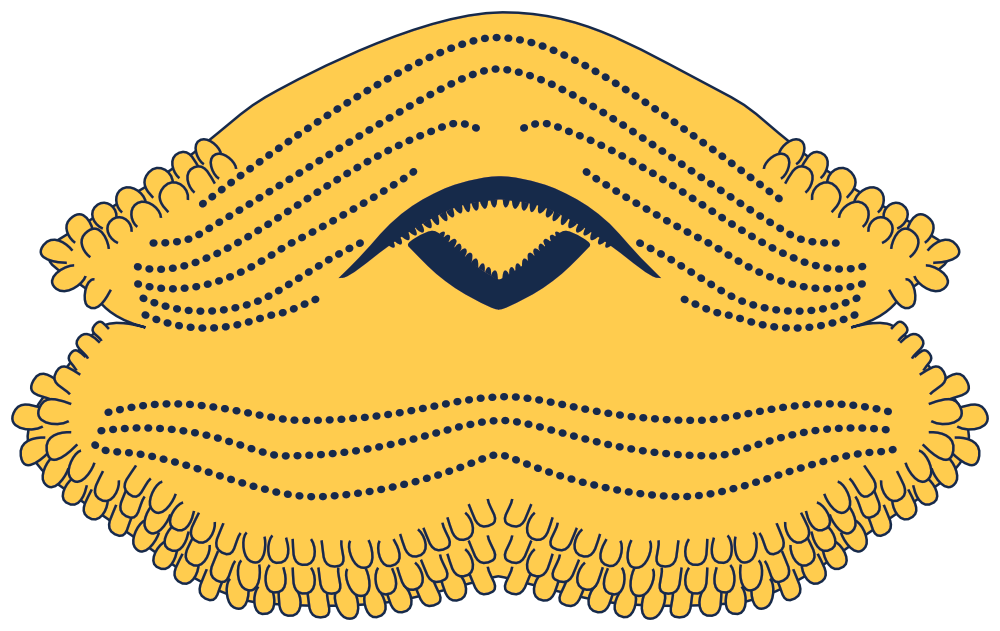
Oral disc anteroventral. Marginal papillae present on the lower lip and lateral portions of the upper lip; a broad medial area of the upper lip lacking papillae. Marginal papillae arranged bi- to triserially on the lower lip. Lateral portions of the upper lip with one row of marginal papillae and one row of submarginal papillae. Papillae generally short and blunt. Emarginations present between upper and lower lips. LTRF 6(3–6)/3 or 7(3–6)/3 (interruption in third upper row may be indistinct). Peripheral keratodont rows long, extending far laterally on both lips. Beaks well keratinized but only moderately robust; jaw edges finely serrated. Upper beak broadly arched; lower jaw V-shaped.
Body
Body depressed, ovoid in lateral view, tapering anteriorly towards the snout. In dorsal view, body outline oval, with head broader than trunk. Maximum body width at the gill region (posterior to the eyes). Spiracle sinistral. Spiracular tube opening posterolaterally, positioned very low, well below the longitudinal body axis in lateral view. Medial margin of spiracular orifice attached to the abdominal wall. Lateral line organs visible in darker specimens.
Eyes & Nostrils
Eyes dorsolateral. In dorsal view, nostrils closer to the snout than to the eyes, oriented anterolaterally and slightly recessed. Orbitonasal streak present. Iris background black, densely covered with golden or coppery iridocytes, forming a thin ring around the pupil. Sclera silvery ventrally and stippled with silver and golden iridocytes on a dark background dorsally.
Tail
Tail long, approximately 66–71% of total length, moderately robust. Tail fins moderately arched in lateral view, more pronounced in the upper fin. Fins taper in the posterior two thirds with relatively straight margins into a narrow, pointed tip; a true flagellum is absent. Upper fin originates at the trunk-tail junction. Maximum tail height reached anterior to mid-tail.
Similar Species
Tadpoles of Rhacophorus pardalis superficially resemble those of R. rufipes and R. borneensis in body shape but differ in coloration. The high-contrast area below the eye (when present) is characteristic of R. pardalis and, together with differences in LTRF, allows separation from these species. Strongly patterned individuals of R. pardalis may be confused with Hylarana raniceps; however, the latter is readily distinguished by the presence of extensive glandular fields on the ventral surface, trunk, and head.
Literature
Males and females are commonly seen 1–3 m high on vegetation around breeding pools. The mating pair builds a foam nest above the water, into which the eggs are laid. The tadpoles hatch from the nest and drip into the water below, where they start feeding.
Inger, R.F. (1985) Tadpoles of the forested regions of Borneo. Fieldiana Zoology new series 26: 1–89.