Frogs of Borneo

Frogs of Borneo

Frogs of Borneo

Frogs of Borneo

Frogs of Borneo

Frogs of Borneo

Frogs of Borneo

Frogs of Borneo

Frogs of Borneo

Frogs of Borneo

Frogs of Borneo
Filter
Rhacophorus nigropalmatus
The largest and most conspicuous flying frog spends most of its life in the forest canopy. Adults are rarely encountered and are most often observed at breeding sites, such as ponds at forest edges, roadside ditches, or pig wallows. Rhacophorus nigropalmatus appears to prefer breeding sites that are visited or created by mammals; consequently, these habitats are typically characterized by turbid water. Tadpoles are difficult to detect. They are primarily benthic, remaining at the bottom of ponds and often burrowing into the superficial mud layer during daytime. At night, they ascend into the water column to filter-feed and to gulp air. Recently metamorphosed froglets differ markedly from adults, exhibiting a rough skin texture and a brown to reddish-brown coloration with light spots.
-
Family:Rhacophoridae
-
Genus:Rhacophorus
-
Ecomorph:benthic-nektonic, exotrophic, lentic
-
Waterbody Type:stagnant
-
Water Column:bottom
-
Feeding Type:feeding, generalist
-
Size:55 mm
-
Development:larva, tadpole
-
Adult:Rhacophorus
Coloration
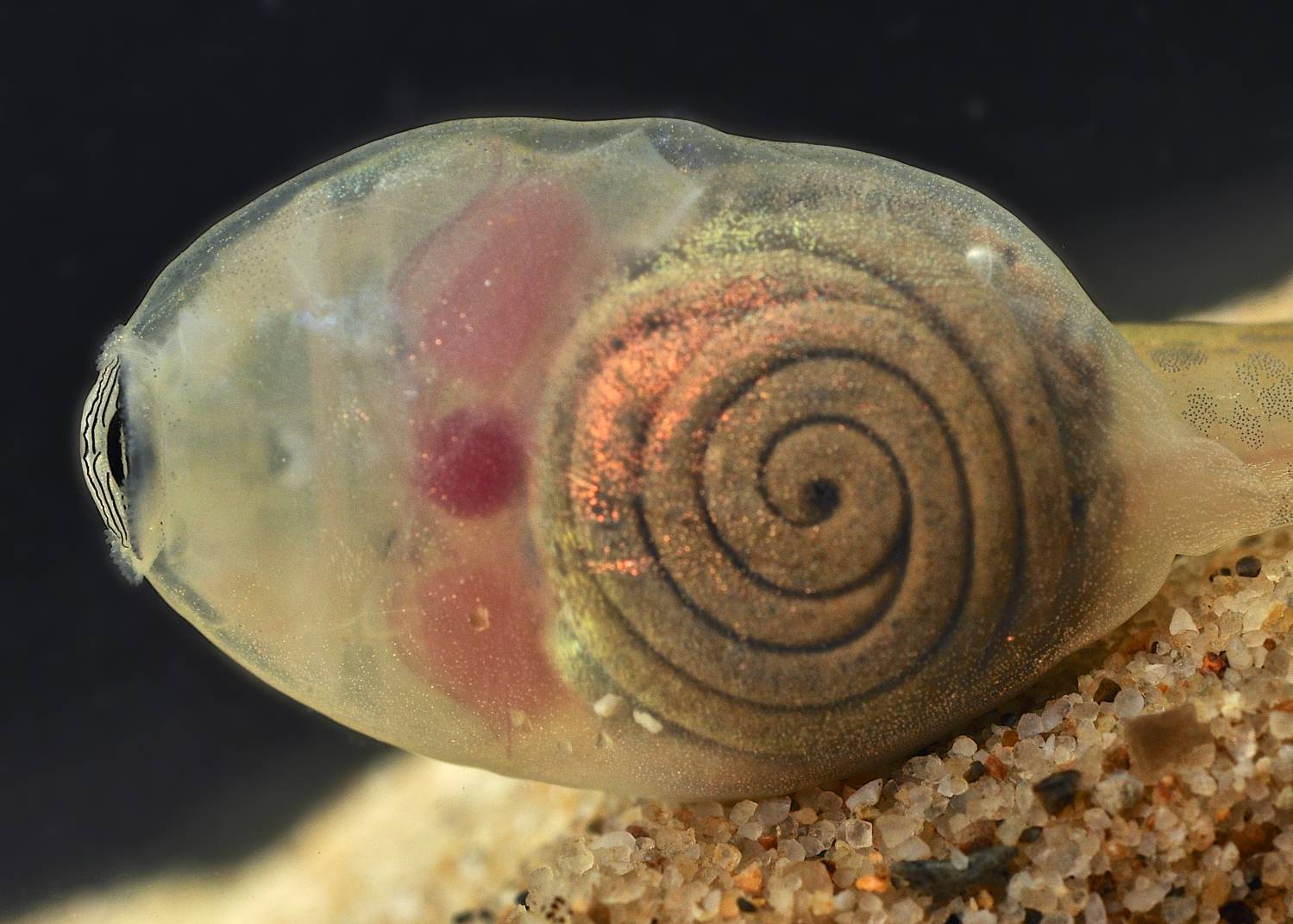
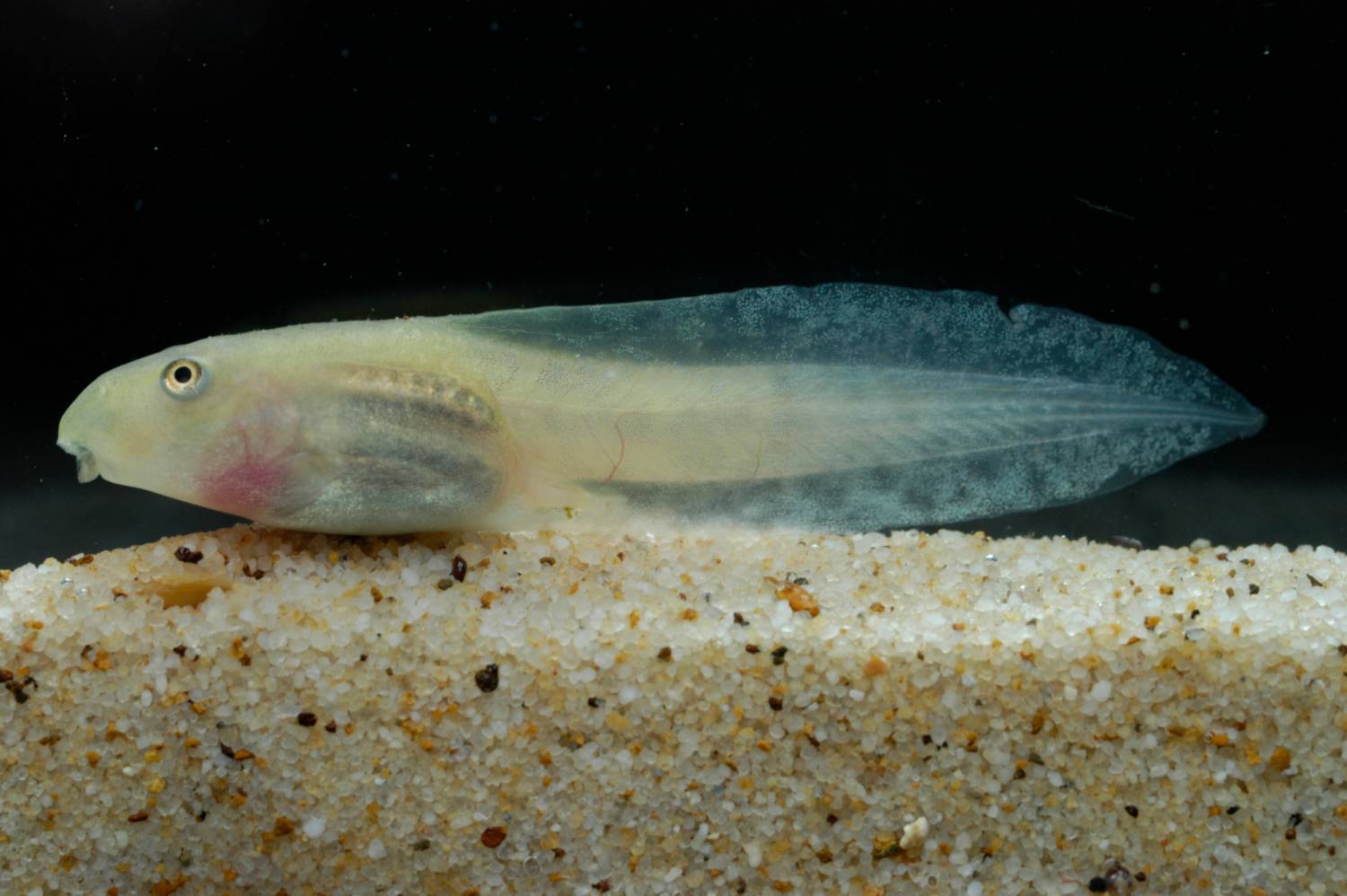
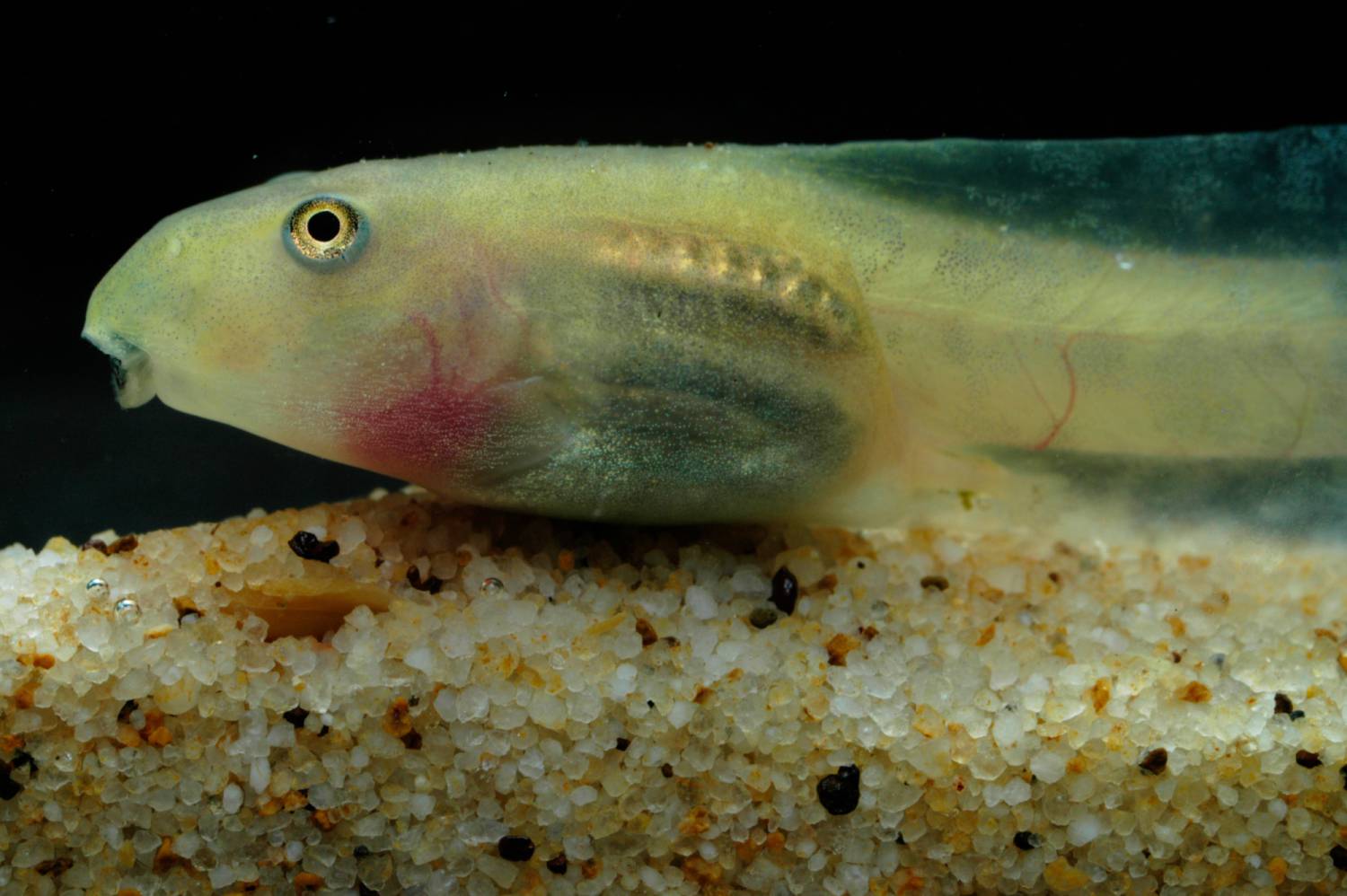
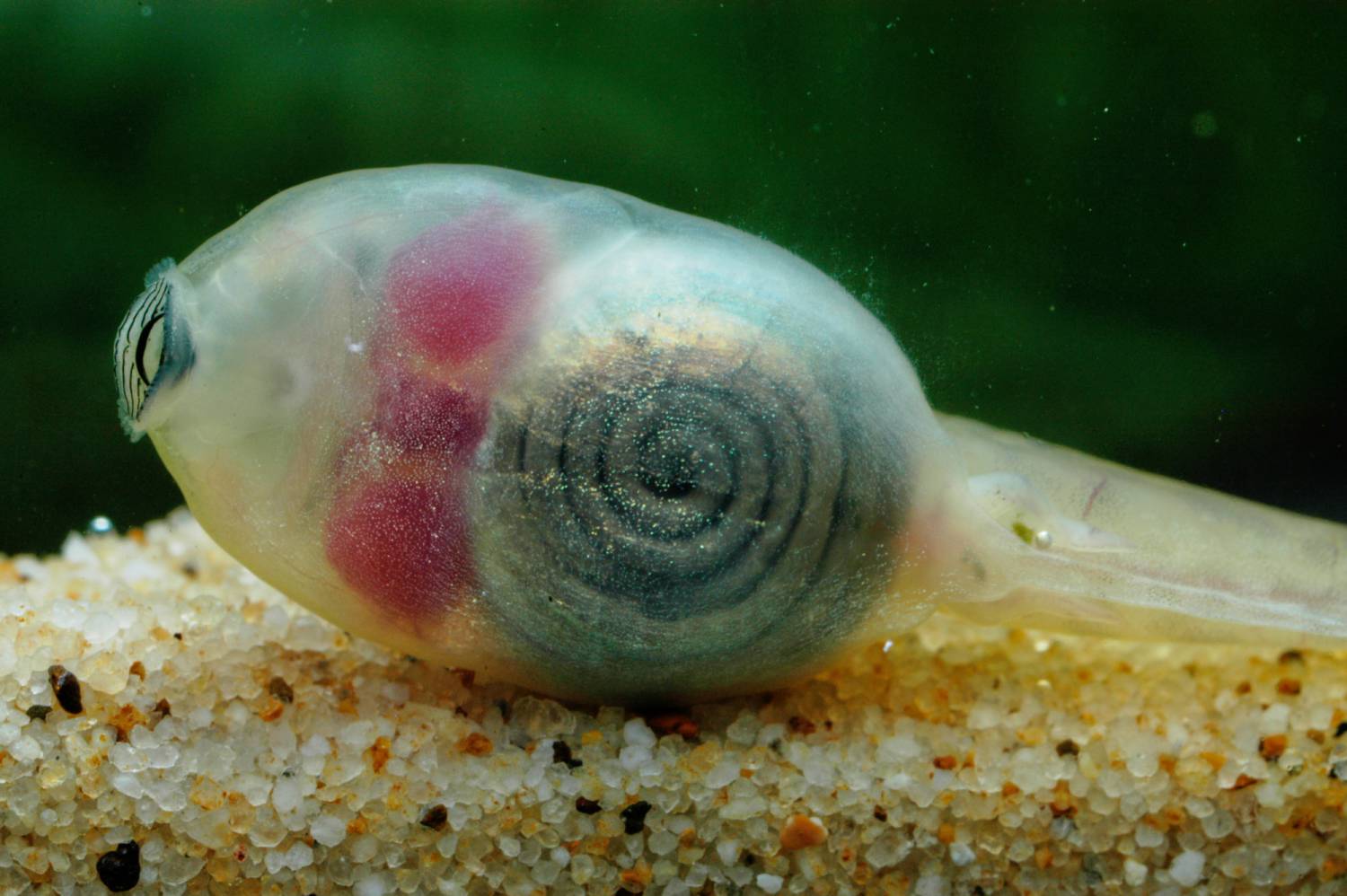
Dorsal coloration beige to gray, sometimes with dark, irregular spots on the posterior trunk. Lower flanks dusted with iridophores. In the upper flank region, the lungs are visible through the skin as a series of silvery bubbles. Gut coils faintly visible in lateral view. Dorsal pigmentation, including dark spotting, extends onto the tail. At night, the proximal third of the tail (including fins) is spotted, whereas the distal two thirds are more uniformly black. These dark markings appear lighter during daytime due to melanocyte contraction, revealing scattered iridophores in the distal tail fins. Ventral surface largely transparent, with scattered golden or coppery iridophores in the anterior abdominal region. Internal organs clearly visible through the skin.
Snout
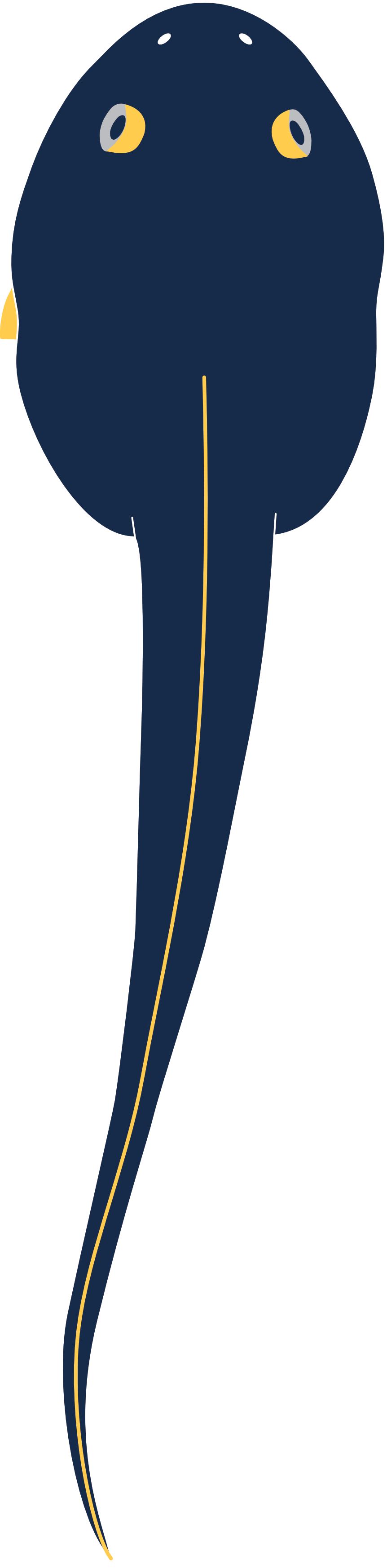
In dorsal view, snout only slightly tapering and broadly rounded. In lateral view, relatively long, with profile slightly angled at the level of the nostrils.
Oral Disc
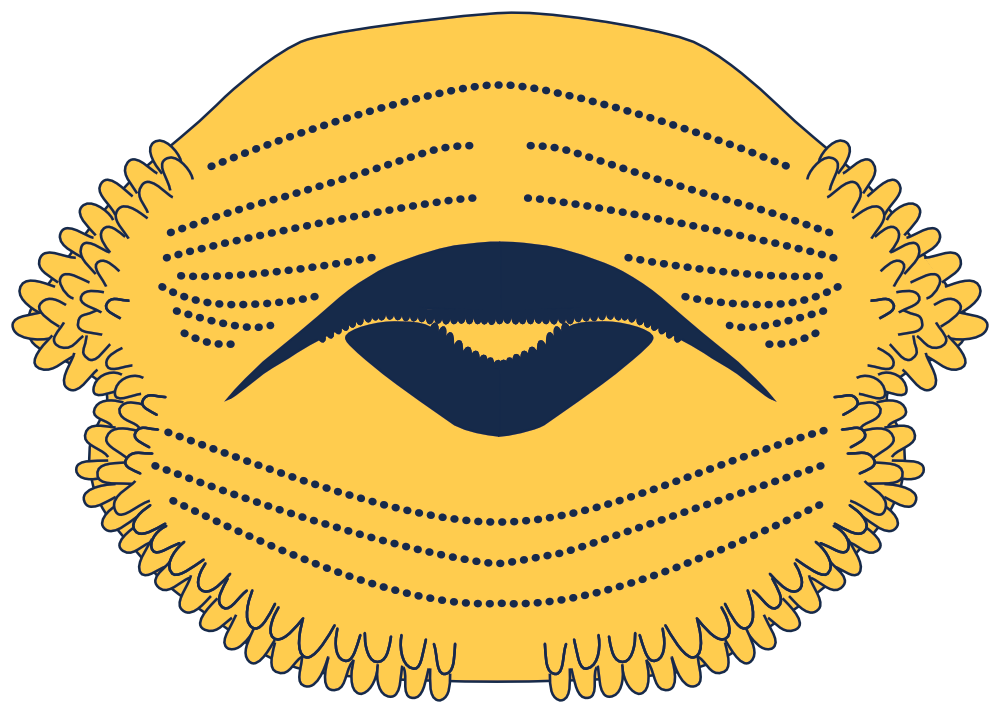
Oral disc subterminal. Marginal papillae present on the lower lip and lateral portions of the upper lip. Upper lip largely devoid of papillae except for the lateral fourths. Lower lip with a narrow but distinct medial gap in papillation. Marginal papillae arranged biserially on the lower lip. Lateral portions of the upper lip with one row of marginal papillae and one or two shorter rows of submarginal papillae. Lower lip with an additional short submarginal row laterally (resulting in three rows laterally). Papillae moderately long and blunt. Emarginations present between upper and lower lips. LTRF 7(2–7)/3. Peripheral keratodont rows extend across most of both lips. Beaks well keratinized and moderately robust; jaw edges sharply serrated. Upper beak broadly and shallowly arched, lacking distinct medial convexity. Lower jaw V-shaped.
Body
In lateral view, body ovoid, with trunk deeper than the head region. In dorsal view, body outline broadly oval, with maximum width at mid-body. Spiracle sinistral. Spiracular tube opening posterolaterally and dorsally. Spiracular orifice relatively large, oval, and positioned below the longitudinal body axis in lateral view. Medial margin of the spiracular orifice attached to the abdominal wall.
Eyes & Nostrils
Eyes dorsolateral, appearing relatively small in proportion to the large body and positioned high in lateral view. Iris predominantly golden, with peripheral stippling of golden iridocytes on a dark background. Sclera similarly stippled with silver and golden iridocytes on a dark background. In dorsal view, nostrils closer to the snout than to the eyes, opening anteriorly.
Tail
Tail long, approximately 67% of total length. Muscular portion moderately strong. Upper fin originates well anterior to the trunk-tail junction. In lateral view, dorsal fin moderately arched. Margins of both fins gradually converge into a narrowly rounded tip. Upper fin slightly higher than lower fin. Maximum tail height reached slightly anterior to mid-tail. Lateral tail vein present but indistinct; myosepta indistinct.
Similar Species
Tadpoles of Rhacophorus nigropalmatus may be confused with those of R. borneensis and R. pardalis due to similar general coloration. Rhacophorus pardalis differs in smaller size, less robust body, and usually distinct, high-contrast cheek markings; it also differs in LTRF and lip papillation. Rhacophorus borneensis differs in reduced lip papillation, narrower jaw sheaths, distinct ventral coloration, and LTRF. Additionally, R. borneensis exhibits a sharply demarcated black distal portion of the tail (night coloration), which contrasts clearly with the lighter proximal portion; such a sharp boundary was not observed in examined specimens of R. nigropalmatus.
Literature
Like other members of the genus Rhacophorus, R. nigropalmatus mating pairs create foam nests, approximately 13 m above the breeding puddle or pig wallow.
Inger, R.F. (1985) Tadpoles of the forested regions of Borneo. Fieldiana Zoology new series 26:1–89.