Zum Hauptinhalt springen

Frogs of Borneo

Frogs of Borneo

Frogs of Borneo

Frogs of Borneo

Frogs of Borneo

Frogs of Borneo

Frogs of Borneo

Frogs of Borneo

Frogs of Borneo

Frogs of Borneo

Frogs of Borneo

Limnonectes paramacrodon

Tadpoles of Limnonectes paramacrodon occur in swampy side pools or stagnant sections of slow-moving lowland forest streams in primary or selectively logged forests. Adults are also found in some coastal peat swamps. Tadpole habits and diet are presumed to be similar to those of L. malesianus; the relatively small mouth and oral disc suggest small particles as the main food source. Tadpoles have rarely been encountered and have not been documented previously.
  • Family:
    Dicroglossidae
  • Genus:
    Limnonectes
  • Ecomorph:
    benthic, exotrophic, lentic, lotic
  • Waterbody Type:
    flowing
  • Water Column:
    bottom
  • Feeding Type:
    feeding, generalist
  • Size:
    30 mm
  • Development:
    larva, tadpole
  • Adult:
    Limnonectes

Coloration

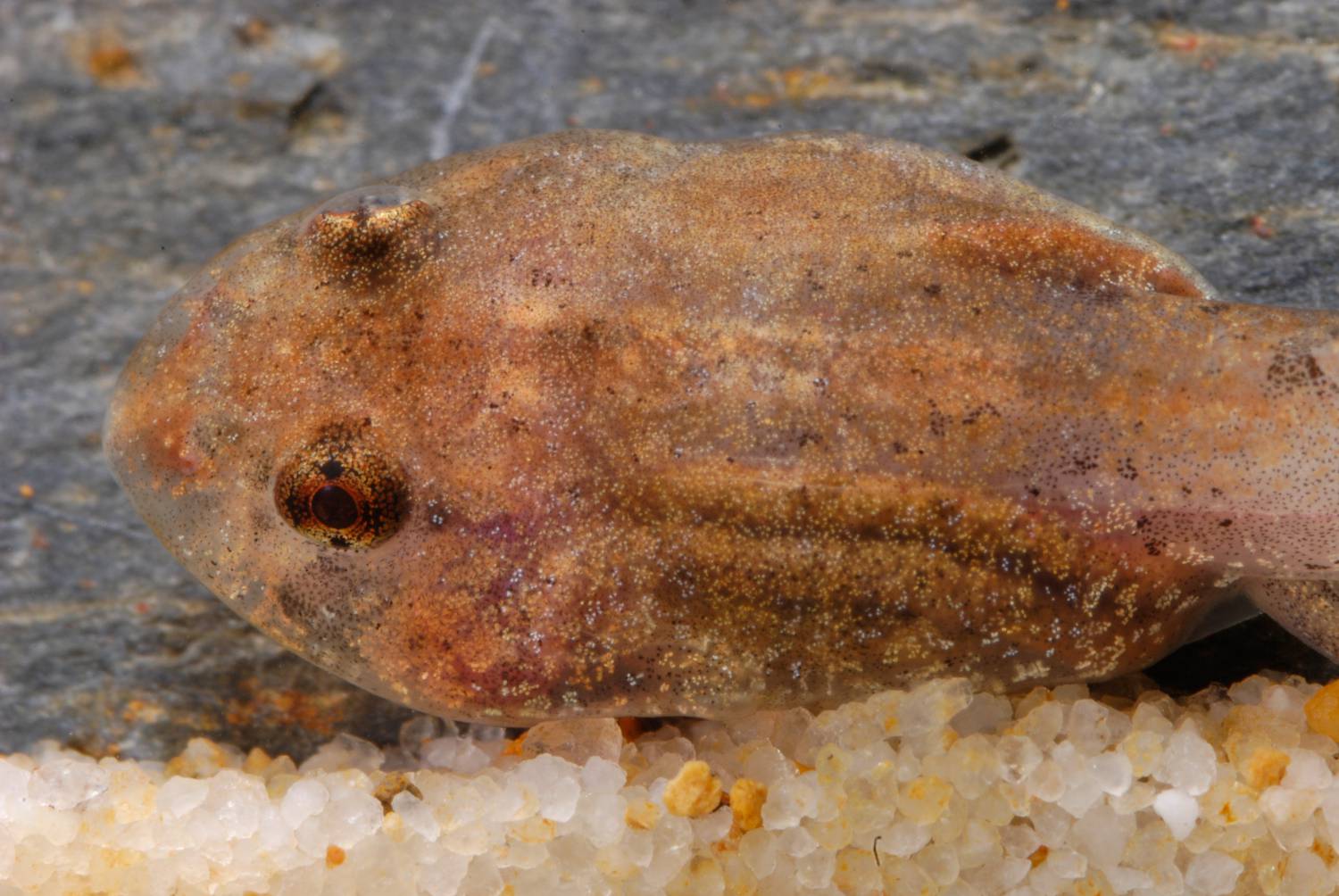
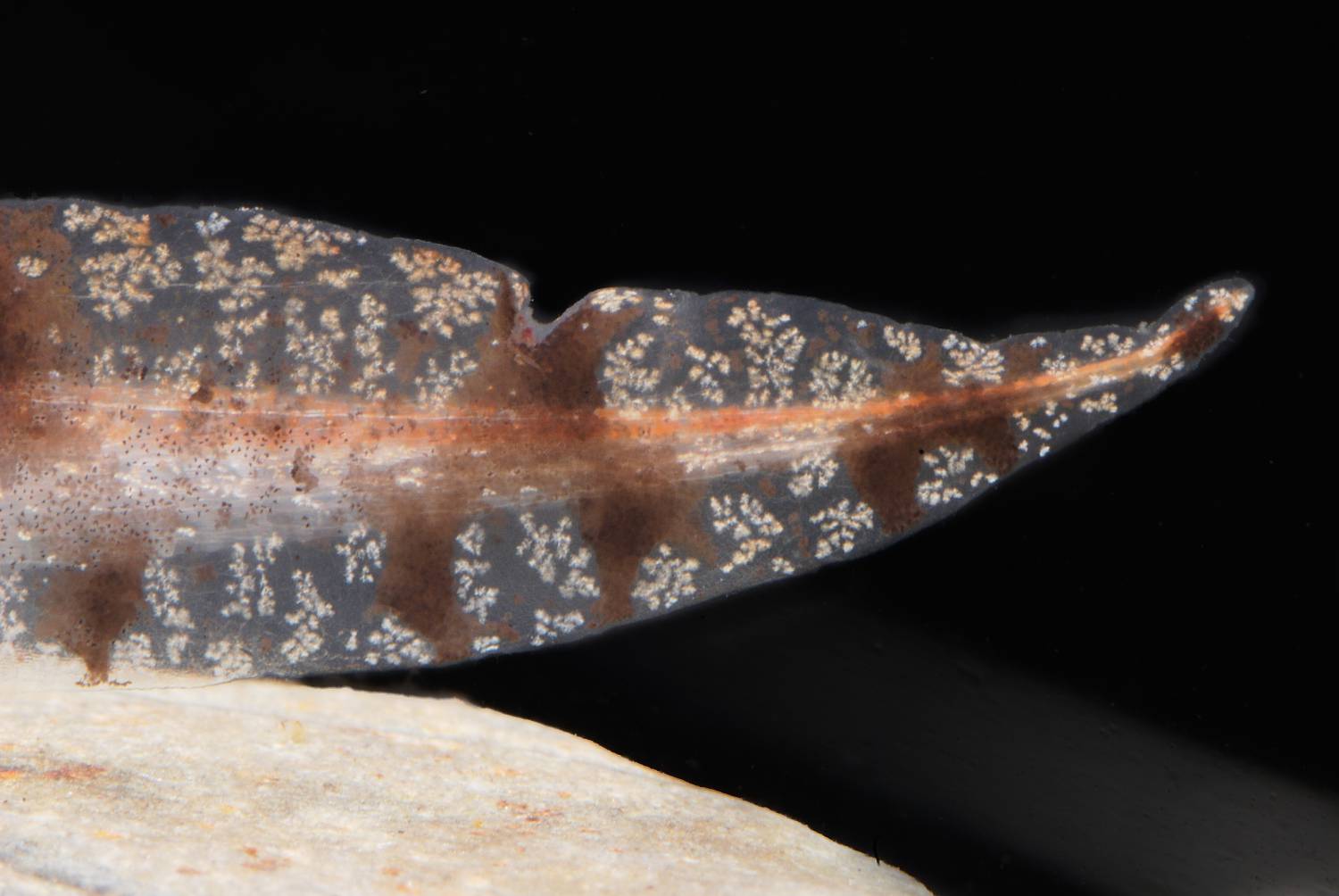
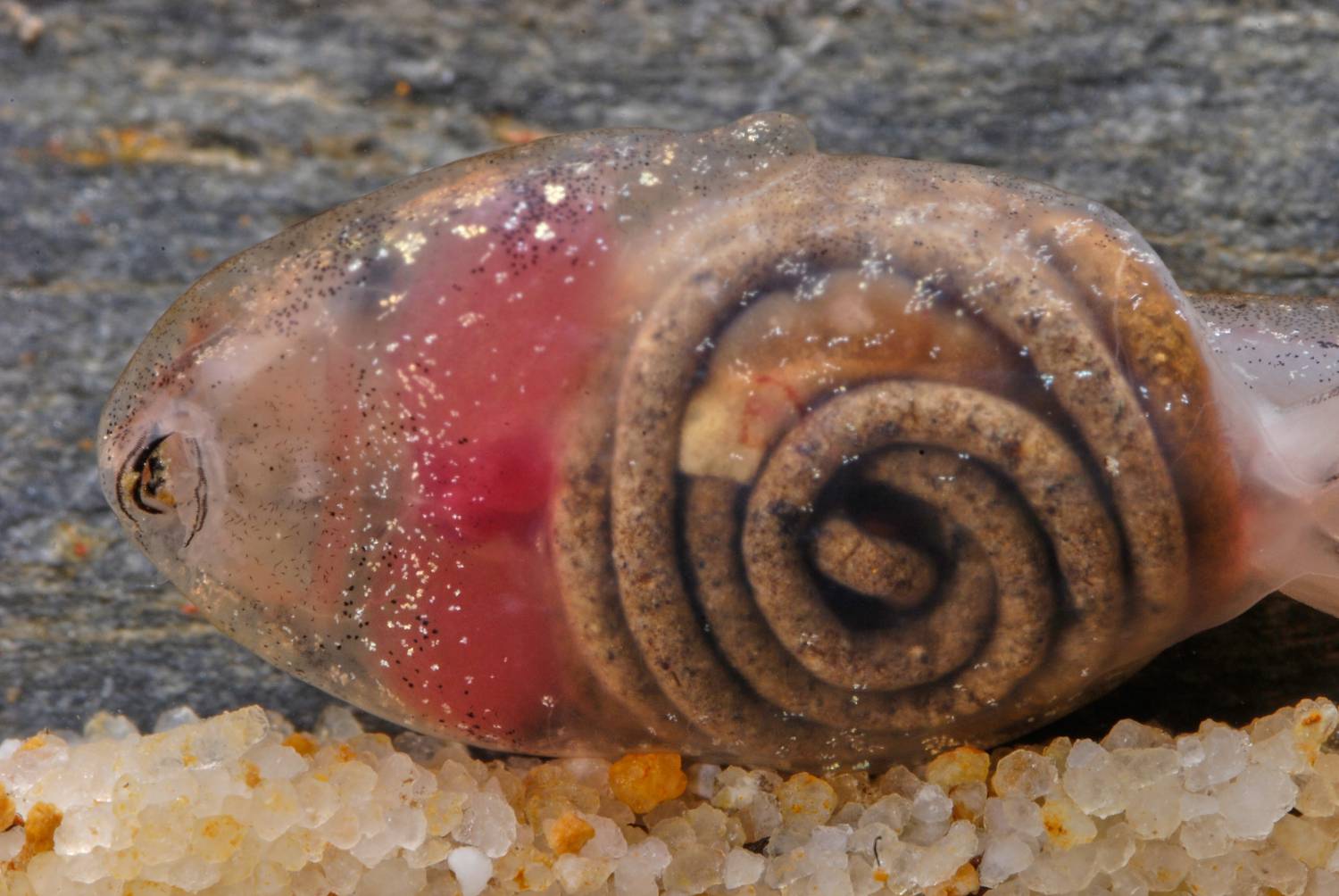
Ochre to dark brown dorsally, without distinct markings; dorsal surfaces densely dusted with gold and some silver iridocytes and scattered fine black dots. Dorsal pigmentation dissolves into patches of pigment cells on the lower flanks and head. Indistinct dark areas present on the lateral face: a faint streak from the eye to the oral disc, a dark patch below the eye, a small patch posterior to the eye, and a patch laterally in the gill region. Ventrally, few iridocytes and melanocytes scattered in the buccal and branchial region and on the abdomen; otherwise ventral skin transparent. Body background color continues onto the dorsal tail musculature; laterally, tail background color lighter. Posterior half of tail muscle often tinted orange-brown. Tail, including fins, bears several large irregular blotches with diffuse edges, particularly in the posterior half. Numerous distinct rosette-like white to brass iridocyte clusters cover the tail and tail fins.

Snout

In dorsal view, a smooth, broad arch with subtle tapering toward the tip. In lateral view, snout moderately long; contour blunt, slightly obtuse and rounded, not distinctly tapering. Snout barely overhangs the oral disc.

Oral Disc

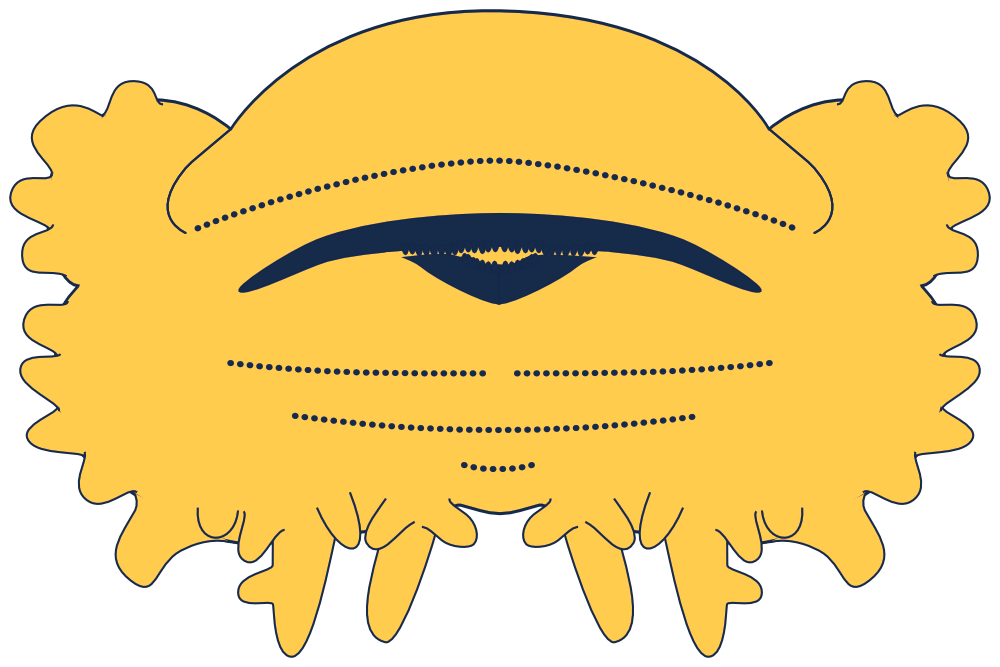
Moderately large, approximately 30% of head width; anteroventrally oriented and not projecting beyond the snout contour in dorsal view. Upper and lower lips separated by an indistinct emargination. Marginal papillae present along the disc margin, except for two gaps: a wide gap on the upper lip and a very narrow gap on the lower lip. Marginal papillae few in number and heterogeneous in size. Typically, 2–3 enlarged papillae occur on each side of the lower lip; these bear shorter papillae on each side of their base in a staggered arrangement, forming a pseudo–double row. Enlarged papillae may bear side branches. Submarginal papillae absent. LTRF 1/3(1). Beaks moderately developed, well keratinized but low; edges finely serrated. Upper beak straight medially and slightly concave laterally; lower beak broadly V-shaped.

Body

Medium-sized tadpole. In dorsal view, general body contour oval, with a mild constriction at the head-trunk transition. Head equal to or slightly wider than trunk; widest point at the gill region. Head contour smoothly rounded in dorsal view. Body dorsoventrally depressed. Spiracle sinistral, opening posteriorly; medial side attached to body wall, lateral face extending further posteriorly than the medial side. Spiracle located at mid-body level in lateral view. Lateral line organs indistinct.

Eyes & Nostrils

Eyes dorsolateral. Nostrils moderate in size, anterolaterally oriented, and closer to the snout than to the eye; nostril rim without distinct projection. Iris stippled with brass or gold iridocytes on a black background and with a reddish horizontal band across the iris. Iridocytes form a complete ring around the pupil and are less dense in the anterior, posterior, dorsal, and ventral sectors, forming a radial pattern with four dark radii.

Tail

Long, approximately 68% of total length. Muscular part of tail moderately strong. In dorsal view, tail muscle less than half the maximum trunk width; in lateral view, clearly more than half trunk height. Upper fin originates slightly posterior to the trunk-tail junction, at approximately 5% of tail length. Upper fin higher than lower fin; both fins similar in shape and forming shallowly convex contours. In the posterior fourth of the tail, fins converge into an acute tip. Near the tip, a concavity in the contour of the upper fin is present. Maximum tail height at mid-tail section. Lateral tail vein faintly visible at the tail base. Tail myosepta indistinct.

Similar Species

This species is most similar to Limnonectes malesianus. The limited number of examined specimens of L. paramacrodon show fewer tail blotches, less distinct facial markings, more reddish iris coloration, and differences in the shape of oral disc papillae. See comments for L. ingeri, L. malesianus, and L. leporinus.

Literature

Inger et al. (2017) presented a photograph of an amplecting pair in shallow water.
Inger, R.F., Stuebing, R.B., Grafe, T.U., Dehling, J.M. (2017) A field guide to the frogs of Borneo. 3rd ed. Natural History Books, Kota Kinabalu. 228 pp.