Frogs of Borneo

Frogs of Borneo

Frogs of Borneo

Frogs of Borneo

Frogs of Borneo

Frogs of Borneo

Frogs of Borneo

Frogs of Borneo

Frogs of Borneo

Frogs of Borneo

Frogs of Borneo
Filter
Leptobrachium ingeri

Tadpoles of Leptobrachium ingeri are known from coastal Sarawak, where they inhabit clear, rocky streams in hillside settings. They are not adapted to strong currents and prefer quiet or nearly stagnant sections of streams, including shores and bays associated with low water velocity. In these areas, accumulations of leaf litter are common, and tadpoles frequently seek shelter among the leaves. At night, they forage more actively over the stream substrate than during the day.
-
Family:Megophryidae
-
Genus:Leptobrachium
-
Ecomorph:benthic, exotrophic, lotic
-
Waterbody Type:flowing
-
Water Column:bottom
-
Feeding Type:feeding, generalist
-
Size:57 mm
-
Development:larva, tadpole
-
Adult:Leptobrachium
Coloration
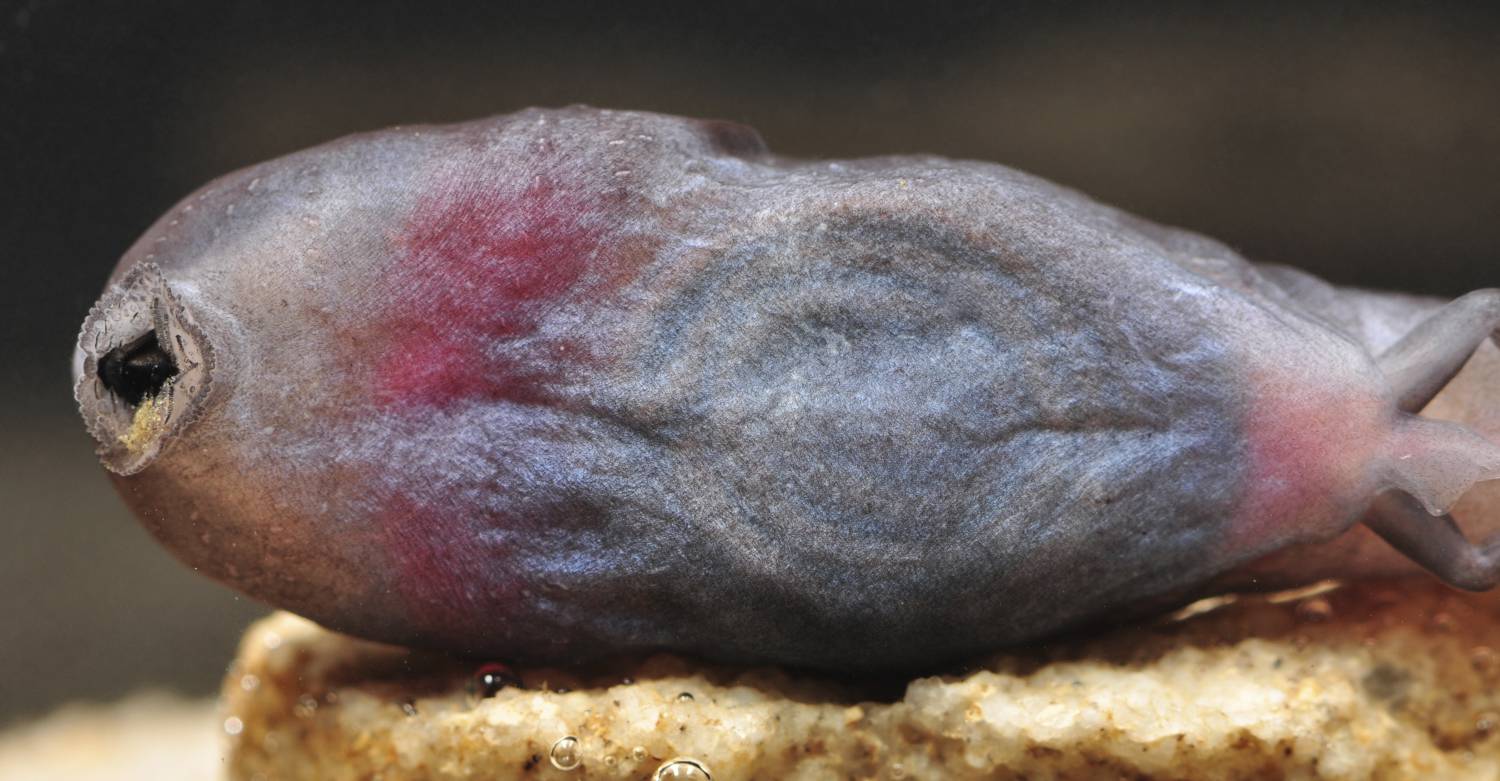
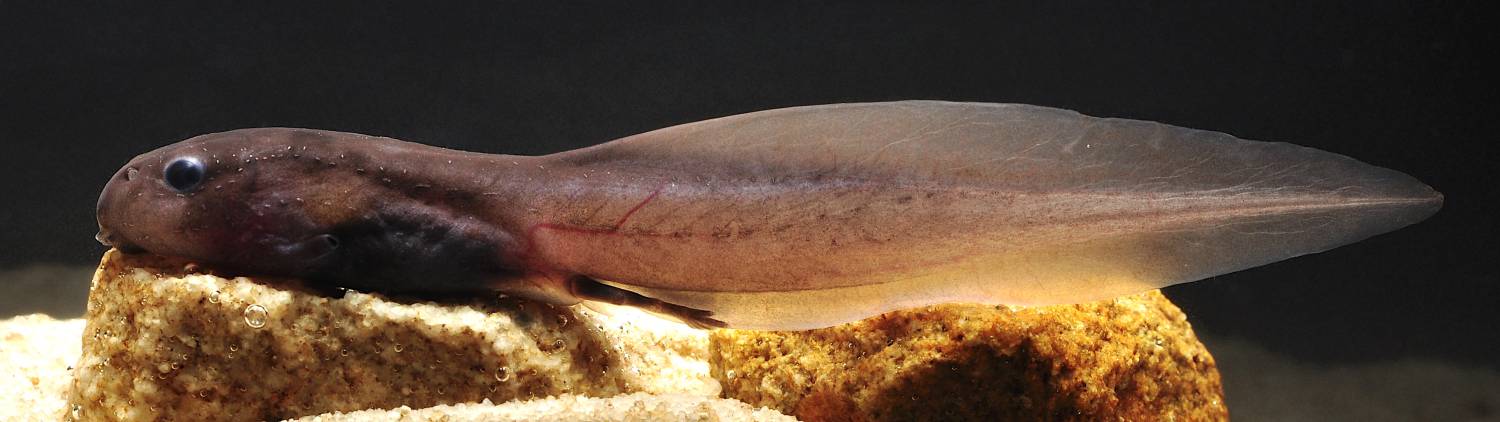
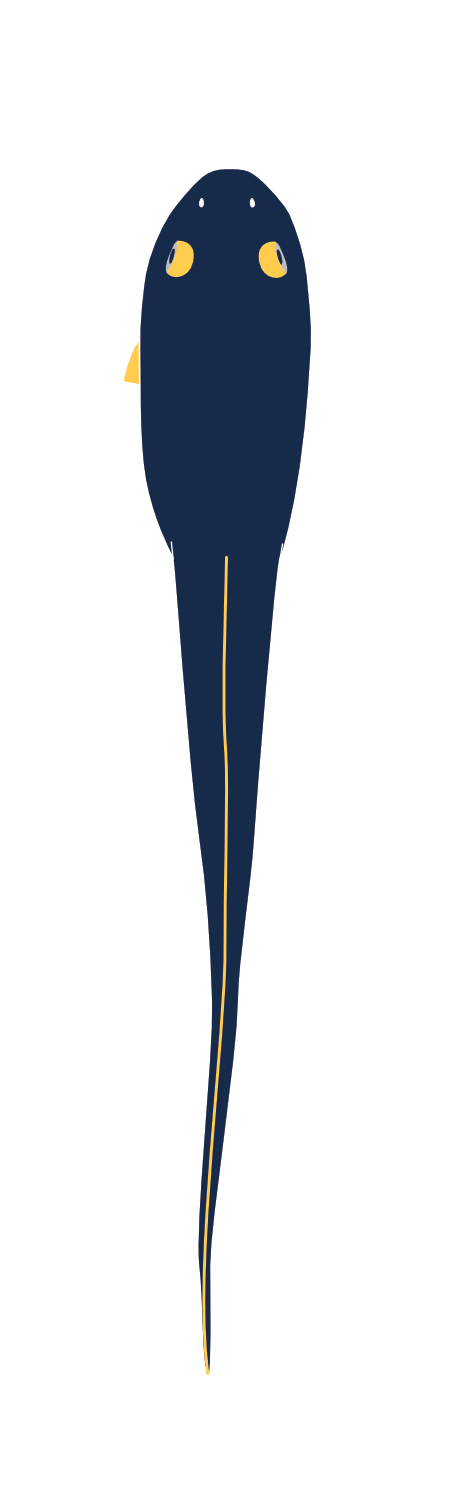
Tadpoles are homogeneously black dorsally. In living specimens, the abdominal skin exhibits a bluish-silvery iridescence, which is absent in preserved material. In close-up view, a finely hatched pattern of pigment cells is discernible, particularly on the ventral surfaces. The abdominal region is semitranslucent to milky, with gut coils visible and a bluish hue. The gill region is red, and the buccal region is darkly pigmented. The oral disc is partly pigmented, especially the papillae. The black coloration of the dorsal trunk continues onto the tail. Along the tail, dark pigmentation fades gradually toward the tip, along the fin margins, and generally in the lower portions of the tail. Myosepta and the lateral tail vein are inconspicuous. Inger (1985) and Inger et al. (2017) reported a golden stripe along the midline of the back; this feature could not be confirmed in our material.
Snout
The snout is broadly rounded, blunt, and moderately long in dorsal view. In lateral view, the head slopes smoothly. The snout is blunt and rounded, giving the impression of being slightly flexed ventrally.
Oral Disc
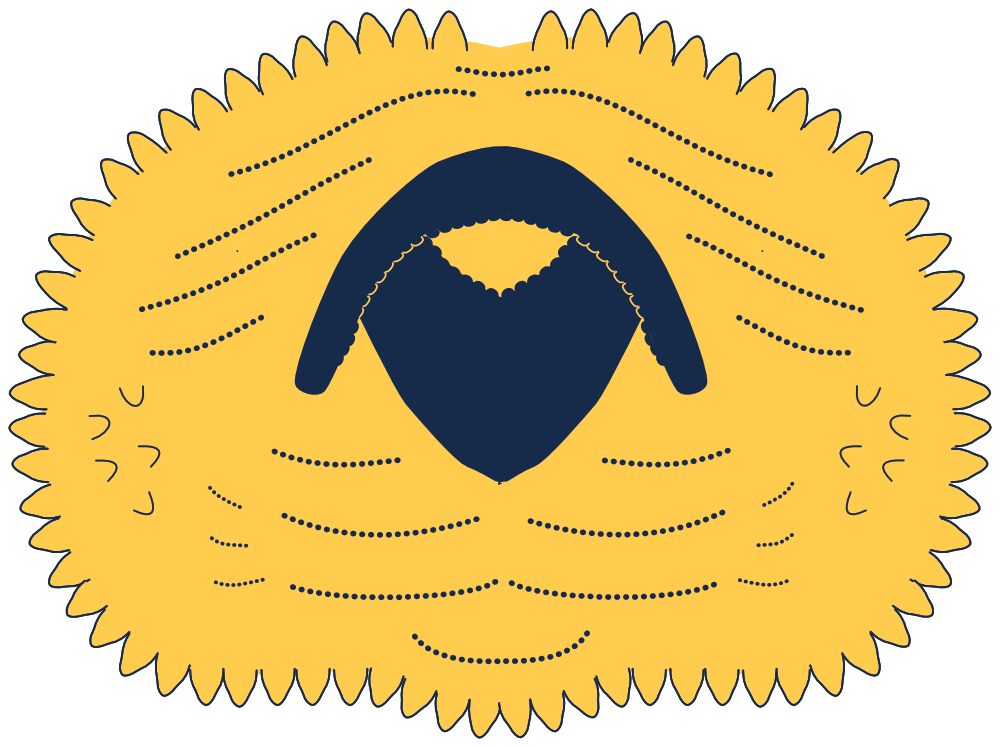
The oral disc is anteroventral to almost ventral in position and less than half the body width. There is no distinct emargination between the upper and lower lips. Marginal papillae are relatively large and slightly conical, forming an almost complete row around the oral disc, with a small medial gap in the upper lip papillation. The lower lip bears a few submarginal papillae laterally. The keratodont formula is LTRF 5(2–5)/4(1–3). In addition, there are 0–5 short keratodont rows in the submarginal area of the lower lip. The first and most peripheral upper keratodont row is particularly short. The jaw sheaths are strong, well keratinized, black, and bear coarse, moderately sharp serrations along their edges.

Body
The body is medium to large in size. In lateral view, the head and trunk are dorsoventrally depressed. In dorsal view, the body is elongate and slightly wider than the base of the tail. The body reaches its maximum width at the level of the gill chambers. The spiracle is sinistral and opens posterolaterally. The spiracular orifice is positioned below mid-body level in lateral view. The spiracle is free from the body wall and forms a short tube. Lateral line organs are visible as a series of light dashes on the head, along the flanks, and along the sides of the tail.
Eyes & Nostrils
The eyes are positioned dorsolaterally, low in profile, and non-protruding. The iris and scleral portion of the eye are black. The nostril is distinct and relatively large, positioned closer to the snout than to the eye and oriented laterally. The mediodorsal rim of the nostril projects slightly laterally.
Tail
The tail is long, comprising 65–67% of the total length. The muscular portion is strong and nearly as high and wide as the body. The upper fin rises from the trunk-tail junction in a gentle convex arch. The lower fin is similar in shape but lower than the upper fin. In the posterior half of the tail, both fins taper toward a narrowly rounded tip. Maximum height of the tail and tail fins is reached at approximately mid-tail. Skin glands are absent.
Similar Species
The tadpole of Leptobrachium ingeri is easily distinguished from known tadpoles of its congeners by its uniformly black coloration, relatively slender body, and lower number of keratodont rows. Superficially, it may be confused with tadpoles of Hylarana picturata or H. signata due to similarities in body shape and dark coloration. However, it can readily be distinguished from these taxa by features of the oral disc and the absence of skin glands, which are abundant in H. picturata. The tadpole of the closely related L. kanowitense has not yet been described, but it is likely that the tadpoles of these two species are similar. Tadpoles of Leptobrachium ingeri are relatively large and are more slender and darker than larvae of the sympatric L. abbotti. This taxon has recently been separated from L. nigrops.
Reproduction
Males call at some distance from streams, slopes of banks, or the ground. Little else is known about the reproductive biology of this species.
Literature
Males call at some distance from streams, slopes of banks, or the ground. Little else is known about the reproductive biology of this species.