Zum Hauptinhalt springen

Frogs of Borneo

Frogs of Borneo

Frogs of Borneo

Frogs of Borneo

Frogs of Borneo

Frogs of Borneo

Frogs of Borneo

Frogs of Borneo

Frogs of Borneo

Frogs of Borneo

Frogs of Borneo

Leptobrachella dringi

Tadpoles have so far been reported only from Gunung Mulu, the type locality of the species, at high elevations around 1700 m a.s.l. Larvae inhabit gravel beds in shallow sections of montane streams. Food resources have not yet been determined; however, decomposed leaf litter within the gravel interstitial spaces is a plausible dietary component.
  • Family:
    Megophryidae
  • Genus:
    Leptobrachella
  • Ecomorph:
    exotrophic, fossorial, lotic
  • Waterbody Type:
    flowing
  • Water Column:
    fossorial
  • Feeding Type:
    feeding, generalist, leaf litter
  • Size:
    57 mm
  • Development:
    larva, tadpole
  • Adult:
    Leptobrachella

Coloration

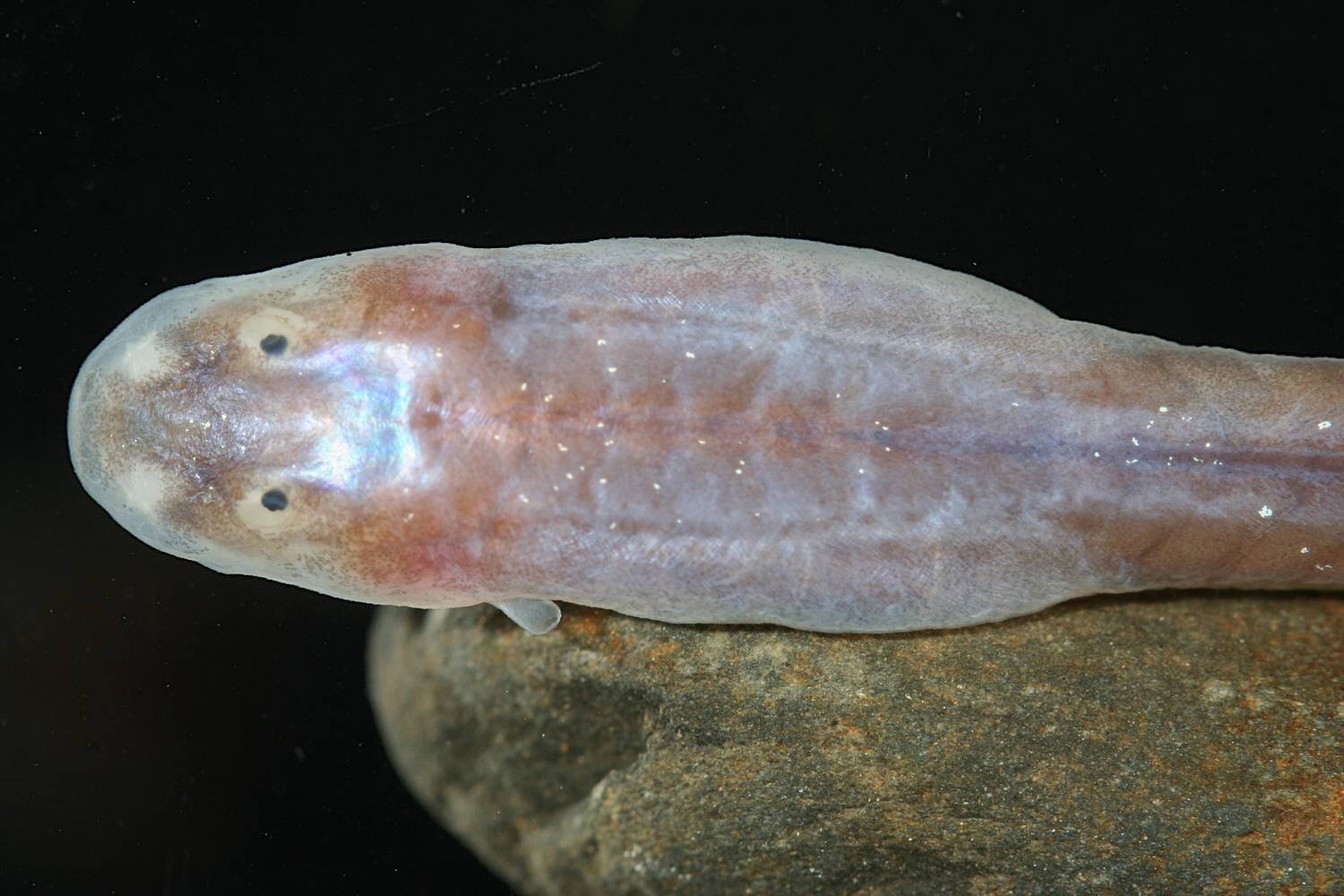
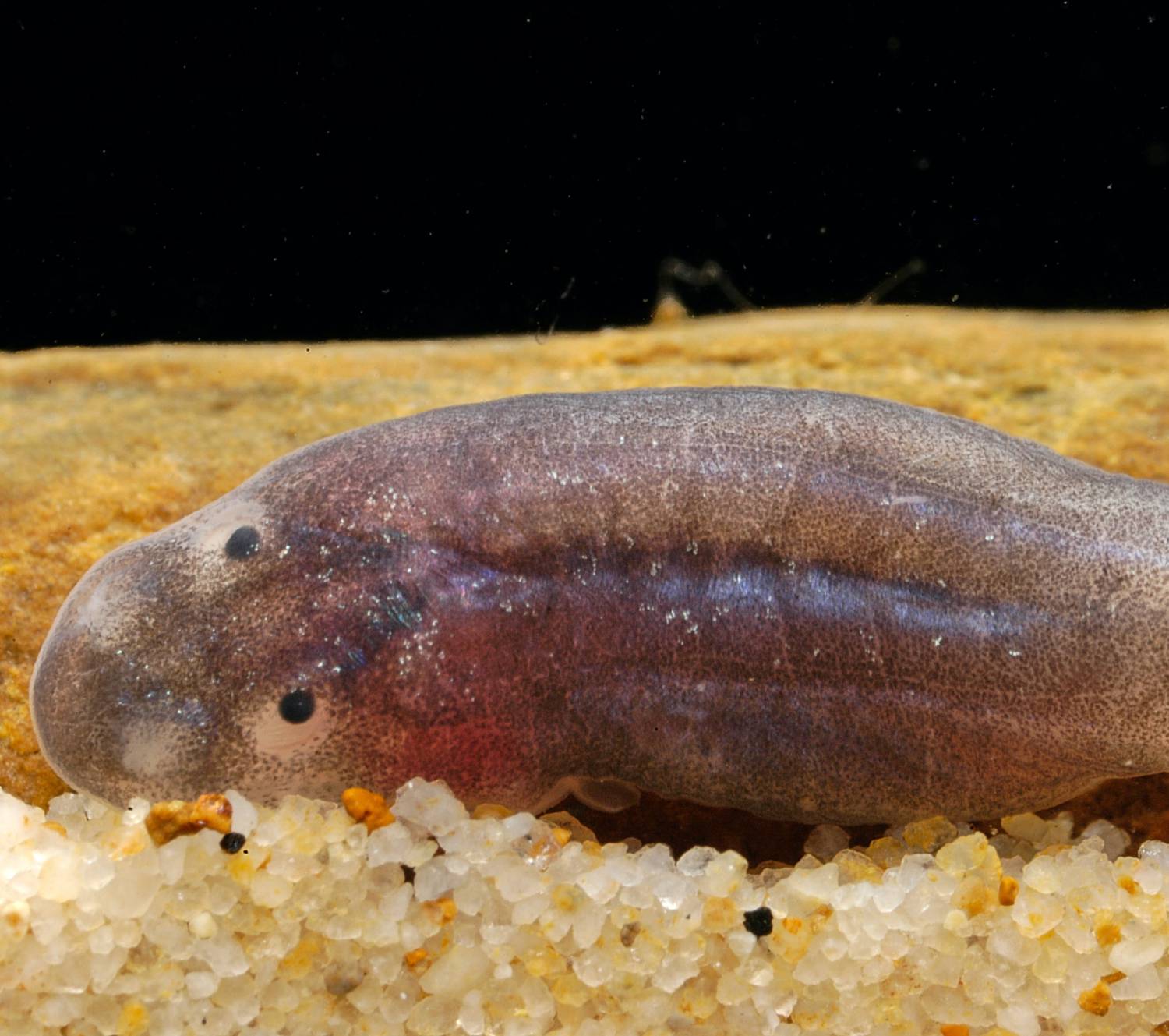
Ash gray overall, with milky semi-transparent skin and a bluish-white sheen on head and trunk. In advanced larval stages, the upper head, upper trunk, and tail show increasing brown pigmentation. Brown pigmentation of the body fades toward the venter. Buccal, gular, and abdominal skin milky semi-transparent, lacking brown pigment but exhibiting a bluish sheen. Gills and heart visible as red areas; gut coils visible in ventral and lateral views. Tail fins semi-transparent, moderately dusted with brown pigment cells in advanced stages. Scattered bluish iridophores present on the dorsal surface of the body and along the tail, including fins. Myosepta accentuated by pigmentation.

Snout

Contour broadly rounded and blunt in dorsal view, moderately long. In lateral view, snout sloping and rounded. In profile, nostrils situated on a small bulge.

Oral Disc

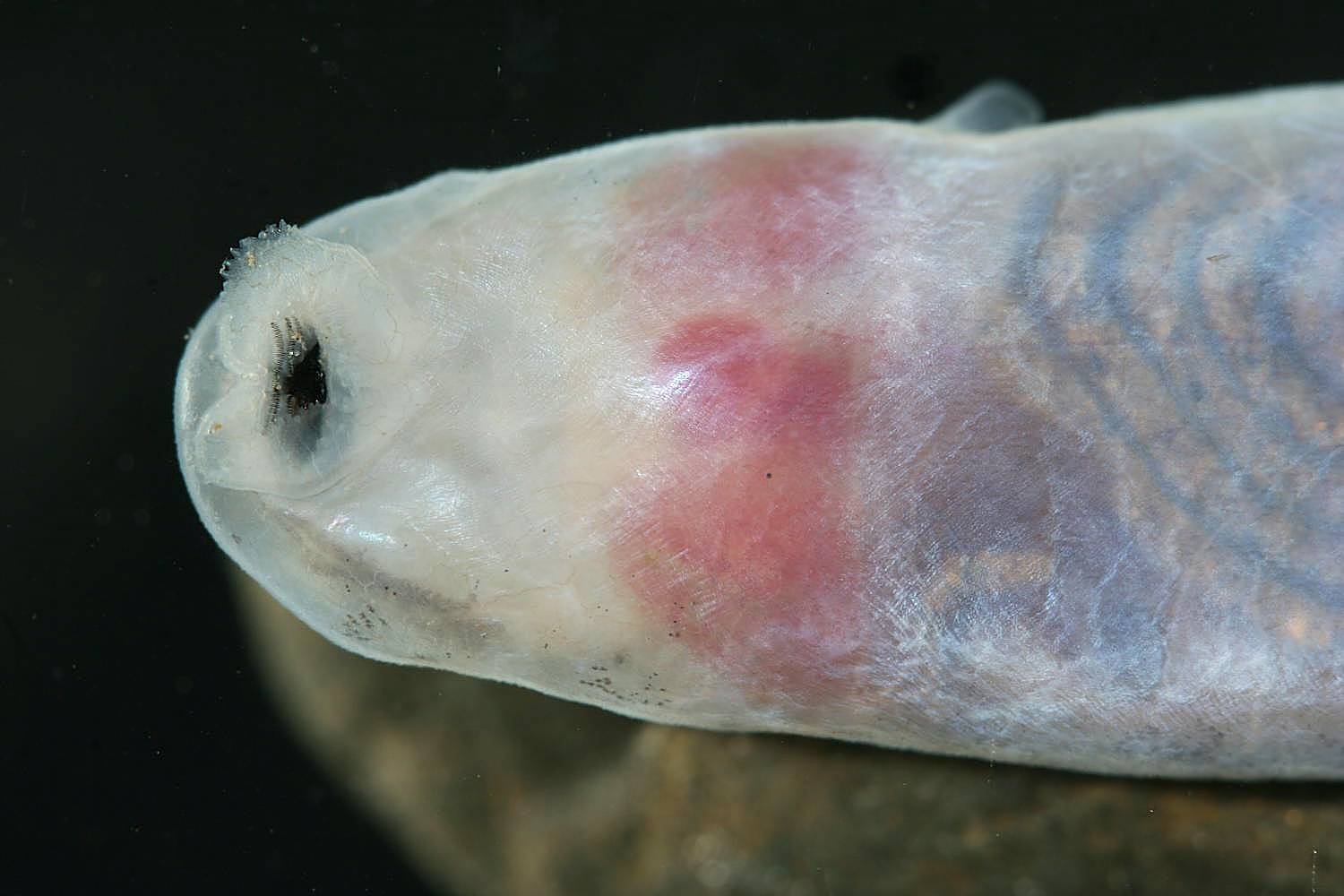
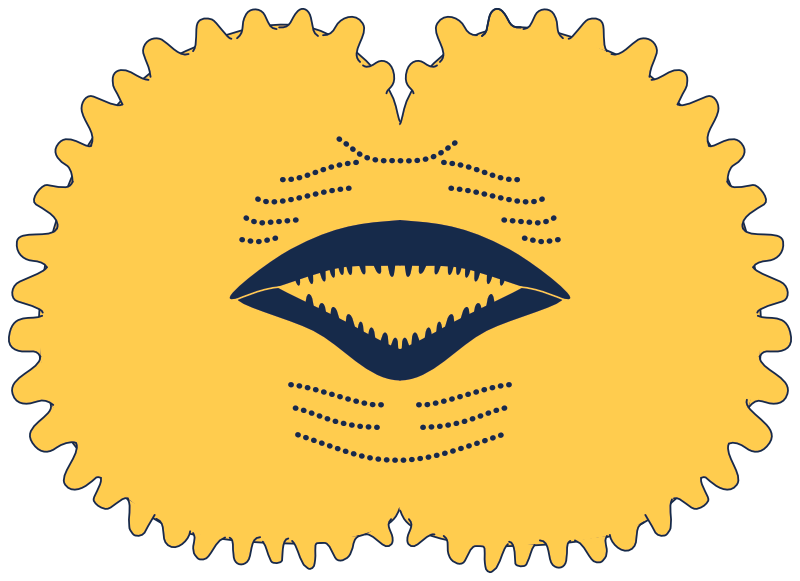
Subterminal; width up to approximately half of body width. Oral disc forming a protruding funnel. Medial emarginations present on both upper and lower lips, with the oral funnel folded inward at these points. Both lips bear short, numerous marginal papillae arranged in a continuous row, except for a minute anterior gap. Deep within the oral disc funnel (not externally visible), the lower lip bears irregular rows of submarginal papillae. Keratodont rows short; peripheral rows on upper and lower lips undivided; LTRF 5(2–5)/3(1–2). Jaw sheaths strong, well keratinized, black. Serrations small and sharp on the upper jaw sheath, blunter on the lower. Upper jaw sheath high and arched (difficult to observe in full extent); lower jaw sheath high and widely V-shaped.

Body

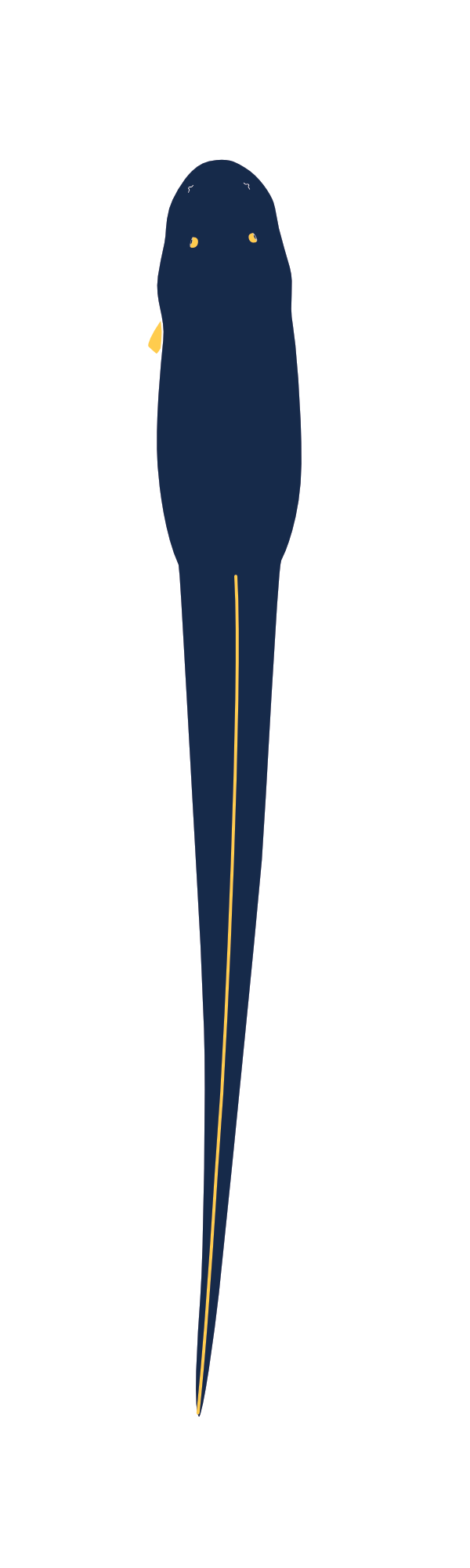
Midsized and elongate; tadpole eel-like in appearance. In lateral view, head and trunk dorsoventrally depressed. In dorsal view, body slender, only slightly wider than the base of the tail; trunk-tail transition smooth. Trunk region long; head shorter than trunk and only weakly set off from it. Body widest at the trunk. Spiracle sinistral; spiracular opening free from the body wall, forming a free tube opening posterolaterally. Spiracular opening positioned anterior to mid head-trunk length. Skin glands absent.

Eyes & Nostrils

Eyes dorsolateral, deeply set, and non-protruding in premetamorphic stages. Eyes very small in early stages, increasing in size during development. Eyes surrounded by unpigmented white orbital areas. Nostril closer to snout than to eye, oriented anterolaterally; dorsal rim bears a distinct projection. Iris black.

Tail

Long, up to approximately 73% of total length. Muscular part strongly developed, nearly as high as the body at the base of the tail. Tail fins originate at the trunk-tail junction but remain low in the anterior part of the tail. Upper fin with a straight margin; lower fin slightly convex. Fins nearly equal in height. Posteriorly, fins end in a broadly rounded tip.

Similar Species

Only few Leptobrachella tadpoles have been collected to date, and small sample sizes impede reliable species-level identification and differential diagnosis. At present, confident identification relies on DNA barcoding. Tadpoles of Leptobrachella can be readily distinguished from other Bornean tadpoles by their specific microhabitat, slender eel-like body, small eyes, and the unique shape of the protruding oral disc.
Leptobrachella dringi (Oberhummer et al. 2014) is distinguishable from a tadpole identified by Malkmus et al. (2002) as L. arayai. The latter lacked iridophore dots on the body and head (present on tail only), had two short keratodont rows on upper lip, and more submarginal papillae on lower lip. As Malkmus et al. (2002) provided no genetic data and L. sabahmontanus has since been described from the same locality, it is currently impossible to assign that specimen with certainty to either of the two sympatric species.

Literature

The call consists of a short series of 211 high frequency notes between 6100–6400 Hz, without frequency modulation.
Oberhummer, E., Barten, C., Schweizer, M., Das, I., Haas, A., Hertwig, S.T. (2014) Description of the tadpoles of three rare species of megophryid frogs (Amphibia: Anura: Megophryidae) from Gunung Mulu, Sarawak, Malaysia. Zootaxa 3835: 59–79.

Matsui, M., Dehling, J.M. (2012) Notes on an enigmatic Bornean megophryid, Leptolalax dringi Dubois, 1987 (Amphibia: Anura). Zootaxa 3317: 49–58.