Zum Hauptinhalt springen

Frogs of Borneo

Frogs of Borneo

Frogs of Borneo

Frogs of Borneo

Frogs of Borneo

Frogs of Borneo

Frogs of Borneo

Frogs of Borneo

Frogs of Borneo

Frogs of Borneo

Frogs of Borneo

Staurois parvus

This species is known from mid-elevation rocky streams of eastern Sarawak. Observations in captivity indicate that tadpoles inhabit leaf litter containing rock troughs and quiet side pools of cascading streams. Tadpoles are wary and photophobic.
  • Family:
    Ranidae
  • Genus:
    Staurois
  • Ecomorph:
    exotrophic, fossorial, leaf-litter interstice specialist
  • Waterbody Type:
    flowing
  • Water Column:
    bottom|leaf litter
  • Feeding Type:
    feeding, generalist
  • Size:
    39.5 mm
  • Development:
    larva, tadpole
  • Adult:
    Staurois

Coloration

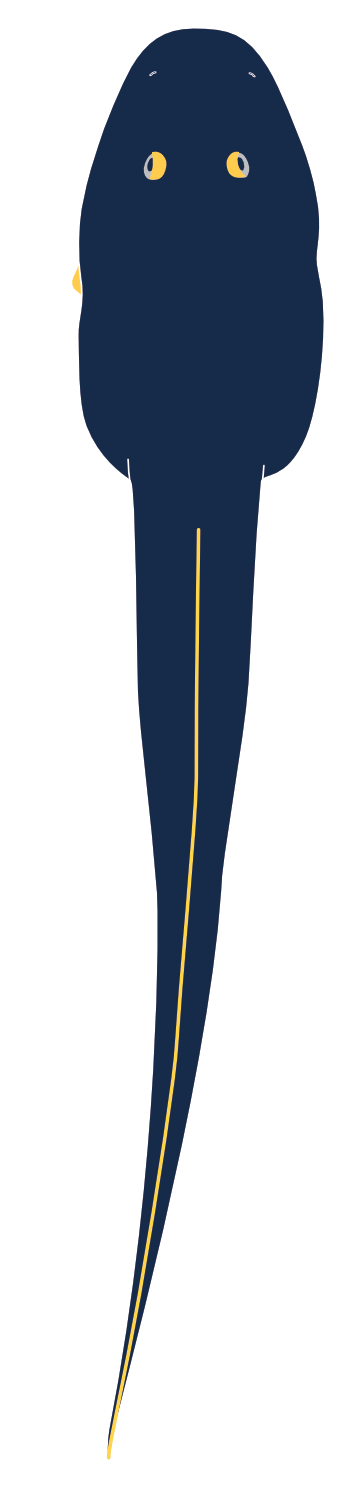
Dorsal surface with a dark band extending from head over trunk to the dorsal muscular portion of the tail. Apart from this, skin mostly transparent or semi-transparent; tadpoles exhibit a reddish appearance in life. Skin shows gray-bluish iridescence. Fins mostly clear. Ventral skin semi-transparent to transparent with bluish iridescence (in living specimens). Oral disc unpigmented. Gills, heart, and gut visible through skin. In preserved specimens, whitish dots (possibly glands or acini) have been reported and suggested as diagnostic for this species.

Snout

Long, tapering in dorsal view, apex broadly rounded and obtuse. In lateral view, dorsal surface continuous with forehead slope; apex of snout positioned low.

Oral Disc

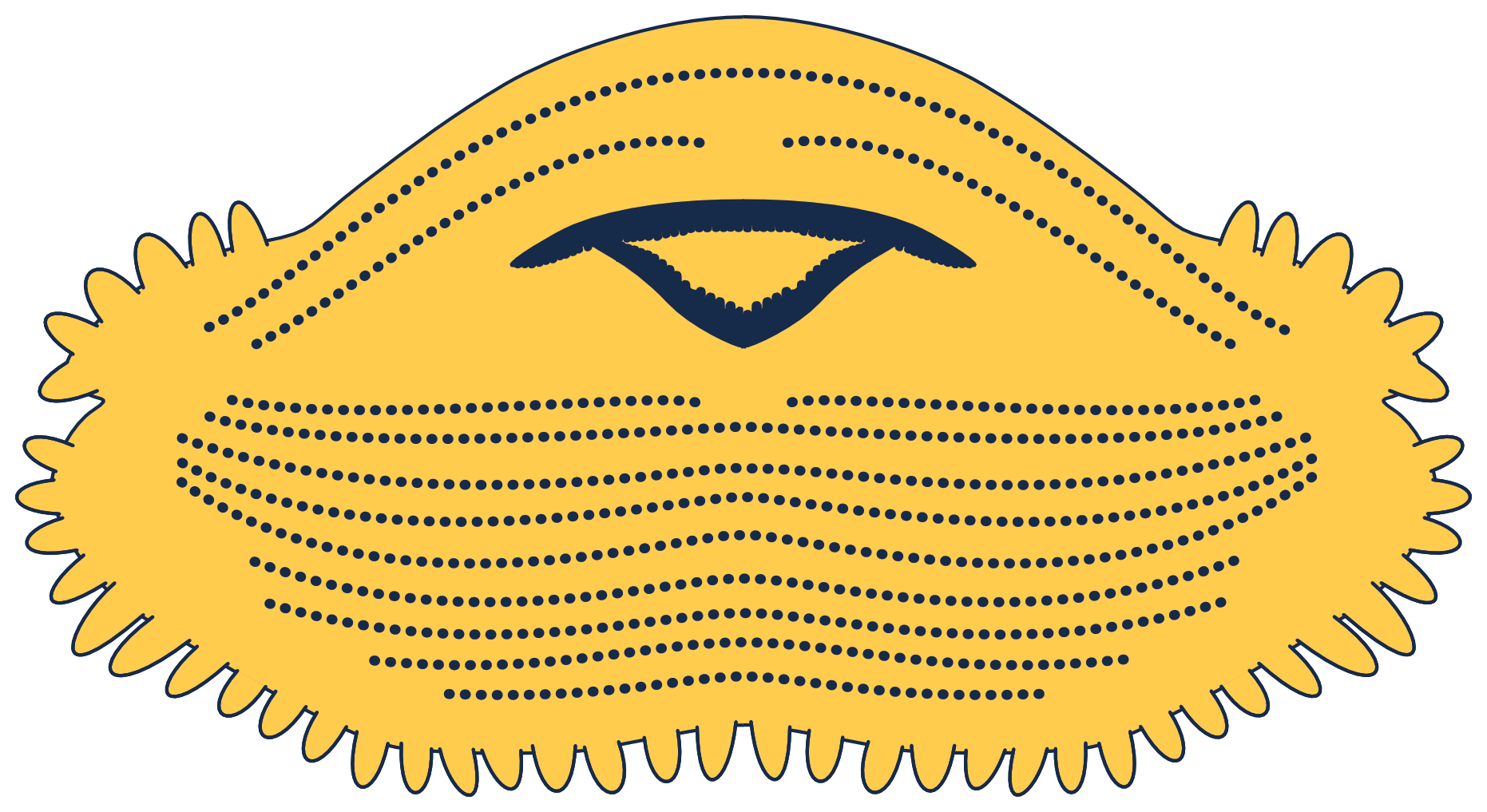
Oral disc subterminal, width up to 59% of body width. Lateral emarginations present between upper and lower lips. Upper lip mostly lacking papillae, except for a single row of marginal papillae on small lateral flaps; sometimes 12 submarginal papillae present. Lower lip with one uninterrupted row of marginal papillae. Marginal papillae moderately long; submarginal papillae absent. LTRF 2(2)/10(1) to 2(2)/11(1–3). Lateral accessory keratodont row absent. Beaks keratinized, black, thin, with very fine serrations. Upper beak nearly straight, slightly arched; lower beak smoothly V- to U-shaped.

Body

Midsized tadpoles. In lateral view, body depressed, flat dorsally and ventrally; snout slightly wedge-shaped, sloping gently to apex, slightly convex. In dorsal view, body slender with bluntly triangular head; trunk narrower than head. Maximum width at gill level, posterior to eyes. Spiracle sinistral, forming a short free tube. Spiracular tube opens posteriorly and positioned below longitudinal body axis in lateral view. Lateral line organs inconspicuous.

Eyes & Nostrils

Eyes very small, covered by skin for most of larval life, enlarging and differentiating toward metamorphosis; dorsolateral in position. Iris (late larval stages) black with silvery sectors above and below. Nostrils small, much closer to snout than to eyes, positioned dorsally relative to oral disc. Nostril supported medially by slight snout bulge and directed anterolaterally.

Tail

Tail very long, approximately 72–73% of total length. Muscular portion moderately strong to strong, slightly less than body height in lateral view. Dorsal fin originates slightly posterior to trunk-tail junction, initially low for the first 10–15% of tail, then rising gradually and shallowly arching at mid-tail, sloping downward with slight convexity toward moderately rounded tip. Lower fin nearly straight. Both fins relatively low; dorsal fin slightly higher than lower fin at mid-tail. Maximum tail height approximately at midpoint.

Similar Species

Few Staurois tadpoles have been collected in the field; much information comes from captive breeding (Preininger et al. 2012; Grosjean and Preininger 2020). S. parvus is distinguished from S. guttatus and S. tuberilinguis by the absence of lateral accessory keratodont rows, 2–3 interrupted rows on the lower lip, and the pattern of whitish glands (at least in preserved specimens). See S. guttatus for further ecological and morphological comparisons.

Literature

Preininger et al. (2012) reported that in a terrarium, two clutches with 14 and 26 eggs, respectively, were discovered under submerged rocks in a quiet section of an artificial stream. Troughs under cascades may also be sites where the species deposits eggs. It is unclear whether or not an amplectant pair lays one or several clutches. Larval life may extend over three months; metamorphs measure 11.8 mm in snoutvent length.
Preininger, D., Weissenbacher, A., Wampula, T., Hodl, W. (2012) The conservation breeding of two footflagging frog species from Borneo, Staurois parvus and Staurois guttatus. Amphibian and Reptile Conservation 5:45–56.

Grosjean, S., Preininger, D. (2020) Description of two Staurois tadpoles from Borneo, Staurois parvus and Staurois tuberilinguis (Anura: Ranidae). Zootaxa 4896: 523–534.