Zum Hauptinhalt springen

Frogs of Borneo

Frogs of Borneo

Frogs of Borneo

Frogs of Borneo

Frogs of Borneo

Frogs of Borneo

Frogs of Borneo

Frogs of Borneo

Frogs of Borneo

Frogs of Borneo

Frogs of Borneo

Polypedates otilophus

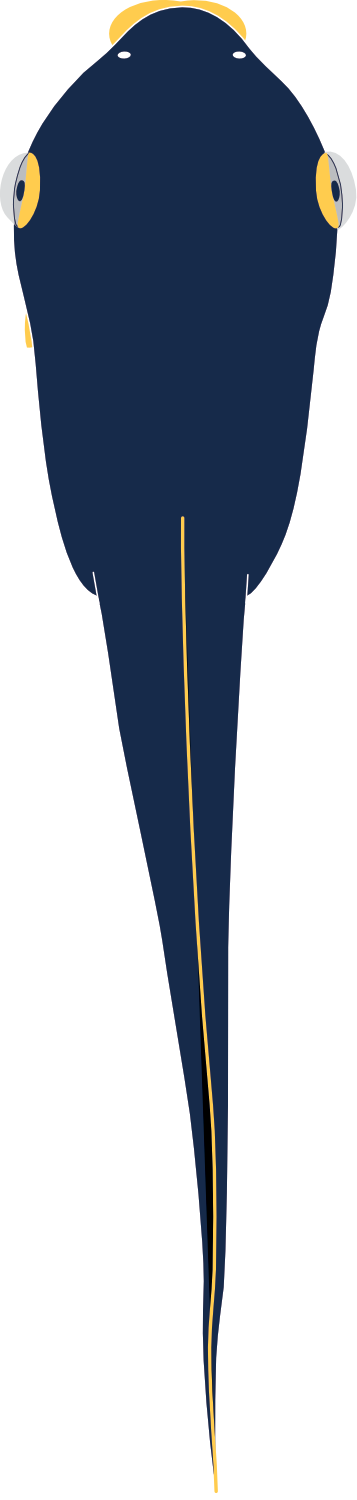
Polypedates otilophus tadpoles inhabit turbid forest ponds located in clearings or along forest edges. They typically remain in deeper water but periodically ascend to the surface to exhale and replenish their lungs. As in other Polypedates tadpoles, they feed on organic matter on the pond bottom or filter-feed on small particles from the water column. This species frequently occurs in association with Polypedates macrotis and Rhacophorus pardalis.
  • Family:
    Rhacophoridae
  • Genus:
    Polypedates
  • Ecomorph:
    exotrophic, lentic
  • Waterbody Type:
    stagnant
  • Water Column:
    bottom
  • Feeding Type:
    feeding, generalist, rasping, suspension feeder
  • Size:
    60 mm
  • Development:
    larva, tadpole
  • Adult:
    Polypedates

Coloration

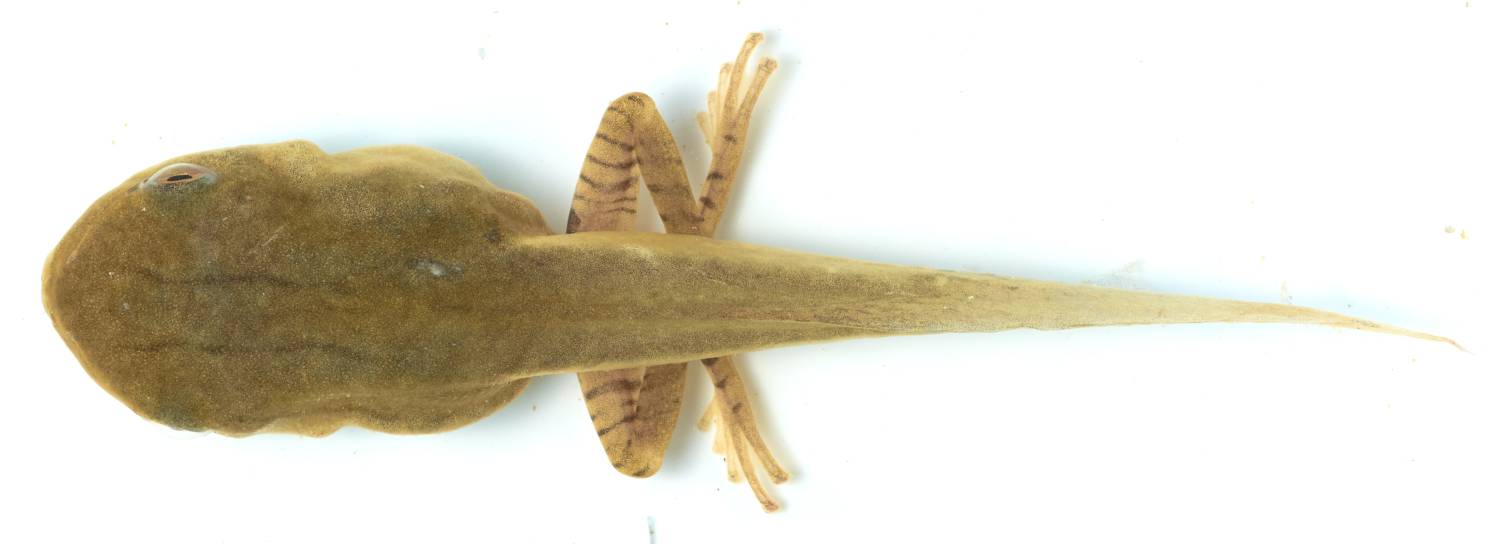
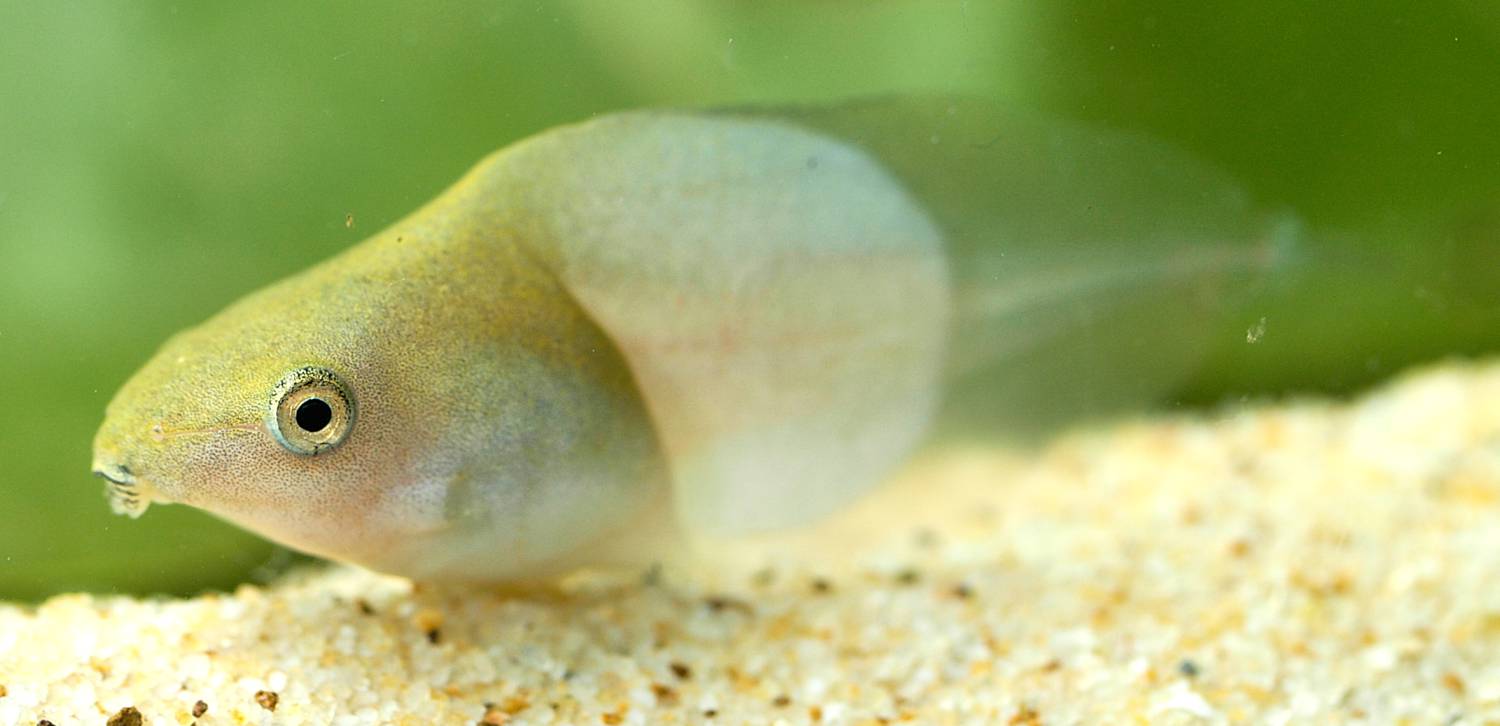
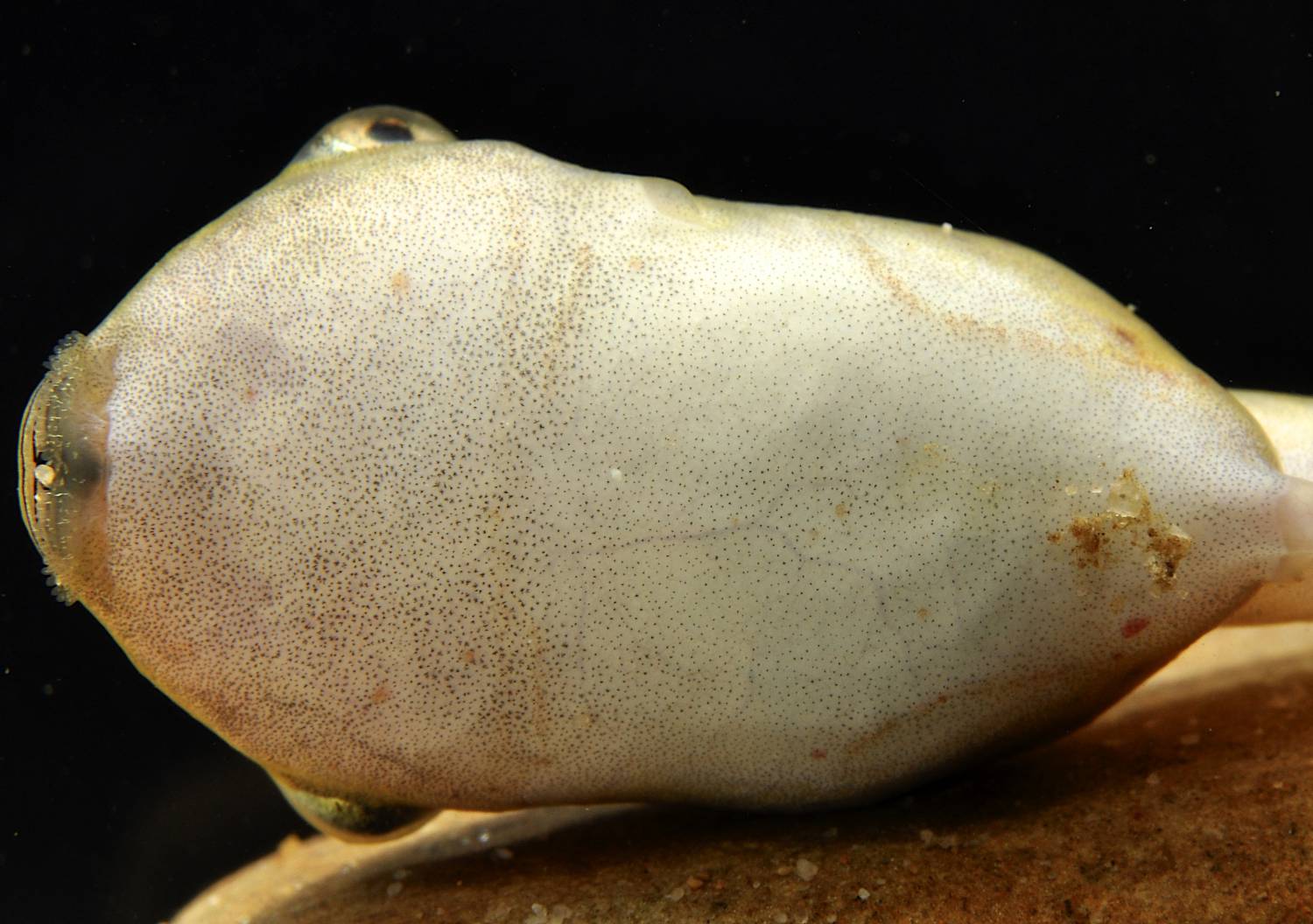
General coloration yellow-greenish dorsally. Along the flanks, the pigmentation gradually transitions from greenish above to white ventrally. The ventral surface is opaque white, finely stippled with melanophores, particularly in the gular (throat) region; yellow pigmentation may also be present ventrally. The yellow-greenish pigmentation of the trunk extends caudally onto the tail, including the tail fins in the proximal 30–50% of the tail. In the distal 50–70% of the tail, both upper and lower fins are translucent. The lateral tail vein is visible but may be indistinct. In advanced stages, the oral disc and papillae are lightly stippled with melanocytes.

Snout

In dorsal view, the snout tapers anteriorly in a relatively straight line between the eyes and mouth, terminating in a bluntly rounded tip. The snout is long, with a slightly angled profile in lateral view.

Oral Disc

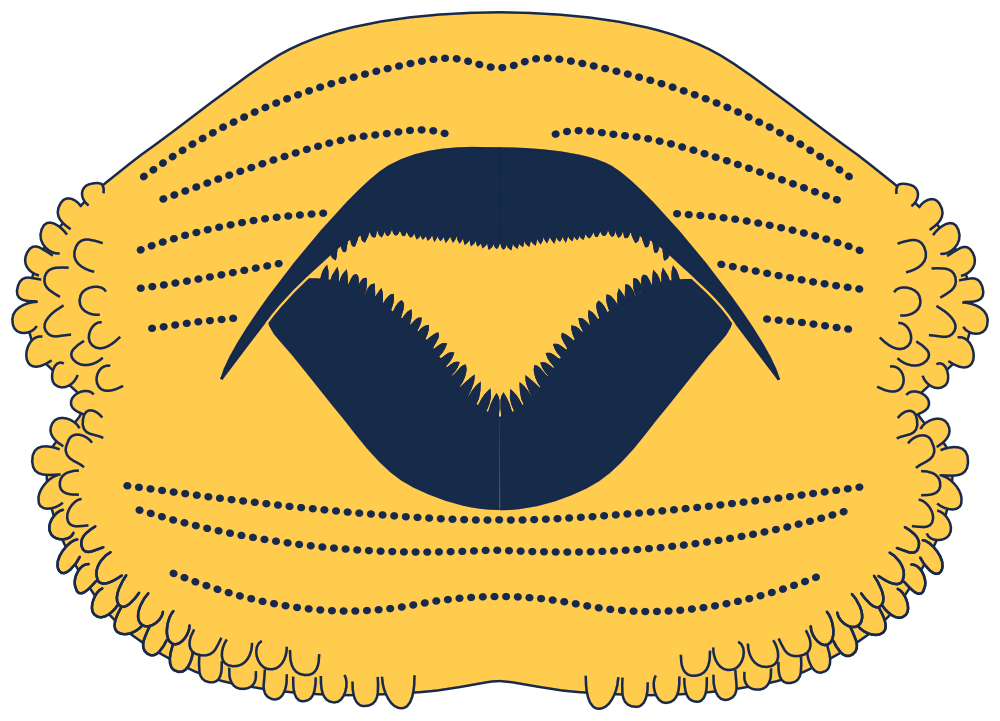
Oral disc subterminal to terminal. The upper lip bears papillae only laterally. Lateral indentations of the oral disc are present, clearly delimiting upper and lower lips. Marginal papillae on the upper lip are arranged in a single row, with additional submarginal papillae giving the appearance of double or triple rows. On the lower lip, marginal papillae are predominantly arranged in double rows, merging into a single row medially. A small medial gap in lower lip papillation is present. Marginal papillae are of moderate length and blunt. LTRF 4(2–4)/3 or 5(2–5)/3. Upper and lower beaks undivided, robust, black, and serrated along their edges; upper beak weakly convex medially.

Body

Body rhomboid in dorsal view, with maximum width at eye level. In lateral view, the trunk is considerably deeper than the head. Head dorsally flat. Trunk as high as wide or higher than wide. A moderate concavity is present in the gular region (from snout to abdomen). Spiracle sinistral, with a large orifice positioned well below the mid-body axis in lateral view. Posterior spiracular opening fused to the body; spiracle directed posterolaterally.

Eyes & Nostrils

Eyes lateral, protruding beyond the head contour. Nostrils closer to the snout than to the eyes. Orbitonasal streak distinct. Iris silvery with a coppery hue or pale golden. Peripherally, the iris is stippled with black. Sclera silvery, often with a slight bluish sheen ventrally and increasing black stippling dorsally.

Tail

Tail moderately strong to strong, approximately 65–68% of total length. Upper tail fin originates anterior to or at the trunk-tail junction. The level of fin origin, fin arching, and overall fin height vary with developmental stage and size. A conspicuous patch of opaque tissue is present in the proximal third of the tail, extending slightly into both upper and lower fins. The upper tail fin is well arched. Both fins taper posteriorly with slightly concave margins, forming a narrow tip. Tail generally high but variable; maximum height at approximately 30–50% of tail length. Lateral tail vein visible but often indistinct. Myosepta visible.

Similar Species

In overall body shape, Polypedates otilophus, P. macrotis, and P. leucomystax are superficially similar. P. leucomystax attains a smaller size and differs in coloration and lower lip papillation. Tadpoles of P. macrotis and P. otilophus are more difficult to distinguish. Although differences have not yet been established based on large sample sizes, preliminary observations suggest that P. otilophus differs from P. macrotis in its greenish coloration, longer snout, lighter ventral surface, and a more extensive and conspicuous opaque patch on the proximal tail. Mouthparts are very similar in both species.

Literature

Males descend from the canopy at night and perch on trunks and twigs around the breeding pond. Mating pairs in amplexus produce a foam nest. Several males may attempt to mate during foamnesting. Nests are attached to logs or branches 1–3 m above the water. Tadpoles hatch from their foam nest and drop from the bottom of the nest into the pond below.
Inger, R.F. (1966) The systematics and zoogeography of the Amphibia of Borneo. Fieldiana Zoology 52: 1–402.

Inger R.F. (1985) Tadpoles of the forested regions of Borneo. Fieldiana Zoology new series 26: 1–89.

Inger, R.F., Stuebing, R.B., Grafe, T.U., Dehling, J.M. (2017) A field guide to the frogs of Borneo. 3rd ed. Natural History Books, Kota Kinabalu. 228 pp.