Zum Hauptinhalt springen

Frogs of Borneo

Frogs of Borneo

Frogs of Borneo

Frogs of Borneo

Frogs of Borneo

Frogs of Borneo

Frogs of Borneo

Frogs of Borneo

Frogs of Borneo

Frogs of Borneo

Frogs of Borneo

Polypedates macrotis

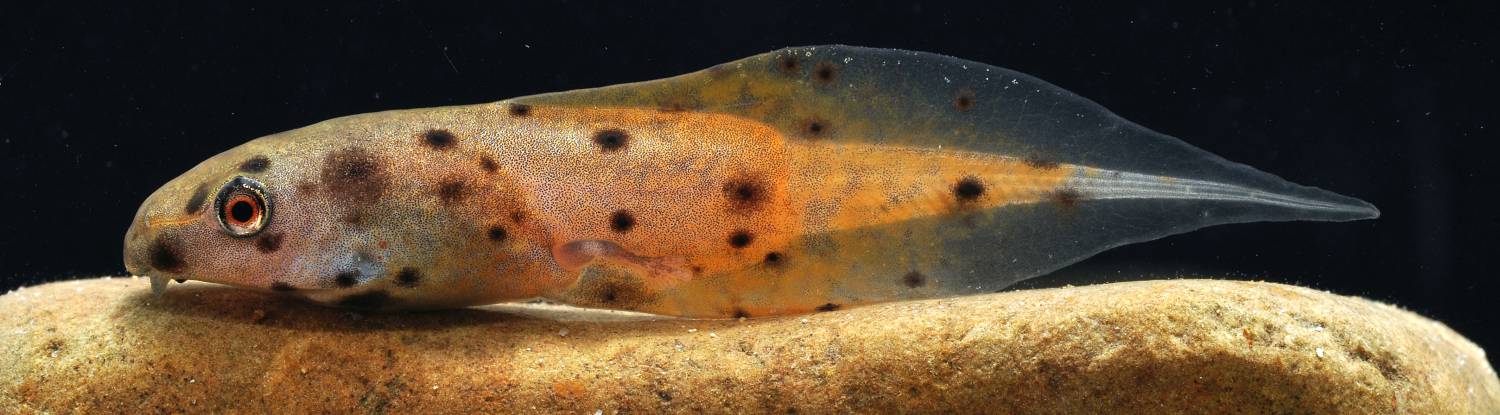
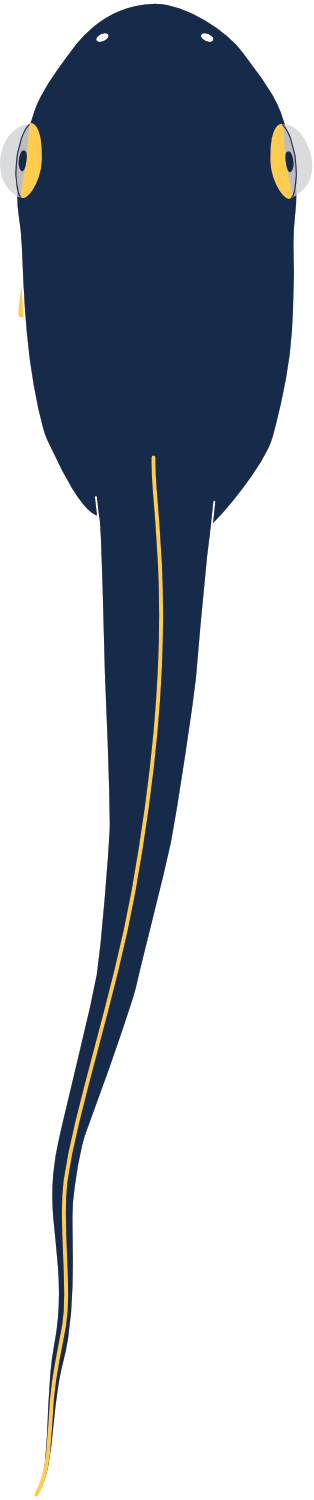
The tadpoles inhabit turbid ponds, often in open or semi-open situations such as clearings, farmland, or forest edges. The body shape indicates that the tadpoles feed on organic matter at the bottom of the pond as well as on small particles obtained by filter feeding in the water column.
  • Family:
    Rhacophoridae
  • Genus:
    Polypedates
  • Ecomorph:
    benthic-nektonic, exotrophic, lentic, suspension-rasper
  • Waterbody Type:
    stagnant
  • Water Column:
    bottom
  • Feeding Type:
    feeding, generalist, rasping, suspension feeder
  • Size:
    60 mm
  • Development:
    larva, tadpole
  • Adult:
    Polypedates

Coloration

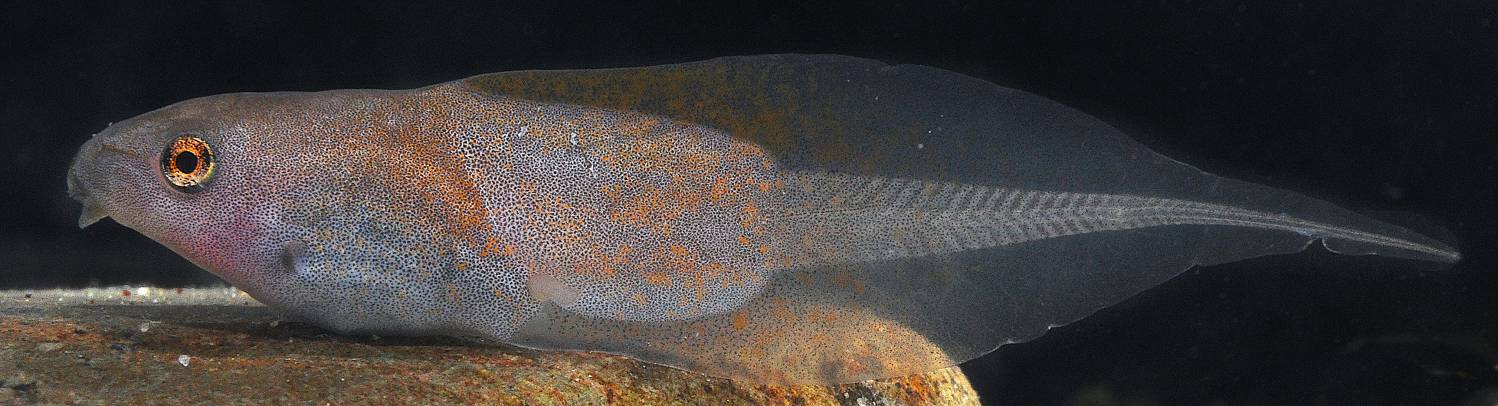
General appearance variable: brown, gray, or greenish dorsally, sometimes (in at least one population) with orange hues or scattered black spots. The flanks gradually transition from darker pigmentation dorsally to lighter coloration ventrally. Ventral head and belly opaque white in background color, but finely stippled with melanophores and sometimes also yellow pigments. The dark pigmentation of the trunk continues caudally onto the tail, where light spots (sometimes yellow) or blotches add to the pattern. Diffuse pigmentation particularly present in the proximal upper fin; melanocyte dusting or reticulation may occur in the fins, predominantly in the proximal part of the tail. Lateral tail vein visible but often indistinct. Oral disc and papillae stippled with melanocytes in advanced stages.

Snout

Tapering and rounded in dorsal view; moderately angled in lateral view.

Oral Disc

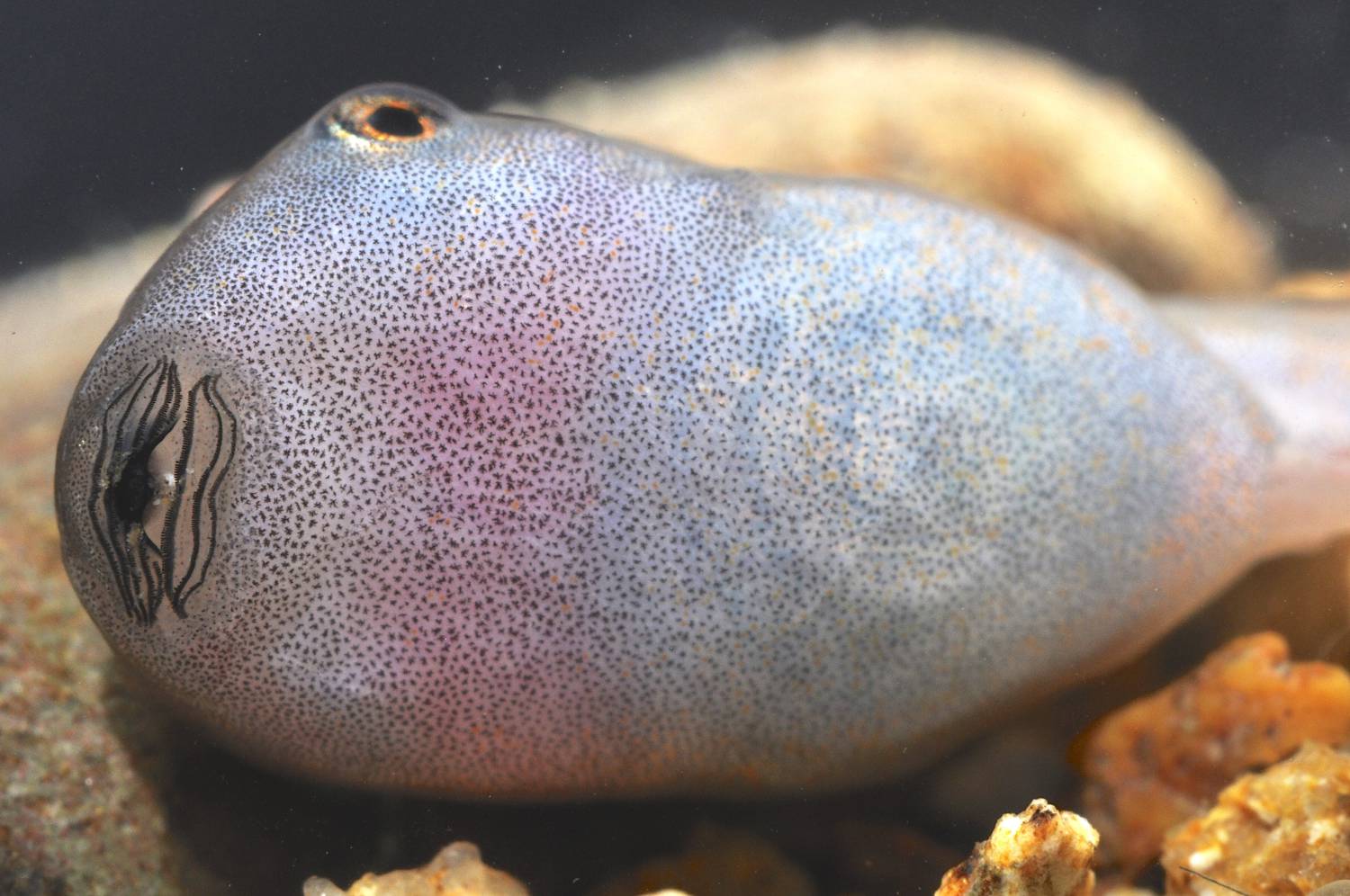
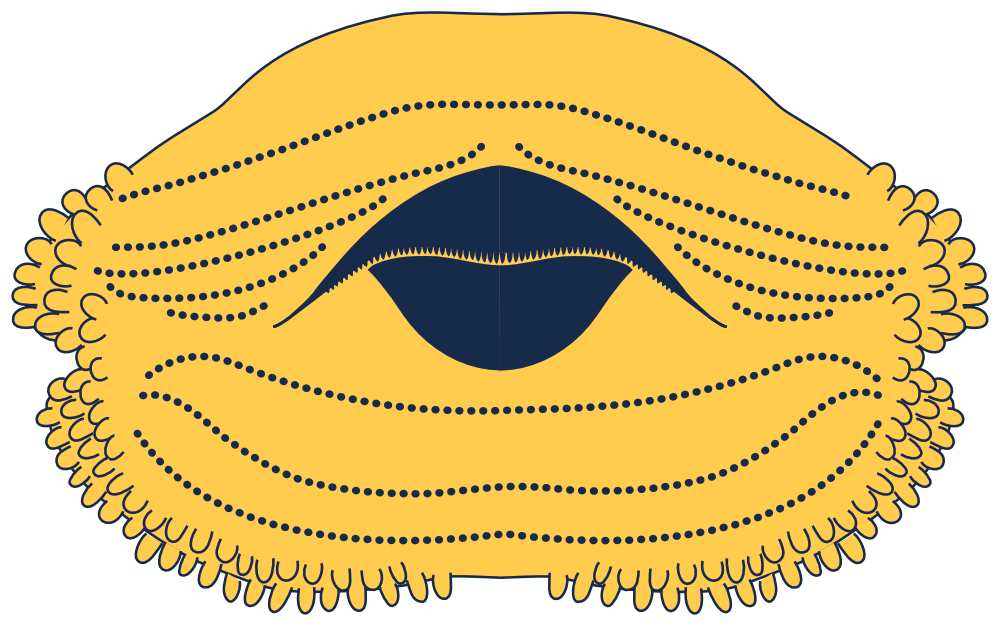
Subterminal. Marginal papillation with a broad gap on the upper lip and a narrow gap on the lower lip. Lateral oral disc indentations present. Marginal papillae arranged in a single row on the upper lip, with closely positioned submarginal papillae. Lower lip marginal papillae mostly arranged in double rows, but forming a single row toward the narrow medial gap. Several submarginal papillae located in the lateral areas of the lower disc, giving a triple-row impression. Marginal papillae moderately long and blunt. LTRF 5(2–5)/3, 5(2–5)/3(1), or 6(2–6)/3. If present, the break in the innermost lower lip keratodont row may be very narrow and indistinct. Upper and lower beaks undivided, robust, black, and serrated along their edges. Upper beak weakly convex medially.

Body

Slightly rhomboid in dorsal view; body widest at eye level. In lateral view, trunk much deeper than head. Body flat dorsally. Trunk as wide as deep, not depressed. In lateral view, a moderate concavity present in the gular-buccal region. Spiracle sinistral, well below the mid-body axis in lateral view. Posterior spiracular orifice fused to the body wall. Spiracle directed posterolaterally.

Eyes & Nostrils

Eyes lateral, protruding beyond the head contour. Nostril closer to snout than to eye. A well-developed orbitonasal streak present. Iris with a black background densely dusted with golden or coppery pigment cells. In the anterior, dorsal, and posterior iris sectors, black and gold pigments mix irregularly; in the ventral sector, golden pigments almost completely cover the black background. Sclera stippled with silvery or golden pigment cells dorsally and fully silvery in the ventral sector.

Tail

Moderately strong and long, approximately 68–70% of total length. Upper tail fin begins at the trunk-tail junction. A patch of semi-opaque tissue present in the first third of the tail, extending slightly into both fins. Upper tail fin well arched. Fins taper posteriorly with slightly concave contours into an acuminate, narrow tip. Fin proportions vary with habitat: in some specimens the upper fin is slightly higher than the lower, while in others the reverse is observed. Maximum tail height reached at approximately one third of tail length. Lateral tail vein visible but often indistinct.

Similar Species

In general body shape, Polypedates macrotis resembles P. otilophus and P. leucomystax. P. leucomystax does not grow as large and differs in LTRF and color pattern. Differences from P. otilophus are more subtle.

Literature

Males assemble around the breeding pond. They prefer to perch on dead wood, on or in hollow logs, occasionally also on low vegetation. The call is a drawn out chuckle. Foam nests are built during mating. They are attached to logs or branches above the water. Tadpoles hatch from their foam nest and drop into the water below.
Inger, R.F. (1966) The systematics and zoogeography of the Amphibia of Borneo. Fieldiana Zoology 52: 1–402.

Inger, R.F. (1985) Tadpoles of the forested regions of Borneo. Fieldiana Zoology new series 26:1–89.

Inger, R.F., Stuebing, R.B., Grafe, T.U., Dehling, J.M. (2017) A field guide to the frogs of Borneo. 3rd ed. Natural History Books, Kota Kinabalu. 228 pp.