Zum Hauptinhalt springen

Frogs of Borneo

Frogs of Borneo

Frogs of Borneo

Frogs of Borneo

Frogs of Borneo

Frogs of Borneo

Frogs of Borneo

Frogs of Borneo

Frogs of Borneo

Frogs of Borneo

Frogs of Borneo

Philautus nepenthophilus

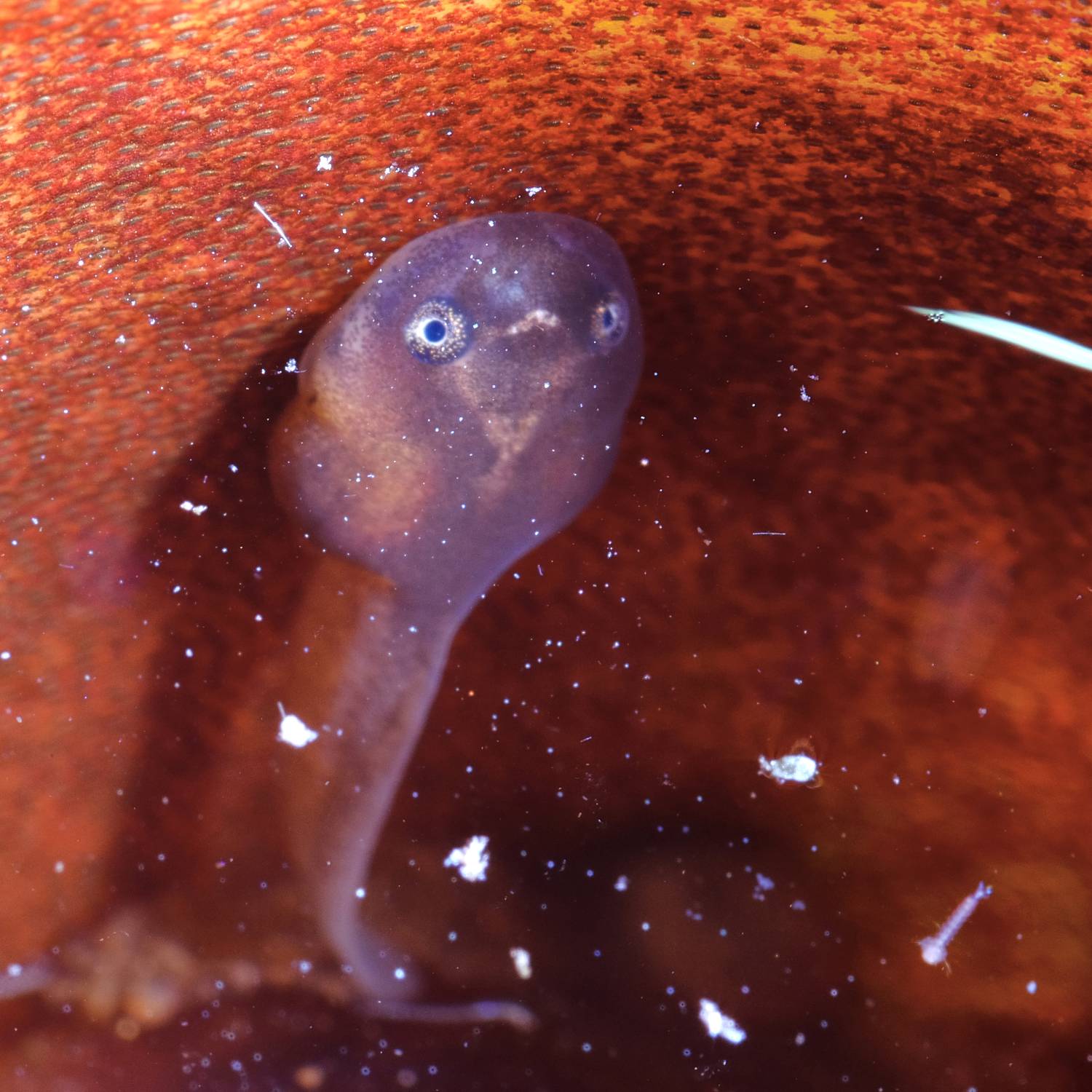
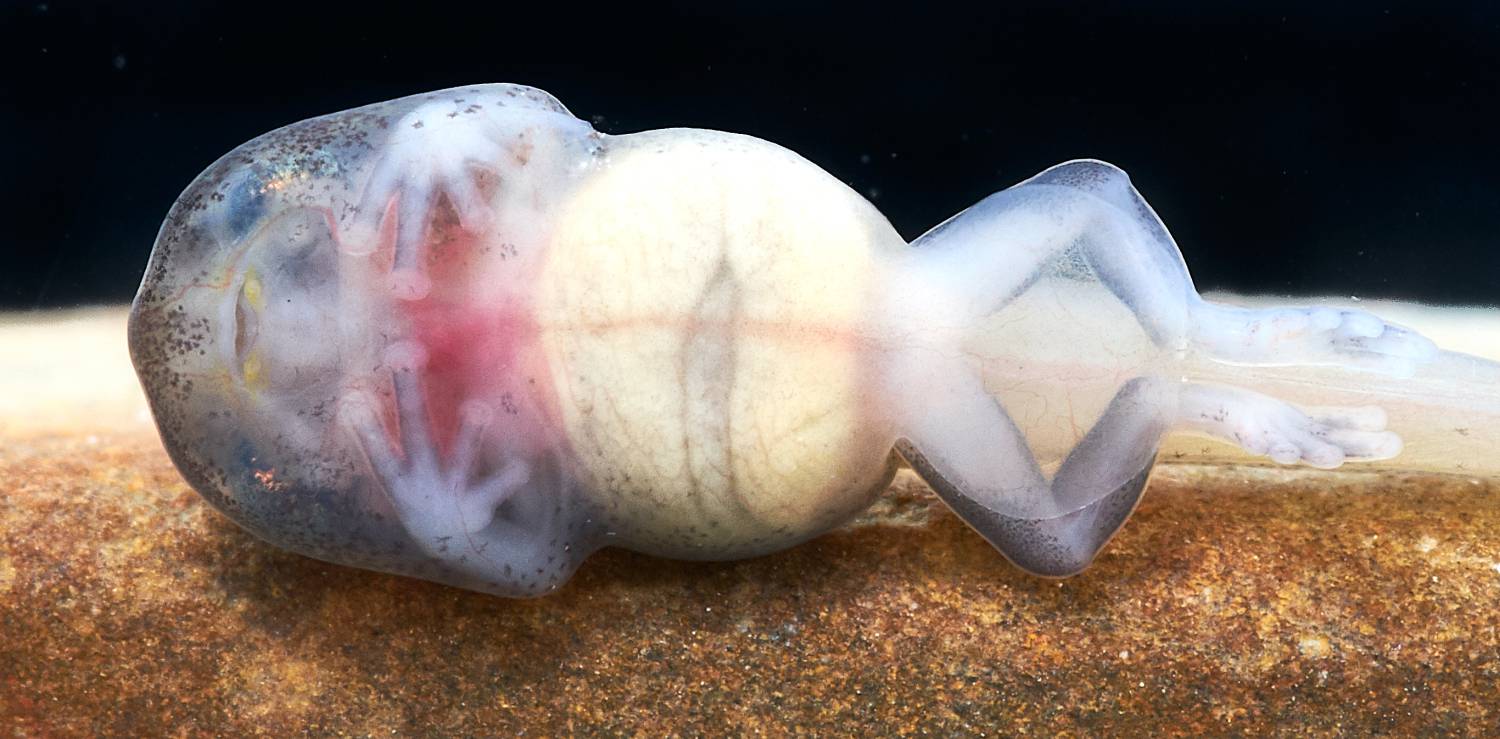
The only collected tadpoles so far were discovered in pitchers of Nepenthes mollis, 2–4 m above the ground. They appeared inactive in the pitchers, resting among debris accumulated at the bottom or along the pitcher wall. Tadpoles were able to hold a vertical position on the pitcher wall, suggesting some form of adhesive mechanism. In one pitcher, we observed two markedly different developmental stage groups, suggesting that successive spawning events may utilize the same pitcher. All larvae possess a large yellowish gut, indicative of an endotrophic mode of development.
  • Family:
    Rhacophoridae
  • Genus:
    Philautus
  • Ecomorph:
    phytotelma specialist
  • Waterbody Type:
    phytotelma
  • Water Column:
  • Feeding Type:
    non-feeding
  • Size:
    22 mm
  • Development:
    larva, tadpole
  • Adult:
    Philautus

Coloration

Dark brown to dark gray dorsally. Although slightly darker (braincase) and lighter areas (branchial region) are present, there is no clear patterning or distinct markings. The dark dorsal coloration fades rapidly toward the ventral side of the head, trunk, limbs, and tail. Trunk coloration continues onto the upper half of the tail, fading posteriorly and ventrally. Pigmentation extends to the base of the upper fin, whereas the ventral muscular part and lower fin lack melanophores. The ventral skin (including the oral field and posteroventral flap) is transparent, with only fine pigmentation in the peripheral ventral oral and gular regions. Inner organs are visible through the ventral skin.

Snout

Very short; truncated in dorsal view, except for a medial protruding bulge. In lateral view, snout bluntly rounded.

Oral Disc

Mouth ventral. Oral disc highly reduced; keratodonts absent. Structures that may represent remnants of oral structures are papillae on each side of the mouth.

Body

In dorsal view, body of advanced stages broadly inverse pear-shaped. Trunk slightly narrower than head. A constriction marks the head-trunk transition. Maximum body width lies anterior to this constriction (at the level of the developing forelimbs). Body dorsoventrally depressed. Spiracle sinistral. Medial spiracular orifice fused to body wall; free tube absent. Spiracle directed posteriorly and positioned well below the mid-body axis. A distinctive large, transparent, circular skin flap extends posteriorly from the abdomen beneath part of the tail; it is dorsally continuous with the ventral tail fin and underlies the developing hind limbs.

Eyes & Nostrils

Eyes dorsolateral; cornea does not reach the head contour in dorsal view. Eye axis oriented anterolaterally. Nostril much closer to the snout than to the eye, positioned almost terminally in lateral view; opening anterolaterally, smoothly rimmed, and slightly sunken. Orbitonasal streak present. Sclera and iris with black background and dense iridophores. Iris iridophores golden, pupil bordered by a narrow silver ring. Scleral iridophores mostly silvery to bluish. Orbital cavity includes an unpigmented area at the origin of the orbitonasal streak.

Tail

Moderately strong, 66–68% of total length. Upper and lower fins begin at the trunk-tail junction. Fins mostly straight and parallel along most of the tail, without pronounced arching. Tail tip broadly rounded. Upper and lower fins equal in height. Maximum tail height at approximately one third of tail length.

Similar Species

The morphological features of this tadpole—especially the short snout, the small ventral oral orifice with two pairs of lateral papillae, and the presence of a posteroventral skin flap—are unique among Bornean species, except for tadpoles of the congeneric Philautus macroscelis. The latter differs most notably in coloration (conspicuous scattered whitish-blue iridophores), ventral position of the nostrils, relatively larger eyes, less broad body, and absence of a posteroventral skin flap.

Reproduction

Males perch on Nepenthes pitchers several meters above the ground. The advertisement call is short, fast and rattling, consisting of three notes with 6–7 pulses each, average note duration is 36.33 ms and the dominant frequency 2812.5 Hz.

Literature

Males perch on Nepenthes pitchers several meters above the ground. The advertisement call is short, fast and rattling, consisting of three notes with 6–7 pulses each, average note duration is 36.33 ms and the dominant frequency 2812.5 Hz.