Frogs of Borneo

Frogs of Borneo

Frogs of Borneo

Frogs of Borneo

Frogs of Borneo

Frogs of Borneo

Frogs of Borneo

Frogs of Borneo

Frogs of Borneo

Frogs of Borneo

Frogs of Borneo
Filter
Occidozyga baluensis
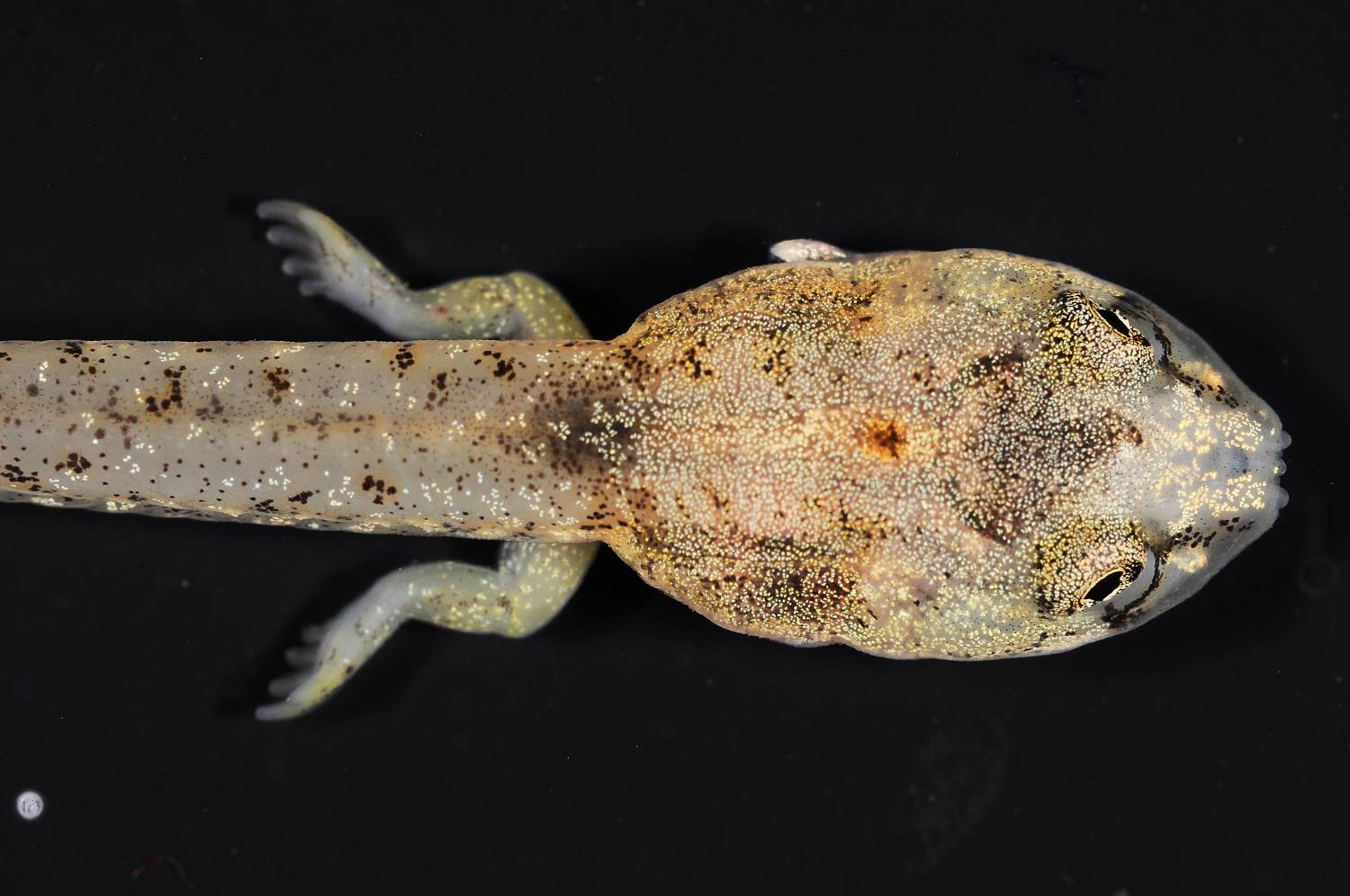
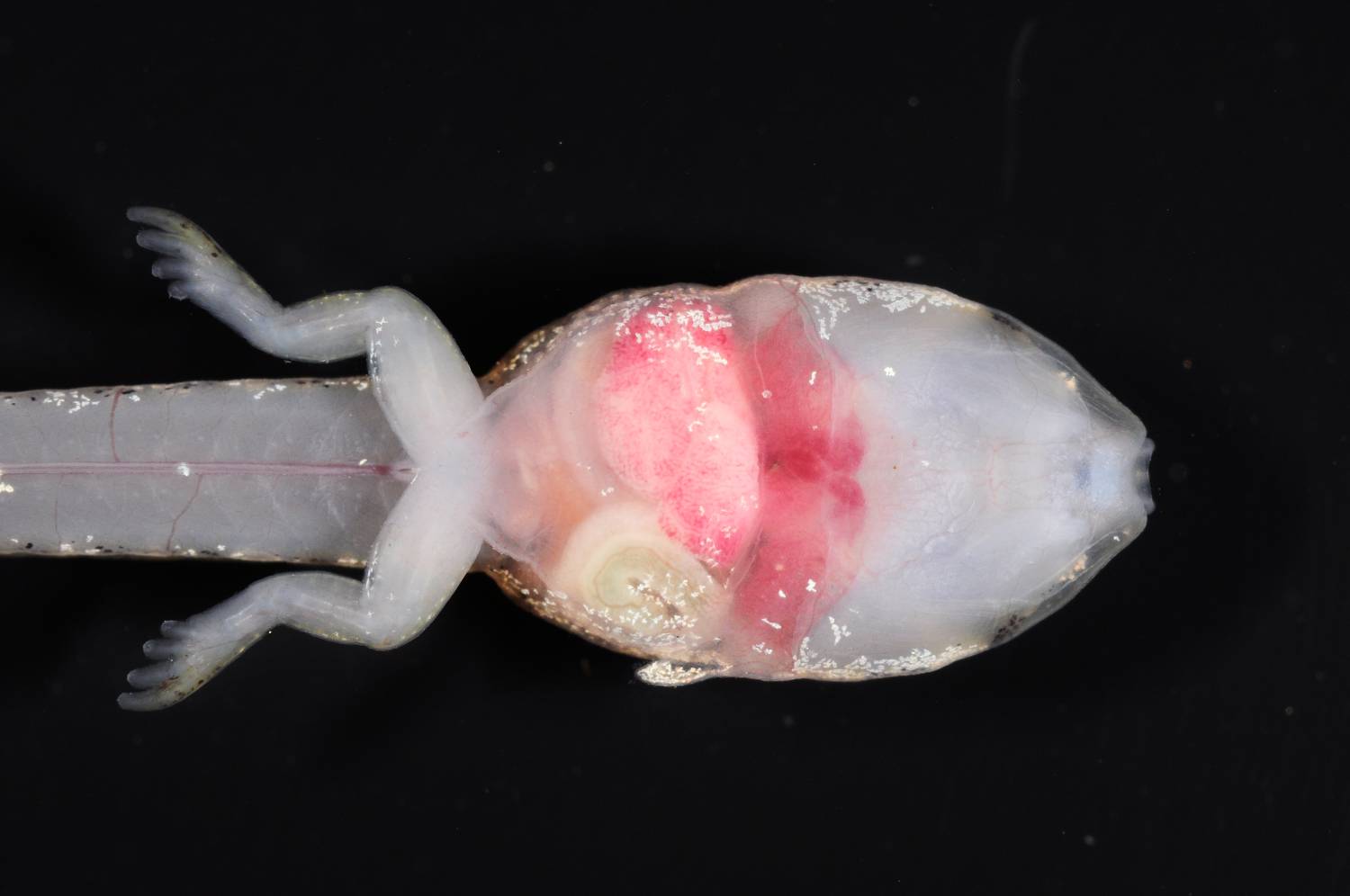
Occidozyga baluensis tadpoles inhabit shallow water-filled depressions in which clear water seeps in, especially at the base of slopes. With their distinctive features, Occidozyga tadpoles are unlikely to be confused with other Bornean genera. Occidozyga baluensis tadpoles are predatory and carnivorous. They feed on small invertebrates such as insect larvae but have also been observed to attack other tadpoles by nibbling their tails. Unlike others, they possess a large stomach-like structure in their digestive tract. The tadpoles can be seen perching motionless on leaf litter, often in the shallows, waiting in ambush. Occidozyga tadpoles show precocious hind limb development, and we have never encountered tadpoles without well-developed hind limbs. It is likely that hind limbs are associated with better balance and perhaps produce thrust associated with prey capture.
-
Family:Dicroglossidae
-
Genus:Occidozyga
-
Ecomorph:benthic, carnivorous, exotrophic, lentic
-
Waterbody Type:stagnant
-
Water Column:bottom
-
Feeding Type:feeding
-
Size:33 mm
-
Development:larva, tadpole
-
Adult:Occidozyga
Coloration
Gold brown or sandy brown to mid-brown above, with irregular small blurred darker flecks; particularly dark area on top of head and trunk-tail junction. Head and trunk densely dusted with iridocytes; scattered dark melanocytes (dots), particularly at lateral face. Orbital space anterior to eye unpigmented. Flank darker than dorsum. Skin of venter mostly unpigmented and transparent, except for scattered iridocytes at anterior abdominal and gill areas. Inner organs visible through skin (large liver, often bright in color). General color of tail similar to that of body but lighter (with less dense pigment cells). Clusters of black dots distributed along tail, as well as clusters of whitish iridocytes; most of the tail’s pigmentation on the muscular part, but the fins pigmented to some extent as well.
Snout
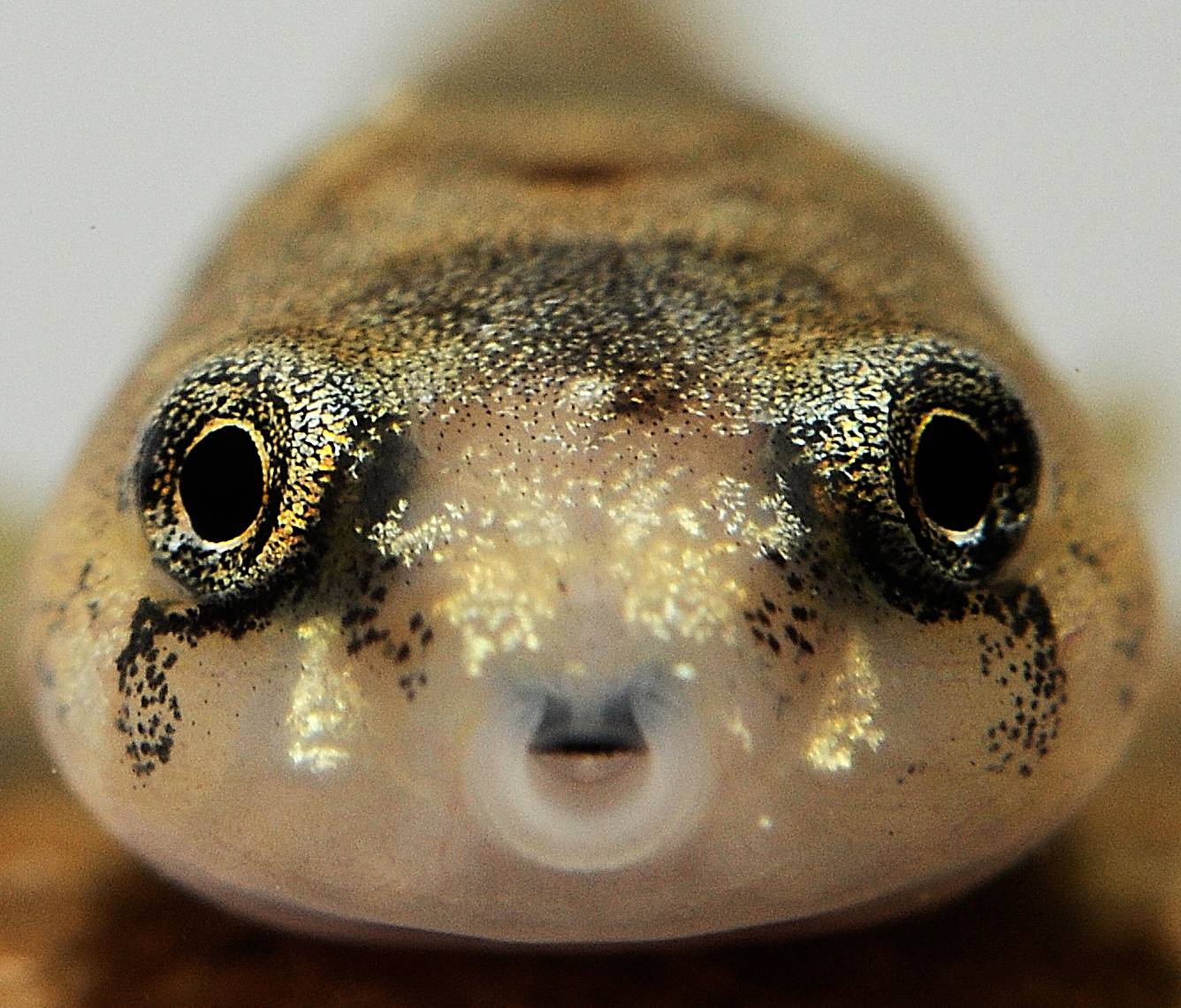
Tapering in dorsal view, truncated anteriorly. A medial projection and slightly projecting oral structures generate three minute anterior projections in the silhouette of the snout in dorsal view. In lateral view, snout moderately long; contour tapering straight into an obtuse tip.
Oral Disc
Instead of an oral disc, a horseshoe-like short tube (open dorsally) is formed. Papillae and keratodont rows absent. LTRF 0/0. Oral orifice terminal. Jaws strongly developed and strongly keratinized but recessed far backward from the external mouth orifice.
Body
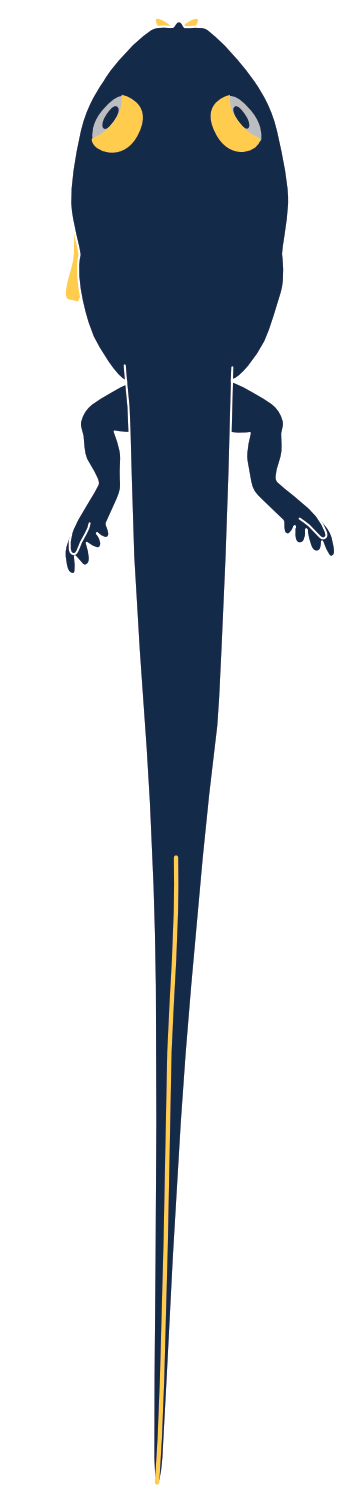
A medium-sized tadpole. In dorsal view, general body contour oval, yet head longer and wider than trunk. Body widest at level of the posterior region of the head. Head contour smoothly rounded in dorsal view, except for a truncation at snout. Body depressed dorsoventrally. Spiracle sinistral and opening posterolaterally. Because of the large head, the spiracle is located quite posterior relative to the body. Medial side of spiracle free; a short spiracular tube present. Spiracle below mid-body level in lateral view. Lateral line organs indistinct. Hindlimbs developed precociously.
Eyes & Nostrils
Eyes relatively large and positioned dorsolaterally, oriented anterolaterally, with a significant overlap in field of view anteriorly. Iris and orbit of eye beyond iris dotted with silver-brass iridocytes. Nostril opening absent for most of larval life; if present (in metamorphic stages), closer to eye than to snout.
Tail
Very long, approximately 75% of total length. Muscular part of tail strong. In dorsal view, tail muscle more than half of maximum trunk width; nearly as high as trunk in lateral view. Upper fin originates far posterior to trunk-tail junction at approximately 40% of tail length. Upper fin higher than lower fin; both fins very low, with little convexity in the contour line. In the posterior fourth of tail, fins converge into an acute tip. Maximum tail height at approximately the beginning of the distal third of tail. Lateral tail vein and tail myosepta indistinct.
Similar Species
Occidozyga tadpoles have a number of unique features that distinguish them from other genera: a horseshoe-like terminal mouth, precocious hind limb development, long tail with low tail fin, and eye axis orientation more anteriorly. In combination, these features make them easy to identify. The relationships within the genus have not been resolved, however. More Occidozyga species than previously known occur on the island, and until larger samples have been analyzed morphologically and diagnostic features have been established, the lineages within Occidozyga should be identified by genetic barcoding.
Literature
The details of reproduction are unknown. Male calls are a series of rasping notes in rather low sound pressure and low pitch.
Flury, J.M., Haas, A., Brown, R.M., Das, I., Pui, Y.M., BoonHee, K., Scheidt, U., Iskandar, D.T., Jankowski, A., Hertwig, S.T. (2021) Unexpectedly high levels of lineage diversity in Sundaland puddle frogs (Dicroglossidae: Occidozyga Kuhl and van Hasselt, 1822). Molecular Phylogenetics and Evolution 163: 107–210.
Haas, A., Pohlmeyer, J., McLeod, D.S., Kleinteich, T., Hertwig, S.T., Das, I., Buchholz, D.R. (2014) Extreme tadpoles II: the highly derived larval anatomy of Occidozyga baluensis (Boulenger, 1896), an obligate carnivorous tadpole. Zoomorphology 133: 321–342.