Frogs of Borneo

Frogs of Borneo

Frogs of Borneo

Frogs of Borneo

Frogs of Borneo

Frogs of Borneo

Frogs of Borneo

Frogs of Borneo

Frogs of Borneo

Frogs of Borneo

Frogs of Borneo
Filter
Occidozyga aff laevis
The morphology suggests that this Occidozyga species is a carnivorous predator, as are the tadpoles of other species in the genus. They were observed at the banks of a blackwater pond in Gunung Mulu National Park, in shallow water, resting on leaf litter.
-
Family:Dicroglossidae
-
Genus:Occidozyga
-
Ecomorph:benthic, carnivorous, exotrophic, lentic
-
Waterbody Type:stagnant
-
Water Column:bottom
-
Feeding Type:feeding
-
Size:33 mm
-
Development:larva, tadpole
-
Adult:Occidozyga
Coloration
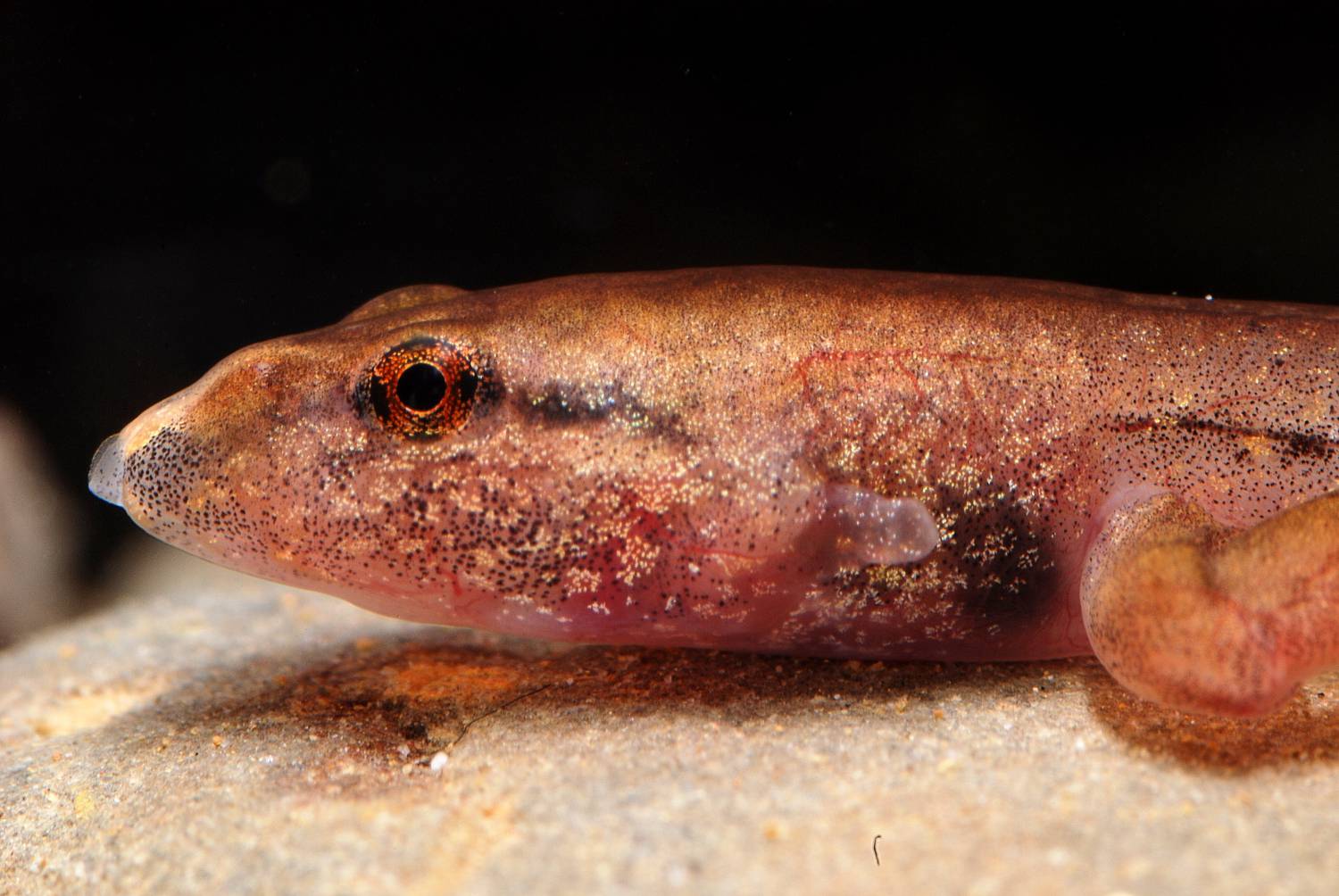
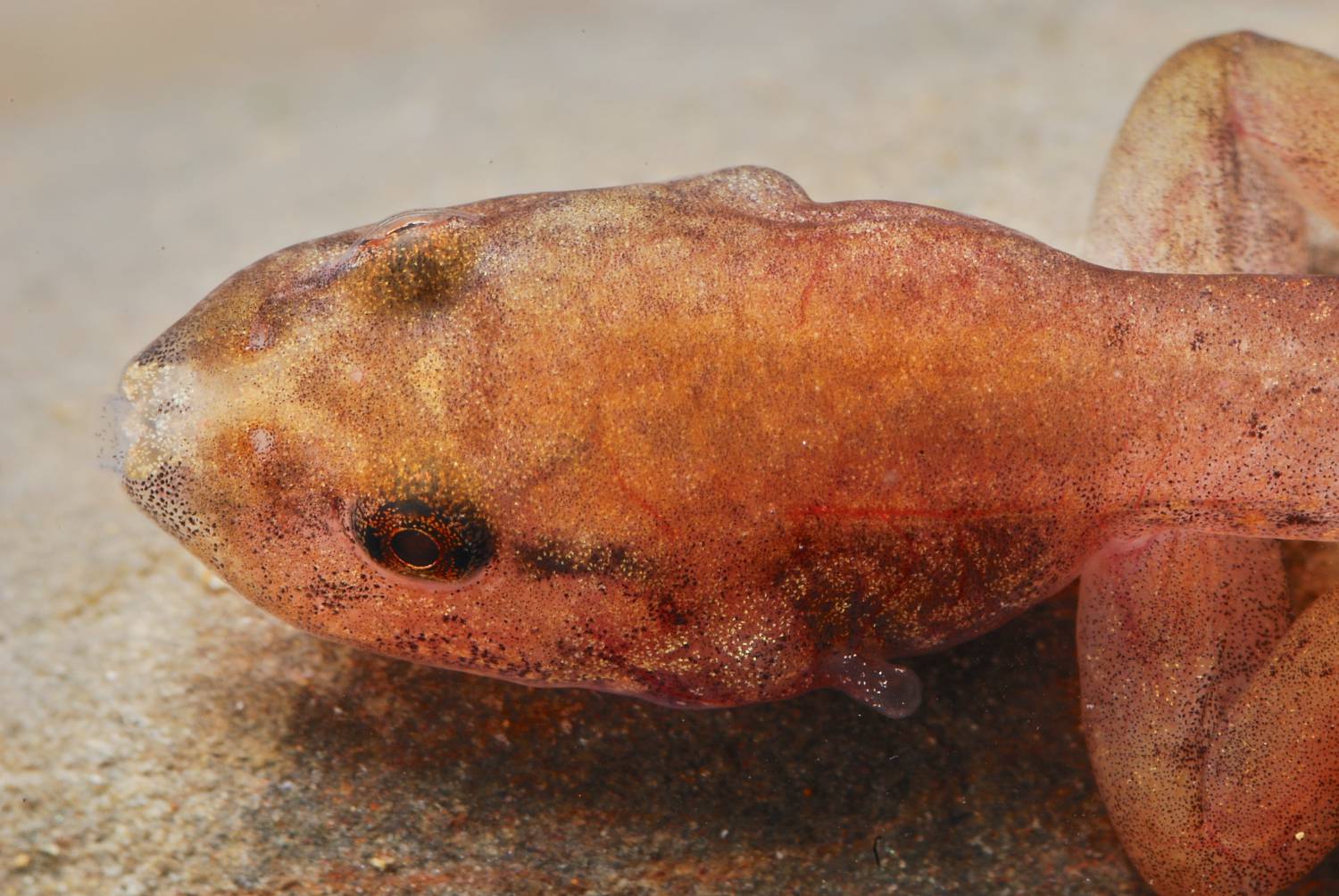
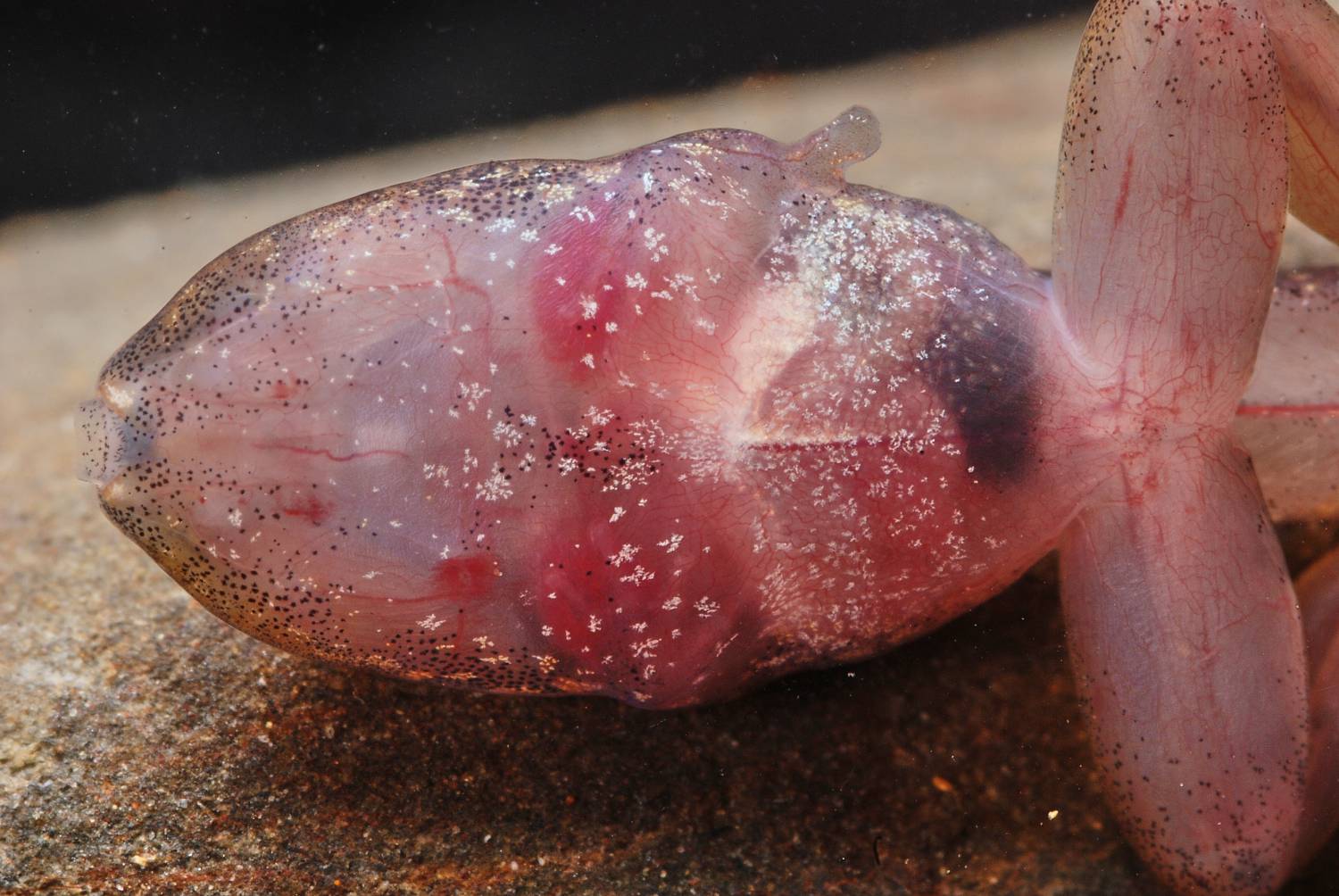
Homogeneously brown to chestnut brown above, without distinctive pattern; lighter in color, cream to sandy brown dorsally on the snout. Head and trunk dusted with gold iridocytes; black dotting especially along the lateral face and flank. A dark streak runs from the eye along the temporal region. Orbital space anterior to eye pigmented. Flank darker than dorsum; lower head and lower flank with light patches of iridocytes in a cloudy pattern. The ventral skin bears scattered iridocytes and melanocytes. Particularly the anterior abdominal area has a high density of iridocytes and a closed silver sheet is formed. Inner organs visible through skin, but not as clearly as in other species. Body color continues onto the tail. The tail and its fins are finely dusted with melanocytes. Clusters of melanocytes form several small black spots along the tail. A narrow black horizontal streak is formed at the root of the tail. Iridophores are scattered all over the tail but particularly form whitish flecks along both fin edges.
Snout
In dorsal view, tapering towards a truncated tip; at the tip, a mouth tube projects beyond the snout contour in dorsal and lateral views. In lateral view, snout long and angular; contour descends from the level of the eye more or less horizontally to the nostril, where it bends downward to continue to the snout tip. Nostrils indistinct (closed).
Oral Disc
Mouth opening terminal in position; oral disc and lip flaps absent; a horseshoe-like short tube (open dorsally) is formed instead, with a finger-like dorsal process of the snout projecting into the open end of the horseshoe (see O. baluensis); tube protrudes beyond the snout in dorsal view. Papillae and keratodont rows absent. LTRF 0/0. Jaws well developed and keratinized but recessed far backward from the external mouth orifice.
Body
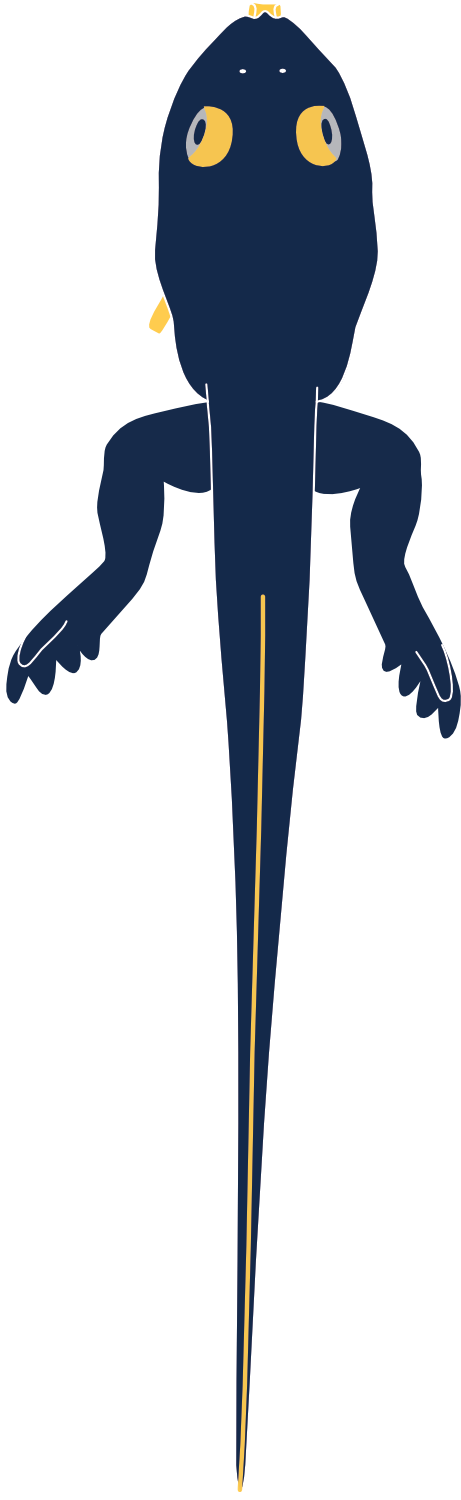
Medium-sized. Depressed dorsoventrally. In dorsal view, general body contour a stretched oval. Head dominates the body and is larger than trunk part. Head slightly wider than trunk. Body widest at level of the posterior head region (gill area). Head contour tapering from eyes to snout in dorsal view. Spiracle sinistral and located relatively far posteriorly, due to the enlarged head. Spiracle opens posteriorly. Medial side of spiracle not attached to body wall; a long free tube present. Spiracle below mid-body level in lateral view. Lateral line organs indistinct. Hindlimbs developed precociously.
Eyes & Nostrils
Eyes dorsolateral. Eye axis more laterally than anteriorly oriented. Iris and orbit of eye beyond iris dotted with copper iridocytes with small gaps (black) in the periphery of the upper, lower, anterior, and posterior sectors. Nostril approximately midway between eye and snout.
Tail
Very long, up to 73% of total length. Muscular part of tail strong. In dorsal view, tail muscle more than half maximum trunk width; nearly as high as the trunk in lateral view. Upper and lower fins originate posterior to trunk-tail junction at approximately 18% of tail length. Upper fin is higher than lower fin; both moderately low. Upper fin more convex in contour than lower fin. In posterior third of tail, fins converge straight into an acute tip. Upper fin contour slightly concave before it reaches the tip. Maximum tail height in the mid-tail region. Lateral tail vein partly obscured by pigmentation. Tail myosepta indistinct.
Similar Species
This tadpole can only be confused with other Occidozyga tadpoles. Body shape, precocious development of hindlimbs, and mouthparts are unambiguous characters for tadpoles of the genus. It is distinct from O. baluensis and O. berbeza by its long and angular snout; the eyes are less forward-directed and the tail fins originate more proximally on the tail compared to the other two species.
Literature
unknown.