Frogs of Borneo

Frogs of Borneo

Frogs of Borneo

Frogs of Borneo

Frogs of Borneo

Frogs of Borneo

Frogs of Borneo

Frogs of Borneo

Frogs of Borneo

Frogs of Borneo

Frogs of Borneo
Filter
Microhyla malang
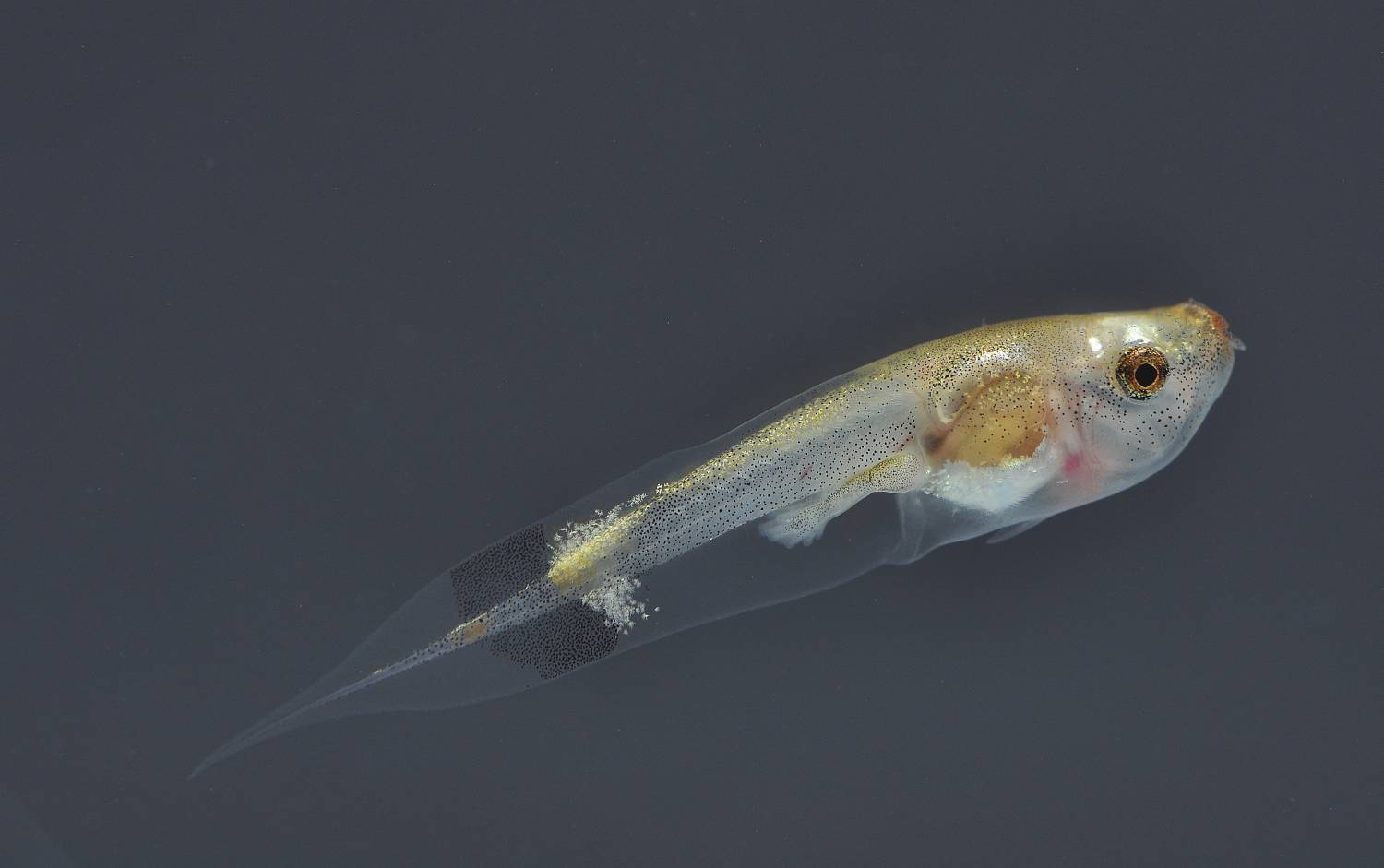
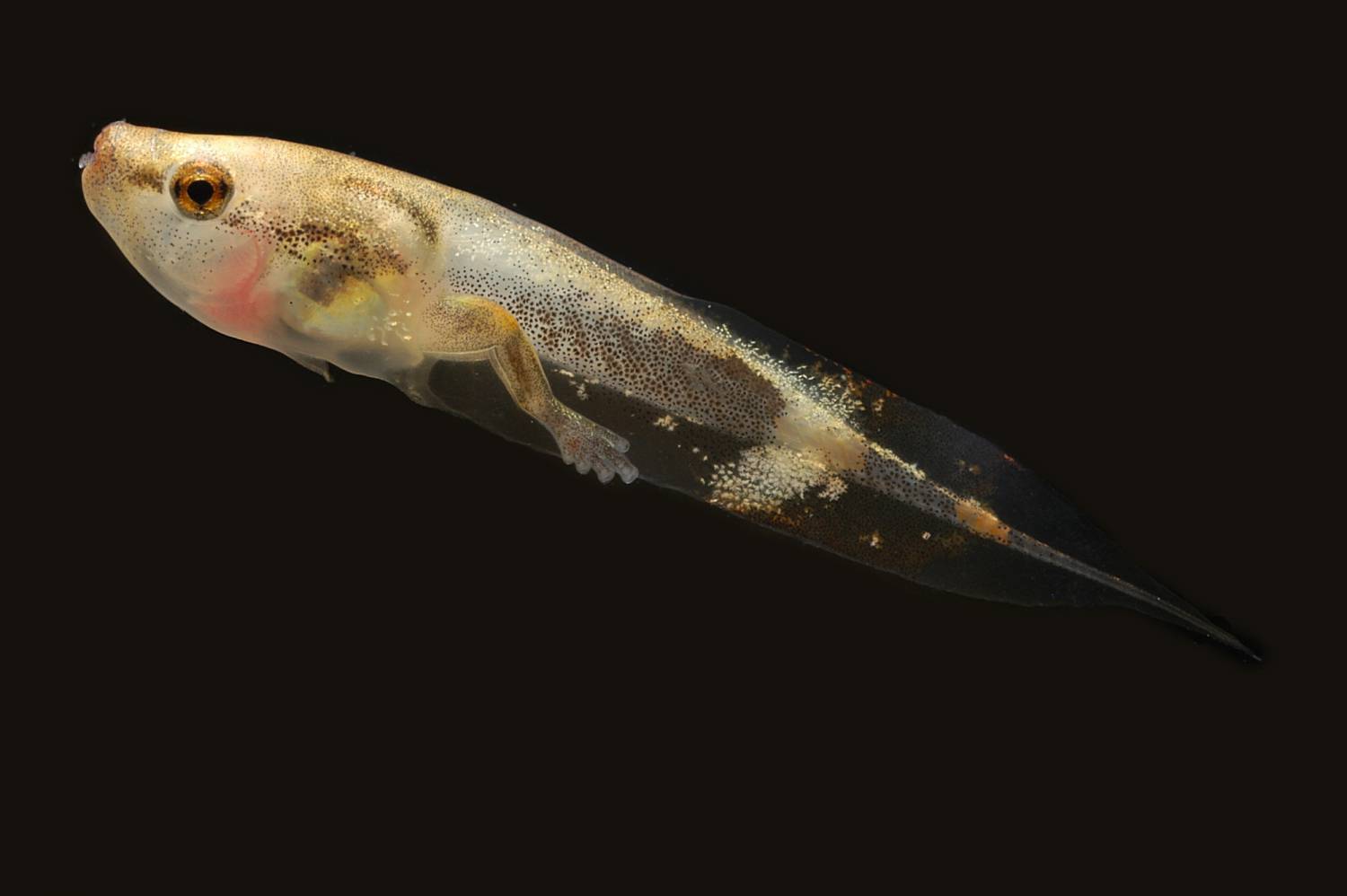
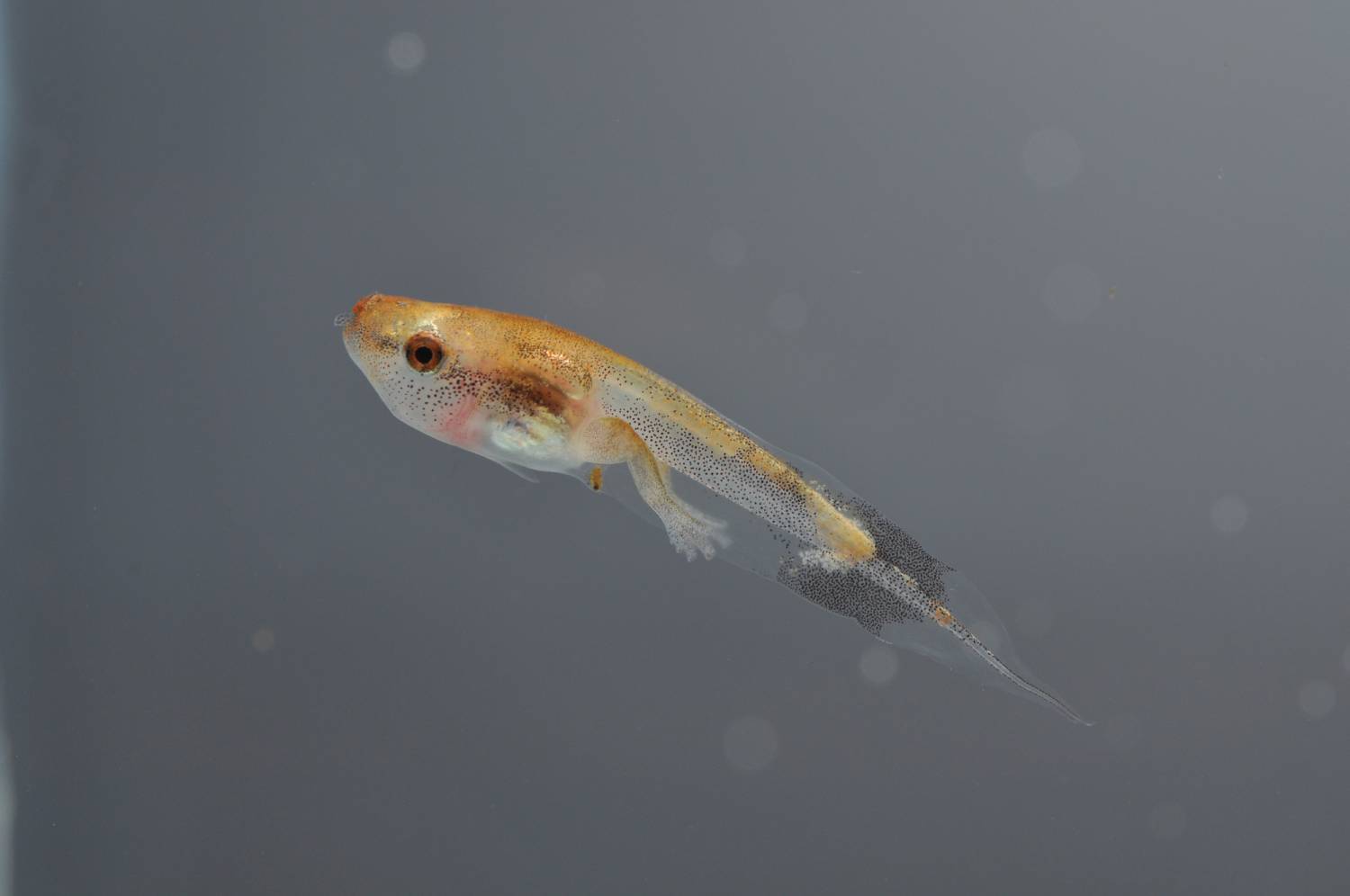
Tadpoles of Microhyla malang usually hold position almost motionless near the water surface. They maintain this position by continuously beating their long, flagellate tail tip. While hovering, the body is inclined at approximately 30° with the head directed upward. The lungs are air-filled, shine silvery through the skin, and provide buoyancy. When disturbed, the tadpoles are capable of short bursts of swimming toward the bottom leaf litter.
-
Family:Microhylidae
-
Genus:Microhyla
-
Ecomorph:endotrophic, lentic
-
Waterbody Type:stagnant
-
Water Column:mid-water to surface
-
Feeding Type:feeding, suspension feeder
-
Size:16 mm
-
Development:larva, tadpole
-
Adult:Microhyla
Coloration
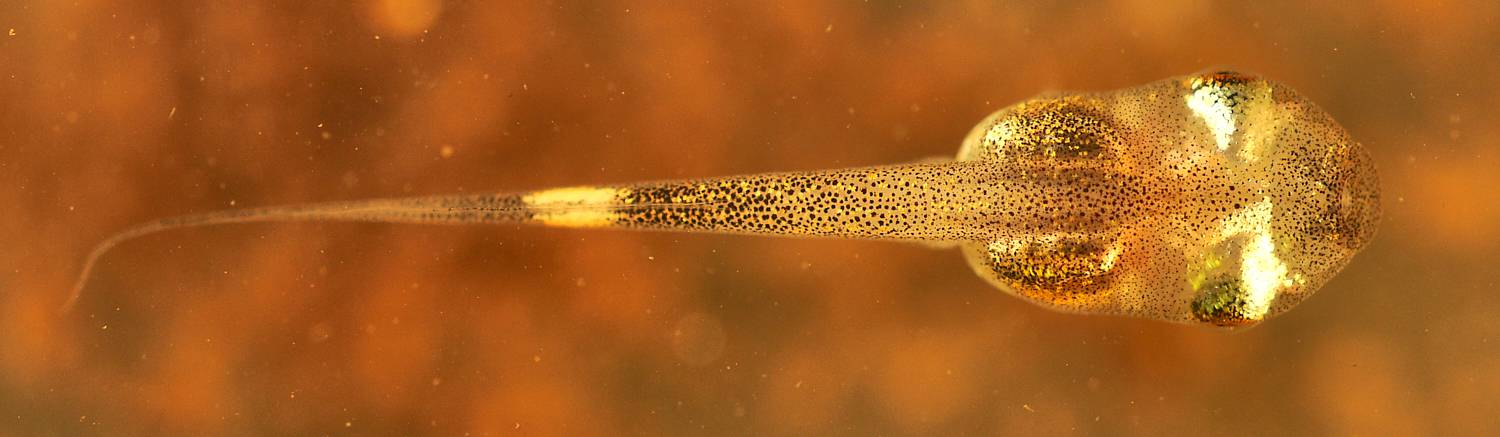
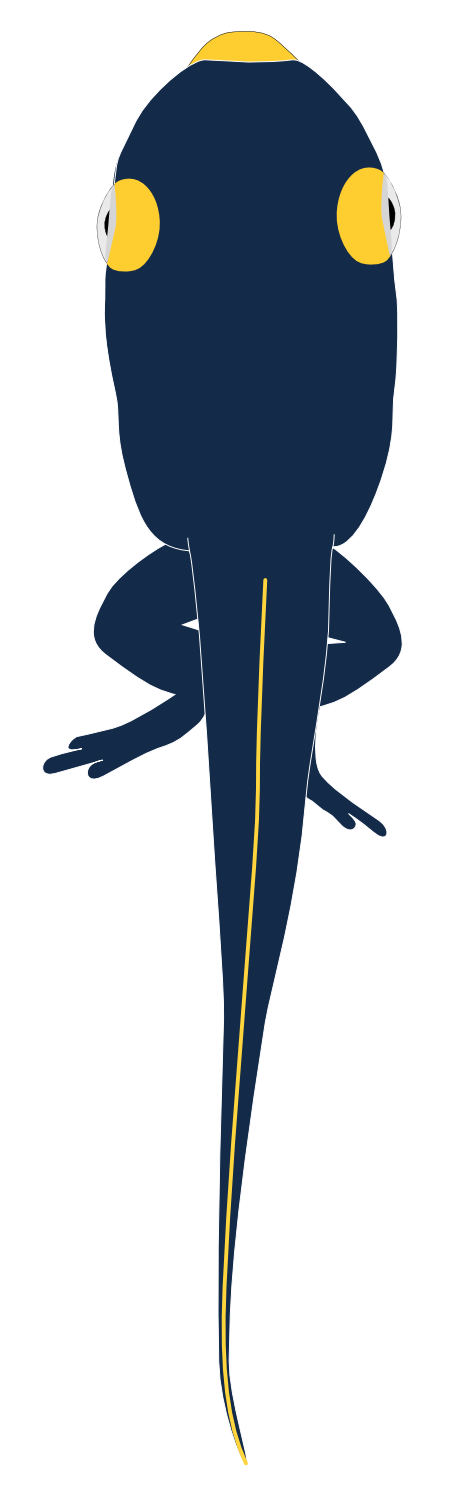
Head, trunk, and proximal tail brown dorsally. In some individuals, a diffuse dark band extends laterally from the mouth across the eye to the flank. The muscular part of the tail may bear a black horizontal band over approximately half of its length. A broad black vertical band crosses the tail in the distal half at about 60% of tail length; this band is bordered anteriorly by a conspicuous white band formed by iridocytes. Tail fins otherwise unpigmented. Iridocytes scattered at moderate density along the dorsal trunk and dorsal surface of the tail musculature. Dense iridocyte patches dorsally on the head near the eyes may appear as bright white spots in daylight. Mouth region often tinged orange to red. Ventral skin transparent and devoid of pigment cells; internal organs visible, including red heart and gills, silvery gut from below, and silvery lung dorsally.
Snout
Moderately long and broadly rounded in dorsal view, with an anterior truncation accommodating the mouthparts. In lateral view, the snout tip is truncated, with a distinctly bulging ventral region forming a pronounced “chin”. Jaws recessed.
Oral Disc
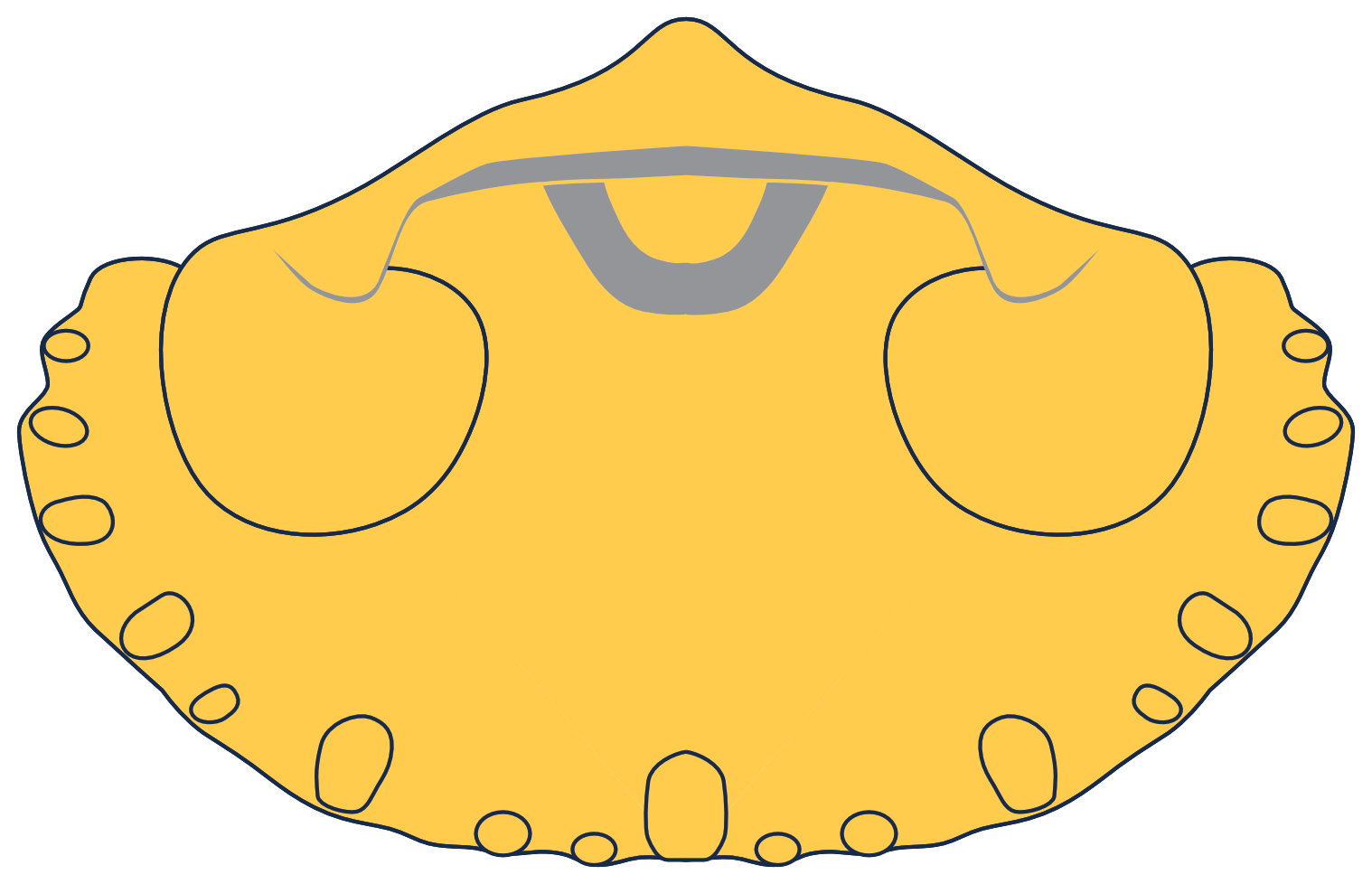
Mouth terminal and slightly directed upward in lateral view. Upper oral disc reduced to a fold bearing a triangular flap above the upper jaw. Lower part of oral disc consists of a semicircular lower lip with several knob-like papillae near the margin. Large knob-like papillae present on the left and right sides of the mouth, surrounded by the lower lip. Ventral bulging of the snout causes the mouthparts to appear recessed. Jaw edges not noticeably keratinized and keratodonts absent; LTRF 0/0.
Body
Small. Head and trunk subtriangular in lateral view, trunk approximately as wide as high. Head flat dorsally in lateral view. In dorsal view, head and trunk oblong and parallel-sided. Head relatively large compared to trunk. Body widest at the gill region of the head. Posterior trunk broadly rounded and distinctly wider than the base of the tail. Spiracular orifice ventral, median, and located slightly posterior to the center of the abdomen; opening posteriorly and bearing a ventral, flap-like extension forming a smooth V shape. Lateral line organs not visible.
Eyes & Nostrils
Eyes large, widely spaced, and positioned laterally. Cornea protrudes beyond the body contour in both dorsal and ventral views. Iris dusted with dense metallic copper iridocytes on a black background, with darker anterior and posterior sectors and occasionally a narrower dark ventral sector. Sclera covered with reflective silvery to golden iridocytes. Nostrils not perforated in larval stages.
Tail
Up to approximately 73% of total length. Tail musculature moderately developed, about half the trunk width in dorsal view and approximately half the body depth in lateral view. Upper fin originates slightly posterior to the trunk-tail junction. Upper fin contour largely straight, with only shallow convexity in the distal third of the tail. Lower fin similar in shape but higher than the upper fin, particularly in the proximal half. Tail tip long and flagellate. Skin glands absent. Lateral tail vein indistinct; muscle myosepta faintly visible under magnification.
Similar Species
The terminal mouth, reduced oral disc, and ventromedian spiracular opening clearly identify Microhyla malang as a microhylid tadpole and distinguish it from all non-microhylid larvae. Tadpoles of M. malang may be confused with those of M. petrigena or M. perparva, which also inhabit standing bodies of water. They can be distinguished by their larger size, more parallel-sided body, longer tail flagellum, and distinct coloration, including conspicuous white elements. See also comparative notes under other Microhyla species.
Literature
Males call from the ground in the vicinity of permanent or temporary ponds. Pairs are formed on land. The male clasps the female at the shoulder. Eggs are small, black and float as a single layer on the water surface.
Matsui, M. (2011) Taxonomic revision of one of the Old World's smallest frogs, with description of a new Bornean Microhyla (Amphibia, Microhylidae). Zootaxa 2814: 33–49.
Leong, T.M., Chou, L.M. (1999) Larval diversity and development in the Singapore Anura (Amphibia). The Raffles Bulletin of Zoology 47: 81–137.