Zum Hauptinhalt springen

Frogs of Borneo

Frogs of Borneo

Frogs of Borneo

Frogs of Borneo

Frogs of Borneo

Frogs of Borneo

Frogs of Borneo

Frogs of Borneo

Frogs of Borneo

Frogs of Borneo

Frogs of Borneo

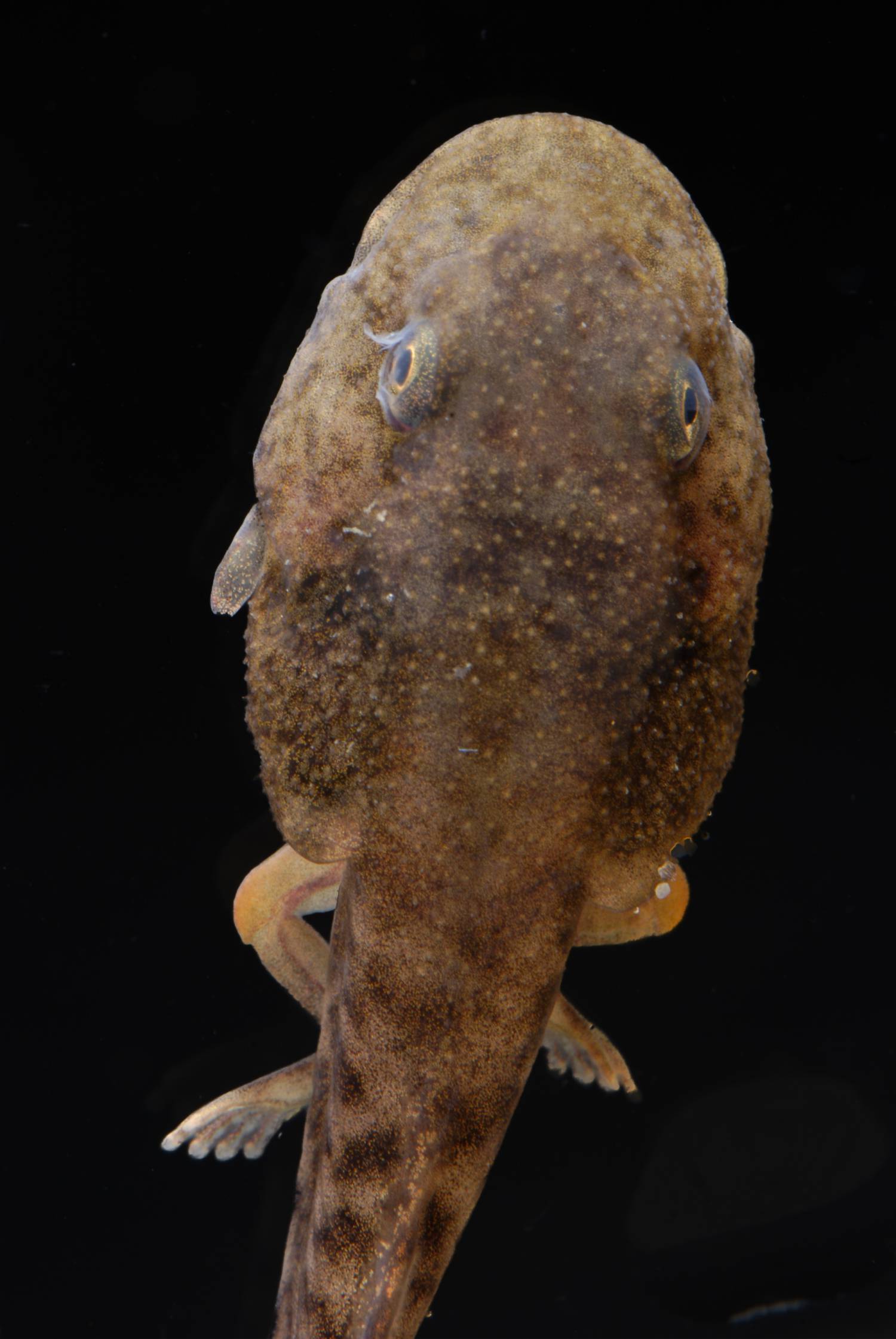
Meristogenys orphnocnemis

The species has been described from Bundu Tuhan, at the lower elevations of Gunung Kinabalu, Sabah, at 990 m a.s.l., but is also widespread in lower localities. Tadpoles can be found in clear, medium to large, rocky hill streams. They feed on organic rock overgrowth (algae, protists). We observed these larvae mostly at night, grazing over rock surfaces.
  • Family:
    Ranidae
  • Genus:
    Meristogenys
  • Ecomorph:
    exotrophic, gastromyzophorous, lotic, rheophilous, suctorial
  • Waterbody Type:
    flowing
  • Water Column:
    rock surface
  • Feeding Type:
    feeding, hard surface grazer, omnivorous, rasping
  • Size:
    40 mm
  • Development:
    larva, tadpole
  • Adult:
    Meristogenys

Coloration

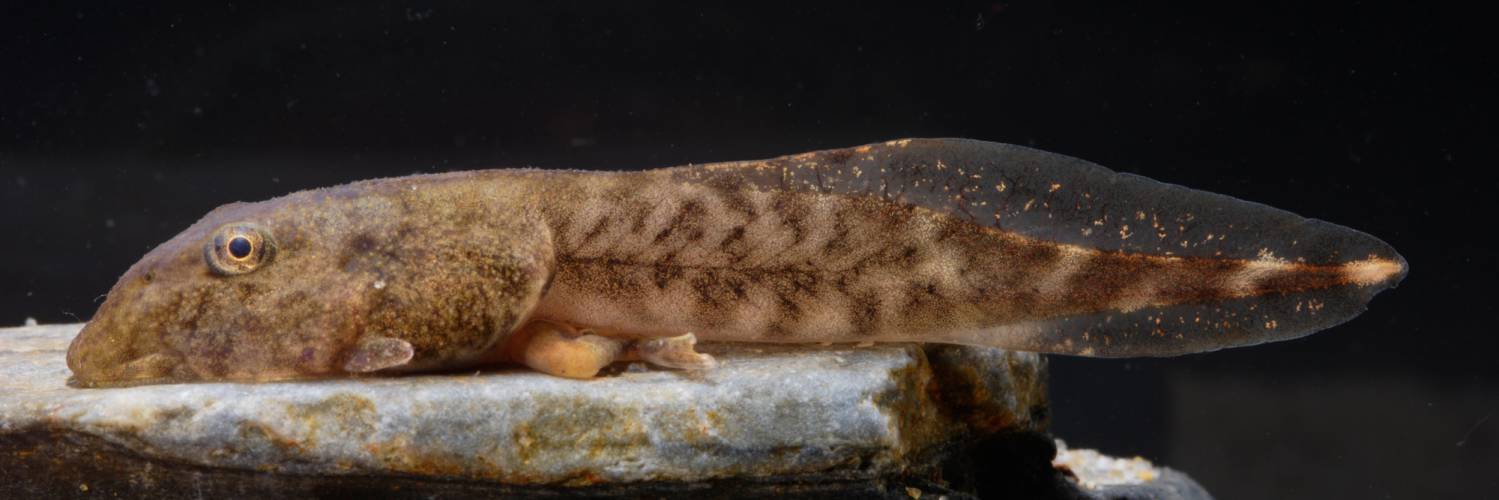
The coloration is variable. The upper side of the body is in shades of brown, gray, or olive. Diffuse spots and blotches create a diffusely mottled or marbled pattern. The blotches become clearer and more contrasty along the tail muscles. Scattered iridocytes are present but do not form distinct patches. The oral disc and abdominal sucker are mostly unpigmented, except for their dorsal faces and rims. Gills and heart are not visible. The tail fins are pigmented, more intensely at the periphery. In advanced stages, melanocytes along the blood vessels accentuate the proximal tail myosepta and produce a reticulate pattern on the tail fins. The lateral part of the abdomen is covered by dense white-silvery iridocytes; the semitranslucent medial belly skin may or may not possess scattered iridocytes.

Snout

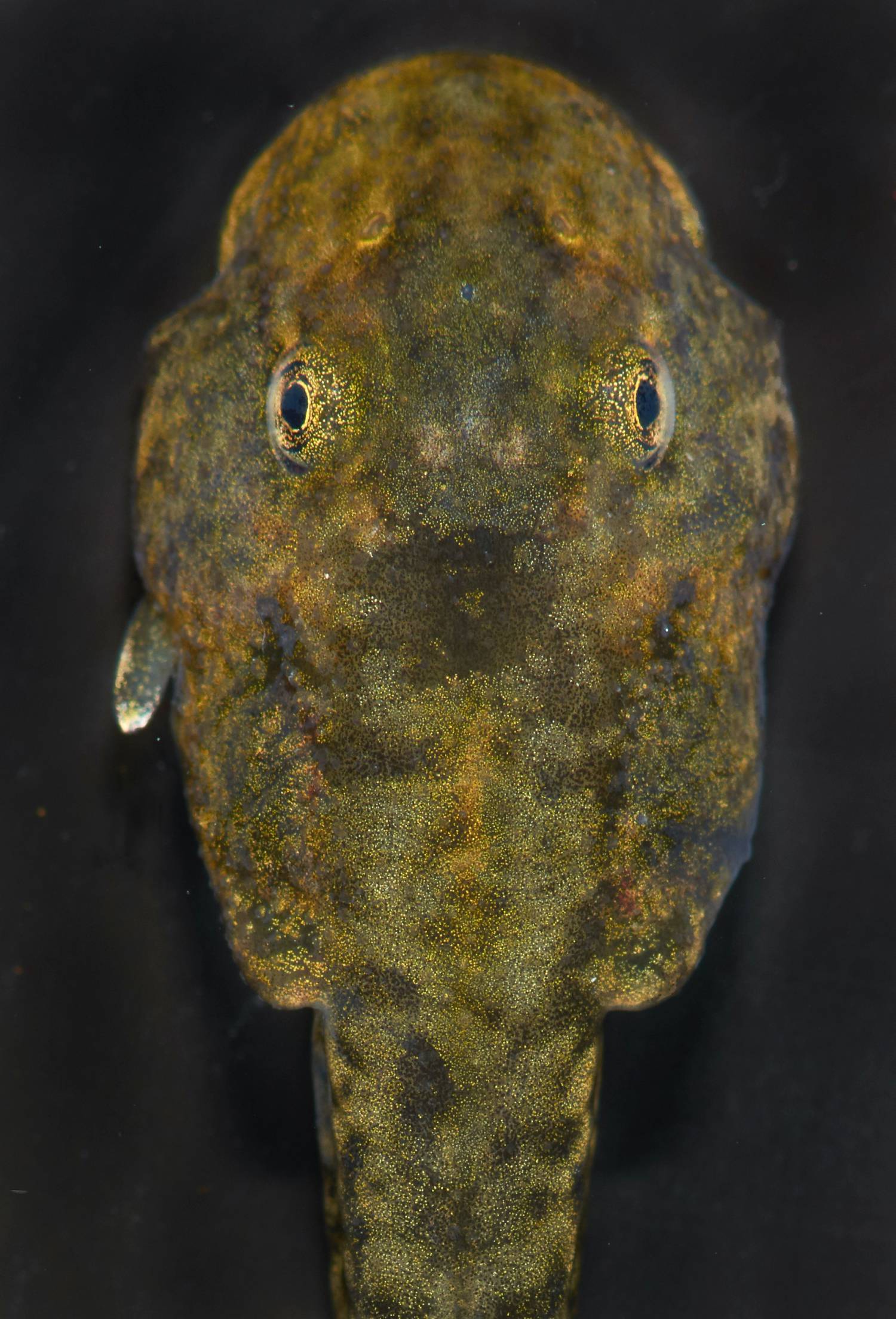
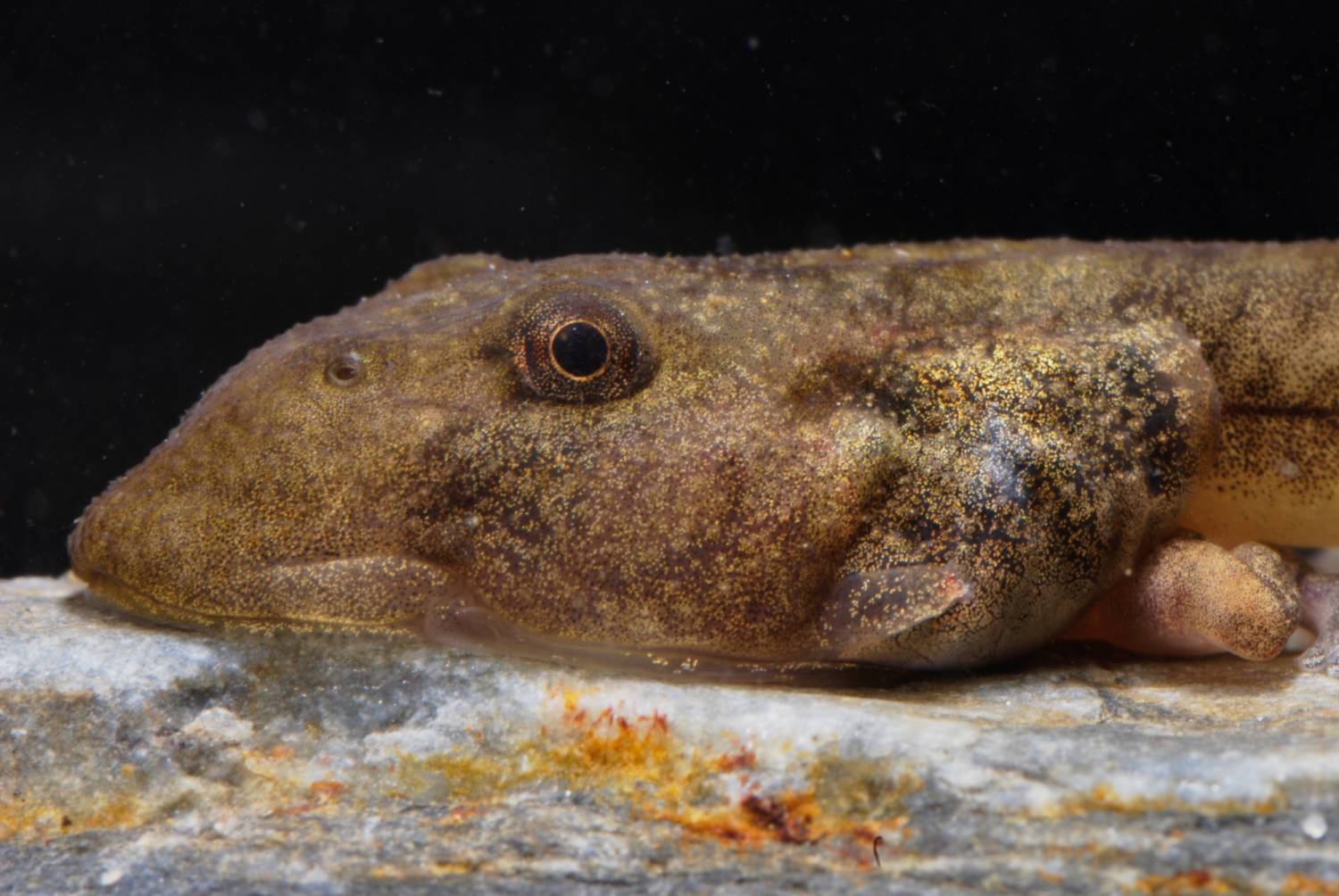
The anterior body is broadly rounded in dorsal view. In lateral view, the snout is long, sloping downward in a smooth convex curve. The oral disc is set off from the snout by a groove.

Oral Disc

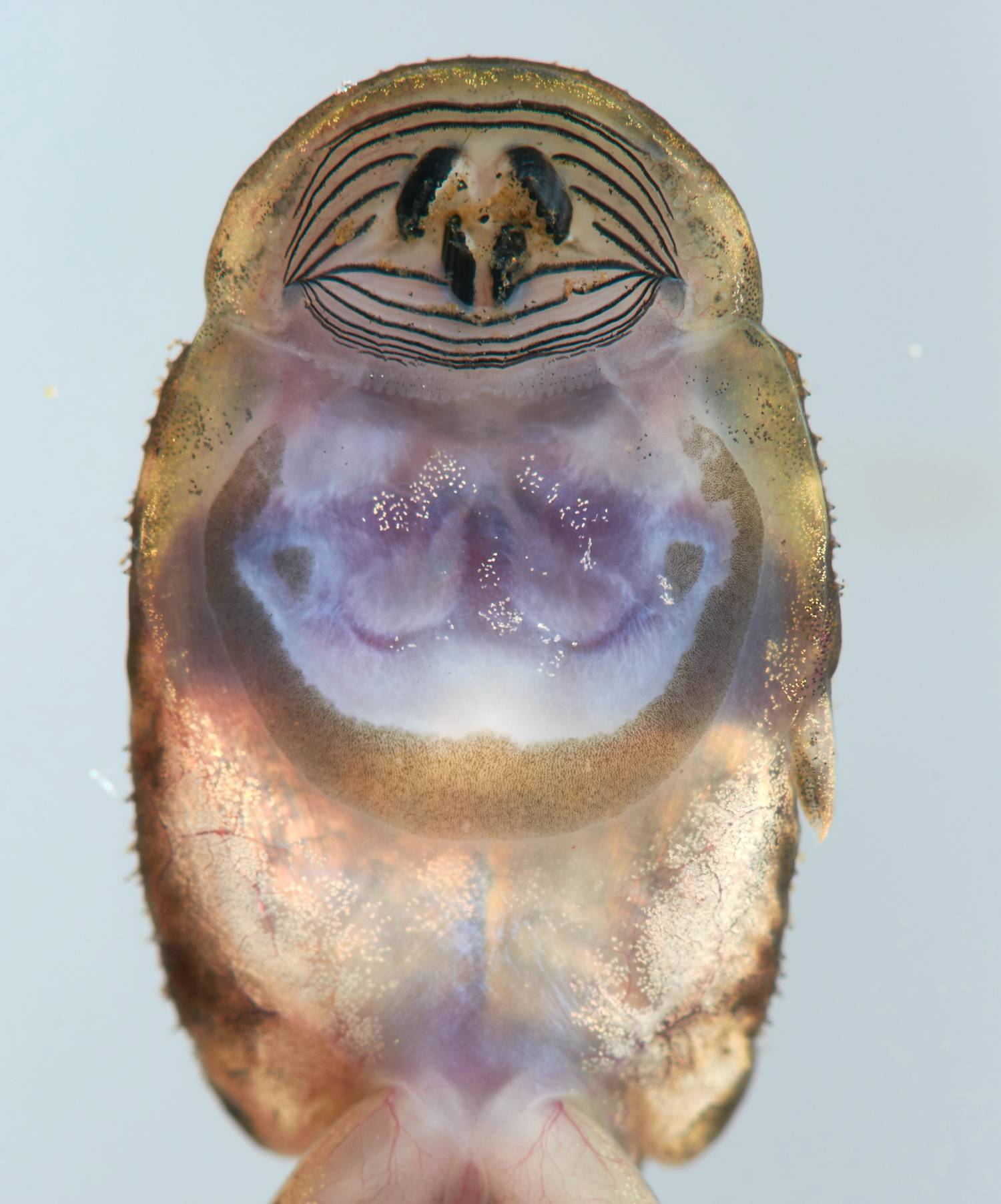
Ventral and wide, a thick-rimmed large abdominal sucker is present posteriorly, adjacent to the oral disc. The posterior rim of the sucker is at approximately 85% of body length in ventral view. A broad horseshoe-shaped friction area is set inside the sucker rim, with additional small round friction areas laterally. Marginal papillation of the oral disc is present on the lower and lateral upper lips. Marginal papillae are short, rounded, and indistinct. A row of submarginal papillae is located at the lateral upper lip. LTRF 6(4–6)/6(1). Beaks are strongly keratinized and deep black. The upper beak is widely divided; the lower beak is divided, V-shaped. Both upper and lower beaks bear coarse serrae (ribs).

Body

Depressed and streamlined in lateral view, the anterior profile shows a long sloping snout. In dorsal view, the body contour is more rectangular than oval. The snout is set off by a notch from the rest of the head. The posterior trunk end bulges posteriorly on both sides of the tail root. The body is widest at the level of the eyes or gills. The ventral side is flat. The spiracle is sinistral. The spiracular tube opens posteriorly and well below the longitudinal body axis in lateral view, close to the substrate. The spiracular orifice is at the end of a free, relatively long spiracular tube. Small groups of skin glands are located at the cheek, anterior to the spiracle, behind the eyes, and at the posterolateral bulge of the trunk; glands at the posterior end of the venter are absent (also see tail). Skin glands may be difficult to see in living specimens, more easily noted in preserved larvae. Lateral line organs are indistinct. The head, dorsum, and flanks bear many conspicuous, pointed skin projections.

Eyes & Nostrils

Eyes are positioned dorsolaterally. Nostrils are closer to the eyes than to the snout and are oriented anterolaterally. The iris bears a thin ring of golden iridocytes around the pupil; more peripherally, the iris is densely stippled with golden iridocytes on a black background.

Tail

The tail makes up 63–66% of total length. The muscular part is strong and high, virtually as high as the body in lateral view. The dorsal fin starts posterior to the trunk-tail junction (20–25% of tail length), rises up in a straight line to the highest point, and slopes down in a straight line to the tip. The tip is triangular and pointed. The lower fin originates at approximately 45% of tail length; it is lower than the upper fin and slightly convex. Maximum height of the tail is at the midpoint. Few skin glands are present in the lower fin, or they may be absent.

Similar Species

Only tadpoles of Huia and Meristogenys possess abdominal suckers and are easily recognized by this feature. Meristogenys differs from Huia in the divided upper beak. Within Meristogenys, several species with fused lower beaks can be excluded (lower beak divided in M. orphnocnemis). Examination of all features (size, skin glands, tail fins, LTRF, skin protuberances) is necessary to distinguish species with divided lower beaks. The taxonomy of larval Meristogenys is poorly known. Reliable identification may not be possible in all cases.

Literature

Males call from low vegetation, roots or rocks along the stream; females are mostly on the ground. Males call at irregular intervals, and sometimes calls are several minutes apart. Up to 800 eggs are attached onto a rock surface in the current. Hatching takes 24 days. Freshly hatched tadpoles tend to stay together in a group for about four days before they leave the natal site and disperse in the river.
Malkmus, R., Manthey, U., Vogel, G., Hoffmann, P., Kosuch, J. (2002) Amphibians & Reptiles of Mount Kinabalu (North Borneo). Koeltz Scientific Books, Königstein. 424 pp.

Matsui, M. (1986) Three new species of Amolops from Borneo (Amphibia, Anura, Ranidae). Copeia, 1986: 623–630.