Zum Hauptinhalt springen

Frogs of Borneo

Frogs of Borneo

Frogs of Borneo

Frogs of Borneo

Frogs of Borneo

Frogs of Borneo

Frogs of Borneo

Frogs of Borneo

Frogs of Borneo

Frogs of Borneo

Frogs of Borneo

Meristogenys amoropalamus

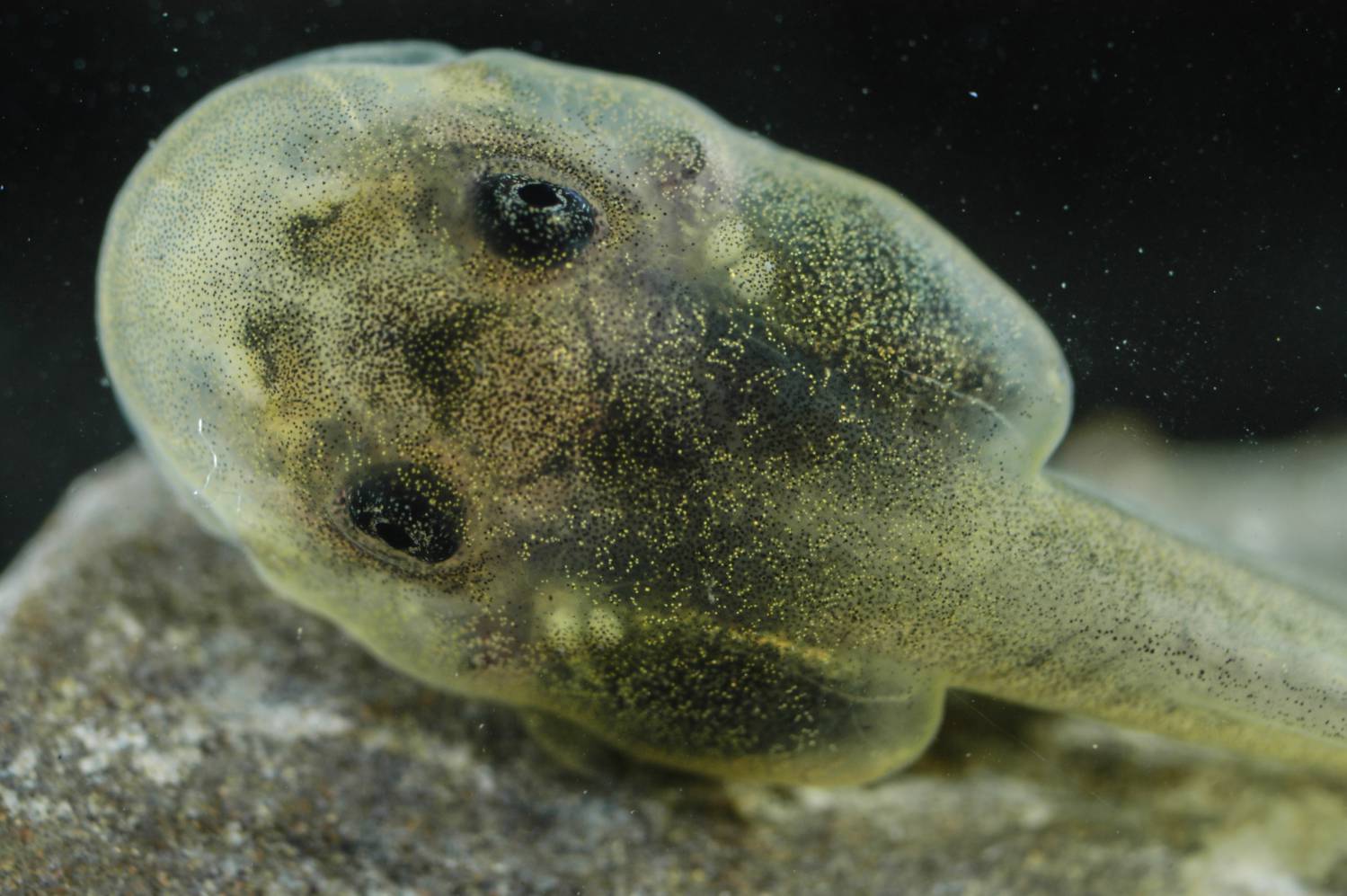
Tadpoles of Meristogenys amoropalamus inhabit clear, high-elevation cascading streams at approximately 1300 m a.s.l. Their well-developed abdominal sucker enables them to adhere firmly to rocks in strong currents while grazing on the rock surface. Tadpoles forage on exposed rock faces primarily at night, whereas during the day they conceal themselves beneath rocks. Particularly favorable rock surfaces may attract large numbers of individuals, and aggregations or schools can form. Habitat and microhabitat are frequently shared with tadpoles of Ansonia species.
  • Family:
    Ranidae
  • Genus:
    Meristogenys
  • Ecomorph:
    exotrophic, gastromyzophorous, lotic, rheophilous, suctorial
  • Waterbody Type:
    flowing
  • Water Column:
    rock surface
  • Feeding Type:
    feeding, hard surface grazer, omnivorous, rasping
  • Size:
    40 mm
  • Development:
    larva, tadpole
  • Adult:
    Meristogenys

Coloration

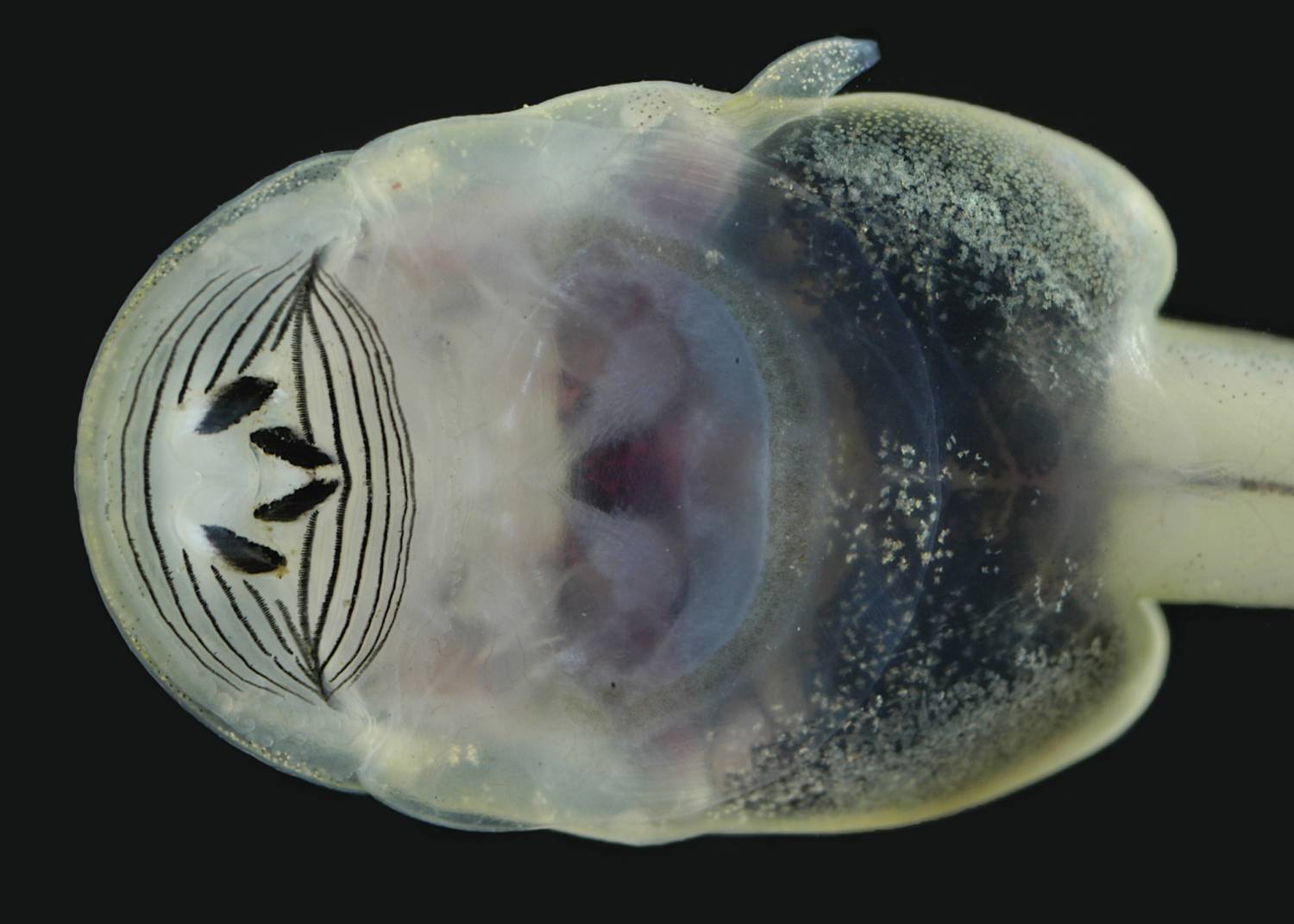
Body and tail generally grayish to dark brown; trunk darker dorsally and laterally than the head. Diffuse dark areas present at the nostrils and between the eyes. Lower flanks and lateral abdominal skin bear fields of scattered iridocytes. Medially, the abdomen is black or semitransparent; gut coils not visible or only faintly visible. Oral disc and abdominal sucker unpigmented; gills and heart not visible through the ventral skin. Specialized epithelial friction areas along the inner rim of the abdominal sucker appear as light brown zones. Pigmentation of the trunk extends seamlessly onto the muscular part of the tail, though lighter in appearance. Tail fins stippled with melanocytes, with lighter zones at the bases of the dorsal and ventral fins. In advanced larval stages, melanocytes along blood vessels accentuate the myosepta and may form a reticulate pattern on the tail fins.

Snout

Expanded and broadly rounded in dorsal view. In lateral view, snout long, sloping in a smooth convex curve, with a slight bulge above the oral disc.

Oral Disc

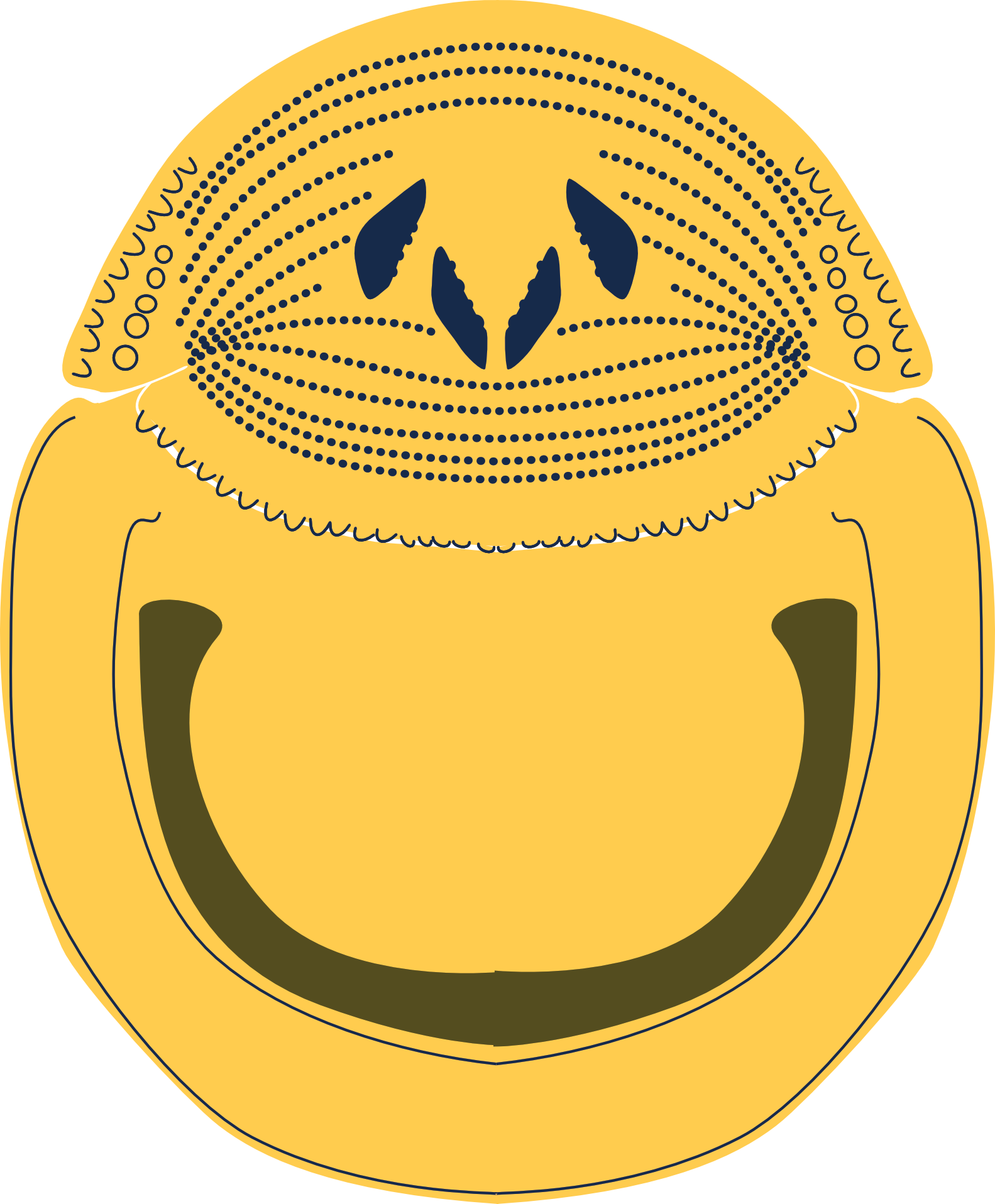
Oral disc ventral in position and wide, followed posteriorly by a large abdominal sucker. Abdominal sucker thick-rimmed and covering a substantial portion of the ventral trunk.

Body

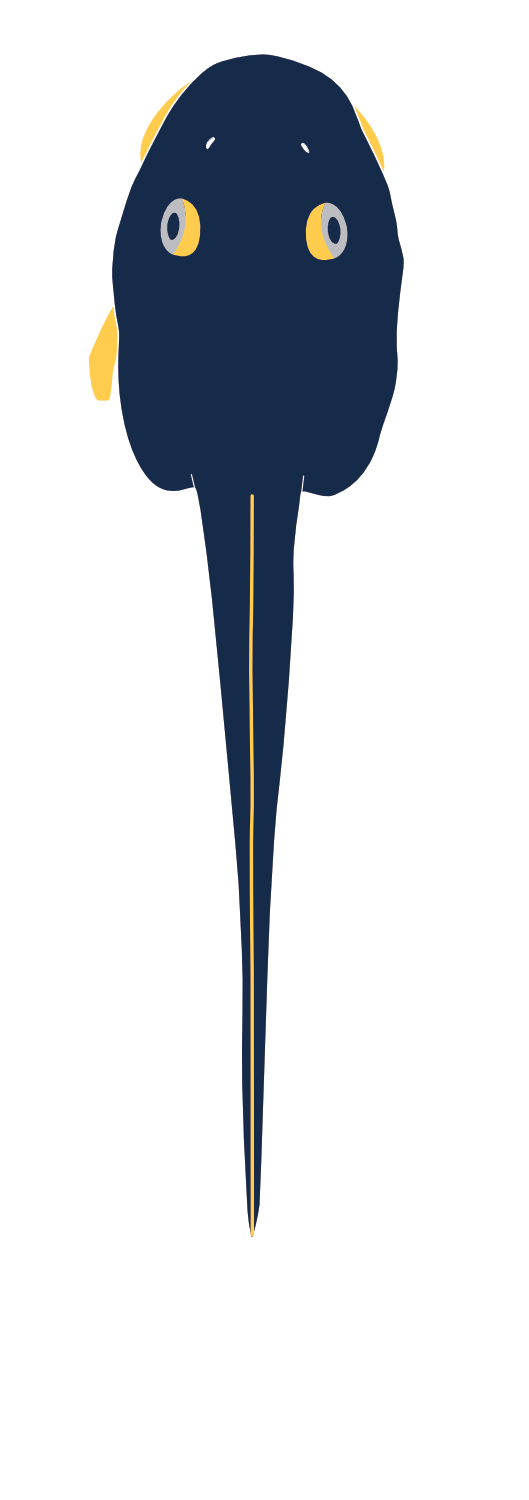
Strongly depressed and streamlined in lateral view, with a long, anteriorly sloping snout profile. In dorsal view, body contour intermediate between oval and rectangular, snout slightly set off. Trunk bulges posteriorly on both sides of the tail base. Body widest at the level of the gill region. In lateral view, trunk depth equal to head depth; ventral surface flat, belly not bulging. Spiracle sinistral; spiracular tube opening posterodorsally and well below the longitudinal body axis in lateral view. Spiracular orifice located at the end of a long, free spiracular tube. Small groups of skin glands present at the cheek, anterior to the spiracle, behind the eyes, and on the posterior bulges of the trunk.

Eyes & Nostrils

Eyes dorsolateral. Nostrils closer to eyes than to snout, oriented anterolaterally. Iris black with a ring of silvery to golden iridocytes around the pupil; scattered iridocytes present more peripherally. Sclera with silvery iridocyte stippling.

Tail

Approximately 64–65% of total length. Muscular part of the tail strong and high, slightly lower than body height. Dorsal fin originates only slightly posterior to the trunk-tail junction, rises gradually in a straight line to its maximum height, then changes abruptly to a downward slope, forming a pointed tip. Lower fin originates at approximately one third of tail length and is lower than the upper fin. Maximum tail height located approximately at mid-tail. Both dorsal and ventral fins bear longitudinal rows of skin glands.

Similar Species

Tadpoles of Meristogenys amoropalamus may be confused with other species of Meristogenys, especially M. dyscritus. Careful examination of keratodont formula, skin glands, jaw morphology, and skin protuberances is required for reliable identification. Tadpoles of Ansonia may occur in the same streams and can even occupy the same rock surfaces, but lack an abdominal sucker. Tadpoles of Huia cavitympanum, which do possess an abdominal sucker, are readily distinguished by their undivided upper and lower jaws and their spotted color pattern.

Literature

Reproductive behavior is unknown. Eggs of 2.2 mm diameter and 400–600 ovarian eggs per female have been reported.
Matsui, M. (1986). Three new species of Amolops from Borneo (Amphibia, Anura, Ranidae). Copeia, 1986: 623–630.

Shimada, T., Matsui, M., Yambun, P., Sudin, A. (2011) A survey of morphological variation in adult Meristogenys amoropalamus (Amphibia, Anura, Ranidae), with a description of a new cryptic species, Zootaxa, 2905: 33–56.

Shimada, T., Matsui, M. (2019) Reexamination of larval assignment of Meristogenys poecilus in Sarawak, Borneo, with a diagnostic table of Meristogenys larvae. Current Herpetology 38: 23–31.