Frogs of Borneo

Frogs of Borneo

Frogs of Borneo

Frogs of Borneo

Frogs of Borneo

Frogs of Borneo

Frogs of Borneo

Frogs of Borneo

Frogs of Borneo

Frogs of Borneo

Frogs of Borneo
Filter
Limnonectes leporinus
Streams ranging from small to large, with sandy and gravelly bottoms. Tadpoles hide among leaf litter and plant debris. Weakly developed mouthparts suggest opportunistic consumption of fine organic particles such as algae, protists, bacteria, and decaying matter. Inger (2009) suggested that this species and related river frogs primarily feed on suspended organic matter that they stir up through their activity on the substrate.
-
Family:Dicroglossidae
-
Genus:Limnonectes
-
Ecomorph:benthic, exotrophic, lotic
-
Waterbody Type:flowing
-
Water Column:bottom
-
Feeding Type:feeding, generalist
-
Size:39 mm
-
Development:larva, tadpole
-
Adult:Limnonectes
Coloration
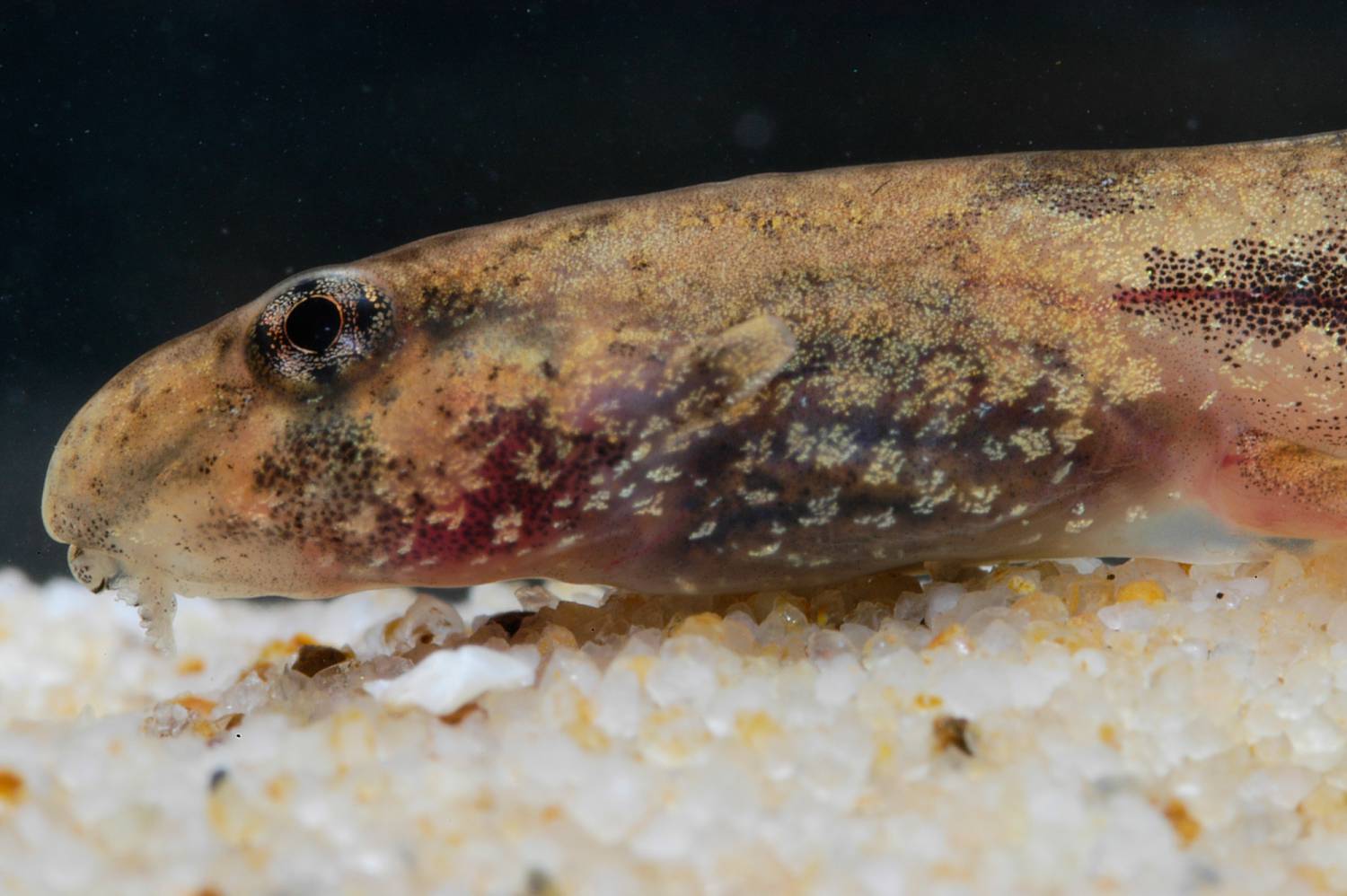
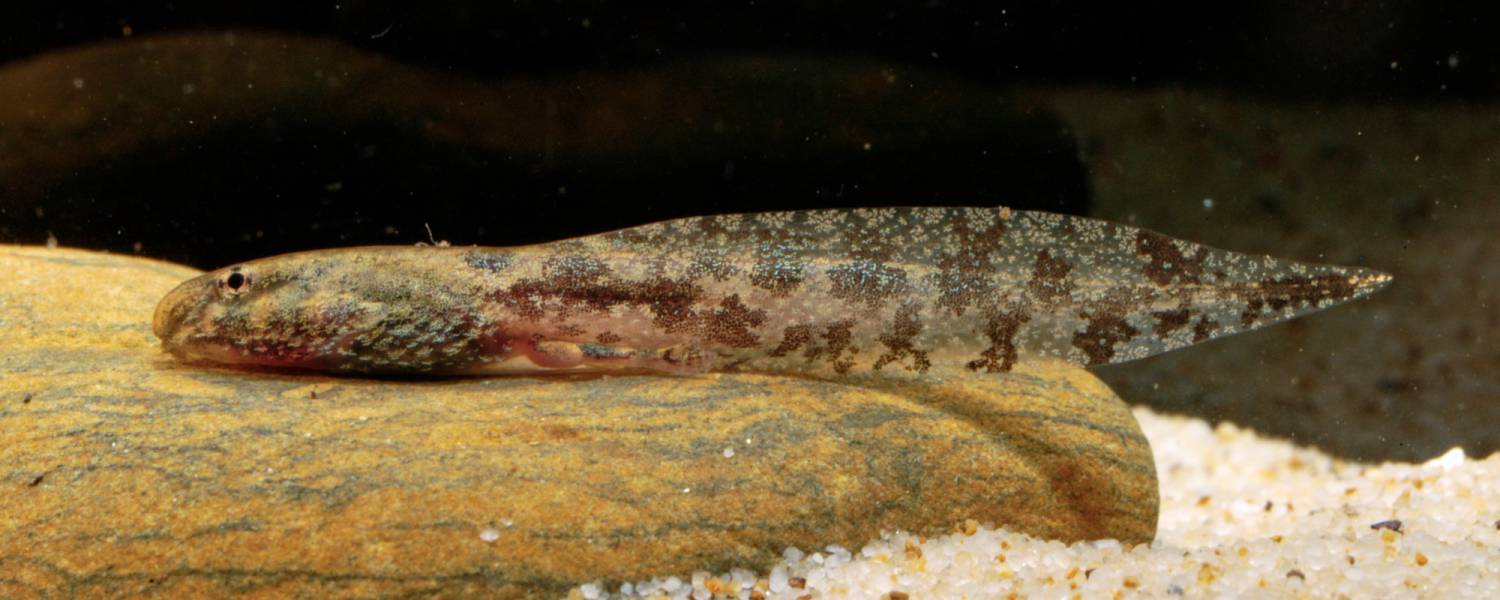
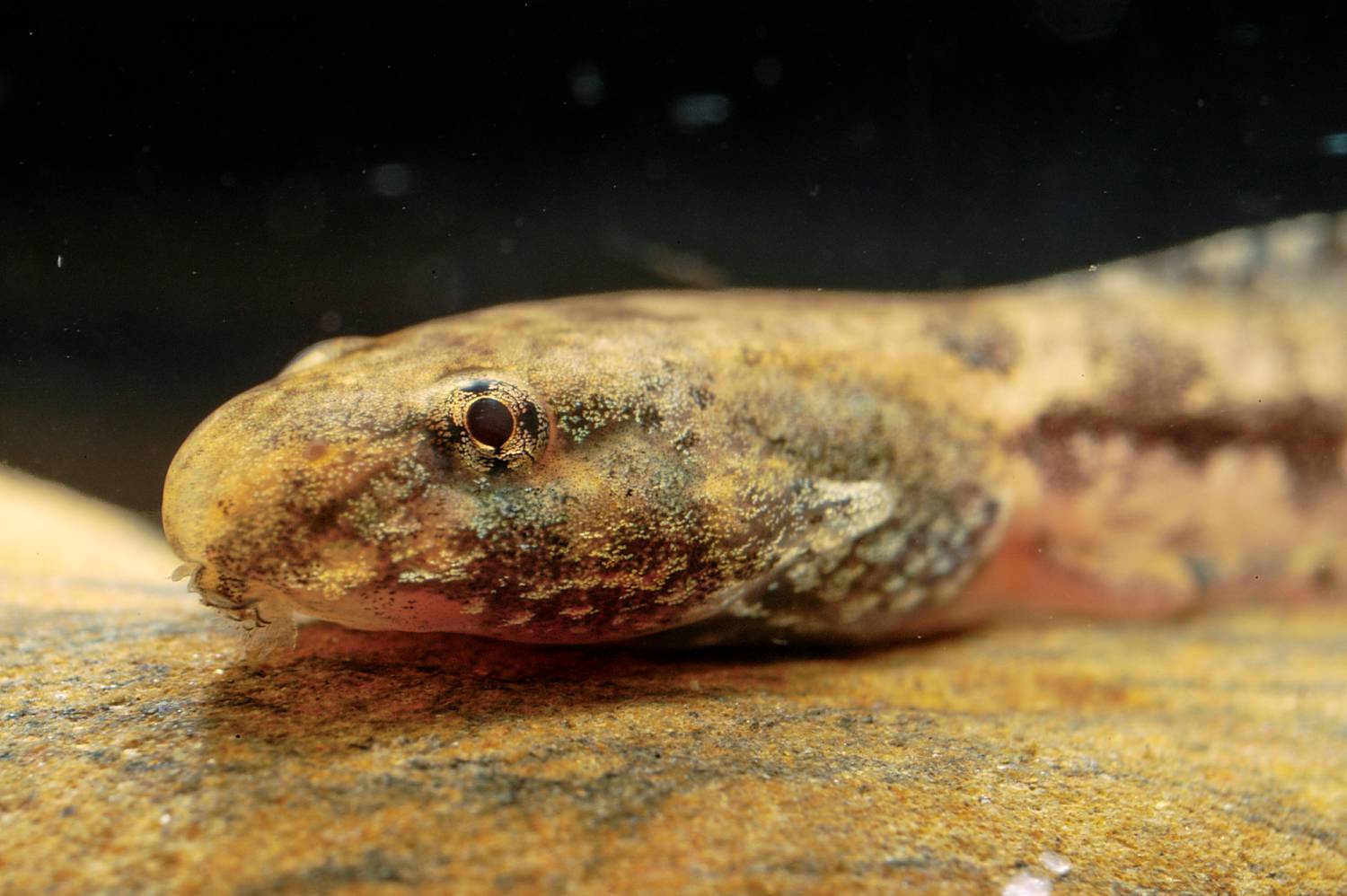
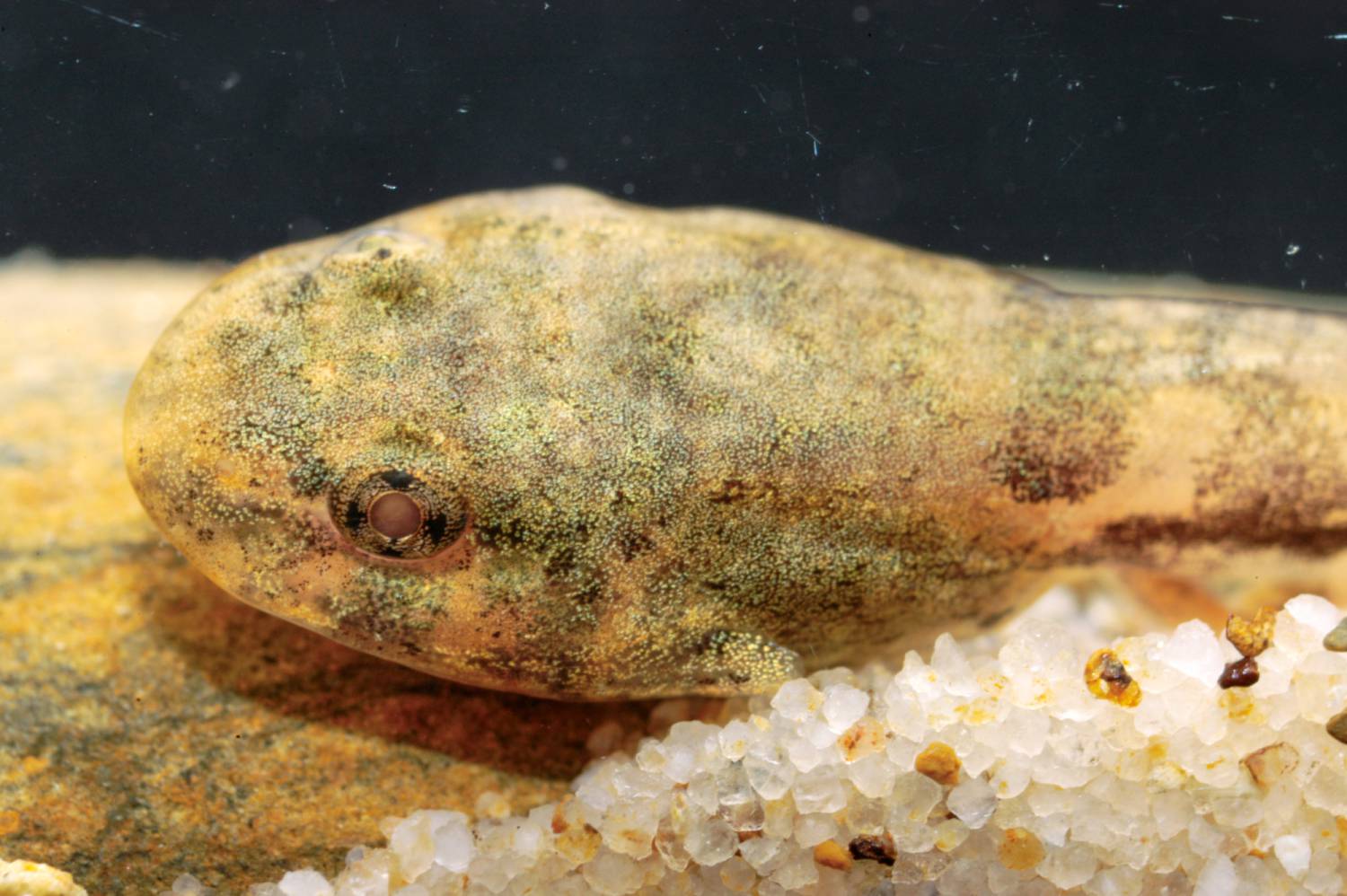
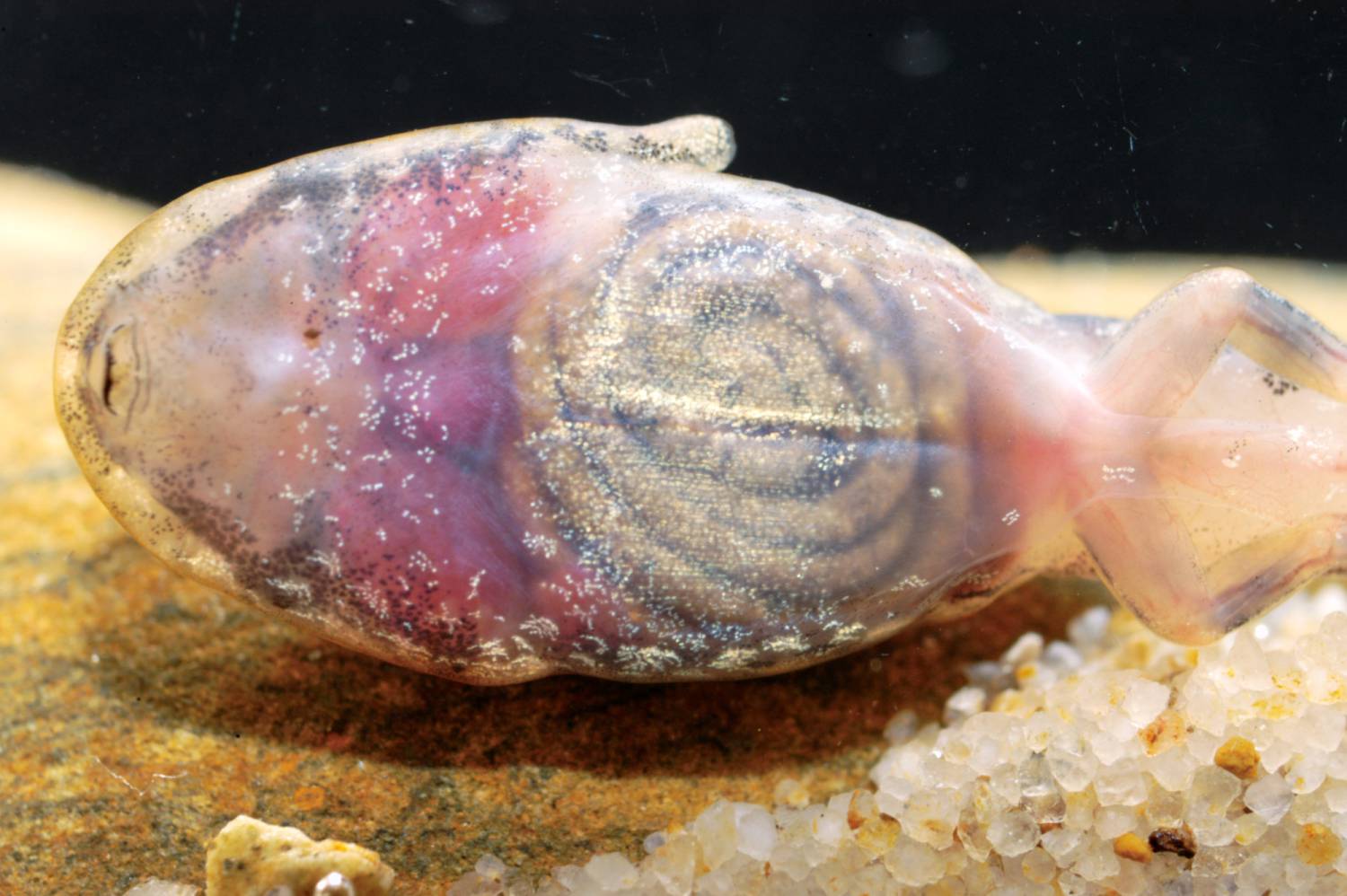
Generally sandy brown to mid-brown dorsally, with irregular, blurred dark or olive marbling and a few scattered black dots. Dorsal surfaces densely dusted with iridocytes. A dark blotch or saddle marking present dorsally at the trunk-tail junction. Flanks darker than dorsum, marbled. Three diffuse dark areas present on the lateral face: a dark streak from the eye to the oral disc, a dark patch below the eye, and one posterior to the eye; sometimes an additional lateral patch occurs at the gill region. On the lower head and lower flanks, the dense dorsal iridocyte cover breaks up into irregular light patches. Ventral skin mostly unpigmented and transparent, with few scattered iridocytes and melanocytes in the gular, buccal, branchial, and anterior abdominal regions. Brown body coloration continues onto the dorsal surface of the tail, becomes lighter, and fades distally. Lateral tail base blotches typically merge into a horizontal streak extending over approximately one fifth of the tail length. Numerous distinct rosette-like clusters of iridocytes cover the tail and tail fins. Black blotches accentuate the distal part of the tail.
Snout
Smoothly arched in dorsal view. In lateral view, moderately long and bluntly rounded.
Oral Disc
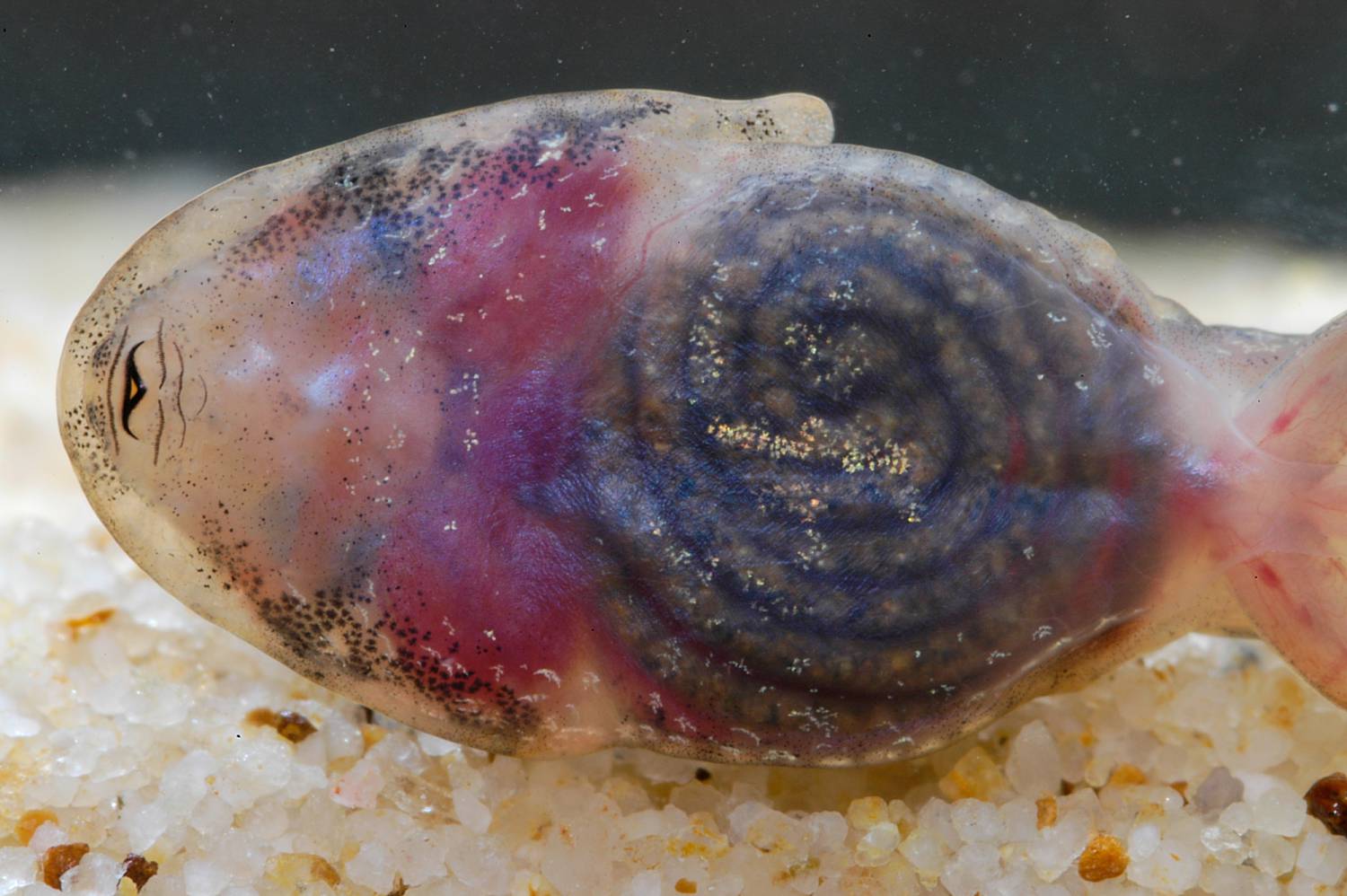
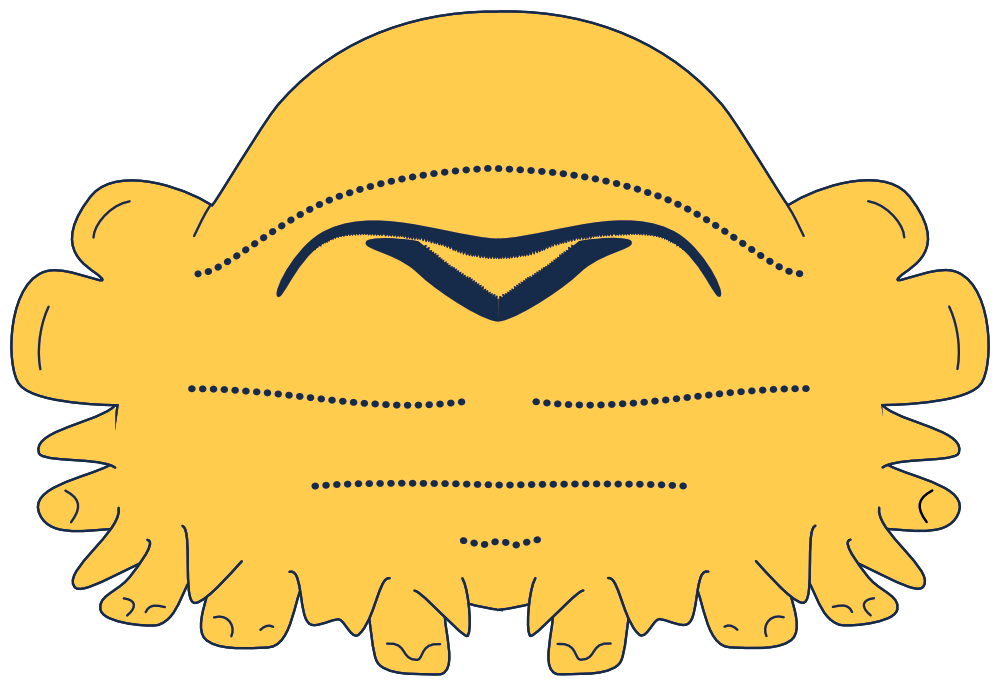
Approximately 30% of maximum head width, anteroventral in orientation, not projecting beyond the snout contour in dorsal view. An emargination separates upper and lower lips. Oral disc bears marginal papillae with two gaps: a wide gap in the upper lip and a narrow gap in the lower lip. Marginal papillae thick and few in number. Upper lip bears flat, broad papillae (appearing as if two to three papillae are fused); lower lip bears flat, broad, moderately infolded papillae as well as more conical ones. On the lower lip, papillae arranged in a single staggered row, giving the impression of a double row. Submarginal papillae absent. LTRF 1/3(1), with the outer keratodont row of the lower lip particularly short. Beaks thin and well keratinized, with finely serrated edges. Upper beak smoothly convex medially and concavely arched laterally. Lower jaw sheath flat and V-shaped.
Body
Medium sized. In dorsal view, body contour oval. Head slightly wider than trunk; widest point at the gill region. Head contour smoothly rounded in dorsal view. Body dorsoventrally depressed. Spiracle sinistral, opening posteriorly; spiracular orifice medially free from the body wall for a short distance, forming a short free tube. Lateral face of the spiracular tube more extended than the medial part. Spiracle located at mid-body level in lateral view. Lateral line organs indistinct.
Eyes & Nostrils
Eyes dorsolateral. Nostrils anterolaterally oriented, small, and closer to the snout than to the eye; nostril rim without a distinct projection. Iris black, dotted with brass- to gold-colored iridocytes. Iridocytes form an almost complete ring around the pupil. Iris with a distinct radial pattern of four dark radii.
Tail
Up to approximately 70% of total length. Muscular portion of the tail moderately strong. In dorsal view, tail muscle equal to or slightly wider than half of the maximum trunk width; in lateral view, clearly higher than half the trunk height. Upper fin originates posterior to the trunk-tail junction, at approximately 57% of tail length. Upper fin higher than lower fin; its contour forms a shallow convex curve. In the posterior fourth of the tail, fins converge into an acute tip, often damaged. Some individuals show a shallow concavity in the upper fin near the tip; in others, the tail is elegantly lanceolate. Maximum tail height in the middle third of the tail. Lateral tail vein obscured by pigmentation; tail myosepta indistinct.
Similar Species
Genetically confirmed samples show a lateral horizontal black streak at the tail base, distinguishing them from other River Frog species. Otherwise, River Frog tadpoles (and other Limnonectes) are superficially similar and may be difficult to identify in the field. Limnonectes leporinus tadpoles can occur sympatrically with L. malesianus and L. ingeri in the same habitat and sometimes even within the same water body. L. ingeri, L. leporinus, L. malesianus, and L. paramacrodon share a single upper keratodont row, distinguishing them from many other tadpoles. Further research is required to determine whether subtle differences among River Frog tadpoles exceed intraspecific variation. DNA barcoding is recommended for reliable identification.
Literature
Limnonectes leporinus reproduces in streams with moderate current. In larger streams, they spawn at the quiet bank areas. They lay their eggs in circular depressions in shallow water that the male excavate in the gravel bed (p. 44). When laid, the eggs do not stick together but trickle into gravel interstices. After completion of spawning, the male covers the circular depression with gravel, often creating a small mound.
Inger, R.F. (1966) The systematics and zoogeography of the Amphibia of Borneo. Fieldiana Zoology 52: 1–402.
Inger, R.F. (1985) Tadpoles of the forested regions of Borneo. Fieldiana Zoology new series 26: 1–89.
Inger, R.F. (2009) Contributions to the natural history of seven species of Bornean frogs. Fieldiana (Zool.) 116: 1–25.
Inger, R.F. (1985) Tadpoles of the forested regions of Borneo. Fieldiana Zoology new series 26: 1–89.
Inger, R.F. (2009) Contributions to the natural history of seven species of Bornean frogs. Fieldiana (Zool.) 116: 1–25.