Frogs of Borneo

Frogs of Borneo

Frogs of Borneo

Frogs of Borneo

Frogs of Borneo

Frogs of Borneo

Frogs of Borneo

Frogs of Borneo

Frogs of Borneo

Frogs of Borneo

Frogs of Borneo
Filter
Leptomantis gauni
The tadpoles of Leptomantis gauni have been found in lowland primary and well-preserved secondary forests. They are adapted to clear, rocky streams and live on and among rocks and pebbles in moderate current, including riffle sections. Tadpoles adhere to rocks in the current using their sucker mouth and seem to avoid fast currents or cascades.
-
Family:Rhacophoridae
-
Genus:Leptomantis
-
Ecomorph:adherent-suctorial, exotrophic, lotic
-
Waterbody Type:flowing
-
Water Column:bottom
-
Feeding Type:feeding, hard surface grazer, omnivorous, rasping
-
Size:36 mm
-
Development:larva, tadpole
-
Adult:Leptomantis
Coloration
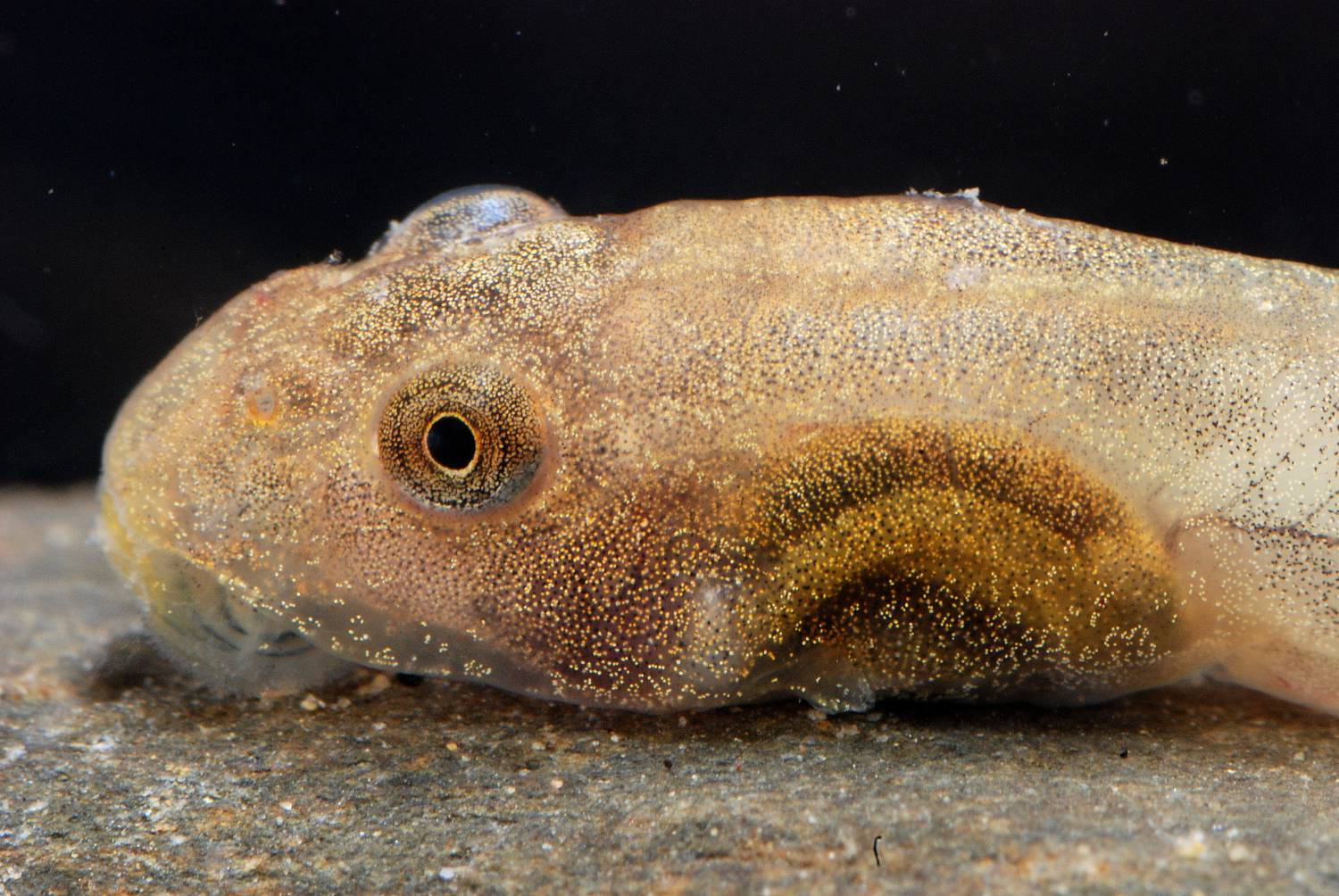
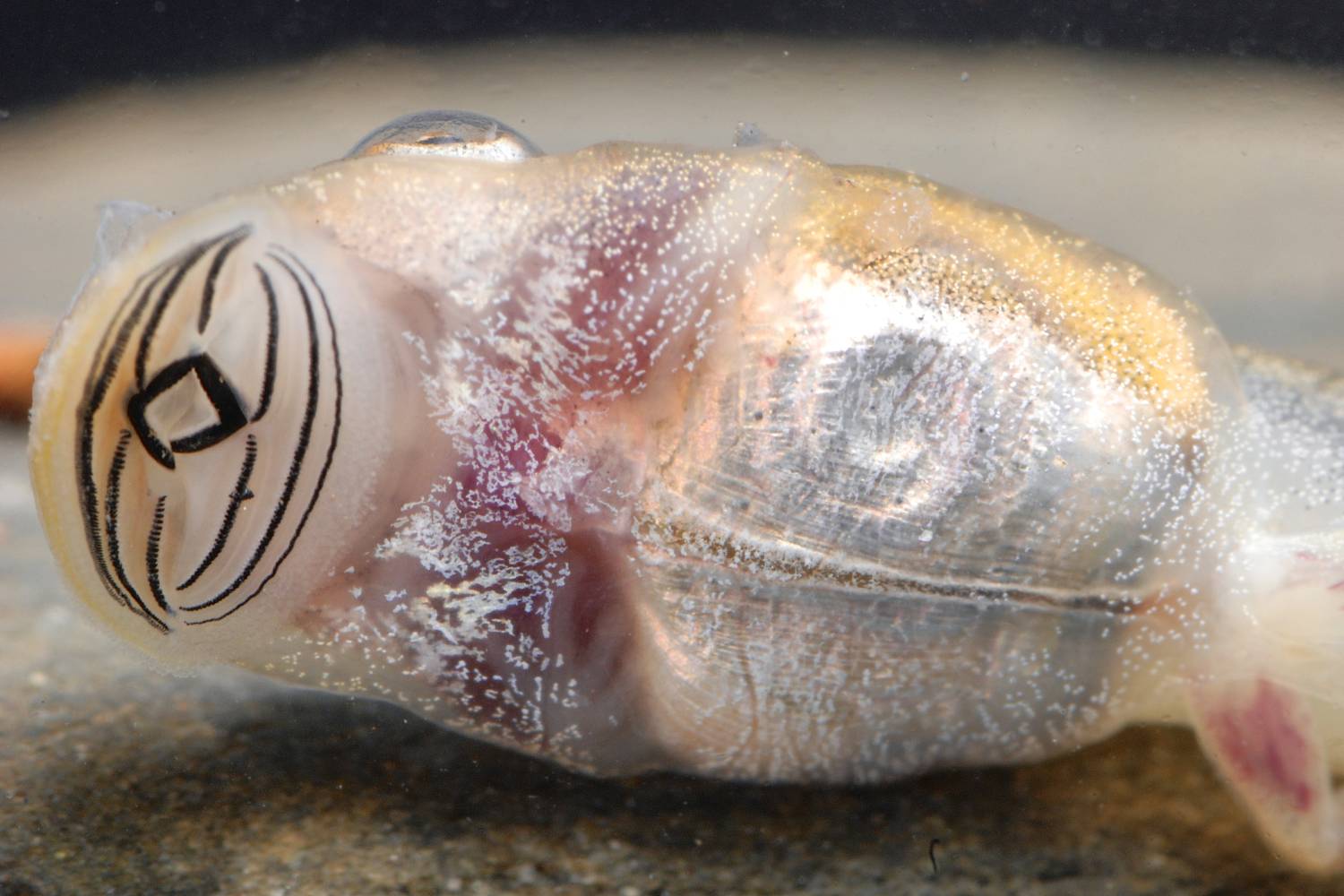
The general background color is dark brown on the head and trunk, transitioning to beige or light brown on the muscular part of the tail. The body is finely stippled with bright iridophores over the dark background. Dark brown pigmentation extends from the trunk onto the muscular tail, forming approximately a dozen diffuse dark blotches along the tail. Red gills and heart are faintly visible through the translucent ventral skin, with a patch of iridophores covering the heart. The skin below the gills is stippled with iridophores. The abdomen is opaque silver with a distinct midline streak, and gut coils are covered ventrally by a silvery iridocyte sheath. Tail fins are mostly clear, with scattered melanophores and iridophores. Major lateral tail vein and some myosepta are discernible.
Snout
Expanded and broadly rounded when viewed from above. The snout profile slopes in a smooth convex curve, but the elevated nostrils give a distinctive angular appearance in lateral view.
Oral Disc
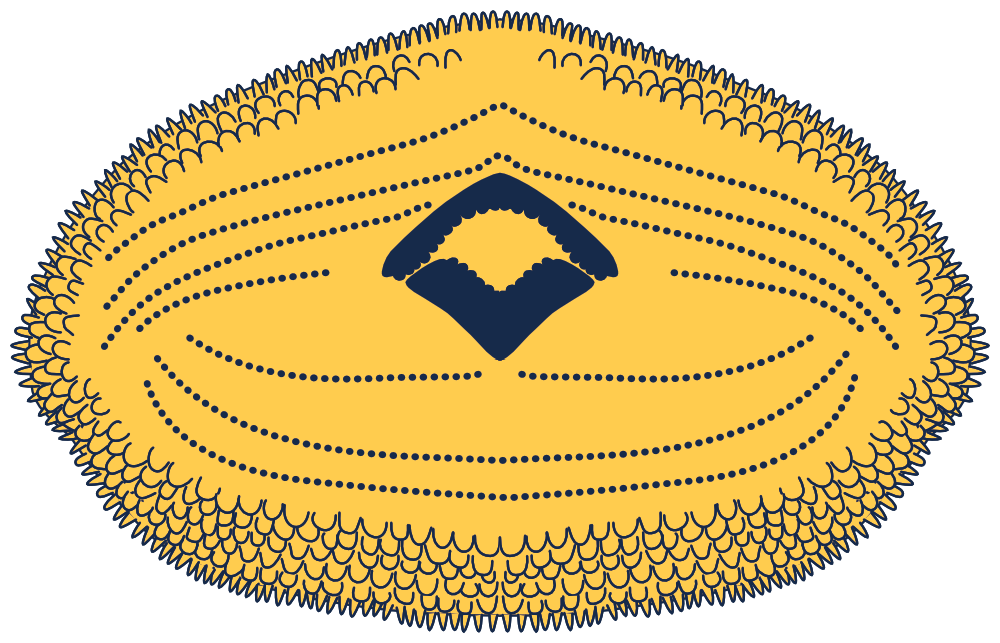
Ventral and wide, approximately 80% of maximum body width. The sucker lacks emargination between upper and lower lips. Lips bear multiple rows of papillae; the marginal row consists of fine papillae, and papillae towards the mouth are blunt and gradually shorter. Labial Tooth Row Formula (LTRF) 4(3–4)/3(1). Outer upper and lower lip keratodont rows are long, spanning most of the oral disc width. Jaws are small but strongly built, black, V-shaped, subequal in width, with coarse, blunt serrations along their edges.
Body
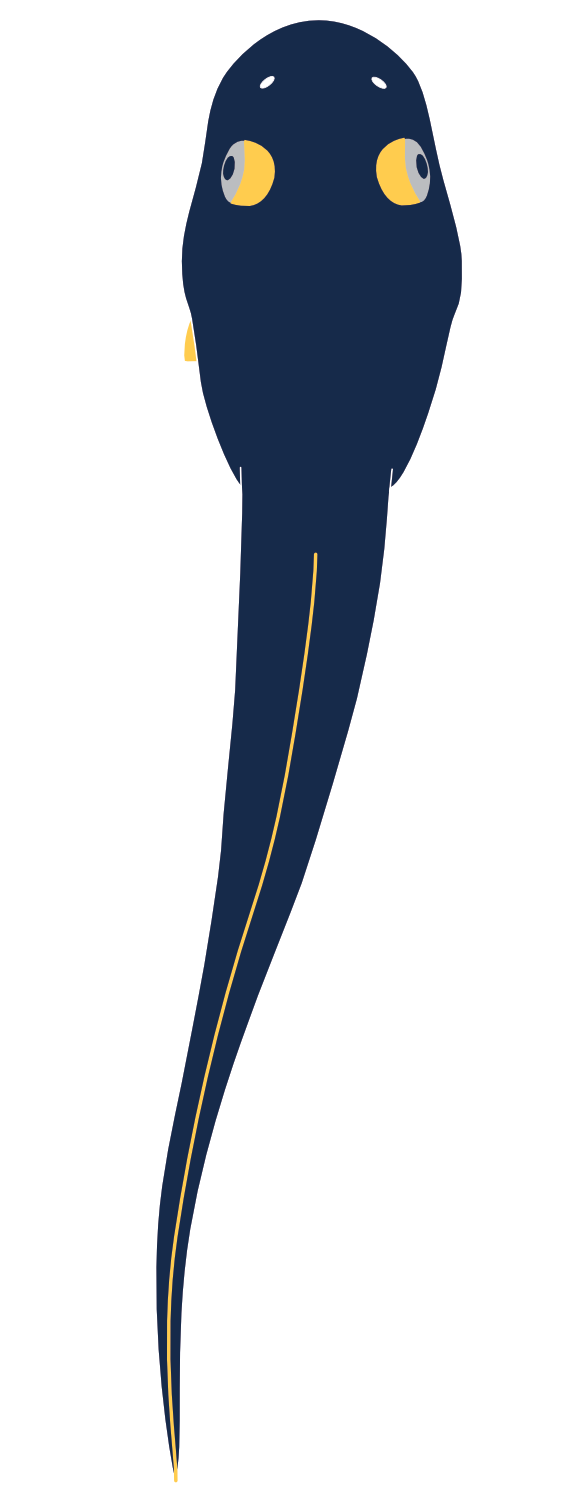
Streamlined. In dorsal view, the body contour is oval to rectangular and dorsoventrally depressed. The head is broader than the trunk and widest posterior to the eyes. Spiracle sinistral and low, well below mid-body axis in lateral view. Spiracular orifice free from the body wall and directed posteriorly.
Eyes & Nostrils
Nostril positioned approximately midway between the eye and snout. Eyes dorsolateral, relatively close to the body outline in dorsal view but not projecting beyond the contour. Iris with black background, mostly covered by a narrow golden ring around the pupil and dense golden peripheral stippling. The scleral region outside the iris is densely stippled with iridocytes, denser ventrally than dorsally.
Tail
Strongly muscular and long, approximately 66–68% of total length. Tail base nearly as deep as the trunk at their junction. Dorsal fin originates 10–16% of tail length posterior to trunk-tail junction, slightly higher than the lower fin. Both fins moderately high, with maximum height around mid-tail. Fin contours shallowly convex, tapering gradually to a moderately narrow rounded tip.
Similar Species
See comments for L. gadingensis.
Literature
Frogs perch up to 8 m above a stream to seek a mate. Small foam nests are produced and attached to vegetation overhanging a stream. Tadpoles hatch from the nest and fall into the stream below.
Inger, R.F. (1985) Tadpoles of the forested regions of Borneo. Fieldiana Zoology new series. 26:1–89.
Inger, R.F., Tan, F.L. (1990) Recently discovered and newly assigned frog larvae (Ranidae and Rhacophoridae) from Borneo. The Raffles Bulletin of Zoology, 38: 3–9.