Zum Hauptinhalt springen

Frogs of Borneo

Frogs of Borneo

Frogs of Borneo

Frogs of Borneo

Frogs of Borneo

Frogs of Borneo

Frogs of Borneo

Frogs of Borneo

Frogs of Borneo

Frogs of Borneo

Frogs of Borneo

Leptobrachella juliandringi

This species occurs in clear streams of lowland and hilly forests. Tadpoles inhabit interstitial spaces in gravel and under rocks, particularly in shallow riffles over shingle beds. Their feeding ecology remains unknown.
  • Family:
    Megophryidae
  • Genus:
    Leptobrachella
  • Ecomorph:
    fossorial, gravel-interstice specialist, lotic
  • Waterbody Type:
    flowing
  • Water Column:
    fossorial
  • Feeding Type:
    feeding, generalist, leaf litter
  • Size:
    41 mm
  • Development:
    larva, tadpole
  • Adult:
    Leptobrachella

Coloration

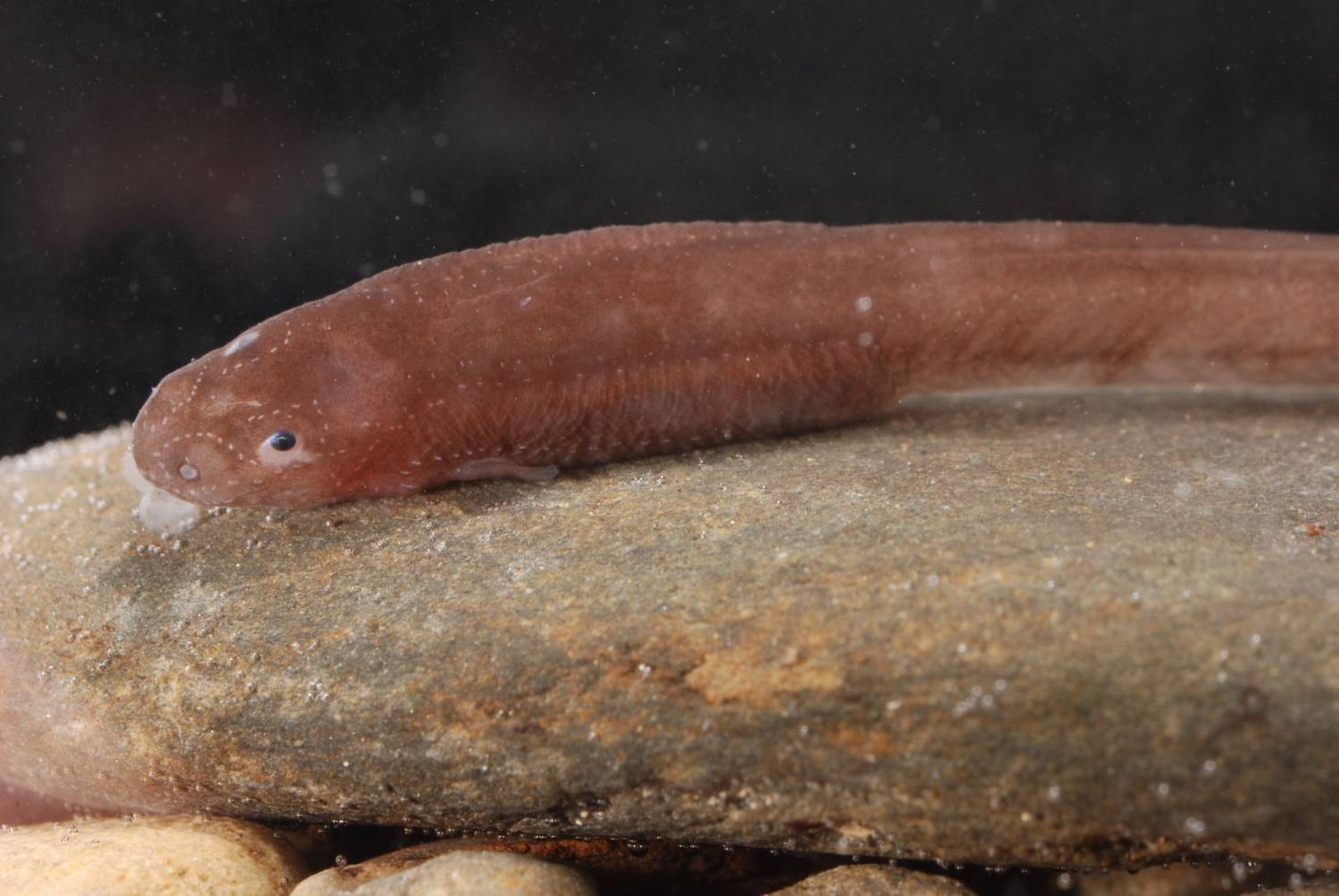
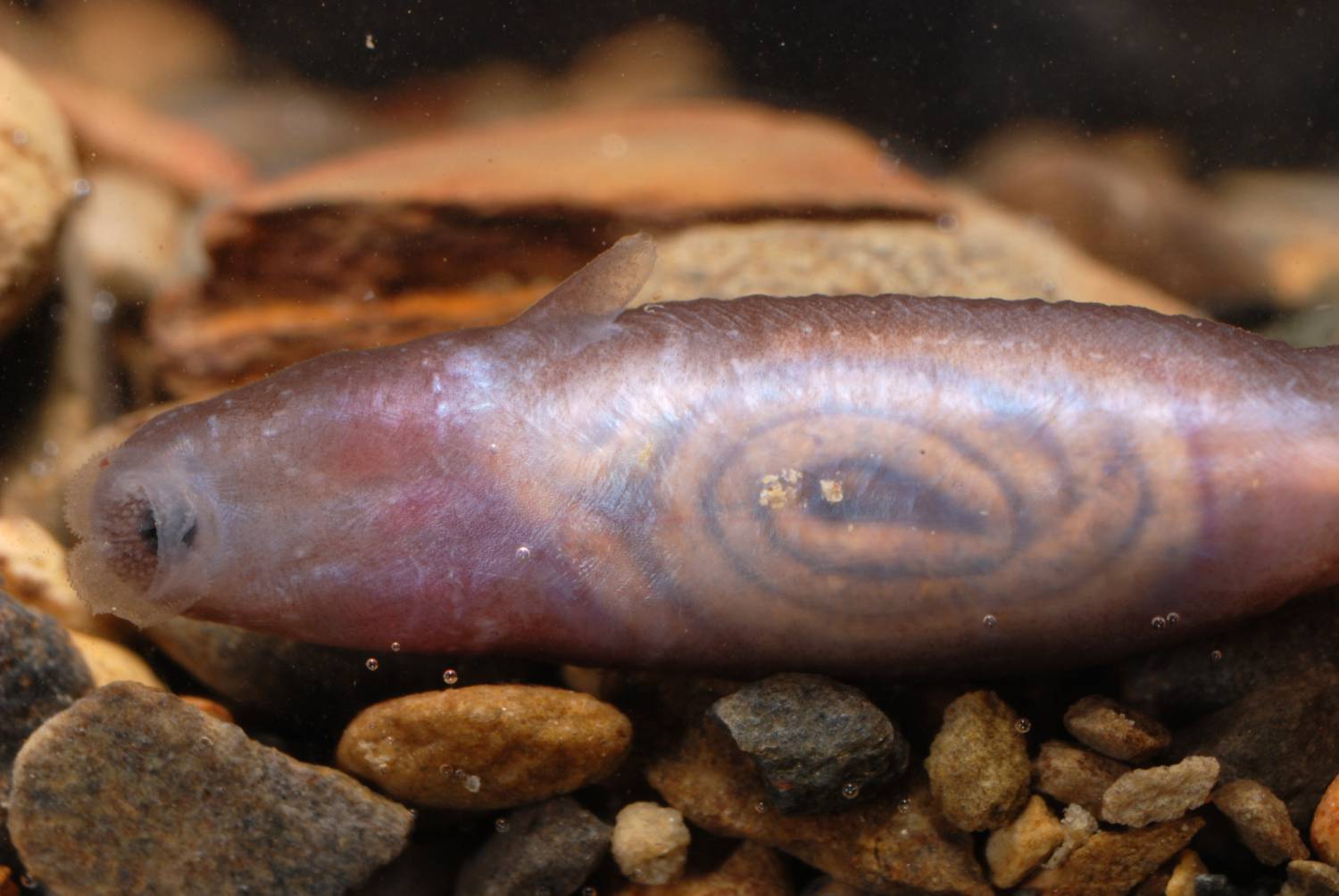
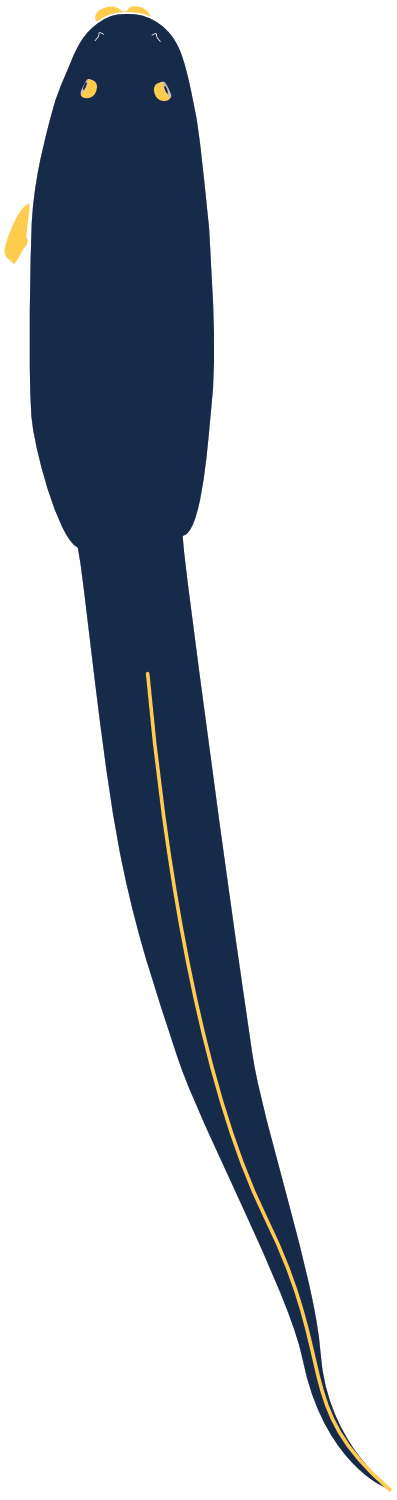
Early larval stages are lightly pigmented, appearing pinkish gray, while advanced stages are uniformly dark brown dorsally. Silvery iridophores are absent. In close-up, the skin shows a hatched texture with bluish iridescence in life. The ventral side, including oral discs, is unpigmented and semitranslucent. Gut coils are visible through the abdominal skin, and the gill region and heart appear reddish. Dark dorsal coloration continues seamlessly onto the muscular part of the tail. Tail fins are pigmented at the base, lightening toward the edges. Myosepta are faintly visible.

Snout

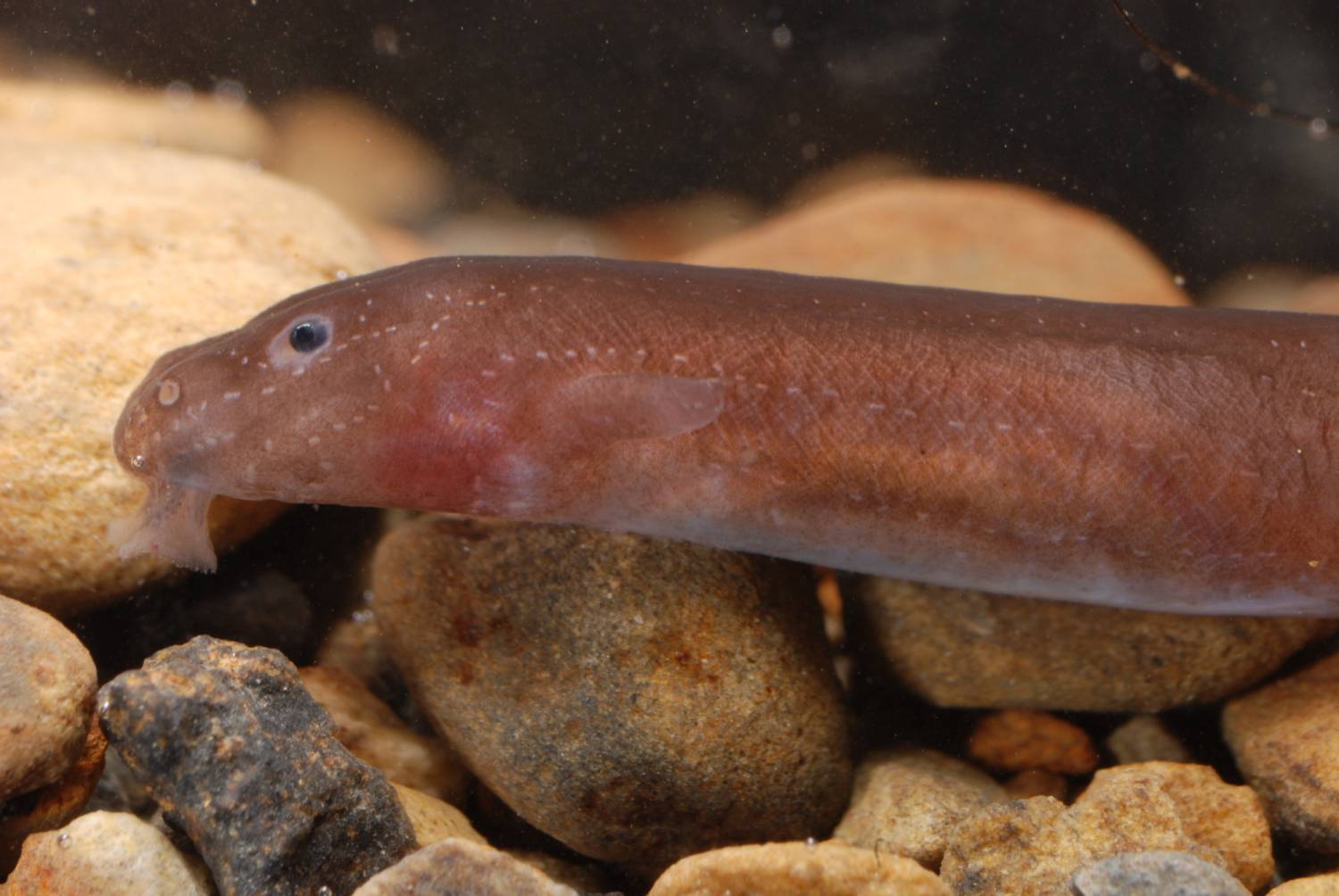
Broadly rounded in dorsal view, blunt, and moderately long relative to the head. In lateral view, the head is bluntly conical, with a small bulge supporting the nostril.

Oral Disc

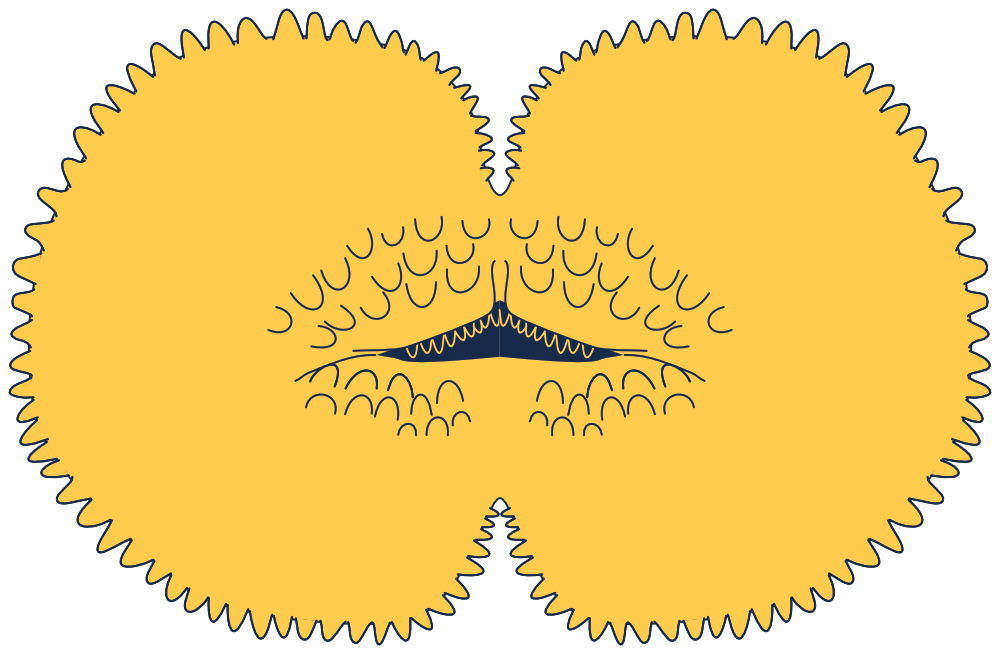
Oral disc positioned anteroventrally, approximately half the body width. Funnel-shaped and protruding from the body. Emarginations and infoldings present in the midline of upper and lower lips. Both lips bear short, numerous marginal papillae in a continuous row. Irregular rows of papillae occur at the base of the oral funnel. Keratodonts are absent (LTRF 0/0). Beaks are strong, well keratinized, black, with sharp serrations, deeply recessed in the funnel-shaped oral disc and partly obscured by transverse ridges.

Body

Midsized, eel-like, elongate. In lateral view, head and trunk slightly depressed; trunk subcylindrical. In dorsal view, body slender, only slightly wider than the base of the tail. Body-tail transition smooth. Trunk long, head much shorter than trunk. Body widest at the trunk. Spiracle sinistral, opening posterodorsally. Spiracular orifice positioned above the longitudinal body axis, free from the body wall and extended into a long free tube. Lateral line organs present as a series of light dots on the head, along the flanks, and along the side of the tail.

Eyes & Nostrils

Eyes dorsolateral, tiny and nonprotruding in early stages; increasing in size and becoming more bulging during metamorphosis. Eye orbits unpigmented, cream-colored. Iris black, with a thin silvery circle around the pupil in late larval stages. Nostril closer to the snout than to the eye, oriented anterolaterally, with a dorsal triangular projection.

Tail

Long, approximately 68% of total length. Muscular part strong, almost as high as the trunk in lateral view. Upper fin starts well posterior to the trunk-tail junction; low in the proximal half of the tail and gradually increasing in height, reaching maximum only at the posterior third. Upper fin slightly higher than the lower fin. Lower fin starts at the trunk-tail junction, low and almost straight; in its posterior third, fins converge toward the narrowly rounded tip. Skin glands absent.

Similar Species

See comments for Leptobrachella mjobergi.

Literature

Males call along stream banks. They often perch on leaves 20–80 cm above the ground. Male calls can be described as a series of highpitched chirps and can form choruses. Details of the reproduction, such as number of eggs and oviposition site are unknown.
Eto, K., Matsui, M., Nishikawa, K. (2015) Description of a new species of the genus Leptobrachella (Amphibia, Anura, Megophryidae) from Borneo. Current Herpetology 34: 128–139.