Zum Hauptinhalt springen

Frogs of Borneo

Frogs of Borneo

Frogs of Borneo

Frogs of Borneo

Frogs of Borneo

Frogs of Borneo

Frogs of Borneo

Frogs of Borneo

Frogs of Borneo

Frogs of Borneo

Frogs of Borneo

Leptobrachella gracilis

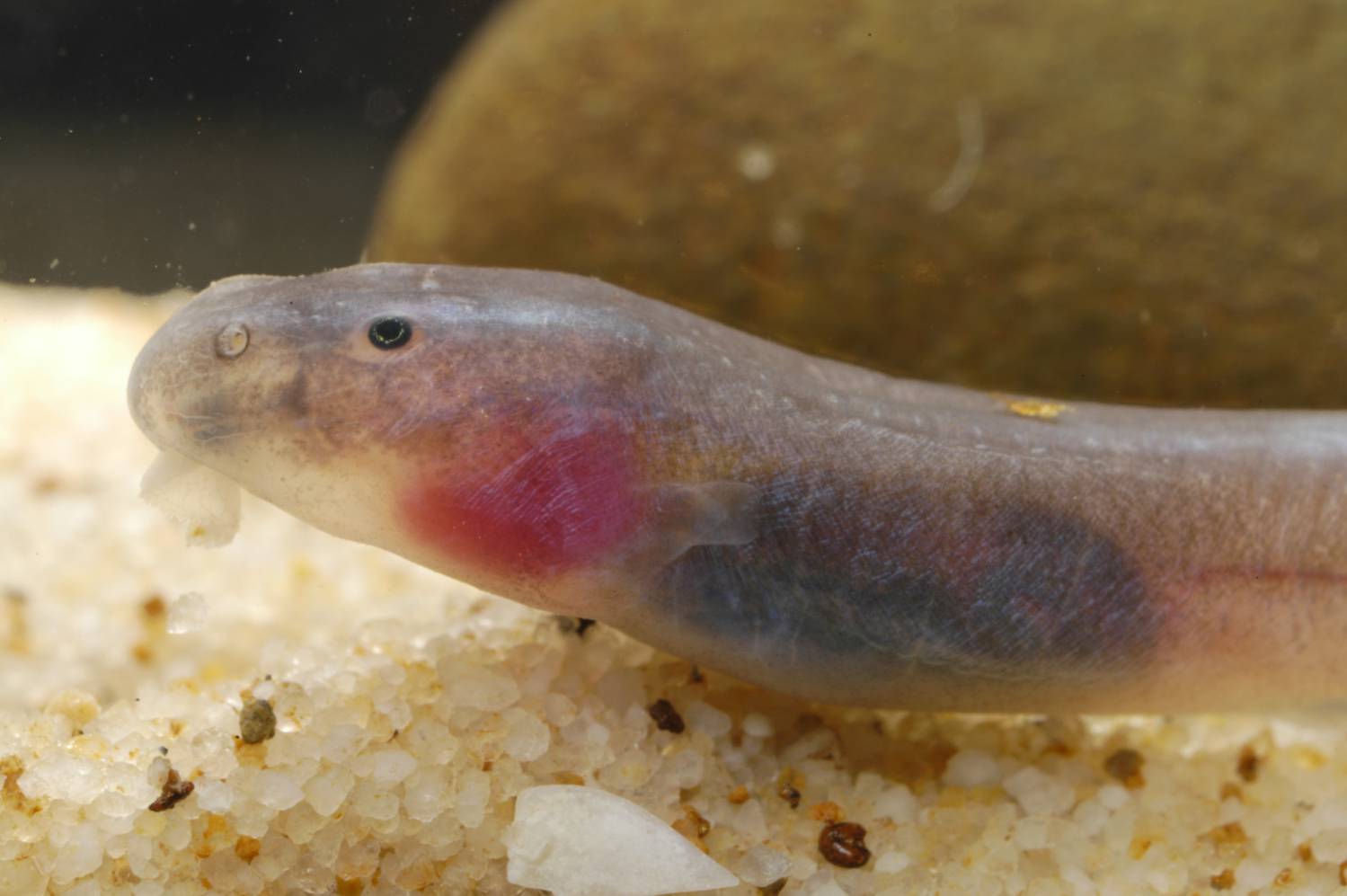
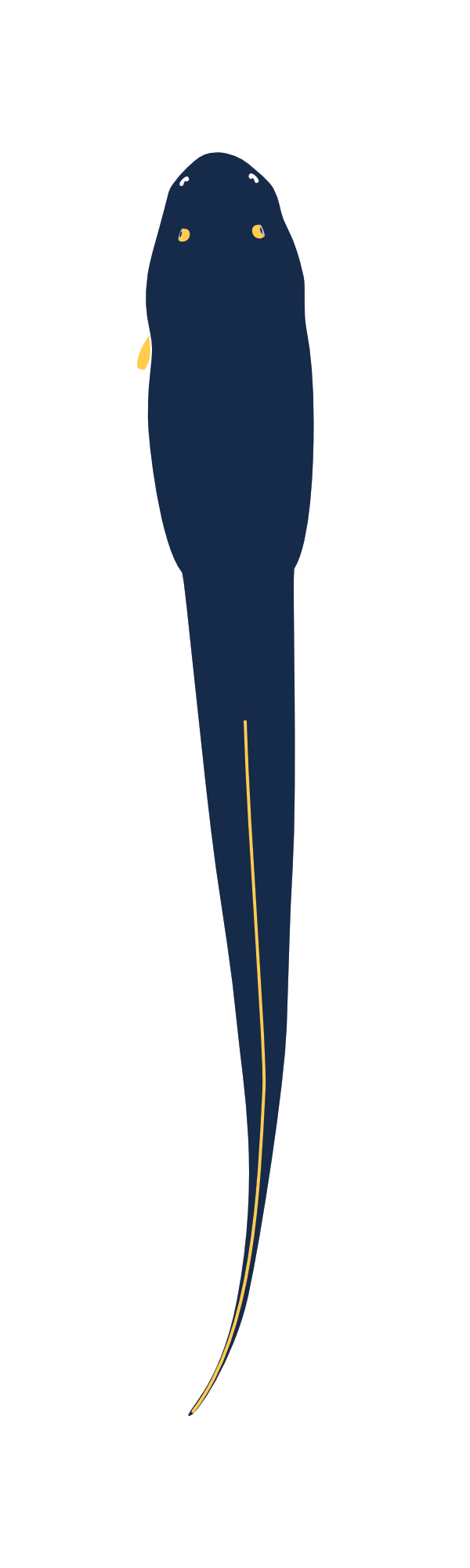
Larvae of L. gracilis inhabit crevices and gravel interstices. The tadpoles depicted here were discovered in a roadside ditch in slow-flowing water, located under piles of accumulated leaf litter and among gravel. Notably, at the time of sampling, L. gracilis tadpoles were associated with the larvae of nine other anuran species in the same body of water.
  • Family:
    Megophryidae
  • Genus:
    Leptobrachella
  • Ecomorph:
    exotrophic, fossorial, gravel-interstice specialist, lotic
  • Waterbody Type:
    flowing
  • Water Column:
    fossorial
  • Feeding Type:
    feeding, generalist, leaf litter
  • Size:
    44 mm
  • Development:
    larva, tadpole
  • Adult:
    Leptobrachella

Coloration

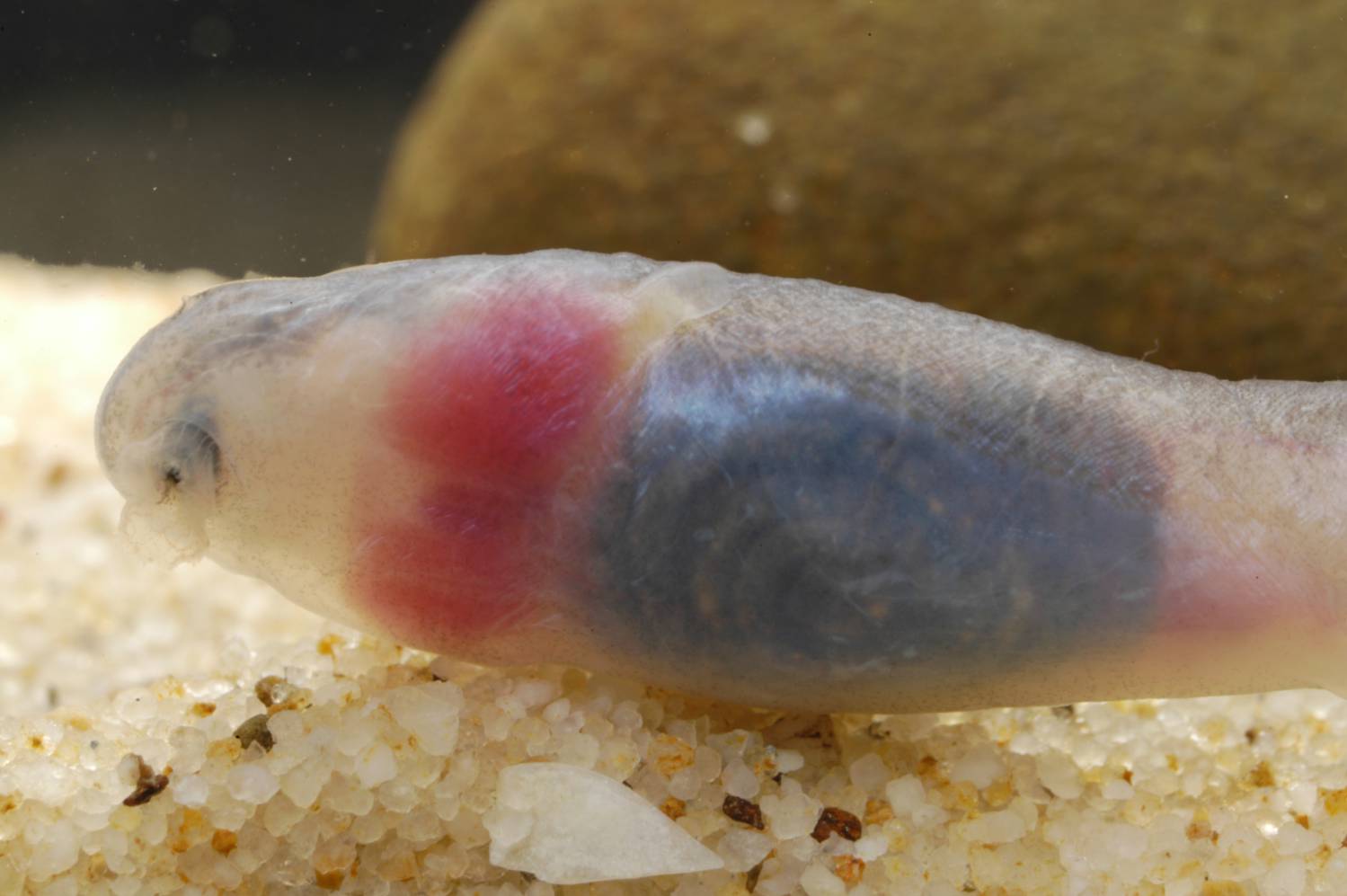
Body background color is gray with a bluish-white sheen. In advanced stages, the upper head, upper trunk, and tail exhibit brown pigmentation; this pigmentation fades towards the ventral side. The buccal region, gill region, and abdominal skin are semi-transparent and lack brown pigment, though they retain a bluish sheen. Gills and heart are visible as reddish areas, and the gut coils are visible in both ventral and lateral views. Tail fins are semi-transparent and moderately dusted with brown pigment cells in advanced stages. Scattered iridophores are present on the dorsal face of the head and body, as well as along the tail, including the dorsal fin. Myosepta and the lateral tail vein are visible.

Snout

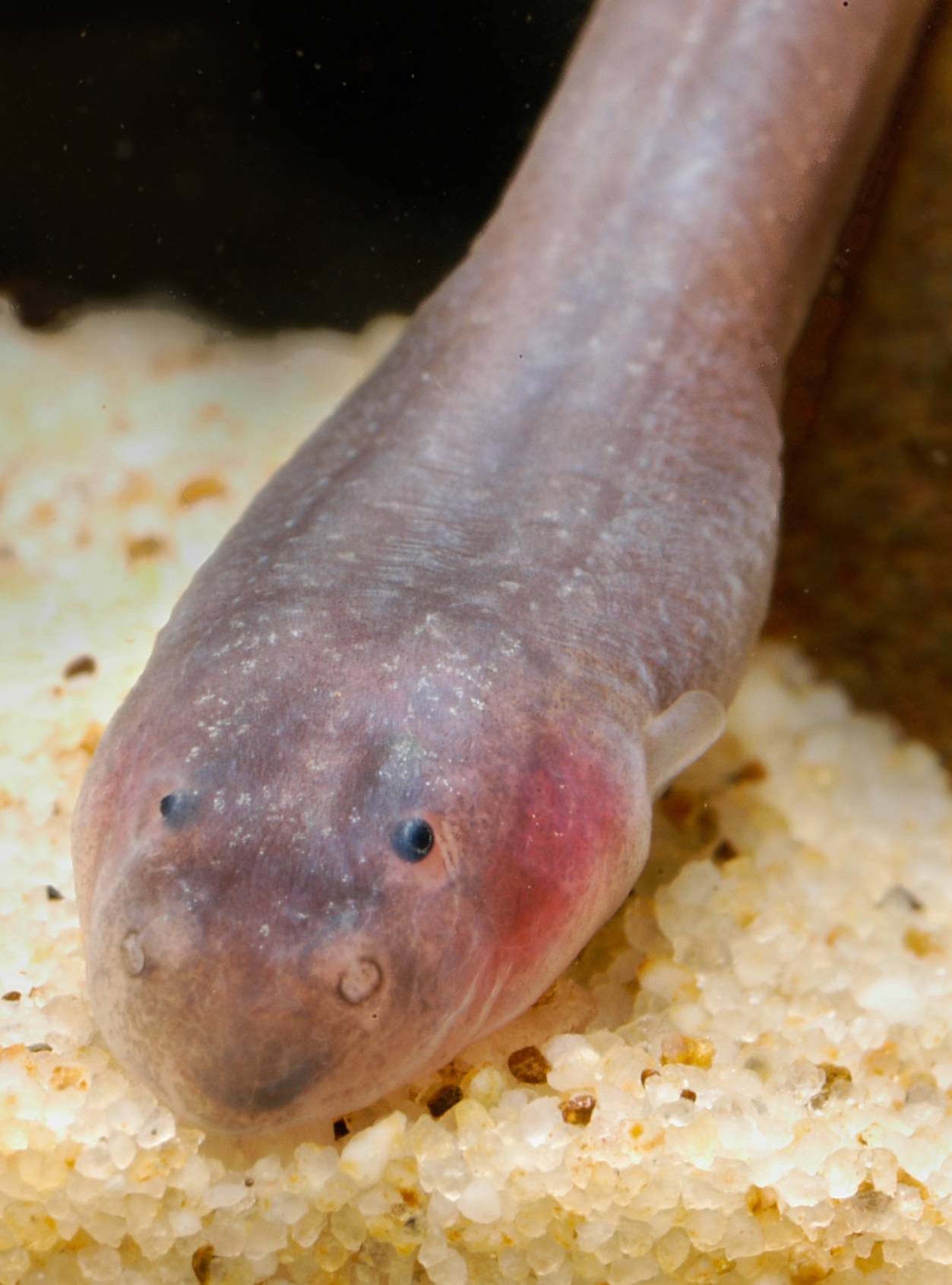
In dorsal view, the snout is broadly rounded, blunt, and moderately long. In lateral view, the head slopes smoothly into a rounded, blunt snout. The nostrils are positioned high on a small bulge.

Oral Disc

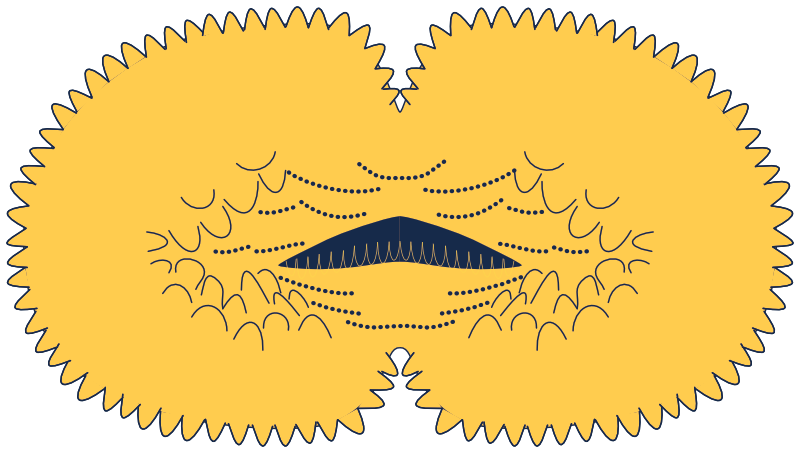
Subterminal; width up to half of the body width. The disc is funnel-shaped and protrudes from the body. Emarginations are present in the medial plane of both the upper and lower lips, and the oral funnel is folded inward at these points. Both lips bear numerous short marginal papillae in a single continuous row. The oral disc also bears many submarginal papillae. Keratodont rows are short; the peripheral rows on the upper and lower lips are undivided; LTRF 4(2–4)/3(1–2). The 3rd and 4th upper lip rows each consist of two keratodont-bearing ridges. Keratodonts are loosely spaced. Beaks are strong, well-keratinized, and black with serrated edges. While both beaks are high, they appear recessed due to their deep position. The upper jaw is smoothly arched, while the lower jaw is more angled and V-shaped.

Body

Medium to large in size and elongate. The head and trunk are depressed in lateral view. In dorsal view, the body is slender and only slightly wider than the base of the tail. The body-tail transition is smooth. The trunk is long, slightly exceeding the length of the head, and the head is only slightly set off from the trunk. The body is widest at the trunk. The spiracle is sinistral, with the opening free from the body; the spiracular tube opens posterolaterally. The opening is positioned posterior to the midpoint of the head-trunk length. Skin glands are absent.

Eyes & Nostrils

Eyes are dorsolateral, positioned deep, and do not protrude in premetamorphic stages. They are tiny in early-stage tadpoles and increase in size during development. The eyes are surrounded by unpigmented white orbits. The nostril is closer to the snout than to the eye and is oriented anterolaterally; its dorsal rim bears a distinct projection and is encircled by a brown ring. The iris is black with a ring of scattered silver iridophores around the pupil.

Tail

Long, comprising up to 70% of the total length. The muscular part is strongly developed and virtually as high as the body at the base of the tail. The dorsal fin begins posterior to the trunk-tail transition at approximately 20% of the tail length and remains low in the anterior section. Both fins are straight without significant convexity and are subequal in height. Posteriorly, the fins terminate in a narrowly rounded tip.

Similar Species

Leptobrachella tadpoles are rarely collected and confirmed by DNA barcoding. The subtle morphological differences observed across various Leptobrachella samples are difficult to assess; therefore, DNA barcoding is highly recommended for identification, especially in areas of sympatry. Leptobrachella tadpoles can be reliably distinguished from all other Bornean tadpoles by their microhabitat choice, relatively slender body, small eyes, and the unique shape of the protruding oral disc. Additionally, a few short keratodont rows are present in some species but absent in others. Given current taxonomic changes and locality data, the tadpoles described by Inger (1985) as L. gracilis (formerly Leptolalax) from various sites may represent several distinct species.

Literature

Males call from elevated perches, usually 1 m, on branches or low vegetation along streams, often several meters from the water. The call is a harsh trill composed of pulsed notes. The dominant frequency is approximately 2500 Hz.
Inger, R.F. (1983) Larvae of Southeast Asian species of Leptobrachium and Leptobrachella (Anura: Pelobatidae). In: Rhodin, A. G. J., Miyata K. (eds) Advances in Herpetology and Evolutionary Biology. Essays in Honor of Ernest E. Williams: 13–32. Cambridge, Massachusetts, Museum of Comparative Zoology, Harvard University.

Inger, R.F. (1985) Tadpoles of the forested regions of Borneo. Fieldiana Zoology new series 26: 1–89.