Zum Hauptinhalt springen

Frogs of Borneo

Frogs of Borneo

Frogs of Borneo

Frogs of Borneo

Frogs of Borneo

Frogs of Borneo

Frogs of Borneo

Frogs of Borneo

Frogs of Borneo

Frogs of Borneo

Frogs of Borneo

Leptobrachella baluensis

The species occurs in submontane and montane primary and secondary forests above 900 m a.s.l. The presence of calling males often indicates nearby tadpole habitats. Tadpoles are interstice specialists inhabiting the gravel beds of streams. They are rarely observed in open water and usually must be excavated from the gravel substrate. As interstitial dwellers, they do not necessarily require surface water, provided that water is present within the gravel layer.
  • Family:
    Megophryidae
  • Genus:
    Leptobrachella
  • Ecomorph:
    fossorial, lotic
  • Waterbody Type:
    flowing
  • Water Column:
    fossorial
  • Feeding Type:
    feeding, generalist, leaf litter
  • Size:
    36 mm
  • Development:
    larva, tadpole
  • Adult:
    Leptobrachella

Coloration

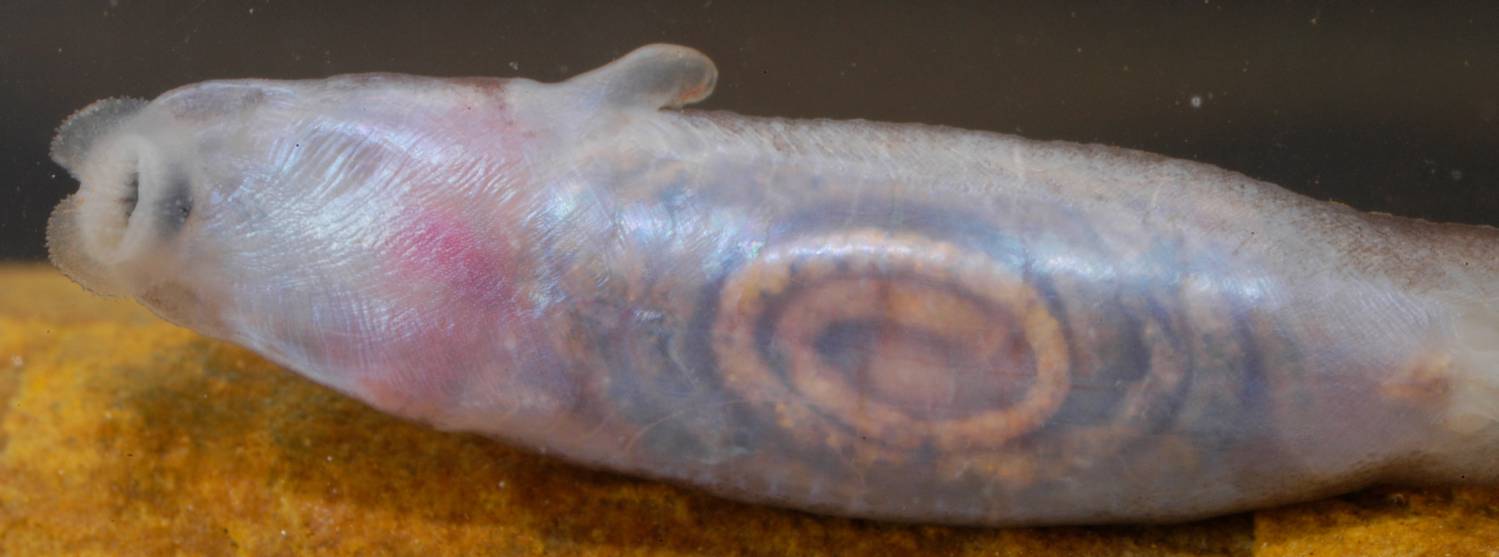
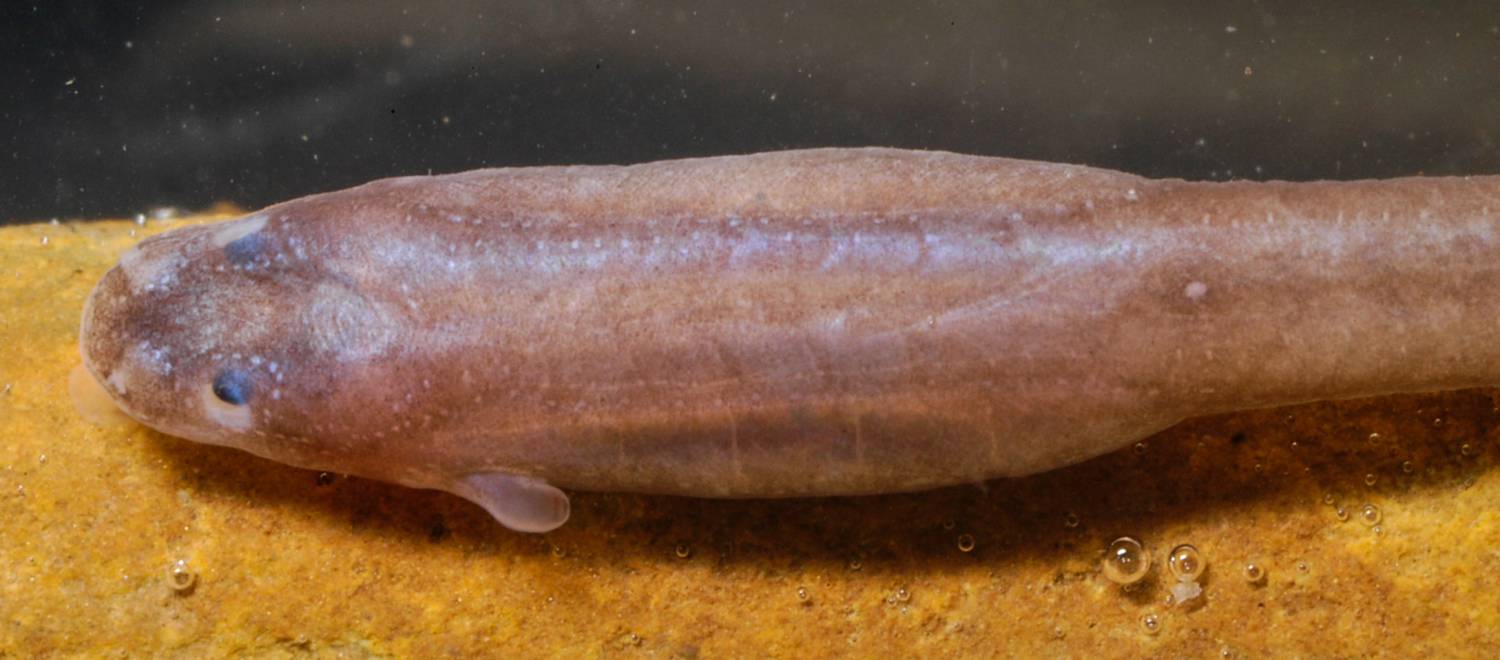
Advanced larval stages uniformly dark brown dorsally and unpigmented, semi-translucent ventrally, including the oral disc. Early stages more lightly pigmented and sometimes appearing pinkish-gray. Under close inspection, the skin shows a finely hatched texture (fabric-like) and a bluish iridescence in life. Iridophores mostly absent. Gut coil visible through the abdominal skin. Heart and gills visible as red areas through the ventral skin, particularly in early larval stages. Body coloration extends seamlessly onto the muscular part of the tail. Tail fins darkly pigmented, lightening toward the fin margins. Myosepta faintly visible and slightly accentuated by pigmentation. A thin lateral tail vein faintly visible in the proximal part of the tail.

Snout

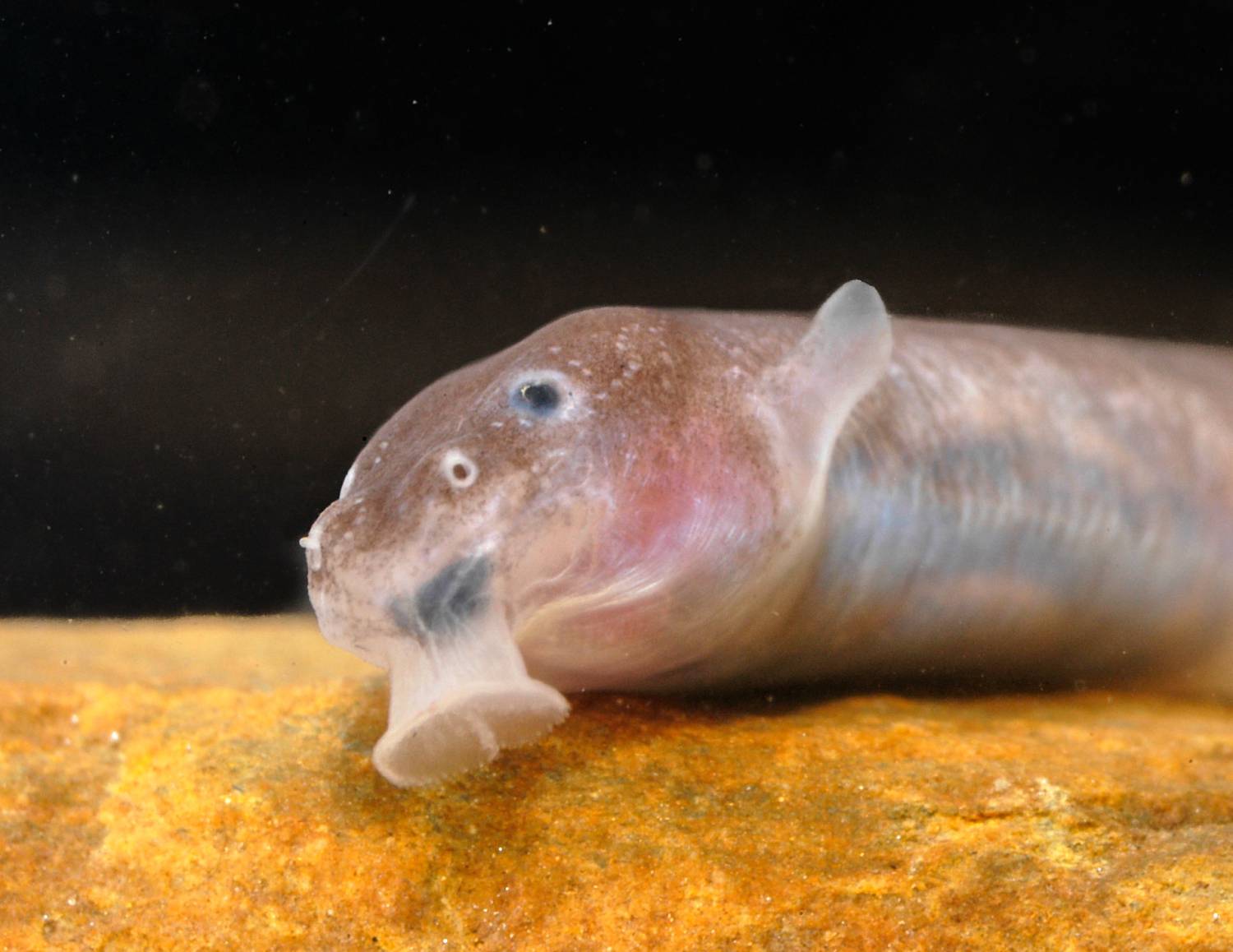
Contour broadly rounded and blunt in dorsal view, moderately long relative to head length. In lateral view, head bluntly conical; nostrils elevated.

Oral Disc

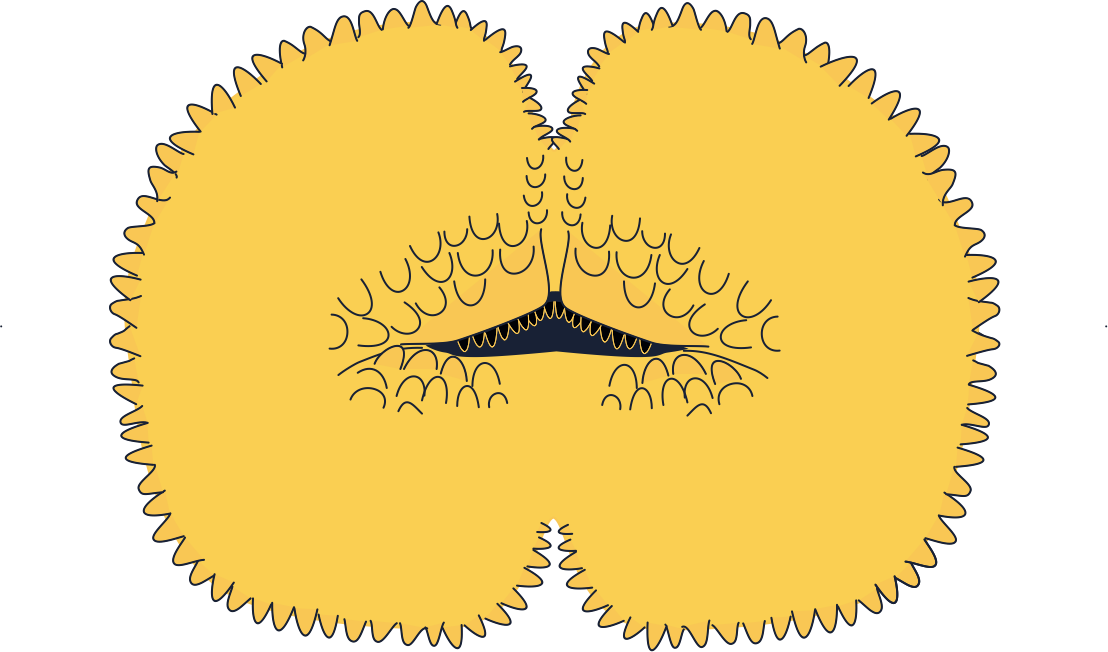
Anteroventral, approximately half of body width or more. Oral disc forming a distinctive funnel protruding perpendicular from the body. Medial emarginations present on both upper and lower lips, with lips folded inward at these points. Both lips bear short, numerous marginal papillae arranged in a continuous row. Deep within the oral disc, the mouth is surrounded by irregular rows of submarginal papillae on both lips. Keratodonts absent (LTRF 0/0). Jaw sheaths strong, well keratinized, black, with sharp serrations; positioned deep at the base of the oral disc and partly covered by additional transverse ridges, scarcely visible without dissection.

Body

Very elongate and narrow. In lateral view, head slightly depressed and trunk subcylindrical. In dorsal view, body extremely slender, only slightly wider than the base of the tail. Body-tail transition smooth and inconspicuous. Trunk region long; head much shorter than trunk. Body widest at the trunk. Spiracle sinistral, opening posterodorsally; spiracular orifice positioned above the longitudinal body axis in lateral view and forming a free tube. Lateral line organs visible as a series of dots on the head, along the flanks, and along the side of the tail.

Eyes & Nostrils

Eyes positioned dorsolaterally and non-protruding in premetamorphic stages. Eyes small in early stages, increasing in size during development. Eyes surrounded by unpigmented white orbital areas. Iris black in late larval stages, with a thin silvery ring surrounding the pupil. Nostril closer to snout than to eye; nostril opening oriented anterolaterally, with a dorsally projecting triangular rim.

Tail

Long, up to approximately 70% of total length (TL). Muscular part of tail strong, reaching body height in lateral view. Upper fin originates well posterior to the trunk-tail junction, initially rising in a nearly straight line and forming a shallow posterior arch before sloping toward a narrowly rounded tip. Lower fin originates at the trunk-tail junction, low and nearly straight in contour. Maximum tail height approximately at mid-tail, without a pronounced fin peak. Upper fin slightly higher than the lower fin. Skin glands absent.

Similar Species

Currently, insufficient data on intraspecific and ontogenetic variation, combined with the paucity of diagnostic characters (including reduced or absent keratodonts), prevent reliable identification of individual Leptobrachella species based solely on tadpole morphology. Tadpoles of L. baluensis may be confused with those of other congeners inhabiting the same mountain ranges. DNA barcoding is therefore required for confident identification in such cases.

Literature

Males call from near stream banks on moist substrates. They will commonly perch on low vegetation or fallen leaves. Males can occur in numbers and form calling choruses. The call is a series of buzzing notes. The call sound pressure is considerable taking into account the small size of the males. Details of egglaying are unknown.
Malkmus, R., Manthey, U., Vogel, G., Hoffmann, P., Kosuch, J. (2002) Amphibians & Reptiles of Mount Kinabalu (North Borneo). Koeltz Scientific Books. 424 pp.