Zum Hauptinhalt springen

Frogs of Borneo

Frogs of Borneo

Frogs of Borneo

Frogs of Borneo

Frogs of Borneo

Frogs of Borneo

Frogs of Borneo

Frogs of Borneo

Frogs of Borneo

Frogs of Borneo

Frogs of Borneo

Kaloula baleata

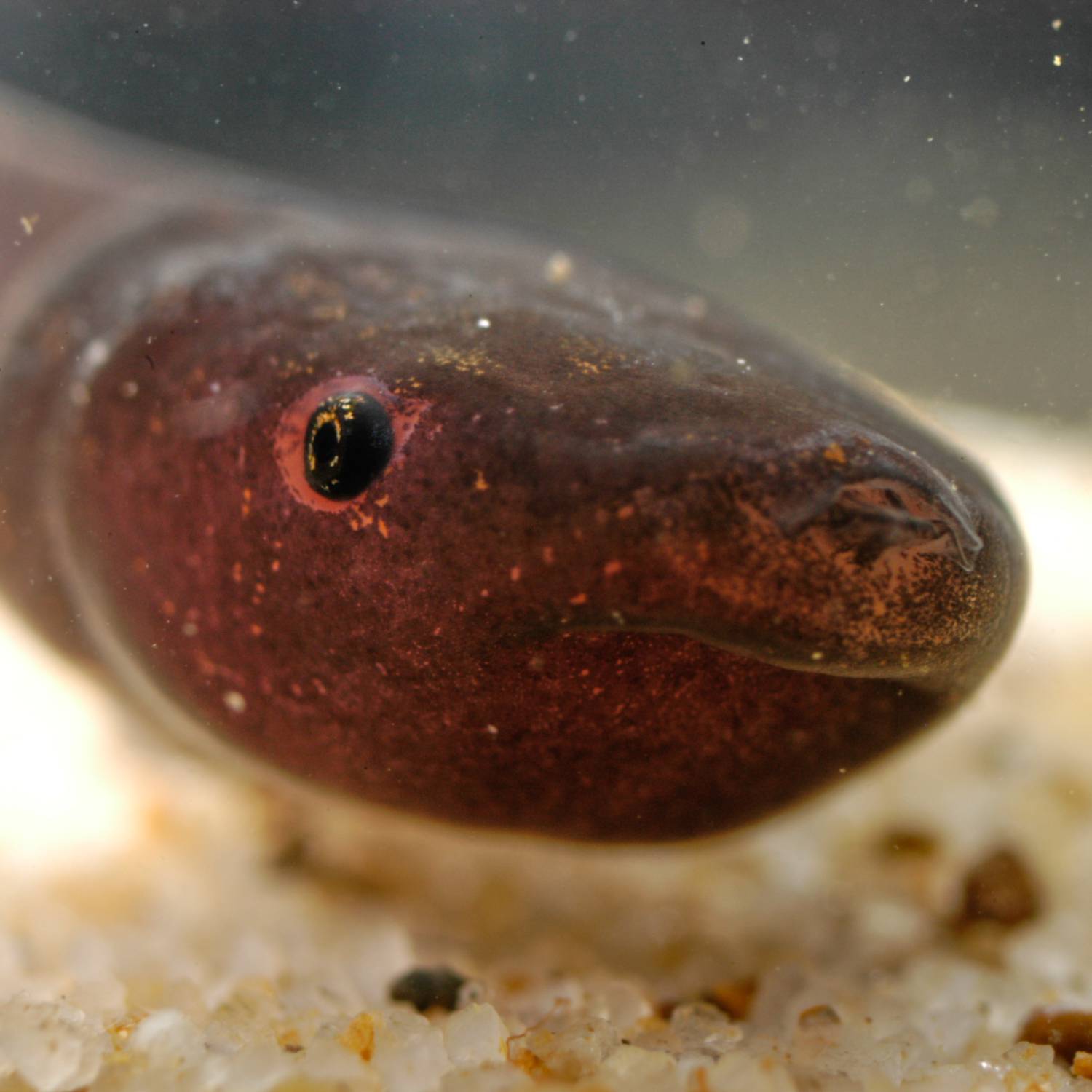
Tadpoles of Kaloula baleata are pond dwellers. Although K. baleata tadpoles, like microhylid tadpoles in general, are specialized suspension feeders, they do not exclusively hover within the water column or feed at the surface as many other microhylids do. Instead, they may also descend to the bottom layer of ponds to ingest detritus. Filter efficiency in microhylid tadpoles is high. The anatomical structures associated with this feeding mode, particularly the internal gill filters, are very large; consequently, the head of these tadpoles is enormous relative to the trunk.
  • Family:
    Microhylidae
  • Genus:
    Kaloula
  • Ecomorph:
    exotrophic, lentic, suspension feeder
  • Waterbody Type:
    stagnant
  • Water Column:
    bottom
  • Feeding Type:
    feeding, suspension feeder
  • Size:
    32 mm
  • Development:
    larva, tadpole
  • Adult:
    Kaloula

Coloration

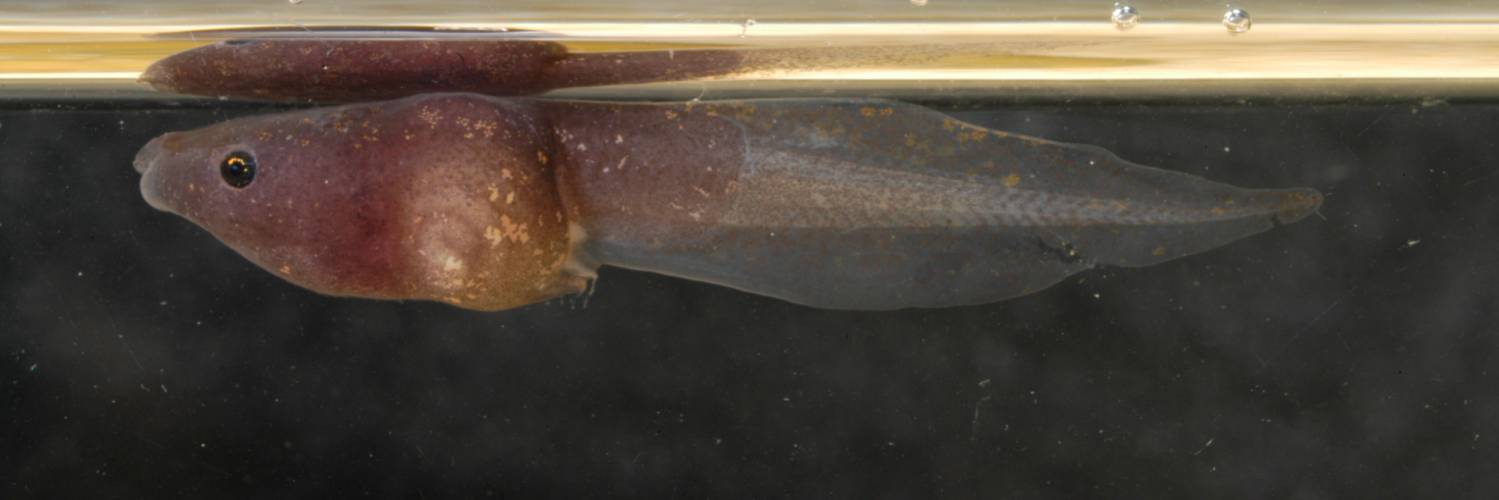
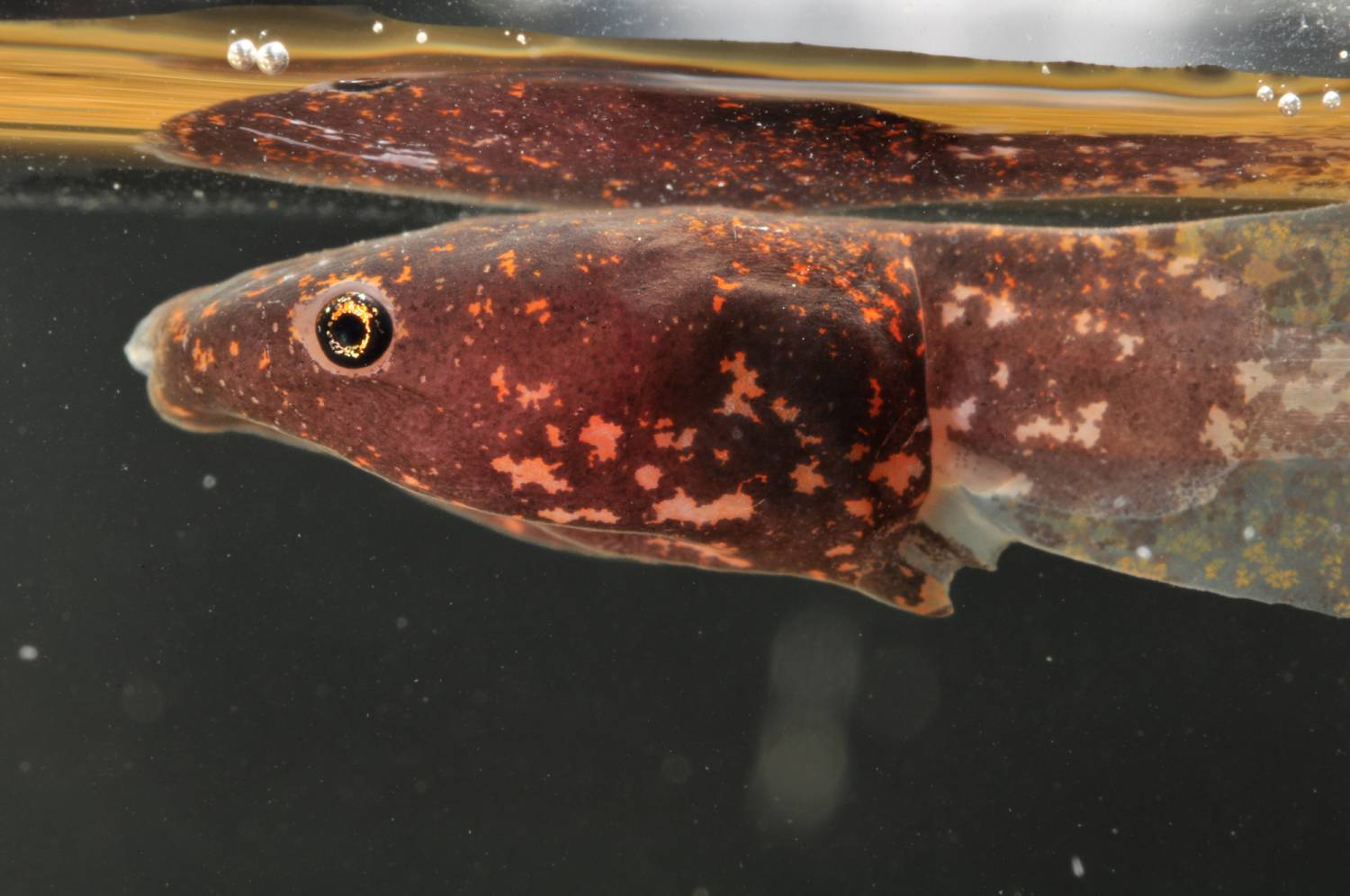
Dorsal and ventral coloration dark brown, with scattered orange flecks of irregular shape. Flecks are smaller dorsally and more blotched and cream-colored along the flanks. The pattern extends uninterrupted from the trunk to the base of the tail. Yellow to cream-colored flecks continue onto the tail fins, whereas melanocyte density decreases toward the distal portions of the tail. Ventral skin well pigmented and opaque; internal organs not visible.

Snout

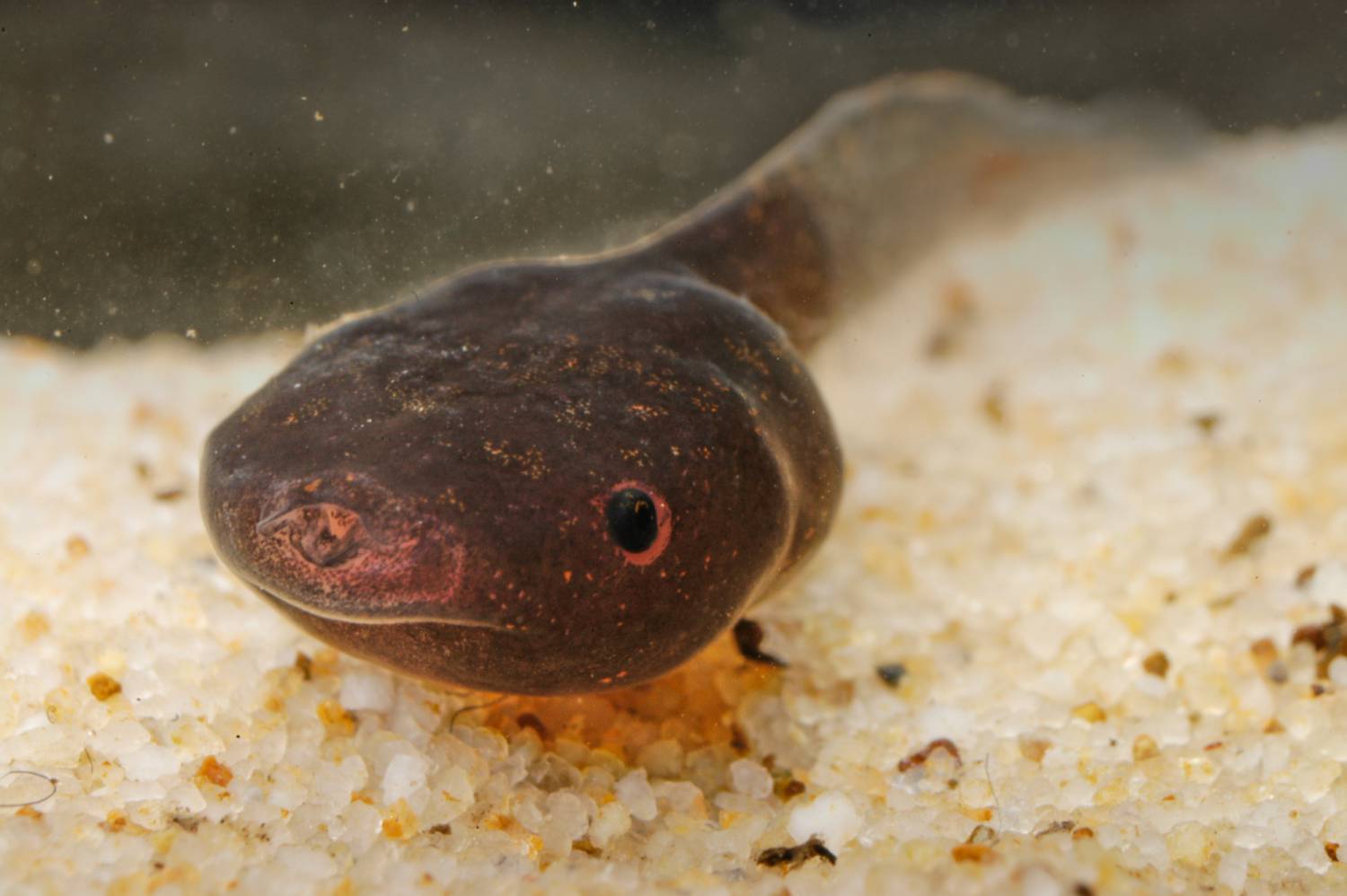
Snout long and wide. In dorsal view, broadly rounded with an anterior embayment accommodating the mouthparts. In lateral view, snout tip truncated. Jaws slightly recessed.

Oral Disc

Mouth terminal; oral disc with free lips absent. Mouth recessed within a horizontal fold at the tip of the snout. Upper jaw flat medially and slightly arched laterally, with corners slightly projecting; lower jaw U-shaped. Jaw edges not darkly keratinized; keratodonts absent (LTRF 0/0).

Body

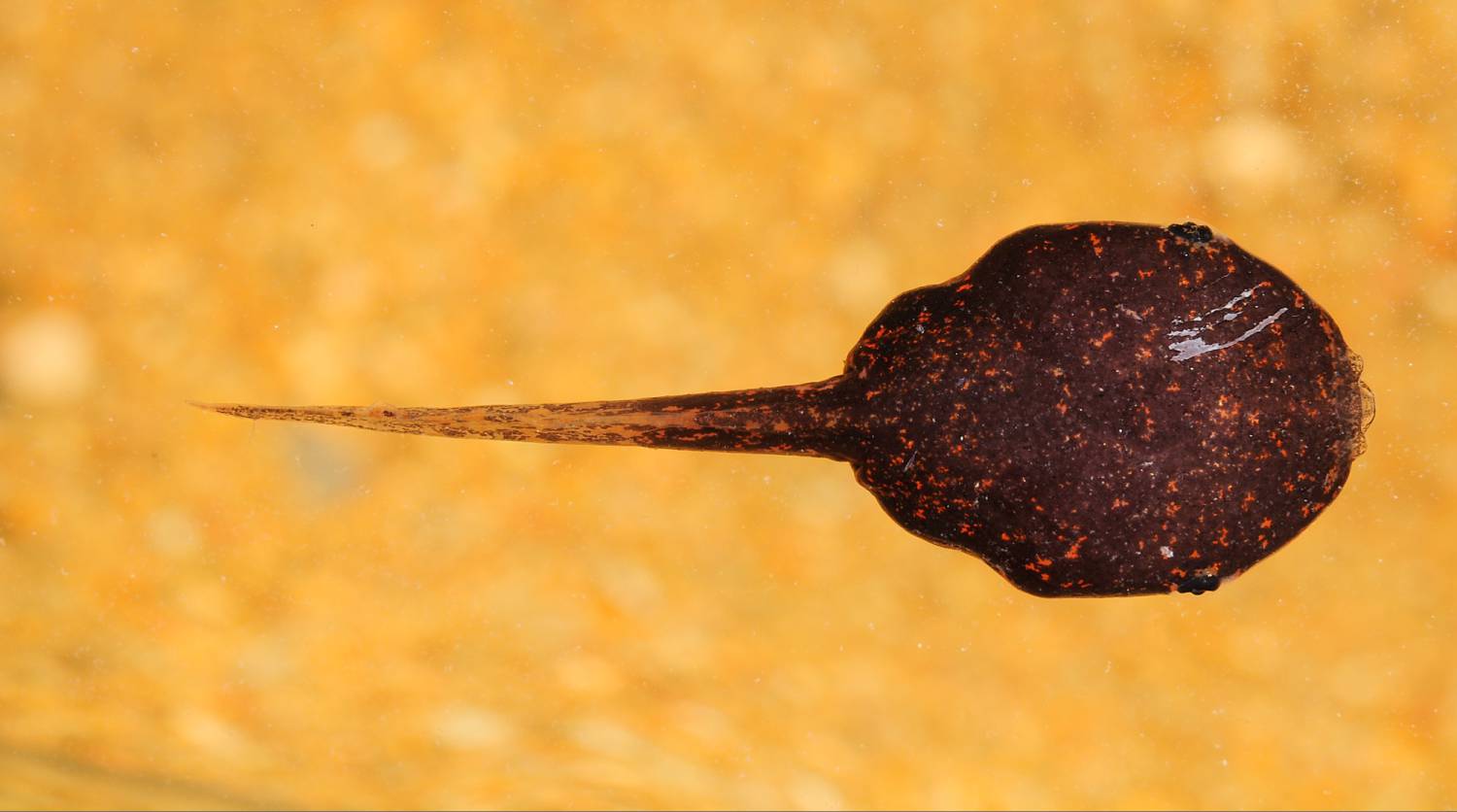
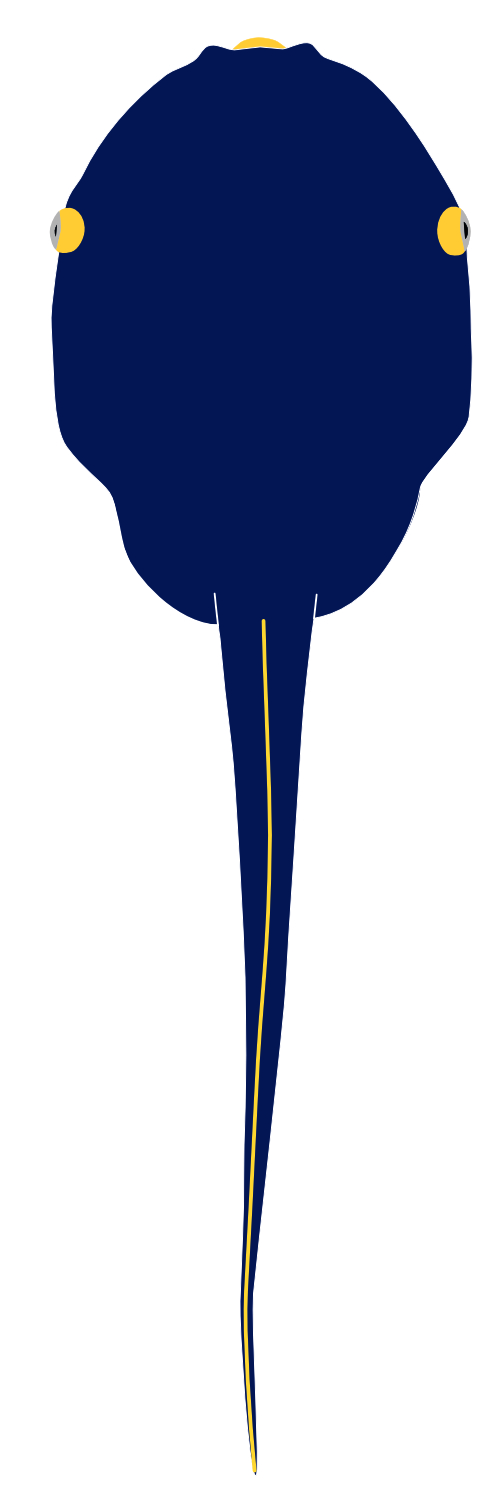
Medium-sized tadpole. Head and trunk dorsoventrally depressed, particularly in the snout region; head flat dorsally. In lateral view, body contour depressed ovoid, with a noticeable tapering of the head from just posterior to the eyes toward the snout tip. In dorsal view, head enormously wide relative to the much narrower trunk. Trunk broadly rounded posteriorly and much wider than the base of the tail. Body widest at the gill region. Spiracle ventral and medial; spiracle opening forming a posteriorly directed triangular funnel. Spiracular orifice positioned posterior to the trunk, beneath the tail root and vent. Lateral line organs indistinct.

Eyes & Nostrils

Eyes lateral; cornea protruding beyond the body contour in dorsal and ventral views. Eyes small. Iris mostly black with a metallic golden ring around the pupil. Sclera dorsally dotted with silver iridophores. Nostrils not perforated in larval stages.

Tail

Tail comprising approximately 60–65% of total length. Tail moderately developed, narrow in dorsal view relative to body size and much narrower than the trunk. Muscular portion markedly lower than body height in lateral view. Upper fin originating at the trunk-tail junction, rising steeply to form a convex arch in the middle section of the tail, where tail height is greatest. Posteriorly, the contour of the upper fin runs straight or slightly concave toward a narrowly rounded tail tip. Lower fin similar in shape but slightly higher, reaching maximum height slightly anterior to that of the upper fin. In the anterior 25% of the tail, an opaque, heavily pigmented patch is present, covering the muscular portion of the tail and parts of the tail fins; this patch is longer than high and smoothly rounded posteriorly and becomes even more conspicuous in preserved specimens. Skin glands absent. Lateral tail vein not visible. Muscle myosepta discernible only under magnification.

Similar Species

In dorsal view, the combination of a very large, wide head and a weakly developed tail clearly identifies tadpoles of Kaloula as microhylids and distinguishes them from pond-type tadpoles of other frog families in Borneo. Larvae of K. baleata and Kaloula pulchra are similar, and diagnostic features have not been established with certainty. We observed an opaque patch in the anterior third of the tail in K. baleata—a feature otherwise known from Polypedates—that was absent in K. pulchra, representing a potential distinguishing character. In addition, the sharp-edged orange-yellow flecks characteristic of K. baleata appear to be absent in K. pulchra tadpoles.

Literature

Adults congregate after heavy rainfalls at forest ponds but also at ponds at forest edges or clearings. Males usually call from hidden spots such as in vegetation or in hollow logs. The deep, forceful voice of the males gave them the name bullfrog. An amplecting pair can lay large numbers of eggs and, thus, a pond can be populated by large numbers of these tadpoles.
Iskandar, D.T. (1998). The Amphibians of Java and Bali. Research and Development Centre for BiologyLIPI and GEFBiodiversity Collections Project, Bogor. 117 pp + 26 pl.