Zum Hauptinhalt springen

Frogs of Borneo

Frogs of Borneo

Frogs of Borneo

Frogs of Borneo

Frogs of Borneo

Frogs of Borneo

Frogs of Borneo

Frogs of Borneo

Frogs of Borneo

Frogs of Borneo

Frogs of Borneo

Hylarana nicobariensis

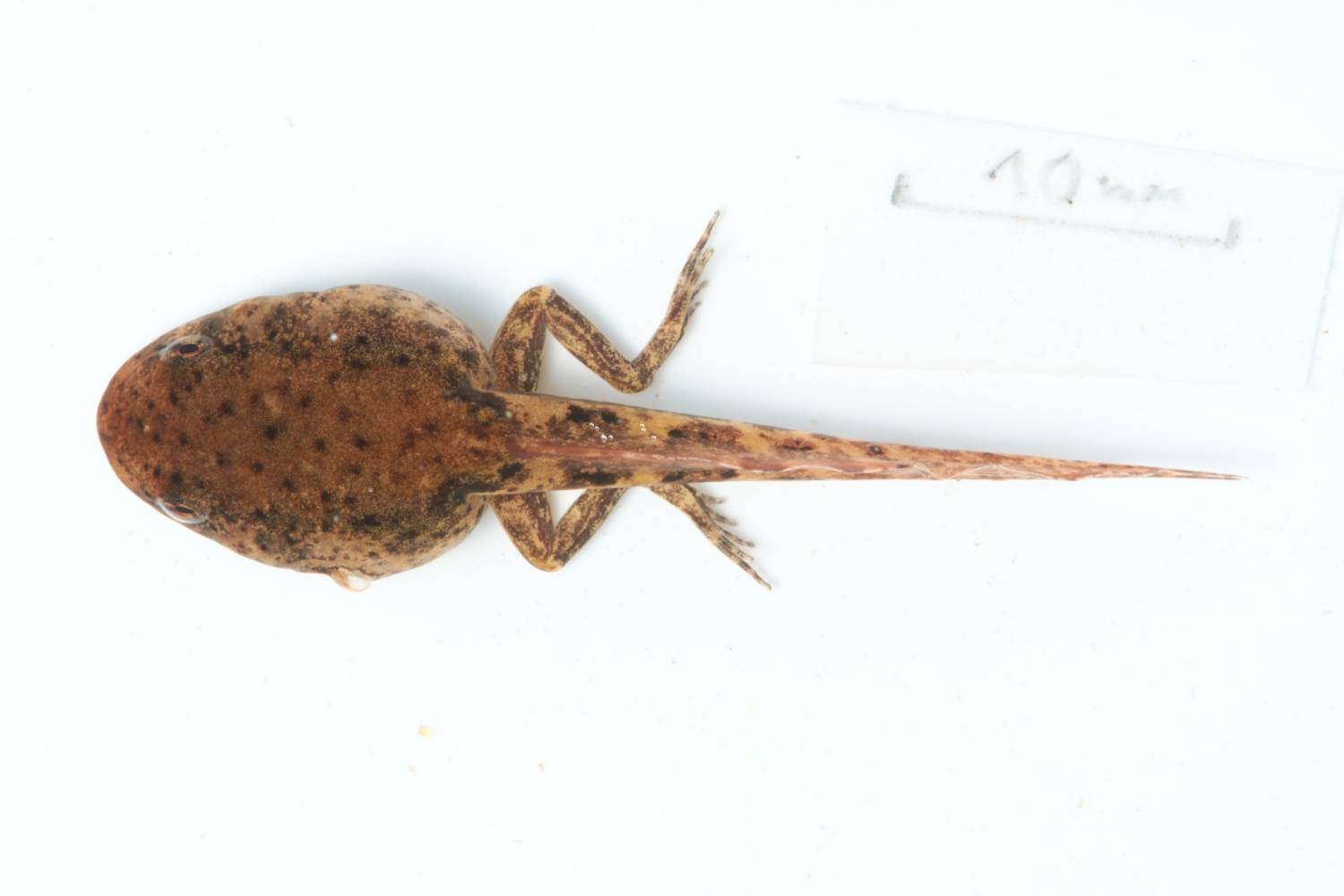
Tadpoles of Hylarana nicobariensis inhabit stagnant water bodies with abundant aquatic vegetation, such as ponds in open areas, roadside ditches, rural landscapes, and large forest clearings. The species does not enter closed forest but depends on open habitats with grass and other low vegetation. Little is known about the ecology of the tadpoles. They appear to spend most of their time near the bottom of ponds, although their broad tail fin suggests that they also move vertically within the water column. These tadpoles are shy and retreat into macrophytic vegetation at the slightest disturbance. The altitudinal distribution ranges from the lowlands up to at least 1000 m a.s.l.
  • Family:
    Ranidae
  • Genus:
    Hylarana
  • Ecomorph:
    benthic-nektonic, exotrophic, lentic
  • Waterbody Type:
    stagnant
  • Water Column:
    bottom
  • Feeding Type:
    feeding, generalist
  • Size:
    47 mm
  • Development:
    larva, tadpole
  • Adult:
    Hylarana

Coloration

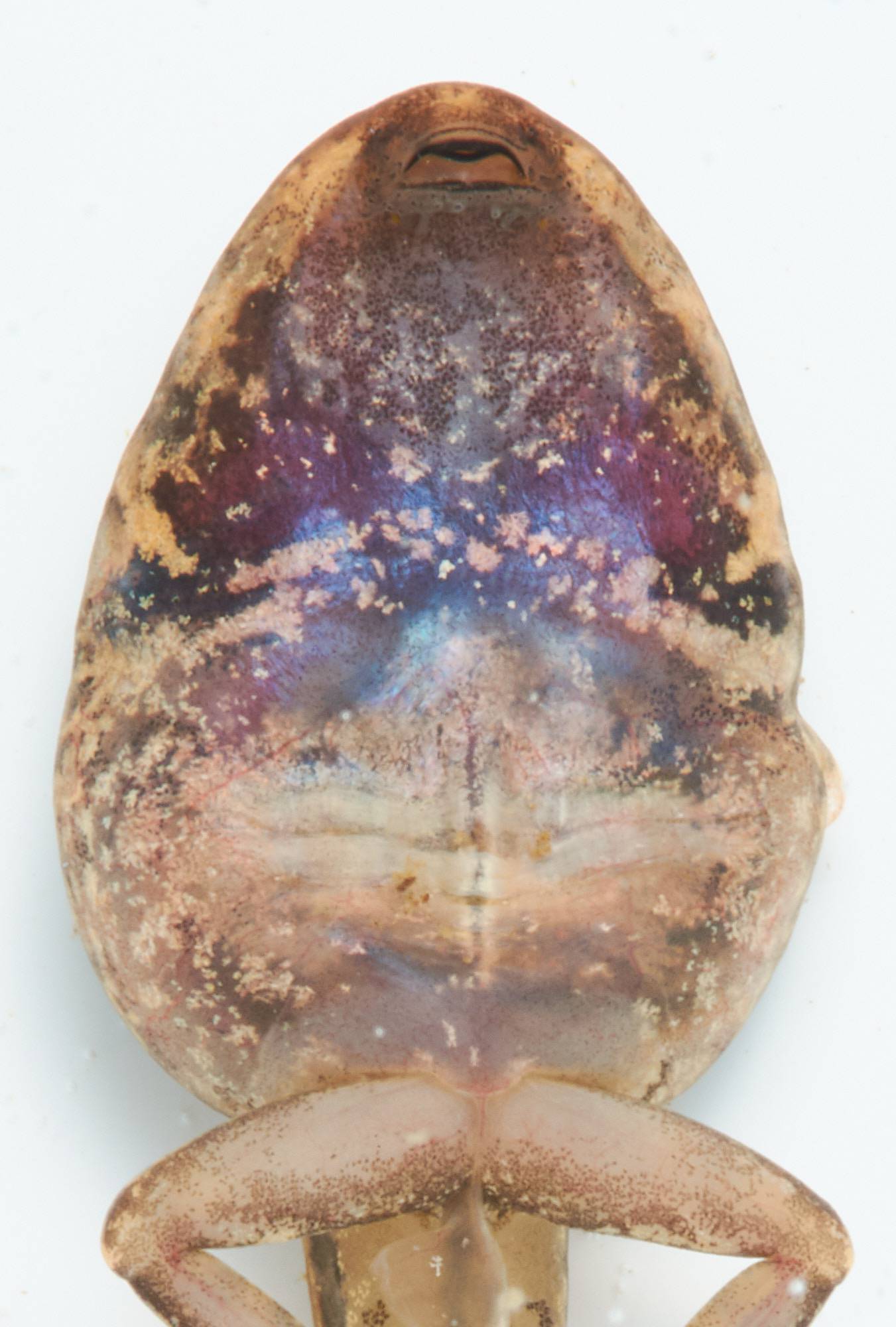
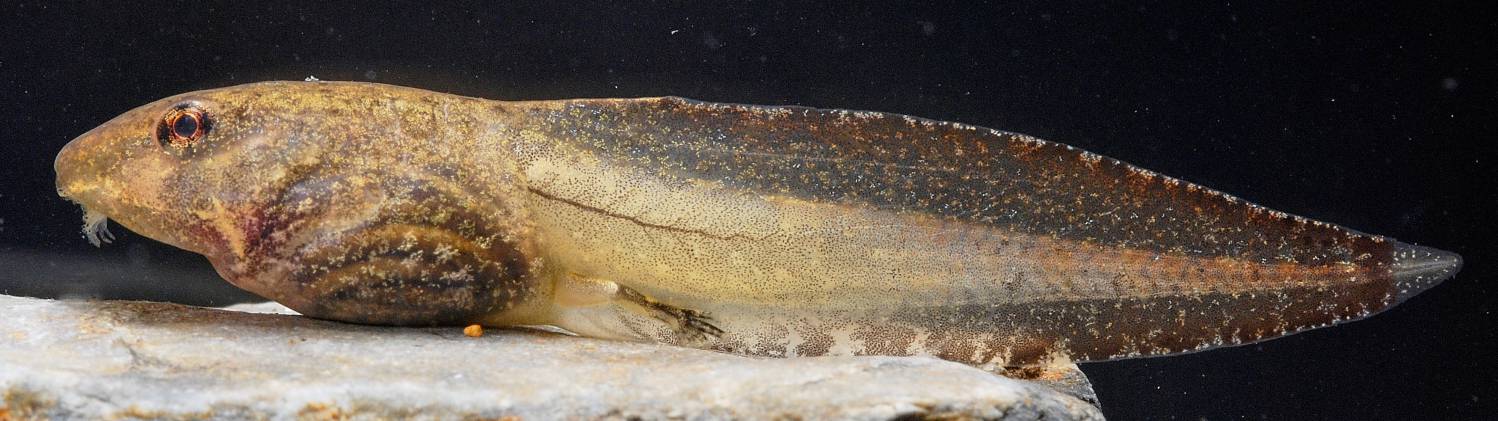
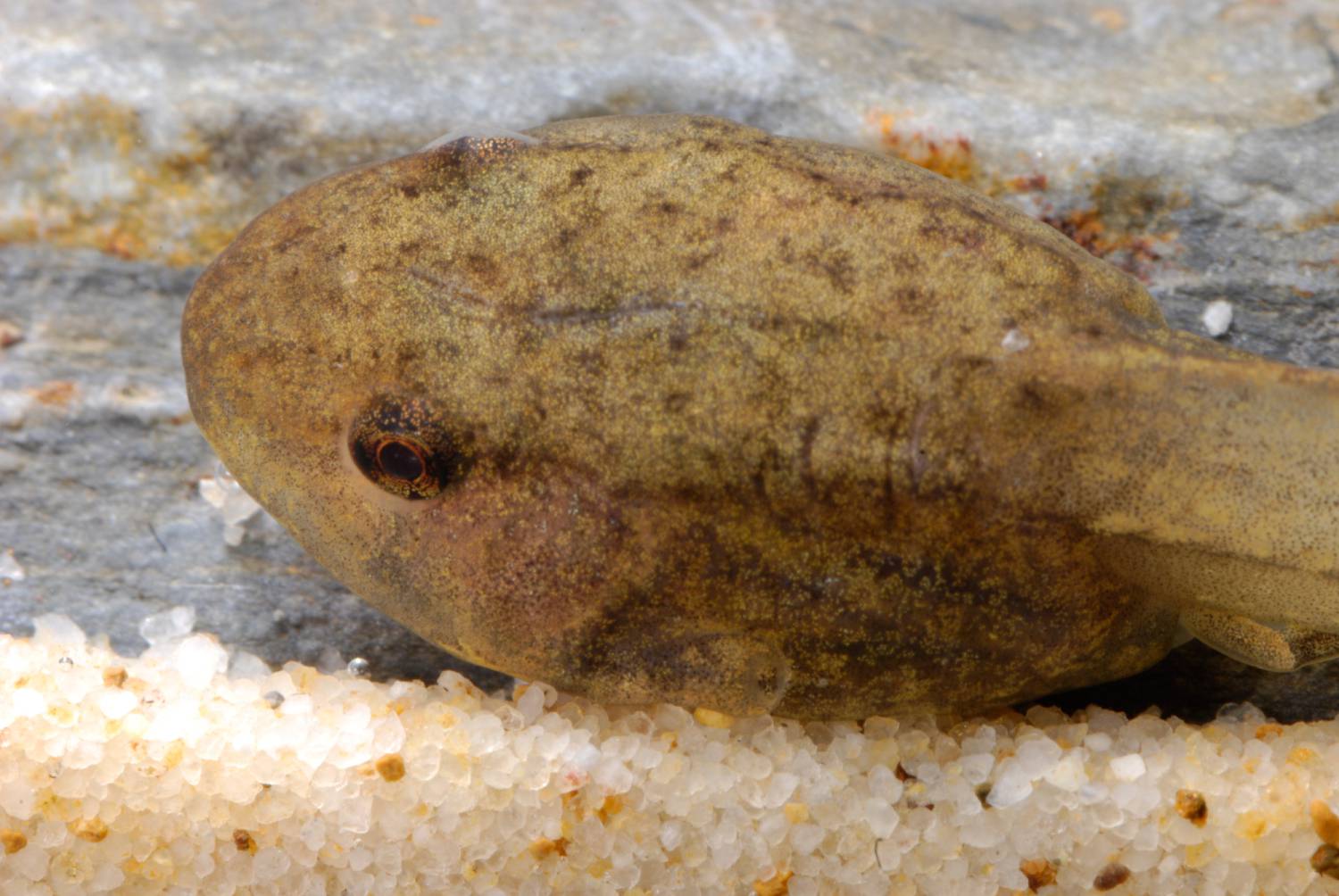
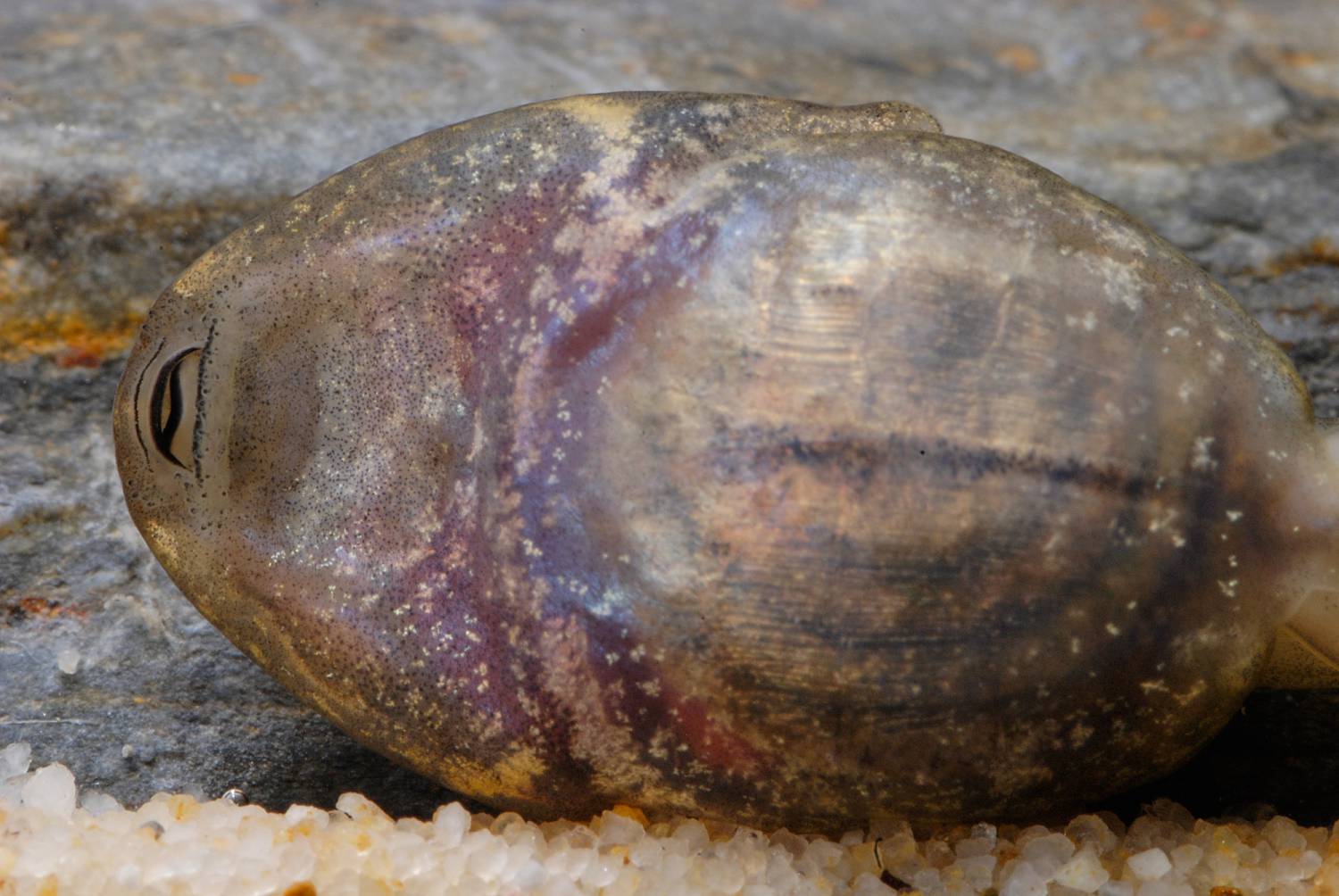
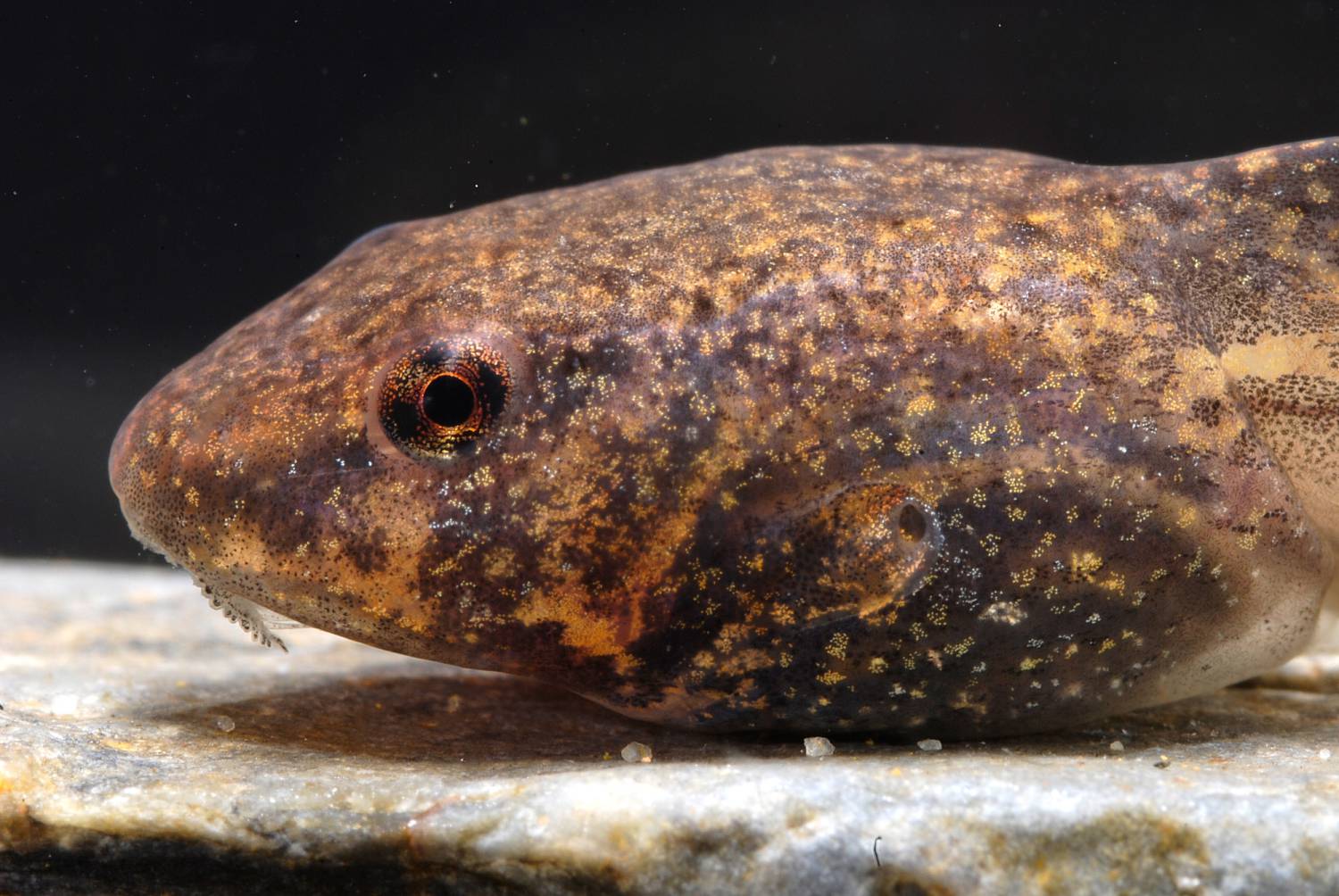
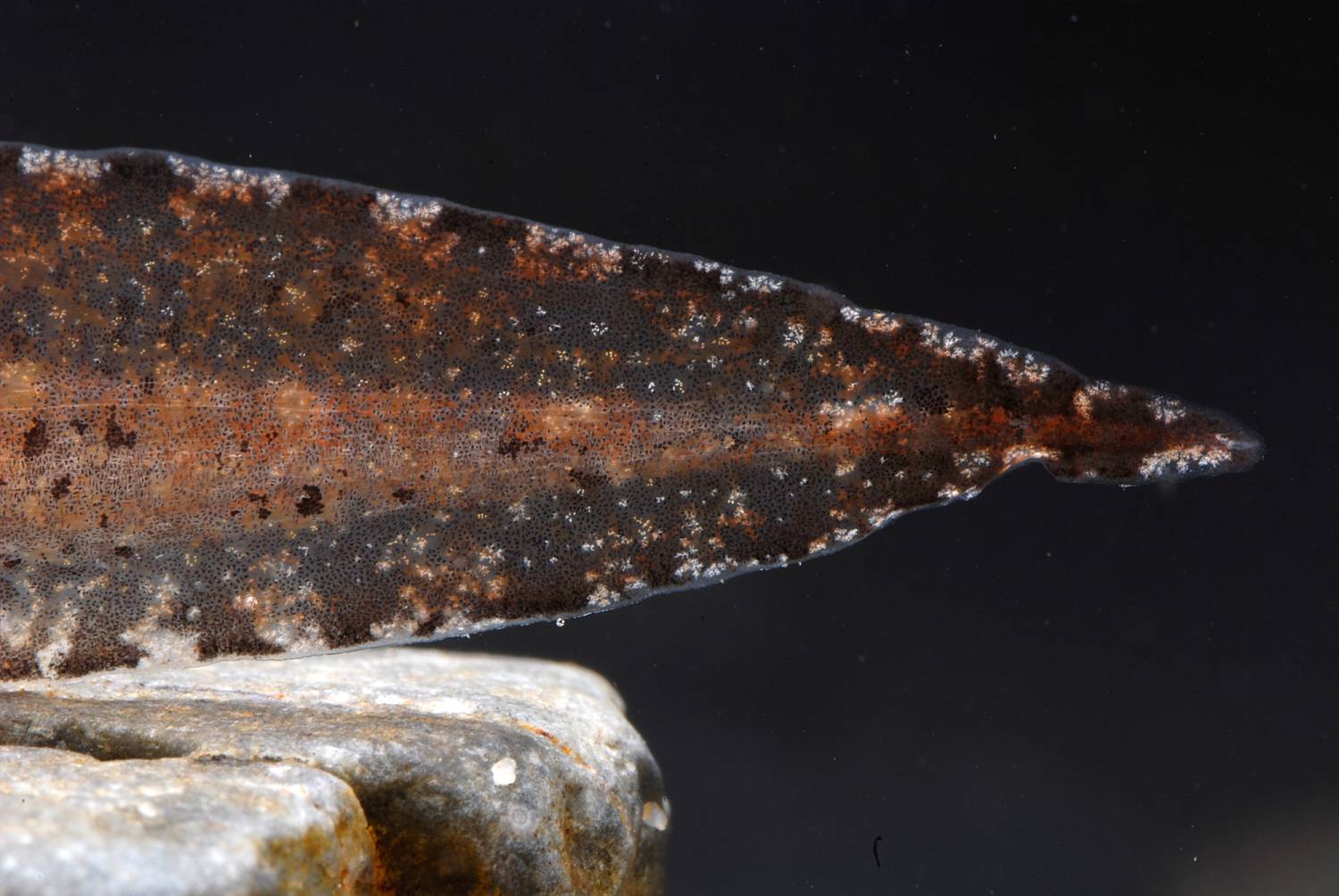
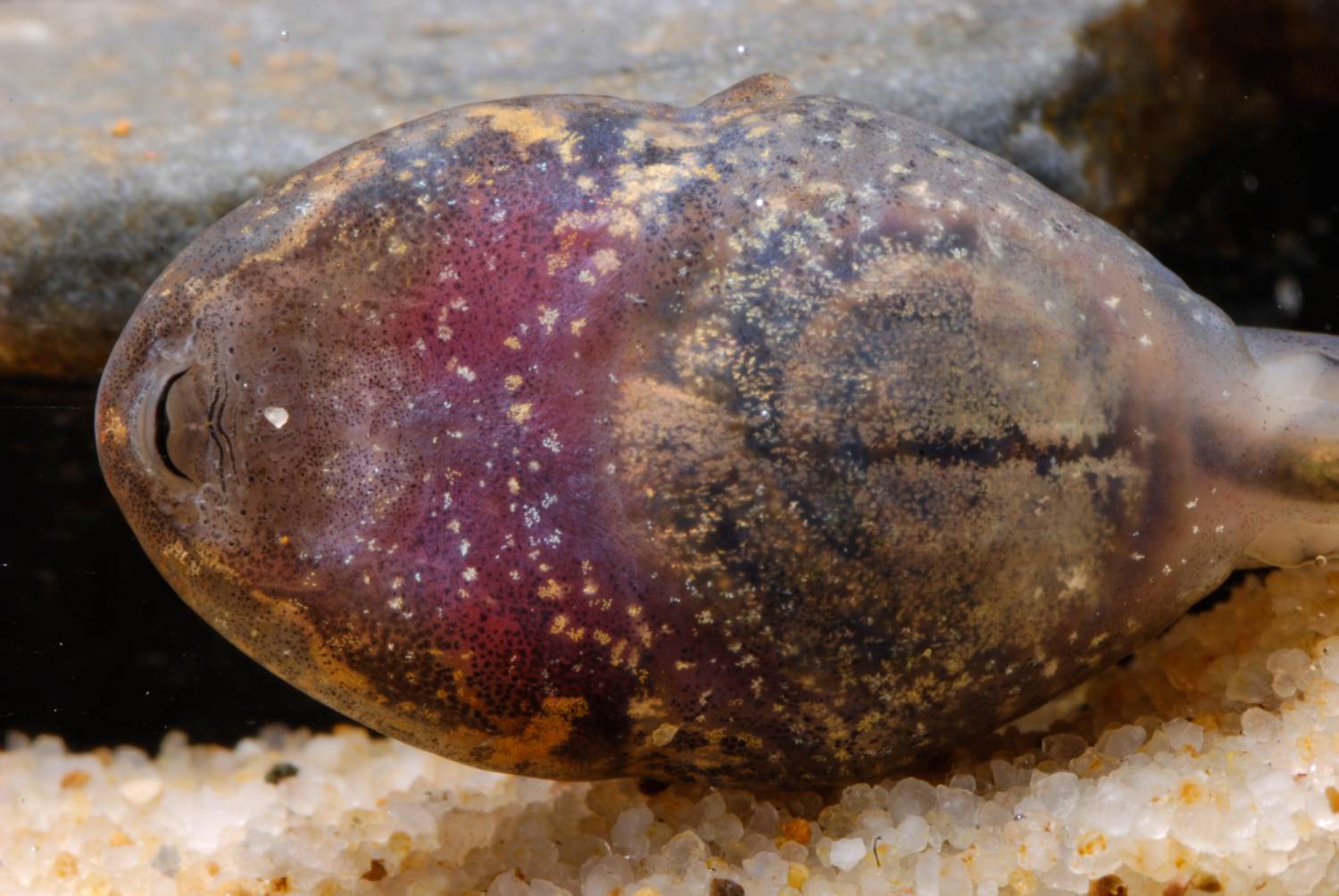
The general background coloration of body and tail dorsally ranges from light to dark brown, with a fine mottled pattern. Facial patterning consists of a diffuse dark band extending from the eye to the snout, another from the eye over the cheek, and a third band posterior to that. Small clusters of iridocytes are scattered laterally over the head and trunk. Trunk pigmentation extends onto the upper portion of the tail. The upper muscular part and upper tail fin are mottled and finely dusted with melanocytes. Tail fins and posterior tail may exhibit orange hues. An alternating pattern of light and dark blotches along the margins of the upper and lower tail fins is characteristic of this species. Ventral abdominal skin is partially translucent, with stippling of small melanocytes and numerous clusters of iridocytes in the gular and abdominal regions; consequently, gut and gills are indistinct. A thin dark median line is present on the abdomen. The oral disc also shows melanocyte stippling, and the tips of oral disc papillae are pigmented.

Snout

Snout rounded and slightly tapering in dorsal view. In lateral view, snout moderately long and sloping; together with the rising ventral contour, this produces a wedge-shaped, nearly pointed profile.

Oral Disc

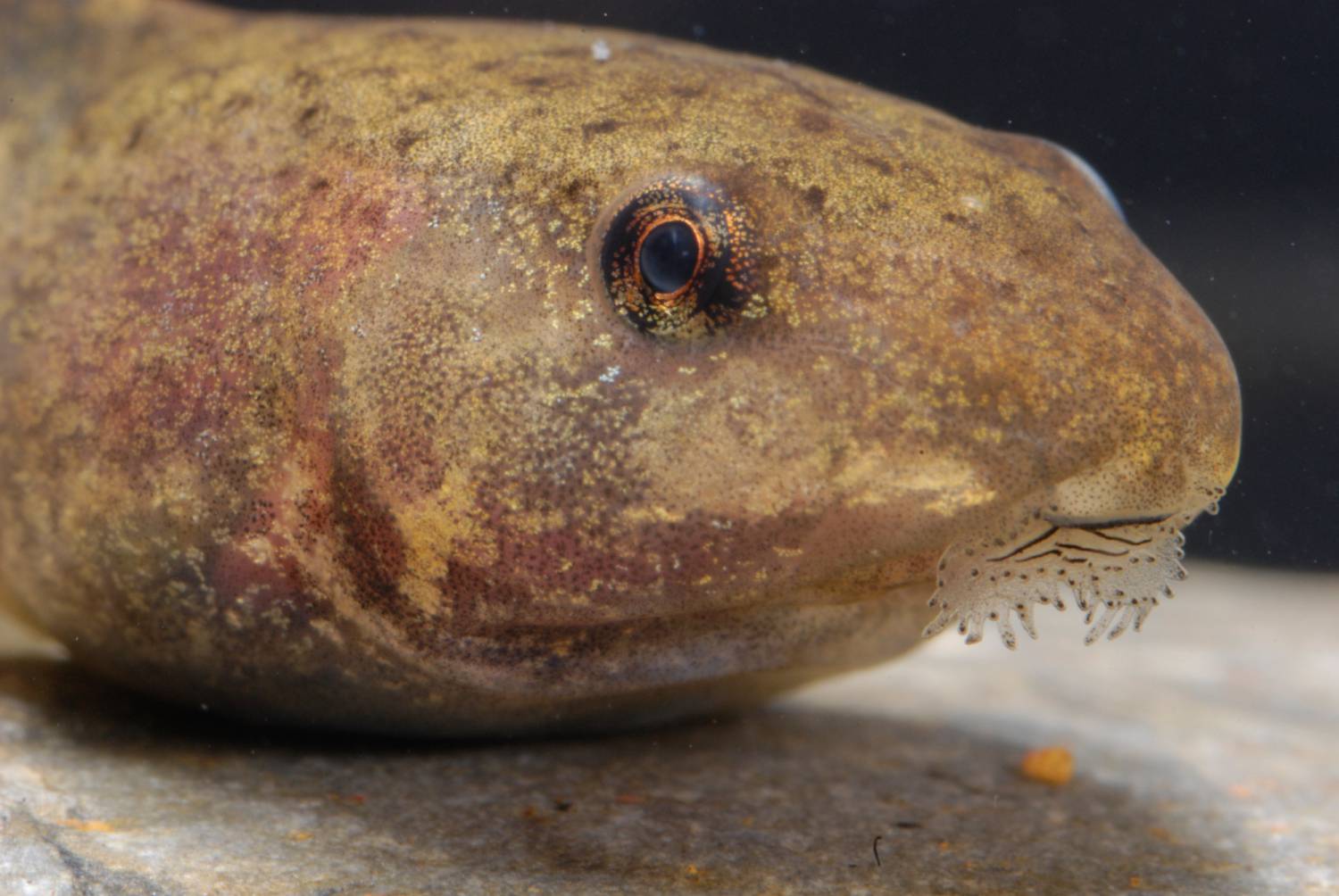
Oral disc anteroventral. A distinct emargination separates the upper and lower lips. Marginal papillae present along the oral disc margin, except for a broad medial gap on the upper lip. Submarginal papillae arranged in 1–2 irregular rows. Marginal papillae short and broadly rounded on the upper lip; lower lip bearing several elongated marginal papillae, reminiscent of barbels. LTRF 1/3 to 1/3(1); when divided, the gap in the first posterior row narrow and indistinct. Third posterior row short. Beaks well keratinized but thin, undivided; jaw edges finely serrated. Upper beak broadly arched, nearly straight along the middle third; lower jaw sheath forming a wide, smooth arch.

Body

Body oblong to oval or ovoid in dorsal view; ovoid and tapering anteriorly in lateral view. Snout slightly tapering but not pointed in dorsal view. Body widest at the level of the gill or abdominal region, depending on feeding state. Spiracle sinistral, opening posteriorly; medial rim of spiracular orifice distinct, without a long free tube. Spiracle positioned vertically at mid-body level in lateral view. Lateral line organs indistinct.

Eyes & Nostrils

Eyes dorsolateral. Nostrils small and inconspicuous, positioned closer to the snout than to the eyes and oriented anterolaterally. Orbitonasal streak indistinct. Iris coppery red around the pupil and golden at the periphery; peripheral iris with four dark sectors (anterior, posterior, dorsal, ventral), giving the eye a radially patterned appearance.

Tail

Tail comprising approximately 65–67% of total length. Muscular portion moderately strong, lower than body height in lateral view. Upper fin originating slightly anterior to the trunk-tail junction. Both tail fins moderately arched, with the upper fin higher than the lower. In the posterior third of the tail, fins taper to a narrowly rounded or pointed tip. Lateral tail vein visible in the anterior third of the tail.

Similar Species

Hylarana nicobariensis may co-occur in ponds with Hylarana erythraea and occasionally with Polypedates leucomystax or P. otilophus. These latter species, however, lack the characteristic tail, eye, and facial coloration patterns of H. nicobariensis and differ in keratodont row formula and oral disc configuration.

Literature

Males of Indosylvirana nicobariensis can be heard everywhere in rural settings but are not easily seen because they like to call from among dense grass. The call is a series of up to ten harsh „kek“ notes.
Inger, R.F. (1966) The systematics and zoogeography of the Amphibia of Borneo. Fieldiana Zoology 52: 1–402.

Inger, R.F., Stuebing, R.B., Grafe, T.U., Dehling, J.M. (2017) A field guide to the frogs of Borneo. 3rd ed. Natural History Books, Kota Kinabalu. 228 pp.