Zum Hauptinhalt springen

Frogs of Borneo

Frogs of Borneo

Frogs of Borneo

Frogs of Borneo

Frogs of Borneo

Frogs of Borneo

Frogs of Borneo

Frogs of Borneo

Frogs of Borneo

Frogs of Borneo

Frogs of Borneo

Hylarana glandulosa

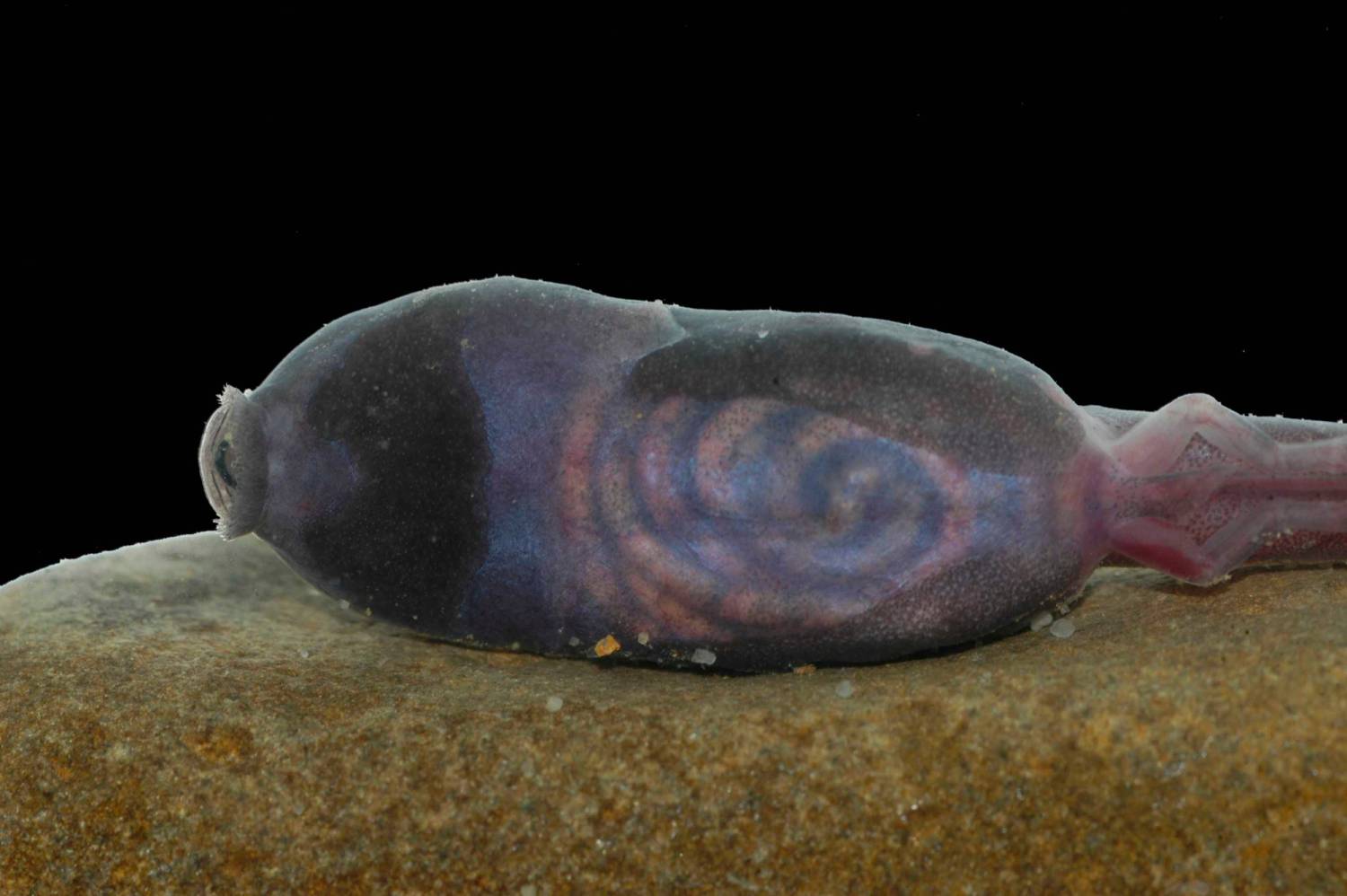
Tadpoles of Hylarana glandulosa inhabit stagnant pools in alluvial forest, blackwater swamps, flooded depressions near streams, and peat swamps. These habitats are typically lowland environments (up to 700 m a.s.l.), and the pools are often filled with thick layers of leaf litter. During the day, tadpoles remain hidden deep within the litter. At night, they emerge to feed among the superficial leaf layers of the pool. The body shape of the tadpoles, together with the circumstances under which they have been encountered, suggests that they are specialized leaf-litter interstice dwellers.
  • Family:
    Ranidae
  • Genus:
    Hylarana
  • Ecomorph:
    lentic
  • Waterbody Type:
    stagnant
  • Water Column:
    bottom|leaf litter
  • Feeding Type:
    feeding, generalist, leaf litter
  • Size:
    56 mm
  • Development:
    larva, tadpole
  • Adult:
    Hylarana

Coloration

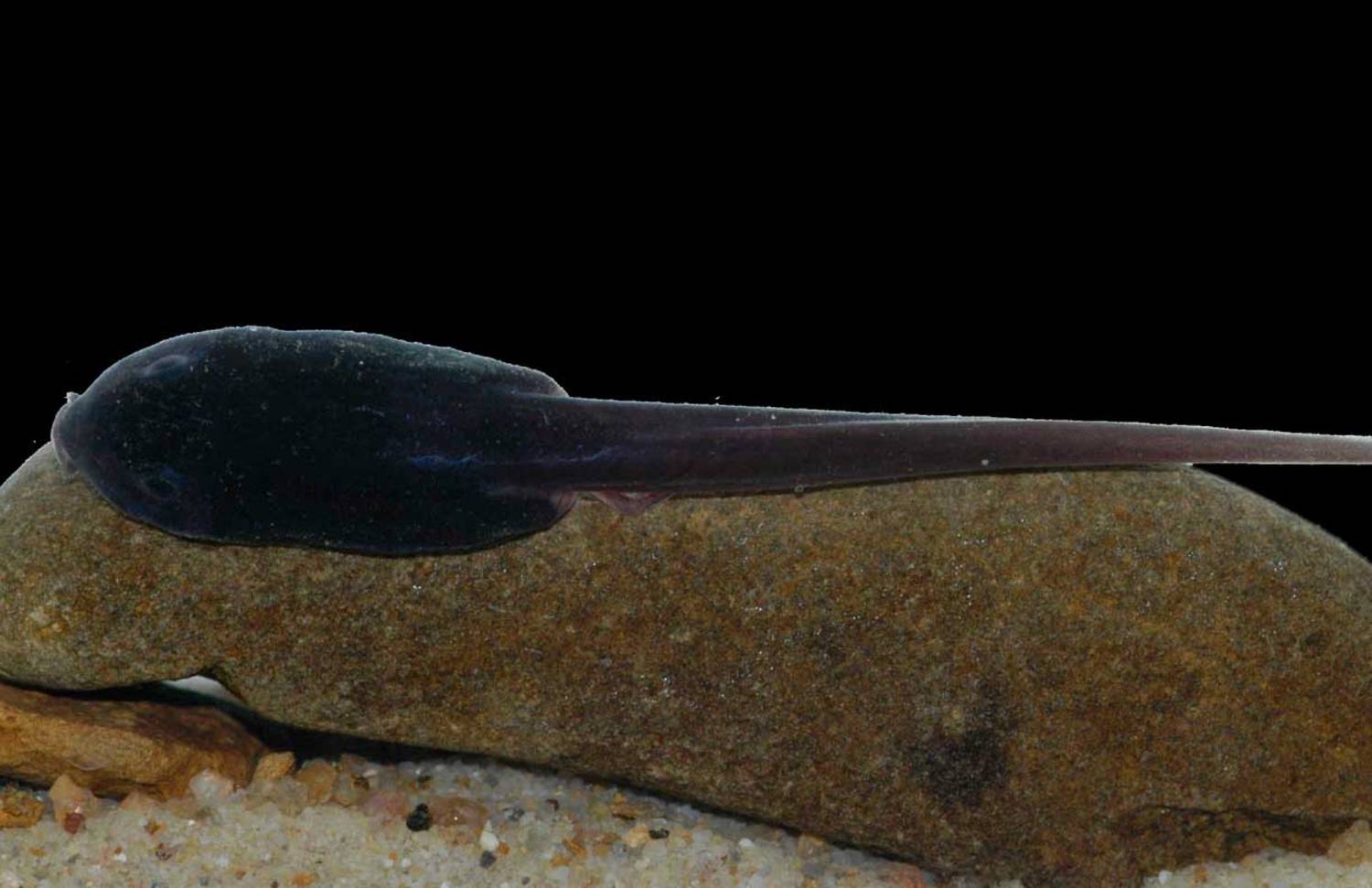
Body and tail uniformly black dorsally, without markings; skin with bluish iridescence in life. Fins also pigmented, dark gray. Ventral skin semitransparent with bluish iridescence in life (iridescence absent in preserved specimens). Oral disc pigmented; papillae bearing groups of melanocytes. Buccal and branchial regions dusted with melanocytes. Buccal glandular field dark brown and covering most of the buccal region. Gills and heart not clearly visible through the branchial region. Abdominal skin also dusted with melanocytes and laterally covered with clusters of skin glands, which are likewise pigmented. The gut is faintly visible through the skin between the glandular fields.

Snout

Snout rounded to narrowly rounded in dorsal and lateral views, moderately long.

Oral Disc

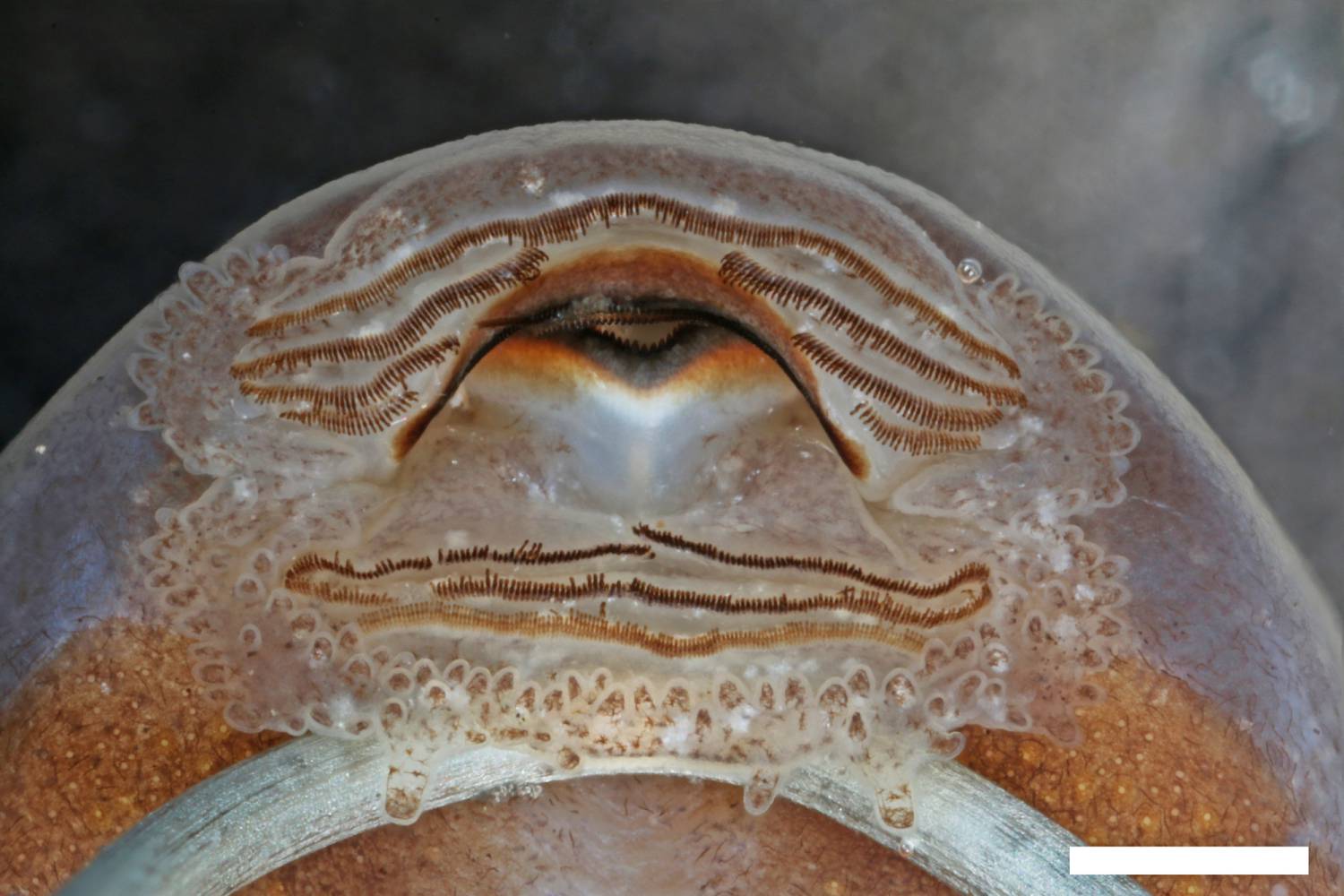
Oral disc anteroventral, its width slightly less than half the body width. Emarginations present at the lateral margins between upper and lower lips. Upper lip devoid of papillae across a wide medial area, with a single row of marginal papillae laterally. Lower lip with one row of marginal papillae, interrupted by a small medial gap. Marginal papillae generally moderately long, with a few longer papillae on the lower lip. Submarginal papillae arranged in staggered rows (one medially to four laterally) on the lower lip. LTRF 4(2–4)/3(1) or 5(2–5)/3(1). Division of the first keratodont row on the lower lip may be indistinct, lacking a wide gap between ridges. Beaks highly keratinized and black, but only moderately thick; jaw edges bearing very fine serrations. Upper beak broadly U-shaped and somewhat angled; lower beak smoothly V-shaped.

Body

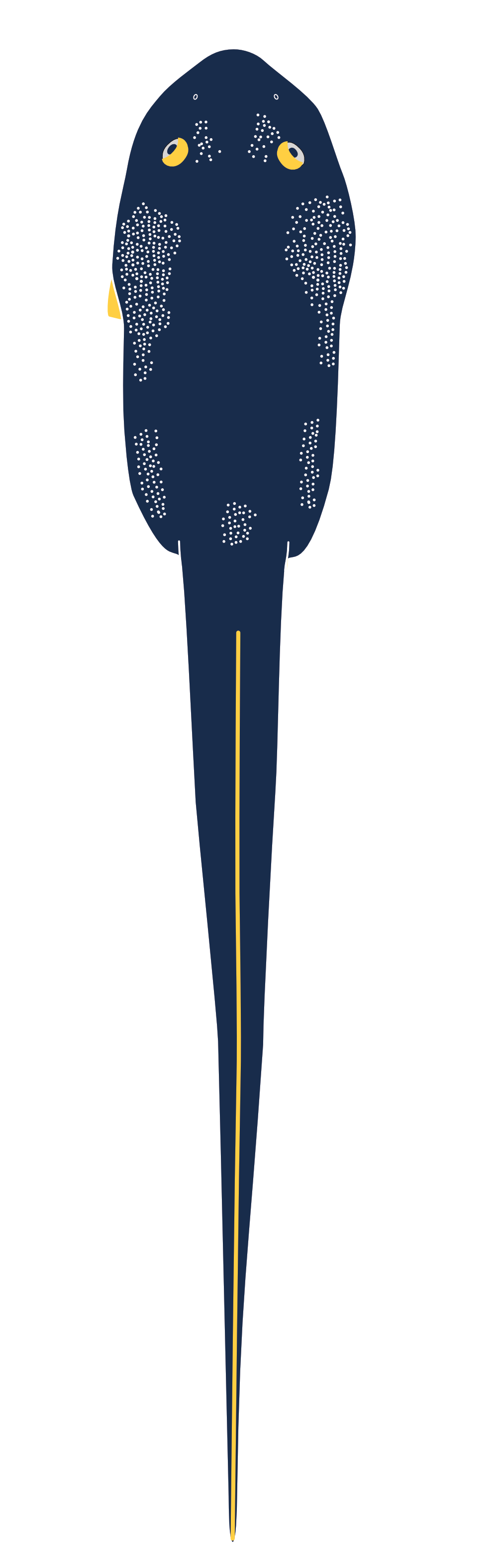
A medium- to large-sized tadpole. In lateral view, body flattened dorsally and ventrally, with belly not bulging. Snout rounded, convex, and not elongate. In dorsal view, body contour slender, oval to rectangular; body widest at the level of the gills, posterior to the eyes. Spiracle sinistral; spiracular tube opening posterodorsally and well below the longitudinal body axis in lateral view; spiracular orifice attached to the body wall. Lateral line organs indistinct. Conspicuous fields of densely arranged glands present between the eyes, dorsally at the body-tail junction, along the upper flanks, laterally on the abdomen, and as a large median cluster immediately posterior to the oral disc, covering nearly the entire buccal area ventrally.

Eyes & Nostrils

Eyes dorsolateral; eyes and nostrils relatively small. Nostrils slightly sunken, without a raised rim, and positioned closer to the snout than to the eyes.

Tail

Tail comprising approximately two-thirds of total length. Muscular portion of tail strong and high, slightly lower than body height in lateral view. Upper fin originating posterior to the trunk-tail junction at approximately 10% of tail length; rising gradually, only slightly curved, and tapering almost straight to a narrowly rounded tip. Lower fin similar in contour but slightly lower; both fins relatively low. Maximum tail height located approximately at mid-tail. Skin glands absent on tail and tail fins.

Similar Species

The number, arrangement, and size of glandular fields in Hylarana glandulosa are unique among Bornean tadpoles. Hylarana raniceps and H. megalonesa also possess extensive glandular fields, though arranged differently, and differ markedly from H. glandulosa in body coloration and body shape. The slender, black tadpoles of H. signata and H. picturata exhibit less extensive glandular fields. Larvae of Staurois are somewhat similar in body shape but lack glandular fields and differ in oral disc morphology and coloration. The same applies to larvae of some Leptobrachella, which are also fossorial leaf-litter specialists.

Literature

Males call from twigs and branches near suitable pools. Although the loud barking sound of the males is wellknown, details of the reproductive behavior have not been reported. Males have paired subgular vocal sacs and reach the same size as females. Egg diameter 1.52.0 mm.
Leong, T.M., Chou, L.M. (1999) Larval diversity and development in the Singapore Anura (Amphibia). The Raffles Bulletin of Zoology 47: 81–137.

Inger, R.F., Stuebing, R.B., Stuart, B.L. (2006). The tadpole of Rana glandulosa Boulenger (Anura: Ranidae). The Raffles Bulletin of Zoology, 54: 465–467.