Zum Hauptinhalt springen

Frogs of Borneo

Frogs of Borneo

Frogs of Borneo

Frogs of Borneo

Frogs of Borneo

Frogs of Borneo

Frogs of Borneo

Frogs of Borneo

Frogs of Borneo

Frogs of Borneo

Frogs of Borneo

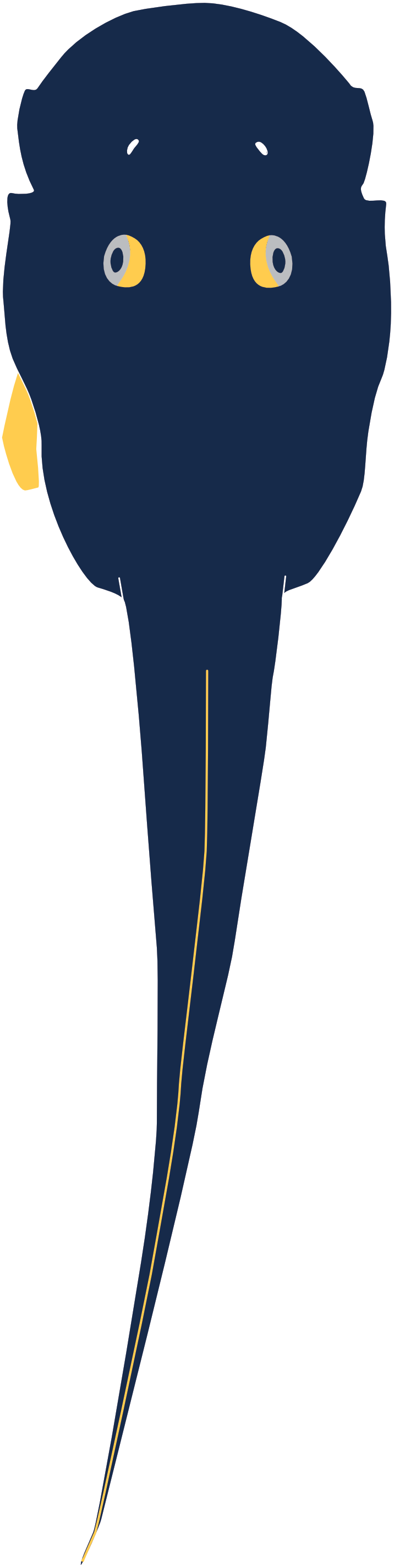
Huia cavitympanum

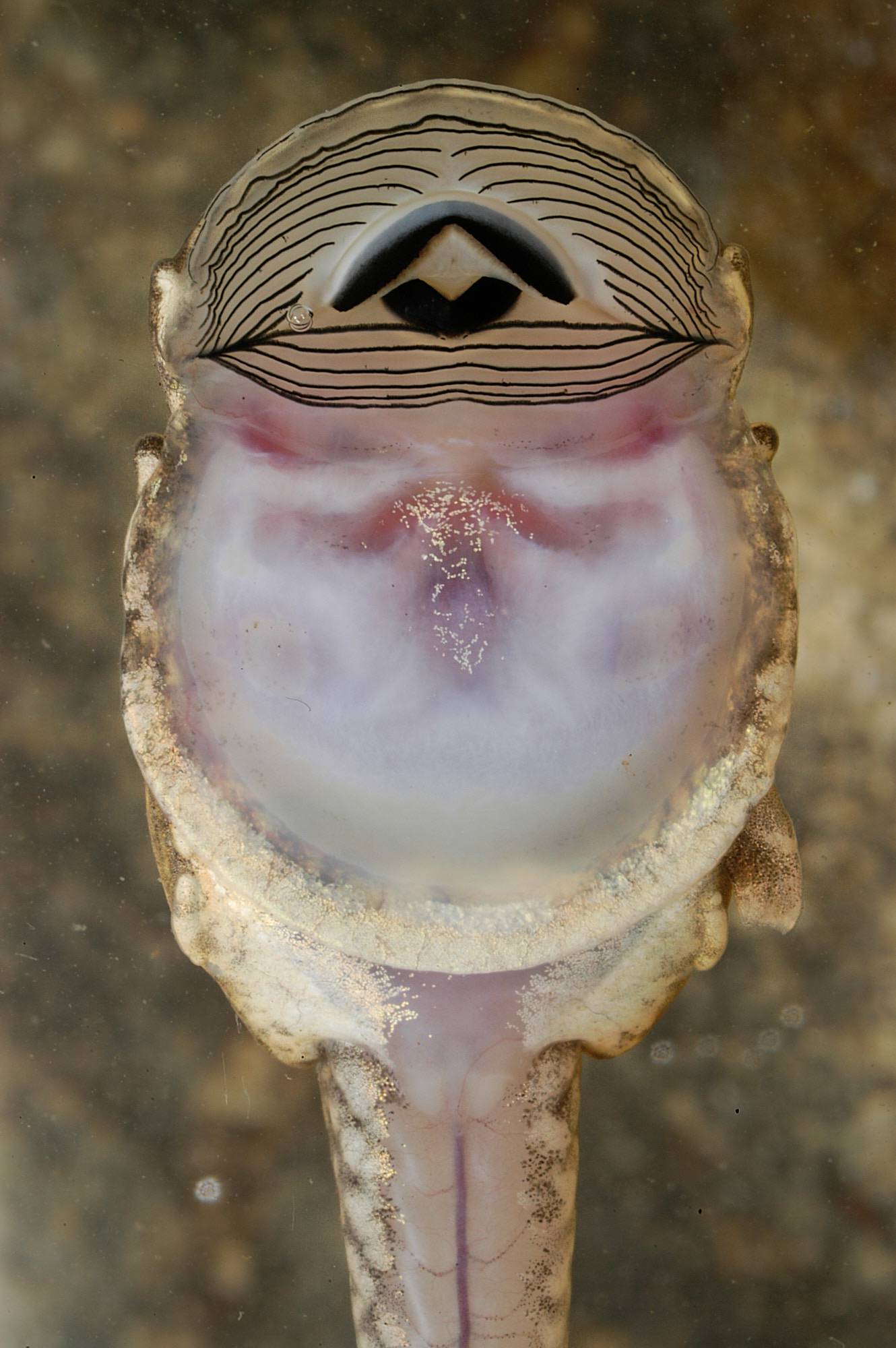
Tadpoles are well adapted to life in cascades and rapids. We observed them clinging to rocks in a range of water velocities, most often in turbulent, fast-flowing currents of clear mountain streams (250–1000 m a.s.l.). Among Bornean species, H. cavitympanum tadpoles appear to tolerate the highest water velocities.
  • Family:
    Ranidae
  • Genus:
    Huia
  • Ecomorph:
    exotrophic, gastromyzophorous, lotic, rheophilous, suctorial
  • Waterbody Type:
    flowing
  • Water Column:
    rock surface
  • Feeding Type:
    feeding, hard surface grazer, omnivorous, rasping
  • Size:
    70 mm
  • Development:
    larva, tadpole
  • Adult:

Coloration

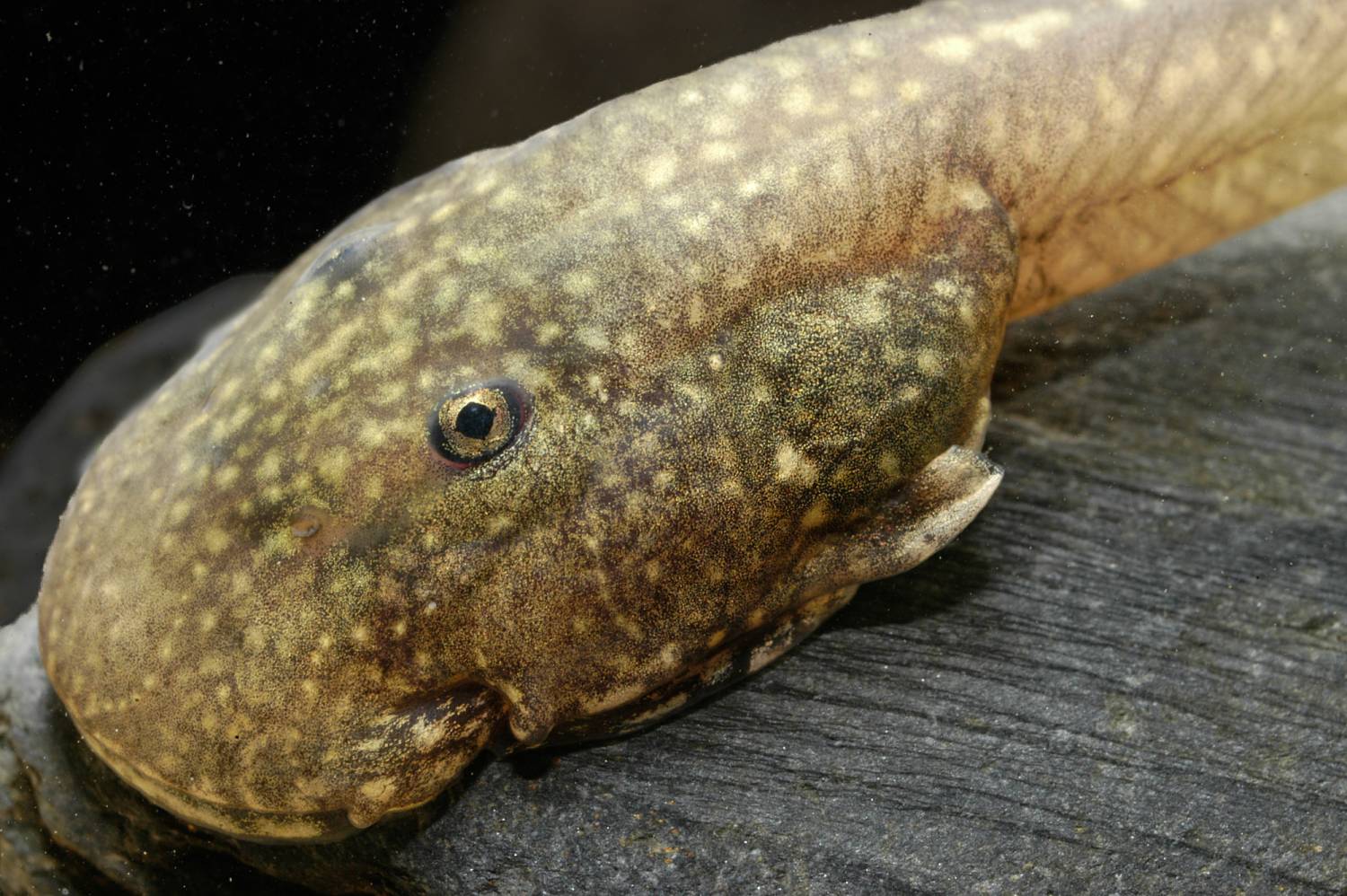
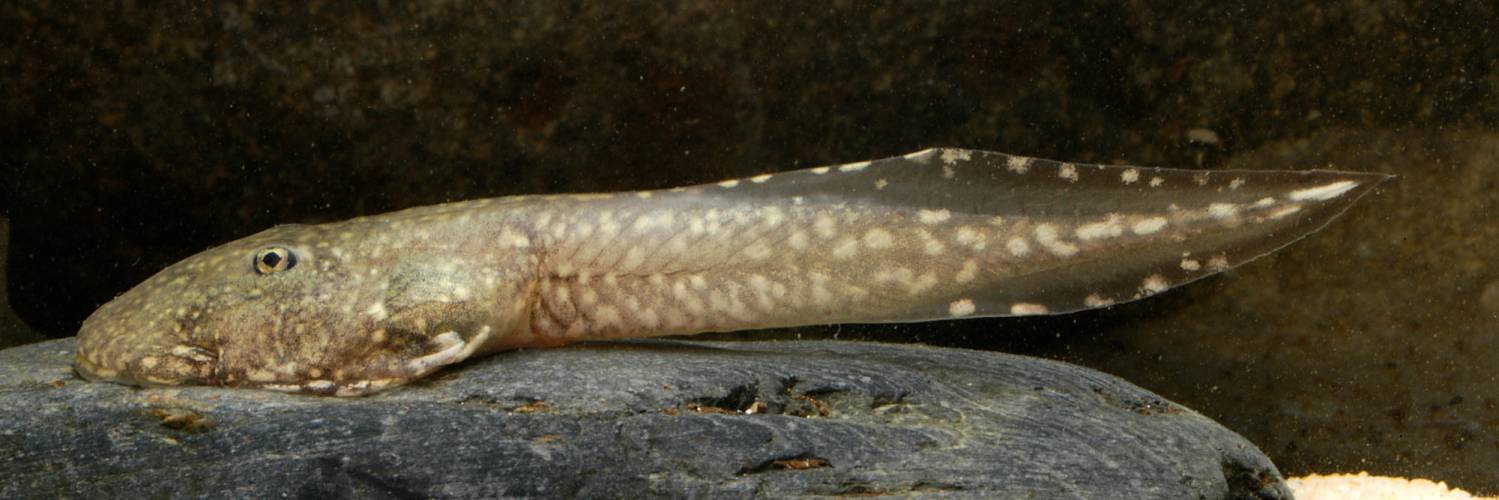
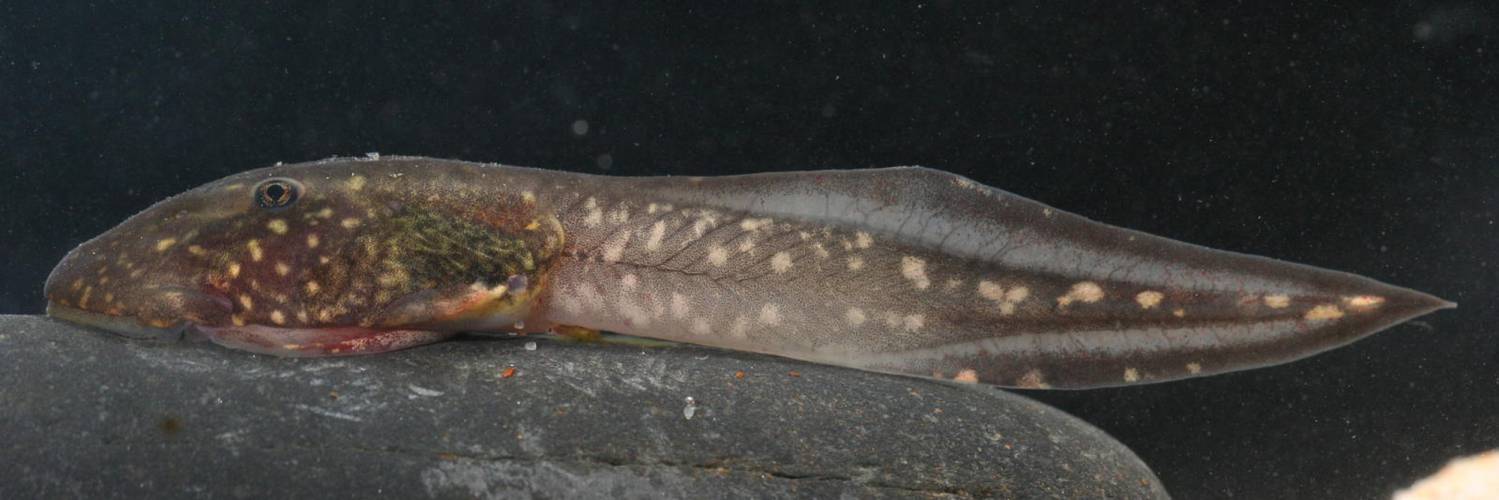
Body and tail dark brown to gray, sometimes with an olive hue. Distinct cream to pale yellow spots are scattered over the snout, cheeks, and tail. This spotted pattern is a distinctive, unique character of the species. Dorsally and laterally, conspicuous iridocytes absent. Pigmentation of the trunk continues seamlessly onto the muscular portion of the tail. Tail fins darkly pigmented, except for a light zone at the bases of the dorsal and lower fins. Ventral skin covered with silvery-golden iridocytes laterally, including the rim of the abdominal sucker. Medial sucker largely unpigmented, except for scattered iridocytes in the anterior and medial regions. Specialized epithelium (friction areas) along the inner rim of the sucker visible as light brown regions. Gut coils, red heart, and red gills visible through the ventral skin, though partially obscured by opaque sucker tissue. Myosepta of the tail accentuated by melanocytes. Tail veins visible at the proximal portion of the tail.

Snout

In dorsal view, snout expanded and broadly rounded. In lateral view, snout elongated and sloping in a smooth, slightly convex curve; streamlined.

Oral Disc

Ventral, wide, and expanded posteriorly by a large abdominal sucker. The abdominal sucker has a thick rim and covers most of the trunk ventrally. Oral disc and sucker together occupy approximately 85% of total body length. Brown friction areas visible inside the sucker rim. Marginal papillation of the oral disc reduced. Emarginations between upper and lower lips absent. LTRF: 12(4–9)/6(1) or 11(4–8)/6(1). Beaks well keratinized, strong, undivided; edges bear blunt serrations. Upper jaw sheath broadly arched, inversely V-shaped, thin medially; lower jaw sheath V-shaped.

Body

Depressed and streamlined in lateral view, with very long sloping snout anteriorly. In dorsal view, body contour somewhat rectangular, length approximately 1.5 × width. Snout broadly rounded, separated from the rest of the body by a distinct notch. Body widest at the level of the eyes in dorsal view. In lateral view, trunk as deep as the head; belly not bulging. Spiracle sinistral. Spiracular tube opens posteriorly and well below the longitudinal body axis. Spiracular orifice free from the abdominal wall, at the end of a free spiracular tube.

Eyes & Nostrils

Eyes positioned dorsolaterally. Nostrils closer to the eyes than to the snout, oriented anterolaterally. Iris densely stippled to solid golden on a black background. Pupil slightly rhomboidal.

Tail

Approximately 62% of total length. Muscular part of tail strong and high, nearly equal to body height. Dorsal fin originates posterior to the trunk-tail junction, gradually rising to an almost angular point before sloping with a slightly concave contour toward the sharply pointed tip. Lower fin originates just anterior to mid-tail and runs with a slightly convex contour toward the tip. Maximum tail height approximately at mid-tail. Skin glands absent.

Similar Species

H. cavitympanum tadpoles may be confused only with those of Meristogenys species but are easily distinguished from any Meristogenys by the combination of: spotted pattern, high number of upper-lip keratodont rows, and undivided upper jaw sheath. These characters, together with the presence of an abdominal sucker, distinguish the species from all other Bornean tadpoles.

Literature

Males perch along steep river banks and produce highfrequency calls. A portion of the call is completely in the ultrasonic (inaudible) frequency range. The vocal repertoire is highly variable in frequency modulation and spectral composition. The audible part or the call is a high, sharp whistle.
Arch, V.S., Grafe, T.U., Narins, P.M. (2007) Ultrasonic signaling by a Bornean frog. Biological Letters 4: 1922.

Arifin, U., Chan, K.O., Smart, U., Hertwig, S.T., Smith, E.N., Iskandar, D.T., Haas, A. (2021) Revisiting the phylogenetic predicament of the genus Huia (Amphibia: Ranidae) using molecular data and tadpole morphology. Zoological Journal of the Linnean Society 193: 673–699.

Gan, L.L., Hertwig, S.T., Das, I.., Haas, A. (2015) The anatomy and structural connectivity of the abdominal sucker in the tadpoles of Huia cavitympanum, with comparisons to Meristogenys jerboa (Lissamphibia: Anura: Ranidae). Journal Zoological Systematics Evolutionary Research 54: 46–59.

Inger, R.F. (1985) Tadpoles of the forested regions of Borneo. Fieldiana Zoology new series 26: 1–89.