Frogs of Borneo

Frogs of Borneo

Frogs of Borneo

Frogs of Borneo

Frogs of Borneo

Frogs of Borneo

Frogs of Borneo

Frogs of Borneo

Frogs of Borneo

Frogs of Borneo

Frogs of Borneo
Filter
Fejervarya limnocharis
Fejervarya limnocharis readily takes advantage of artificial human-induced environmental modifications. It requires open habitats and prefers shallow water bodies for reproduction. Tadpoles are commonly found in roadside ditches, rice fields, puddles, flooded lawns, sports fields, and parking lots. These sun-exposed, shallow, temporary pools may heat up to well above 30 °C and tend to dry out rapidly. The warmer the pool, the faster tadpole development; metamorphosis may occur in less than 3–4 weeks. Tadpoles forage mainly at the bottom of the pools.
-
Family:Dicroglossidae
-
Genus:Fejervarya
-
Ecomorph:benthic, exotrophic, lentic
-
Waterbody Type:stagnant
-
Water Column:bottom
-
Feeding Type:feeding, generalist
-
Size:31 mm
-
Development:larva, tadpole
-
Adult:Fejervarya
Coloration
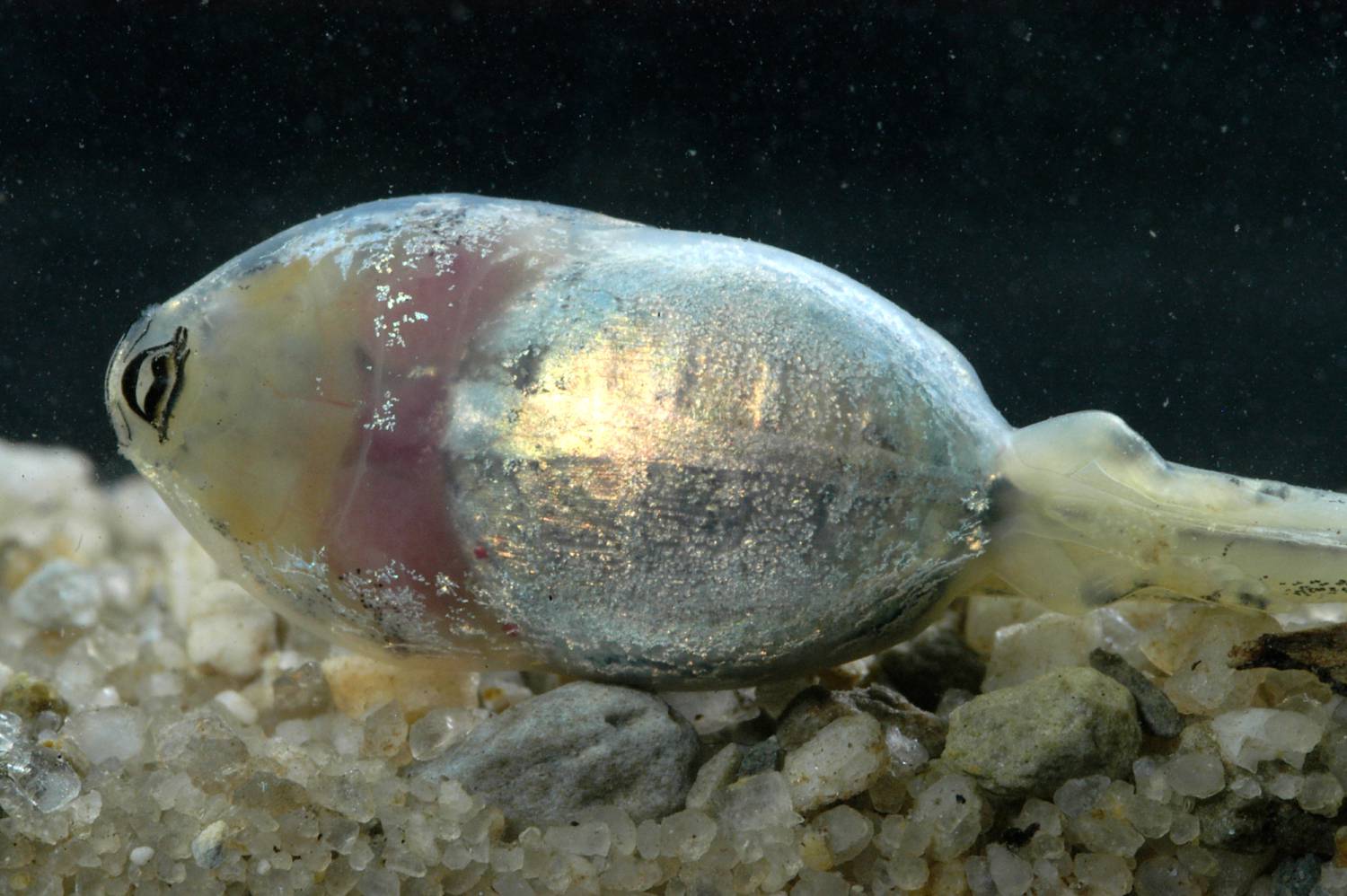
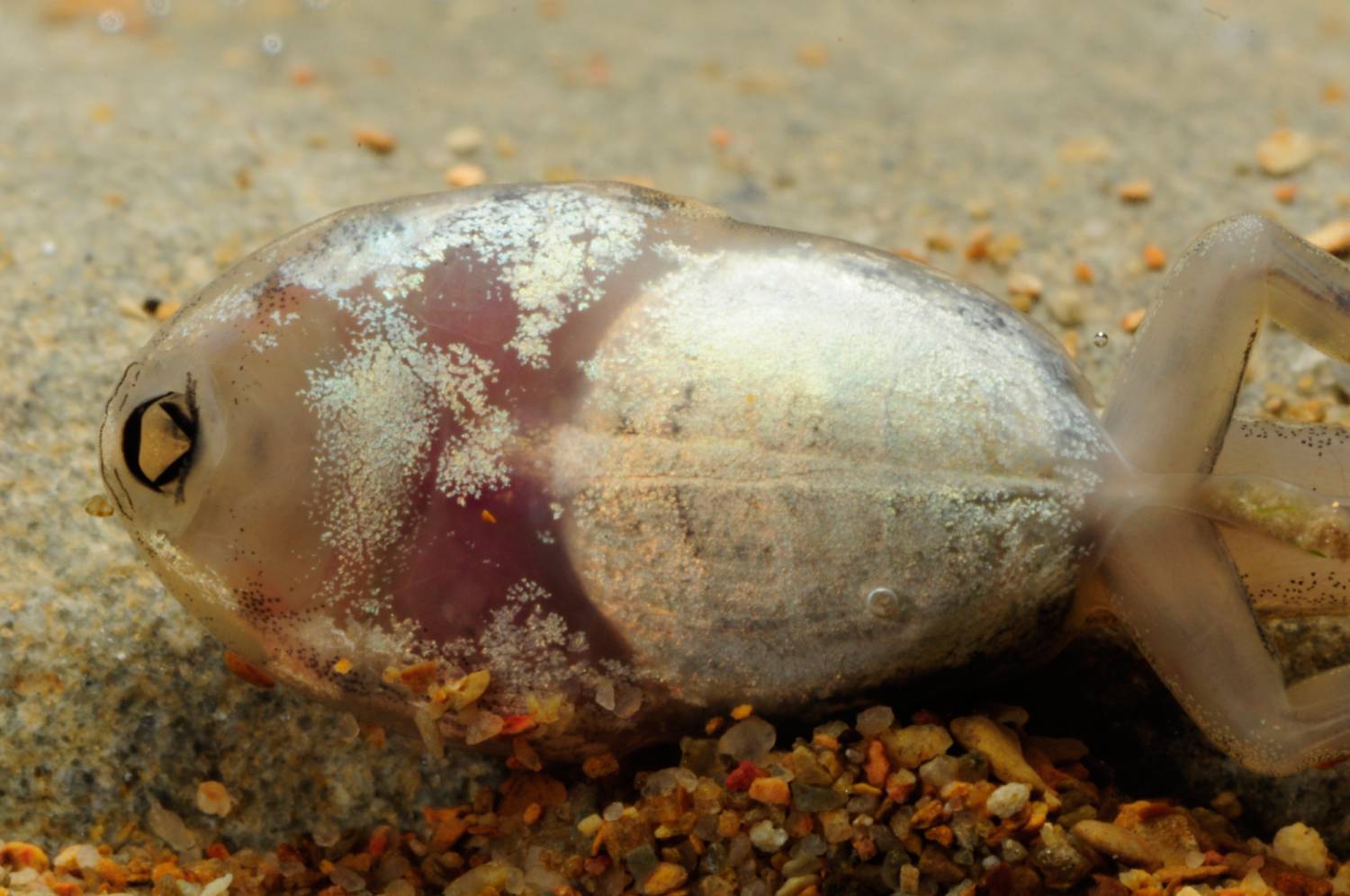
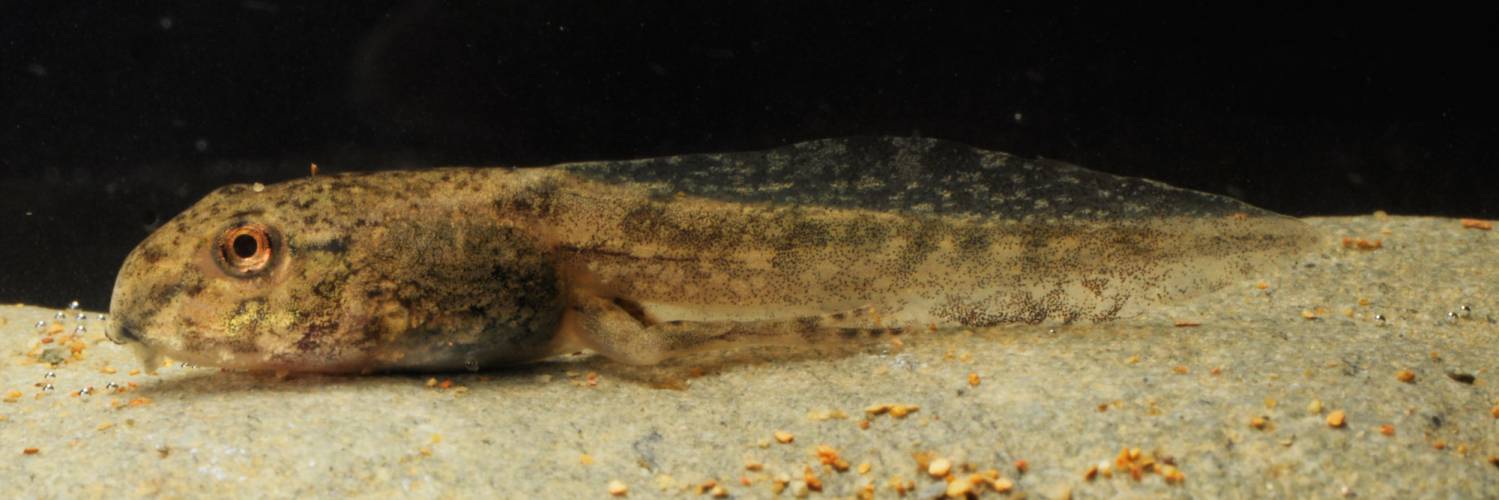
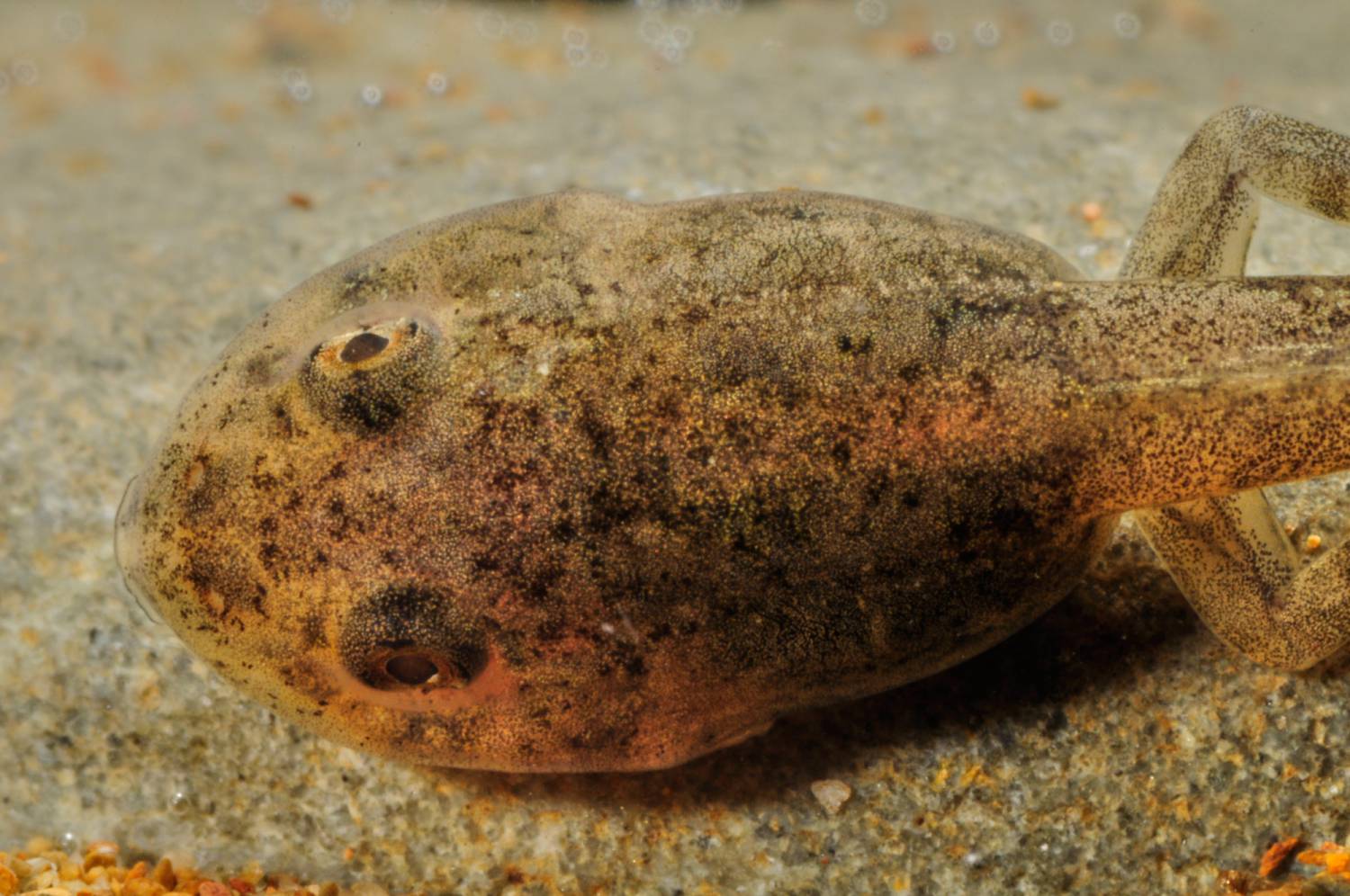
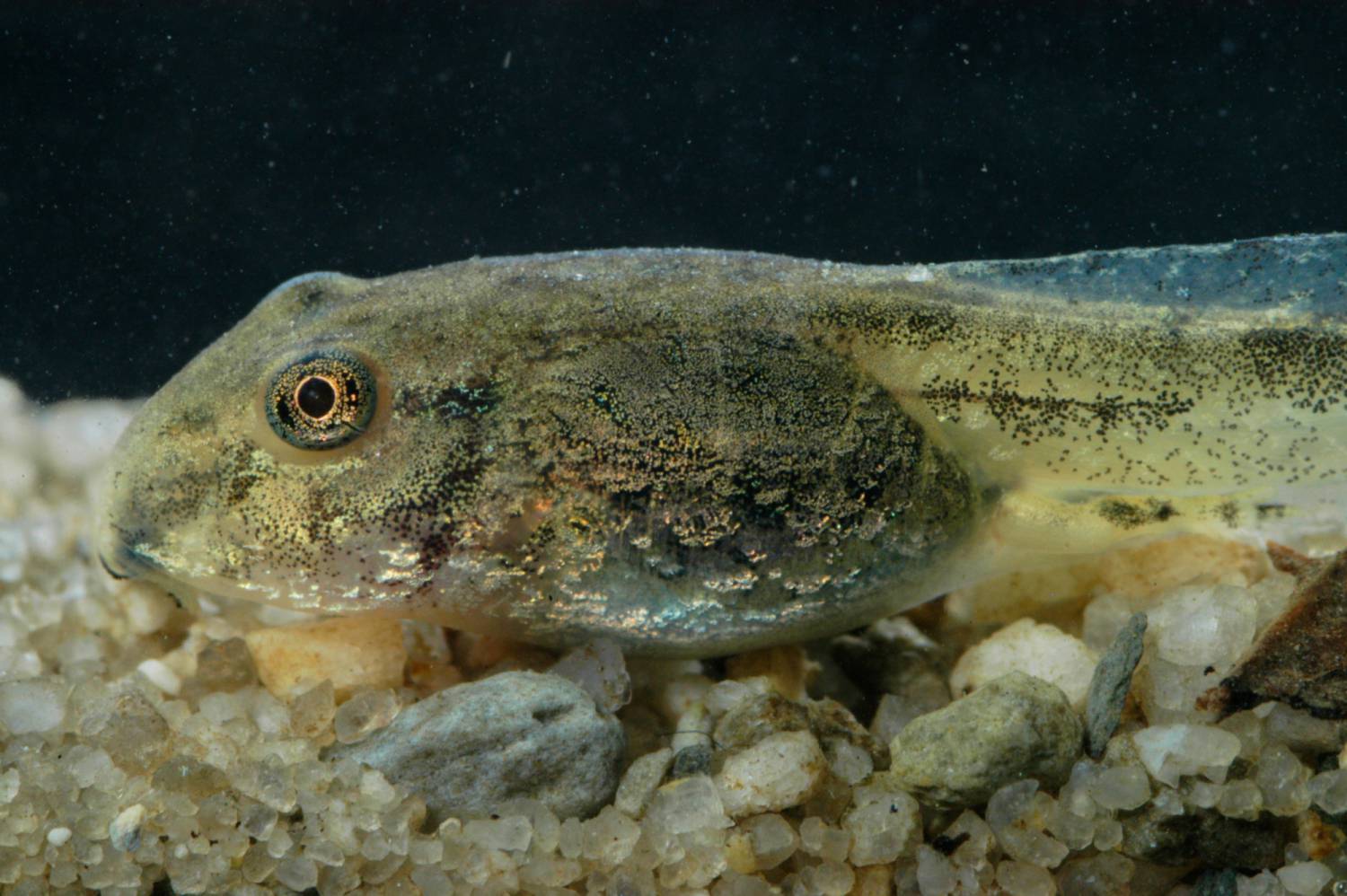
Tadpoles generally brown, gray, or olive dorsally, with an irregular pattern of diffuse darker and lighter areas. This mottling continues onto the sides of the body and tail. Often a diffuse darker bar is present between the oral disc and the eye, as well as a blurred, short horizontal dark line posterior to the eye. The abdominal skin is completely silvery, with a conspicuous mid-belly line. The gut is not visible through the venter. The gill, buccal, and gular regions may be either clear (with gills and heart clearly visible) or partly covered by large silvery patches. Few scattered melanocytes are present in the gular and lateral buccal regions of the ventral skin. The lateral tail vein is masked by dark pigmentation; consequently, the root of the tail often bears a horizontal dark line laterally. The tail and fins are mottled with patches of dark and light (iridophore) pigmentation; these dark flecks may be arranged to form a barred pattern on the middle and posterior portions of the tail.
Snout
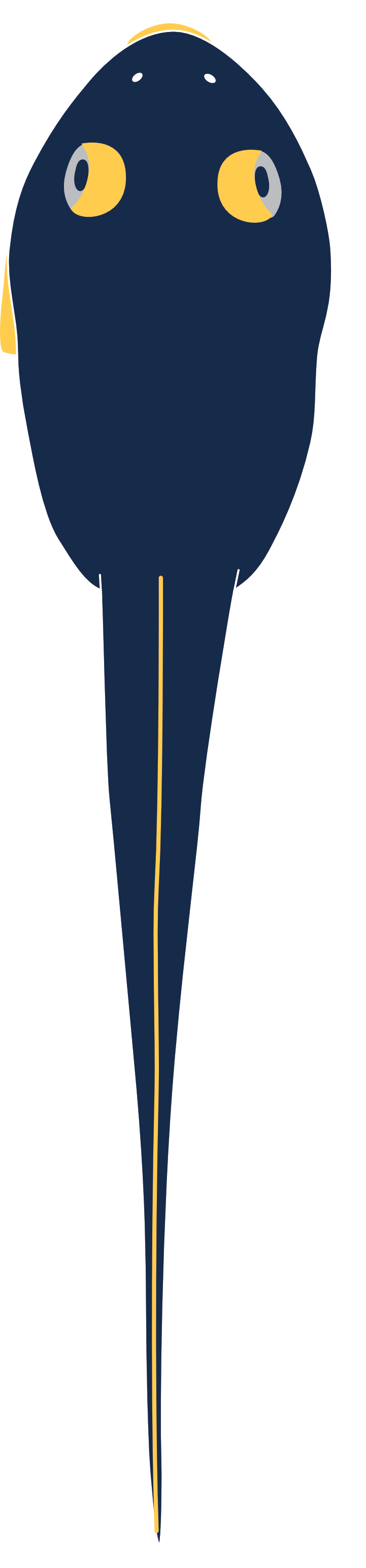
Smoothly triangular in dorsal view and slightly pointed. In lateral view, moderately long and distinctly arched at the level of the nostril, giving the snout a truncated appearance in profile. The oral disc slightly projects beyond the snout in dorsal view.
Oral Disc
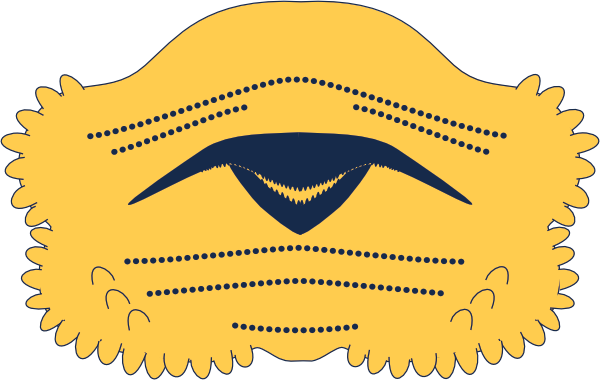
Anteroventral, positioned far anterior on the snout, such that the upper lip usually projects beyond the snout contour. A clear emargination separates the upper and lower lips. Blunt papillae present along the margin, except for a broad medial gap on the upper lip and a small medial gap on the lower lip. Submarginal papillae present in low numbers. LTRF 2(2)/3. Beaks moderately keratinized; jaw edges bear fine serrations. Upper beak broadly and shallowly arched and medially higher; lower beak widely V-shaped.
Body
Oval in dorsal view. Head wider than trunk, with a subtle constriction of the body contour between the two. Widest point of the body at the level of the gill region. Head shape a smooth triangle in dorsal view. Body dorsoventrally depressed. Spiracle sinistral, opening posteriorly or posterolaterally. Medial rim of the spiracular orifice distinct. A short, free spiracular tube present, located below mid-body level in lateral view. Lateral line organs visible on head and trunk.
Eyes & Nostrils
Eyes dorsolateral, with a moderate interorbital distance. Nostrils with a smooth rim, closer to the snout than to the eye and oriented anterolaterally. Iris brass-colored to golden. Iridocytes form a complete ring around the pupil and are less dense in the anterior and posterior sectors, which appear darker.
Tail
Moderately long, 62–63% of total length. Muscular part of the tail moderately strong, exceeding half of body height in lateral view but less than half of maximum trunk width in dorsal view. Upper fin originates at the trunk-tail junction, with a straight edge in the first third of the tail, forming a convexity at mid-tail where the fin reaches its maximum height. Posteriorly, the fin slopes downward with a straight contour toward a narrowly rounded tip. Lower fin lower than the upper fin and less arched. Lateral tail vein often masked by pigmentation. Tail myosepta indistinct.
Similar Species
Tadpoles are relatively easy to identify by a combination of habitat, body coloration, oral disc characteristics, and the distinctive ventral color pattern (which disappears in preservation). Tadpoles of F. limnocharis and F. cancrivora are similar and may be indistinguishable in the field; DNA sampling or ecological differentiation may be required. F. cancrivora tolerates high salinity in the water, and such habitats (e.g., coastal ponds and mangroves) exclude F. limnocharis. Leong and Chou (1999) reported that F. cancrivora tadpoles grow larger, reaching up to 36 mm.
Literature
Calling activity is stimulated by rainfall and males may congregate at flooded areas after heavy rainfall; their loud rasping chirps can be heard from far away. The small eggs are floating in a singlelayer jelly mass on the water surface.
Inger, R.F. (1985) Tadpoles of the forested regions of Borneo. Fieldiana Zoology new series 26: 1–89.
Leong, T.M., Chou, L.M. (1999) Larval diversity and development in the Singapore Anura (Amphibia). The Raffles Bulletin of Zoology 47: 81–137.
Schijfsma, K. (1932) Notes on some tadpoles and frogs from Java. Truebia 14: 43–72.
Leong, T.M., Chou, L.M. (1999) Larval diversity and development in the Singapore Anura (Amphibia). The Raffles Bulletin of Zoology 47: 81–137.
Schijfsma, K. (1932) Notes on some tadpoles and frogs from Java. Truebia 14: 43–72.