Frogs of Borneo

Frogs of Borneo

Frogs of Borneo

Frogs of Borneo

Frogs of Borneo

Frogs of Borneo

Frogs of Borneo

Frogs of Borneo

Frogs of Borneo

Frogs of Borneo

Frogs of Borneo
Filter
Chaperina fusca
Chaperina fusca is widely distributed. It inhabits old secondary and primary forests from the lowlands to montane areas (up to 1500 m at Mt. Kinabalu). Disturbed habitats are occasionally accepted. Tadpoles occur in phytotelmata and rock pools and have been found in buttress cavities, fallen logs containing water, and abandoned man-made receptacles such as bottles, tins, toilets, and buckets. Tadpoles are obligate filter feeders. They hover quietly in the water and, when alarmed, rapidly descend to the detritus at the bottom of the phytotelma.
-
Family:Microhylidae
-
Genus:Chaperina
-
Ecomorph:exotrophic, phytotelma specialist, suspension feeder
-
Waterbody Type:phytotelma
-
Water Column:mid-water to surface
-
Feeding Type:feeding, suspension feeder
-
Size:20 mm
-
Development:larva, tadpole
-
Adult:Chaperina
Coloration
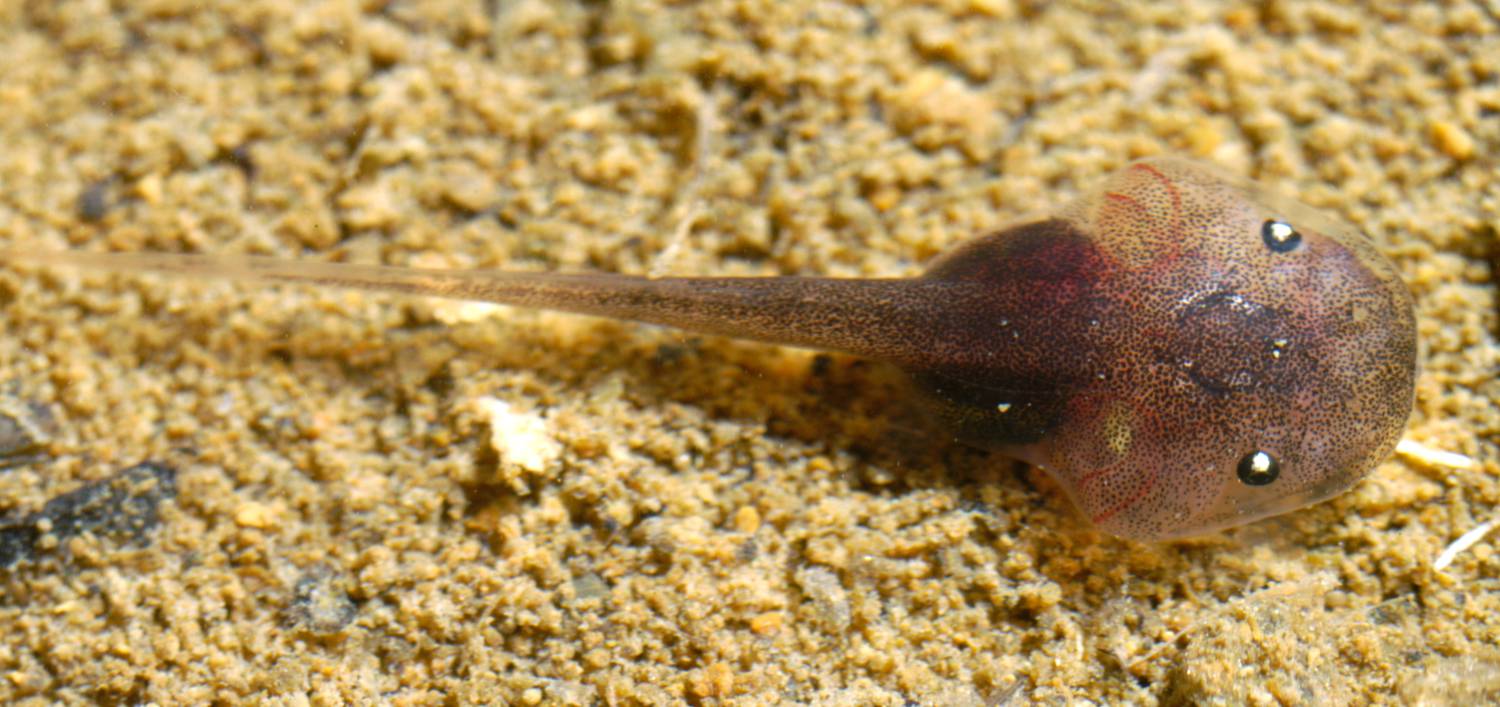
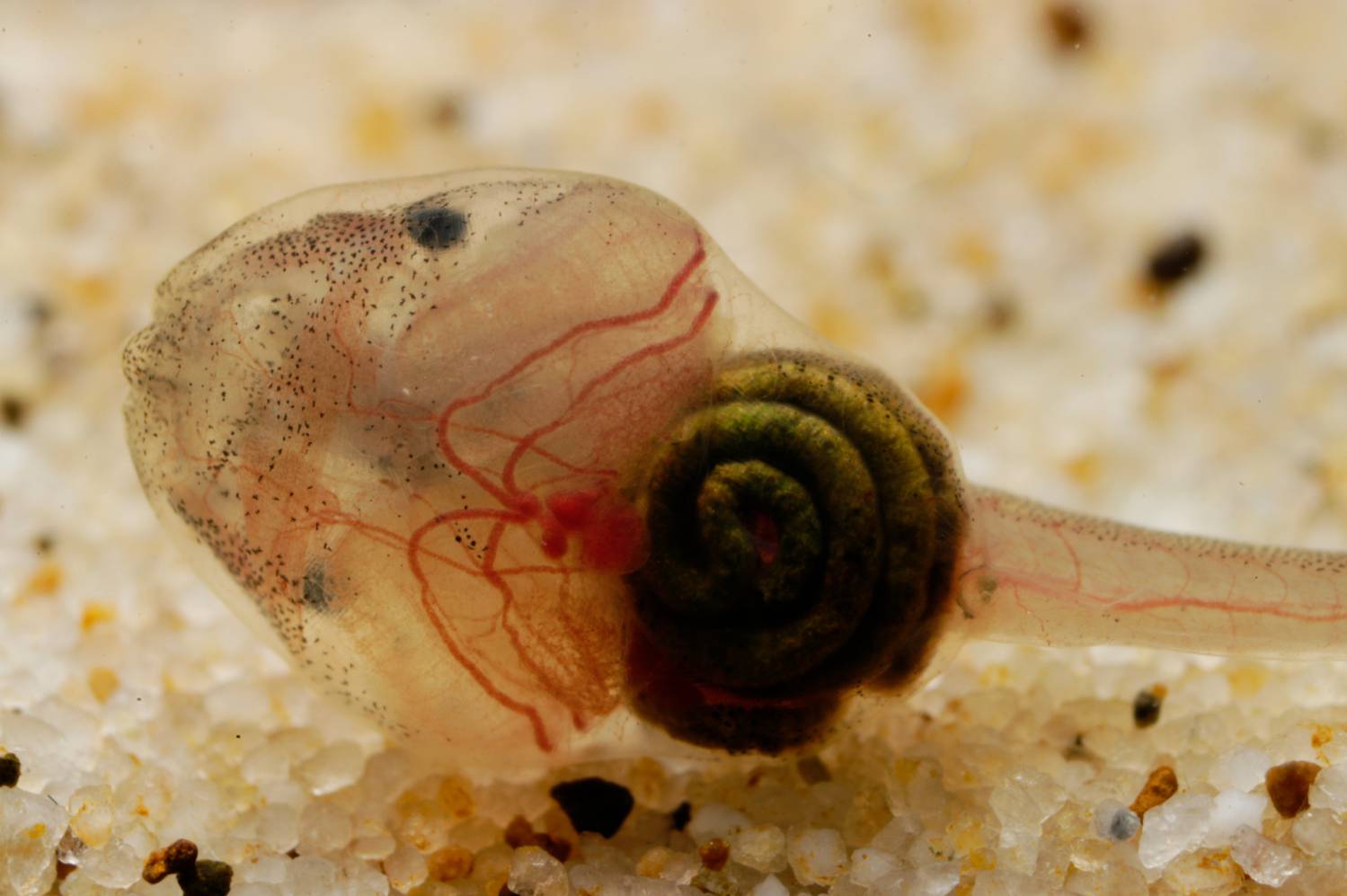
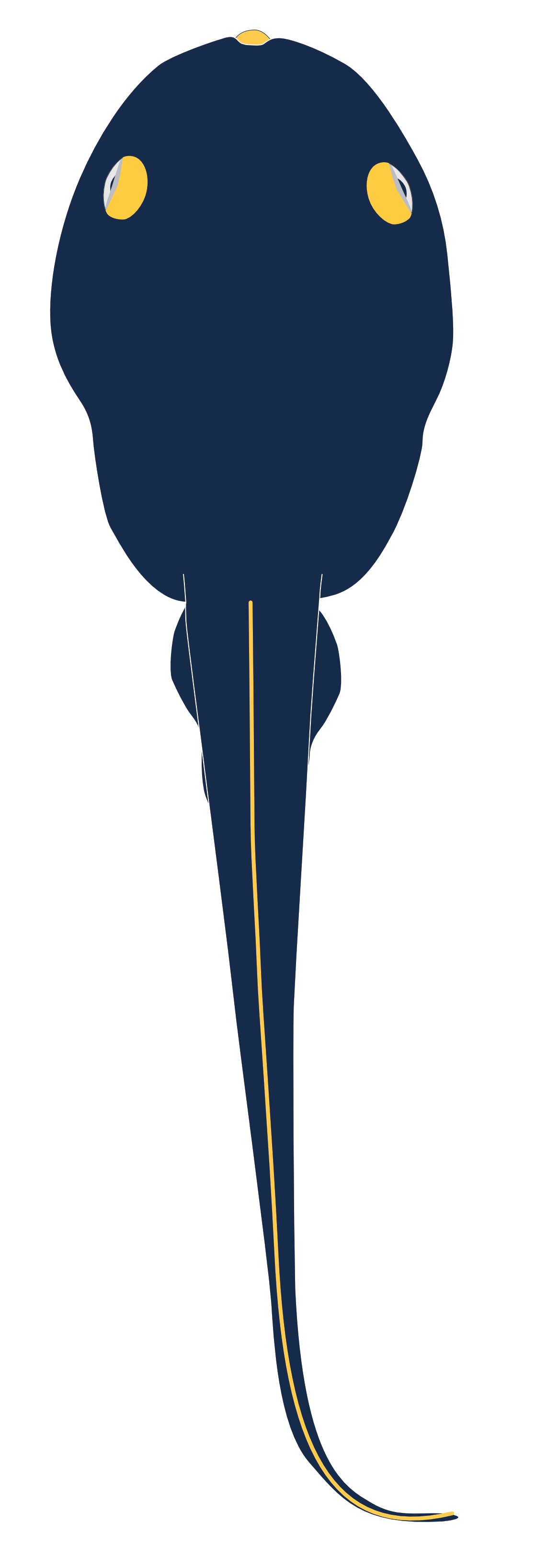
Uniformly black dorsally, without a distinct pattern; the trunk is darker than the head. The tail is darkly pigmented over most of its length, becoming lighter posteriorly. The density of melanocytes decreases along the flanks toward the ventral side. The gut coil is usually visible in lateral and ventral views. The ventral gular and buccal regions are dusted with melanocytes, whereas the abdomen is less pigmented. The ventral skin is translucent, with the heart and major blood vessels visible in ventral and lateral views.
Snout
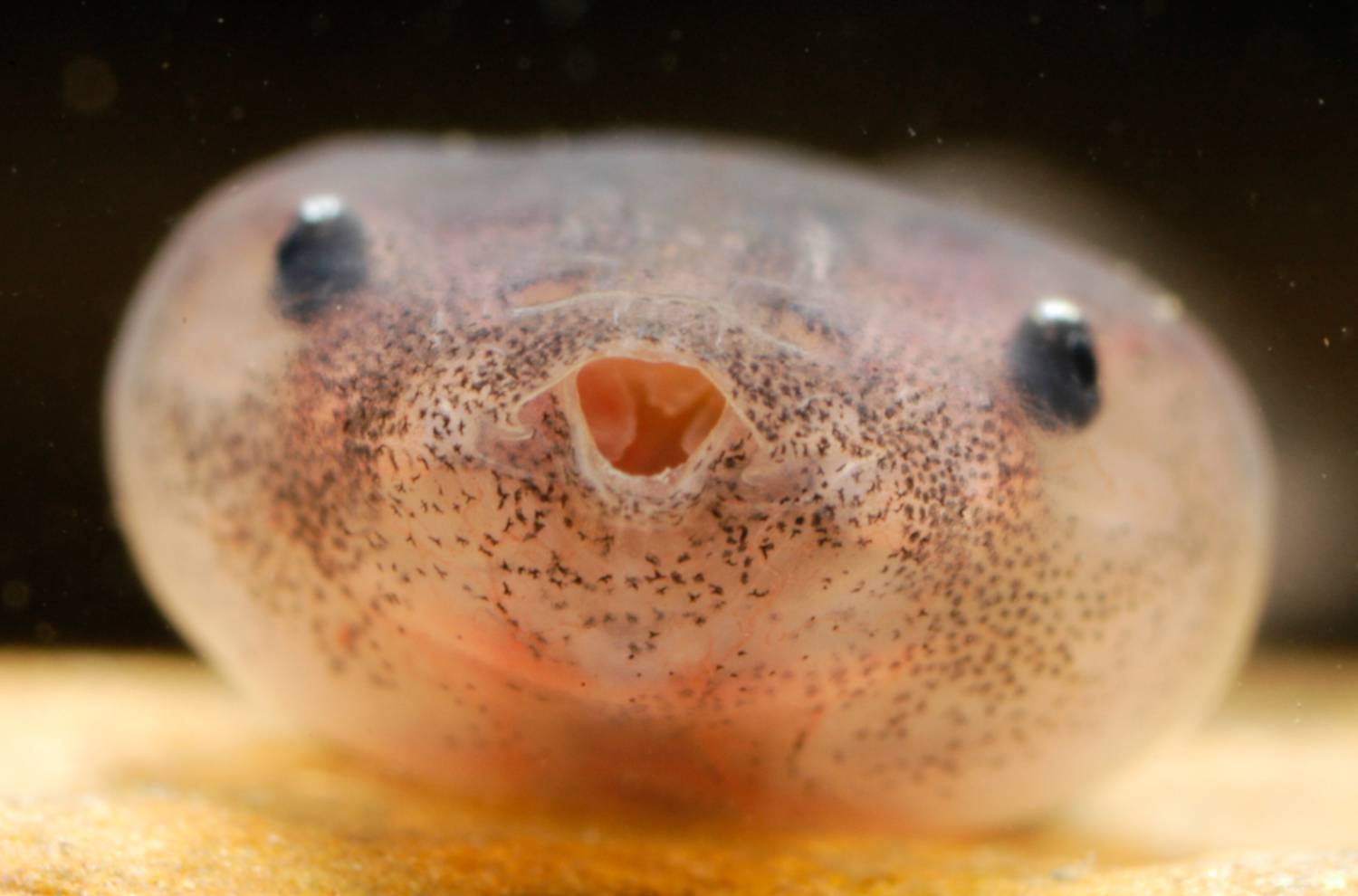
Tapering in straight line in lateral view, bluntly rounded in dorsal view with a small medial bay.
Oral Disc
Terminal mouth; oral disc absent. Upper jaw straight medially and shallowly arched laterally. Lower jaw U-shaped and slightly protruding. Keratinized beaks and keratodonts absent; labial tooth row formula (LTRF) 0/0.
Body
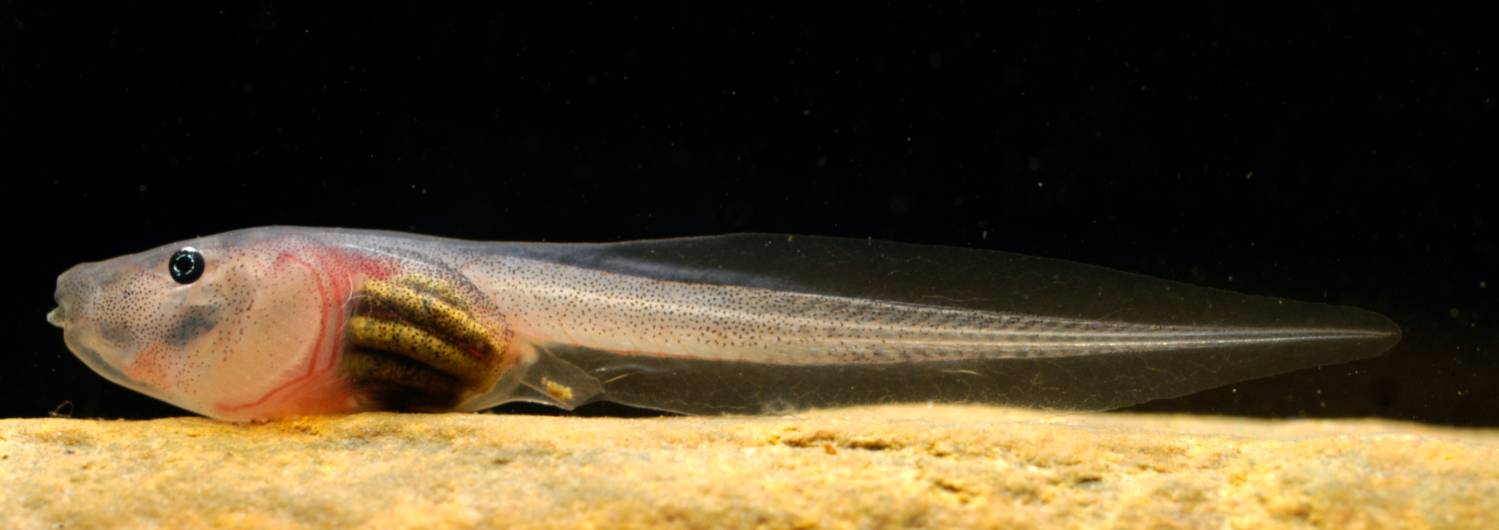
Overall small size. Head and trunk dorsoventrally depressed; head flat dorsally. In dorsal view, the body is broadly inverse pear-shaped. The head is significantly wider and longer than the trunk. In lateral view, head and trunk are oblong-ovoid, with a tapering snout profile. The trunk is much wider than the base of the tail, with maximum width at the gill region. Spiracle ventral and medial; spiracular opening posteriorly directed at mid-abdominal level, with a crescentic margin. Lateral line organs not visible.
Eyes & Nostrils
Eyes dorsolateral and widely spaced; cornea not protruding beyond the body contour in dorsal view. Iris black, surrounded by a silver-blue ring of iridocytes around the pupil. Dorsally, the eyeball is stippled with silver iridocytes, producing a conspicuous specular reflection. Nostrils not perforated in larval stages.
Tail
Tail length up to 67% of total length. Muscular portion relatively narrow and much lower than the body in lateral view. Upper fin originates at or slightly posterior to the trunk-tail junction, forming a shallow convex arch posteriorly. Lower fin similar in shape but slightly lower. Both fins taper gradually into a narrowly rounded tip. Some variation in fin shape was observed among populations, the significance of which remains unknown. Skin glands absent. Lateral tail vein and muscle myosepta indistinct.
Similar Species
Tadpoles of Chaperina fusca occur in phytotelmata, rock pools, tins, buckets, and other small water bodies, but the species appears to avoid ground puddles for reproduction. The most distinctive and easily observed field character is the conspicuous, reflective specular spots on the eyes. The species is readily distinguished by its small size and lack of an oral disc from other phytotelma-breeding species such as Nyctixalus pictus. It differs from tadpoles of Microhyla (e.g., Microhyla petrigena), which may occur in the same water bodies, by its dorsoventrally depressed body shape and eyes that do not reach the body contour in dorsal view.
Literature
Malkmus et al. (2002) reported 6–10 gray eggs per clutch that were attached to the walls of the phytotelma or to submerged plant matter. Multiple females may deposit eggs in one given phytotelma. Males have been observed to be territorial and engage in combat at a breeding site.
Inger, R.F. (1985) Tadpoles of the forested regions of Borneo. Fieldiana Zoology new series 26: 1–89.
Inger, R.F., Stuebing, R.B., Grafe, T.U., 1, J.M. (2017) A field guide to the frogs of Borneo. 3rd ed. Natural History Books, Kota Kinabalu. 228 pp.
Malkmus, R., Dehling, J.M. (2008) Anuran amphibians of Borneo as phytotelm-breeders—a synopsis. Herpetozoa 20: 165172.
Malkmus, R., Manthey, U., Vogel, G., Hoffmann, P., Kosuch, J. (2002) Amphibians & Reptiles of Mount Kinabalu (North Borneo). Koeltz Scientific Books, Königstein. 424 pp.
Inger, R.F., Stuebing, R.B., Grafe, T.U., 1, J.M. (2017) A field guide to the frogs of Borneo. 3rd ed. Natural History Books, Kota Kinabalu. 228 pp.
Malkmus, R., Dehling, J.M. (2008) Anuran amphibians of Borneo as phytotelm-breeders—a synopsis. Herpetozoa 20: 165172.
Malkmus, R., Manthey, U., Vogel, G., Hoffmann, P., Kosuch, J. (2002) Amphibians & Reptiles of Mount Kinabalu (North Borneo). Koeltz Scientific Books, Königstein. 424 pp.