Frogs of Borneo

Frogs of Borneo

Frogs of Borneo

Frogs of Borneo

Frogs of Borneo

Frogs of Borneo

Frogs of Borneo

Frogs of Borneo

Frogs of Borneo

Frogs of Borneo

Frogs of Borneo
Filter
Ansonia minuta
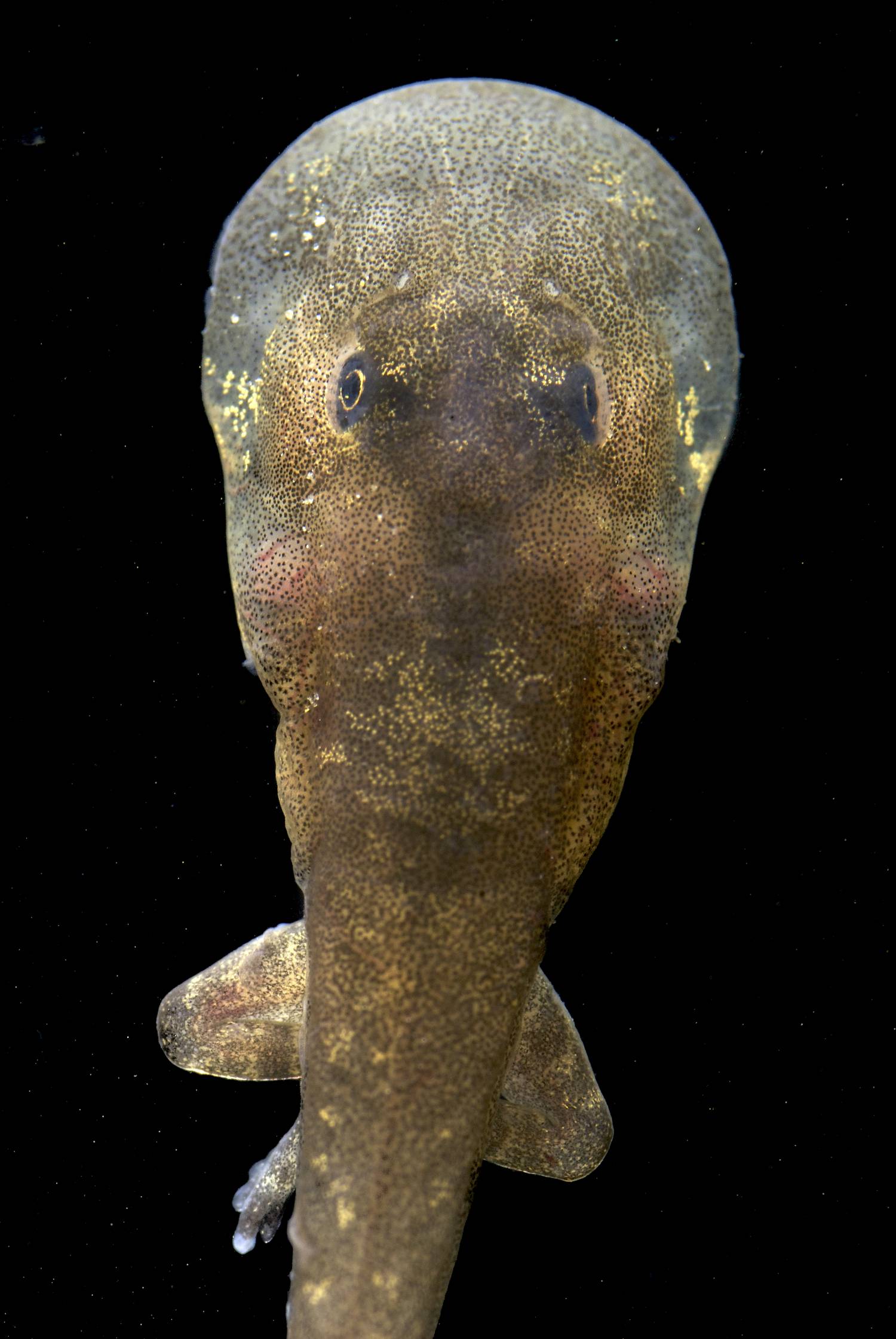
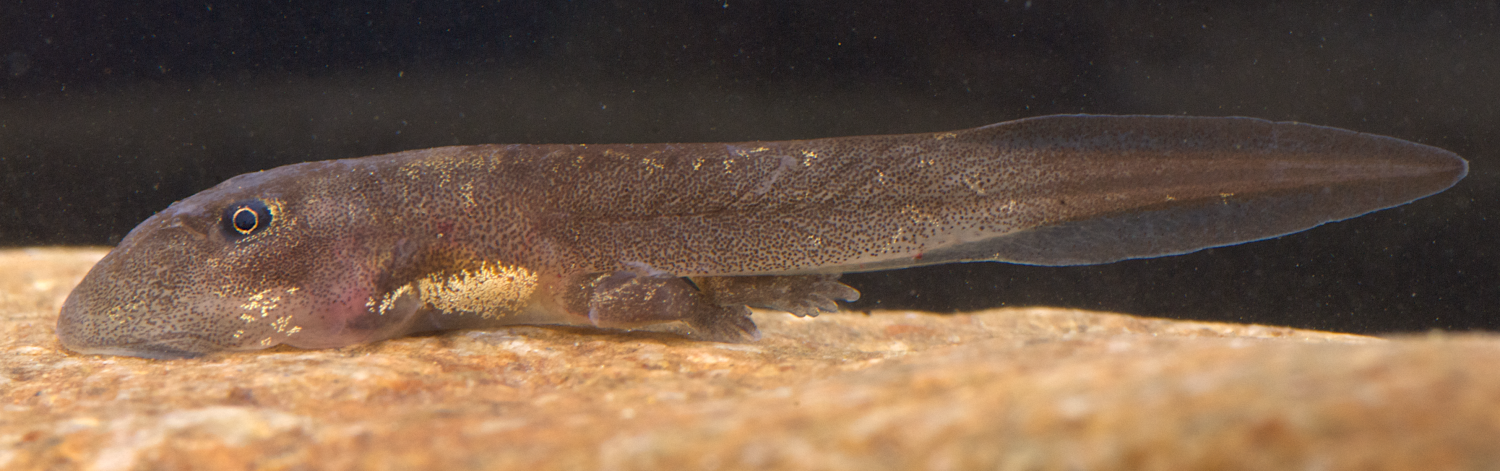
Ansonia minuta inhabits lowland streams in hilly primary and secondary forests of western Sarawak and Kalimantan. In suitable habitats, adults and tadpoles can be common. Tadpoles live on rock faces in strong, often foaming currents. They are active during the day and more so at night. We observed them on rock surfaces ranging from horizontal to vertical, always in strong current. Tadpoles were found at elevations below 700 m a.s.l.
-
Family:Bufonidae
-
Genus:Ansonia
-
Ecomorph:exotrophic, lotic, rheophilous, suctorial
-
Waterbody Type:flowing
-
Water Column:rock surface
-
Feeding Type:feeding, hard surface grazer, omnivorous, rasping
-
Size:24 mm
-
Development:larva, tadpole
-
Adult:Ansonia
Coloration
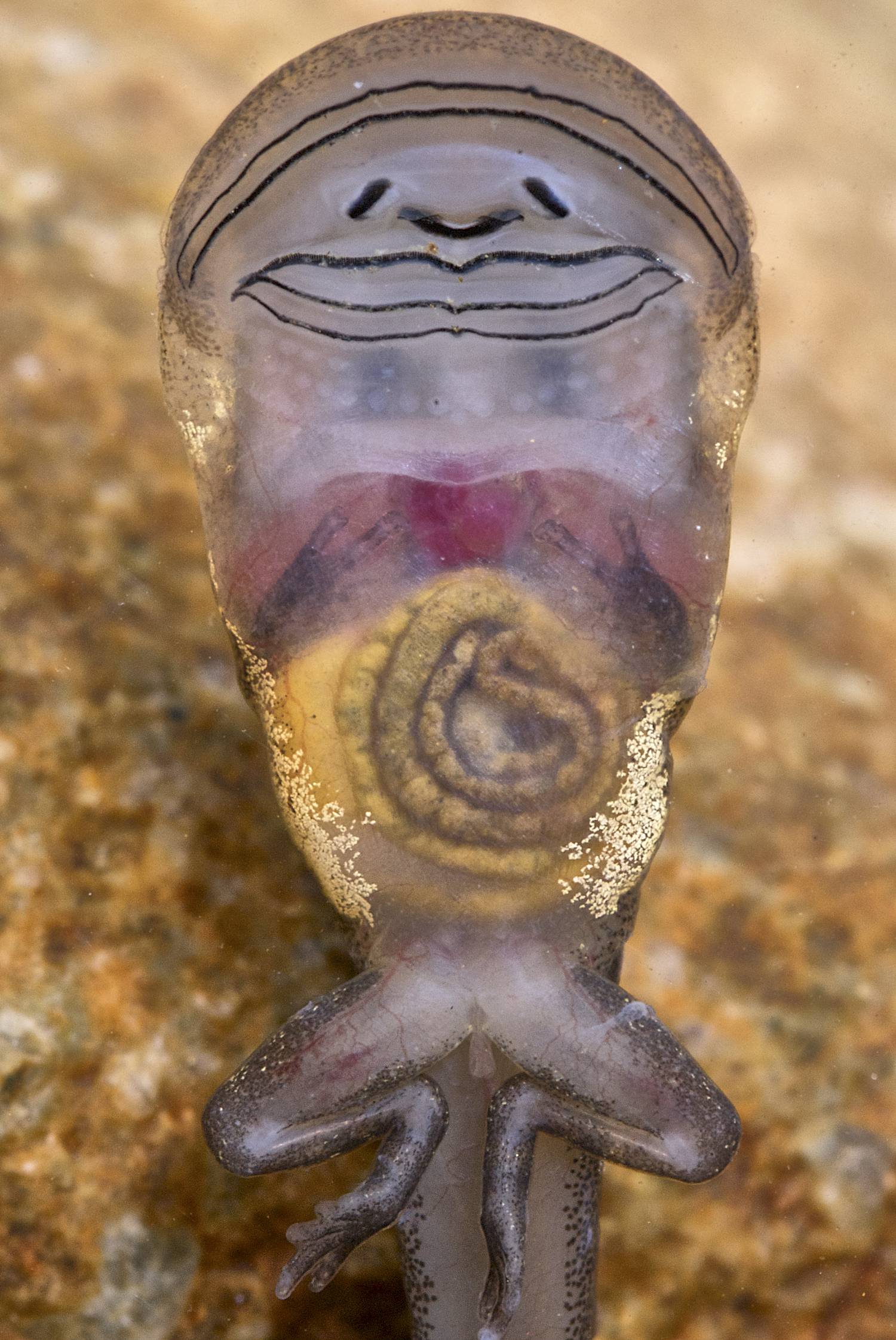
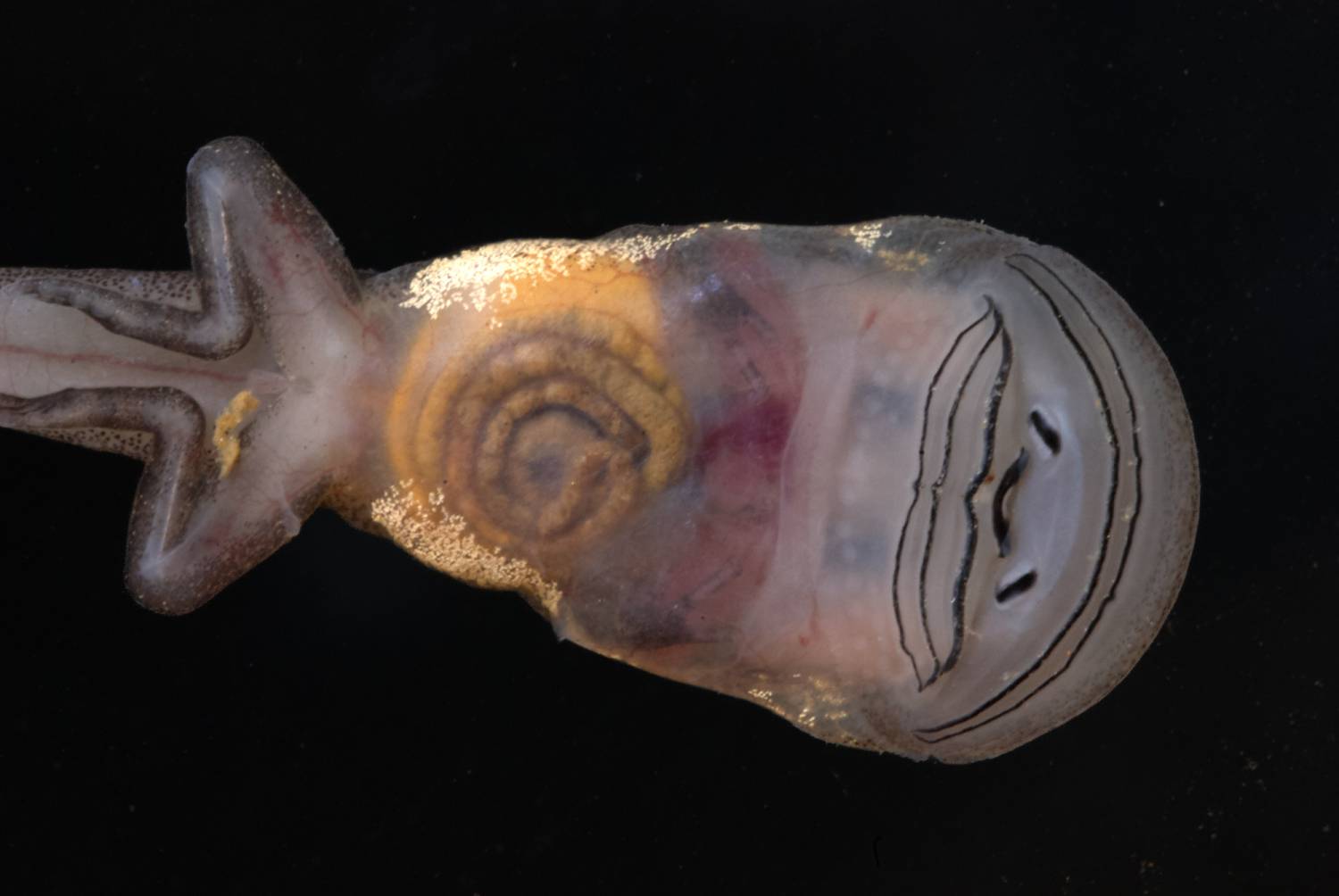
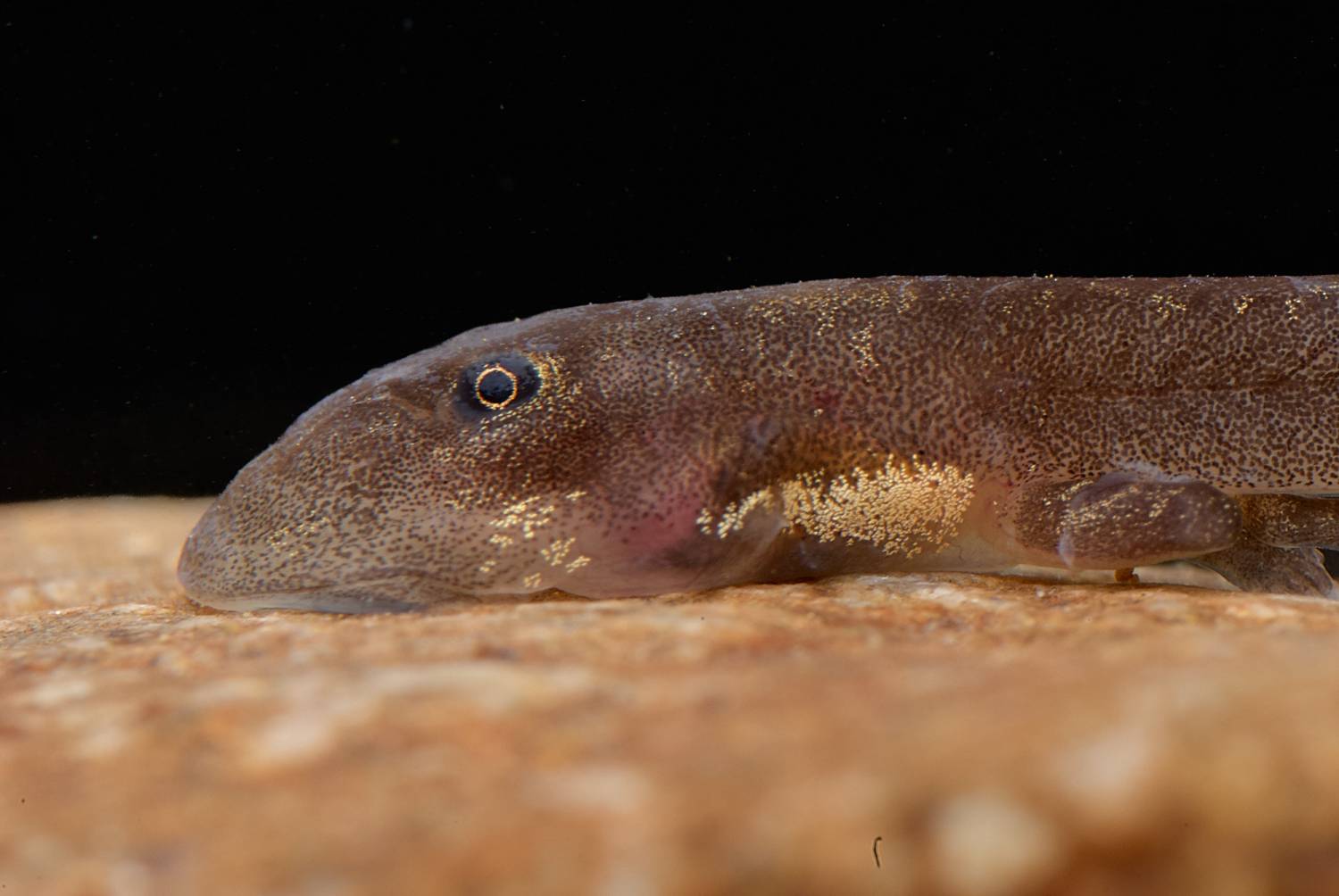
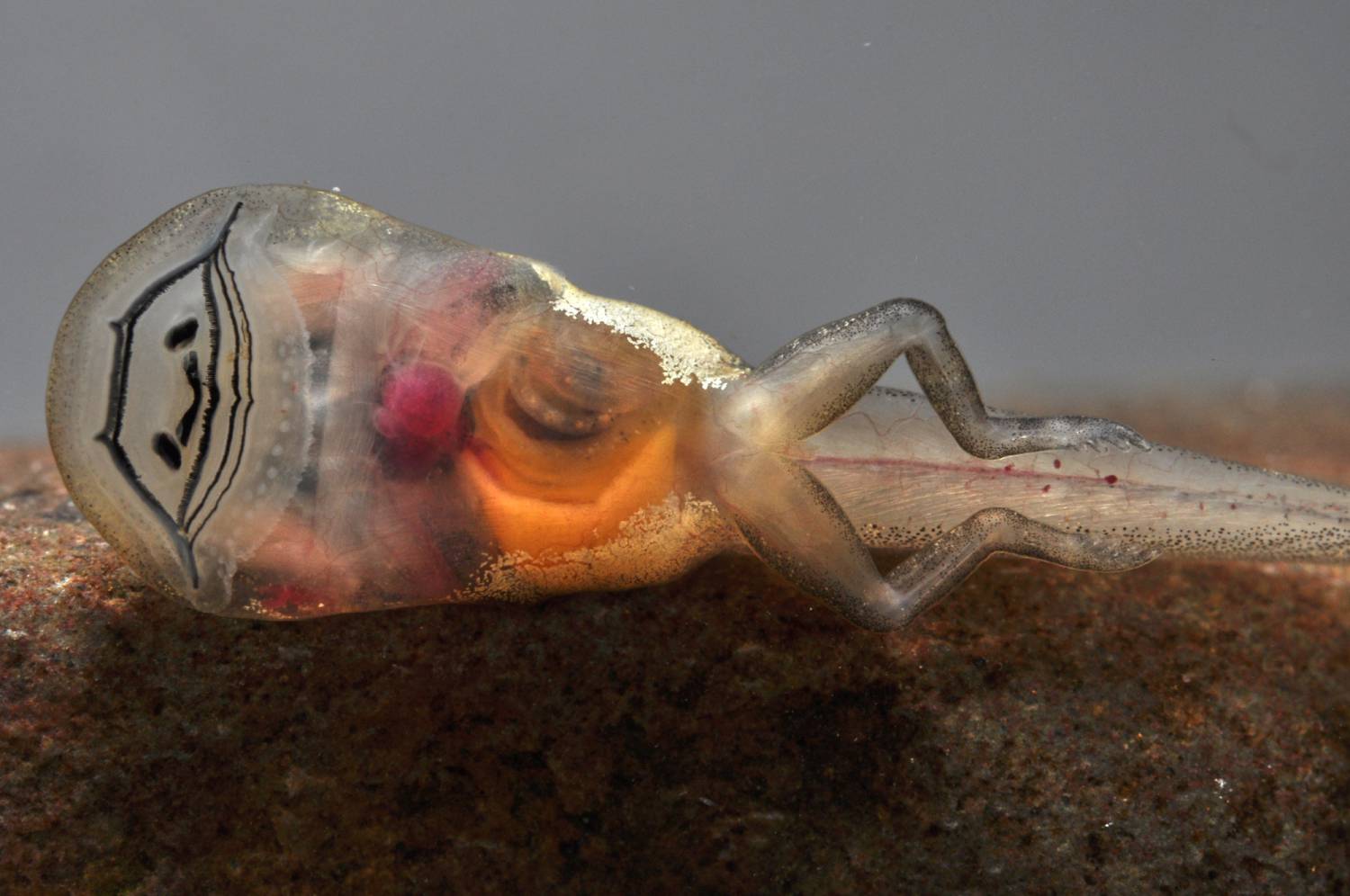
Dorsal background color dark brown to nearly black in daylight. A distinct pattern is absent, but pigmentation is darkest between the eyes and along the middorsum of the head-trunk region. In all populations examined, tadpoles exhibited conspicuous clusters of golden epidermal pigment cells on the lower cheek and a larger, denser cluster on the lower flank and lateral venter. Less distinct golden cells may occur rostrally on the snout, above the eye, on the dorsal trunk, and scattered—mostly dorsally—on the tail. The venter and oral disc are largely unpigmented and translucent, except laterally at the transition to the flanks. Gills and heart are visible through the ventral skin. The gut coil is spirally arranged and clearly visible in ventral view.
Snout
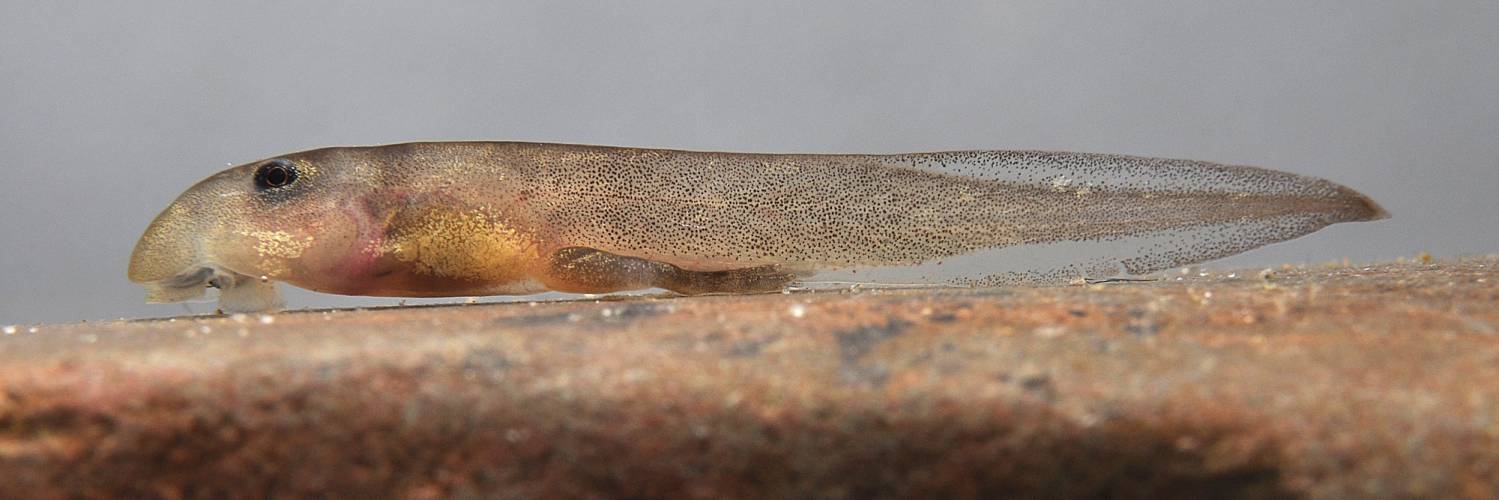
Body broadly expanded and nearly semicircular in dorsal view; long, sloping, and streamlined in lateral view.
Oral Disc
Ventral sucker large, as wide as maximum body width. Lower lip with a uniserial row of marginal papillae; upper lip lacking papillae and forming a circumferential bulge. Oral disc with inconspicuous lateral indentations at the ends of the papillae row. Submarginal papillae present on the lower lip: one complete posterior row (18–21 papillae) and an incomplete anterior row (3–6 papillae on each side, with a medial gap). Labial ridges bear two keratodont rows on the upper lip and three on the lower lip (LTRF 2/3). Upper lip keratodont rows reach or extend beyond the posterior level of the lower lip rows. Upper beak divided into two short, widely spaced edges; lower beak undivided, shallow V-shaped, and medially thin.
Body
In dorsal view, body outline inverted pear-shaped with a slight constriction posterior to the eyes. Body widest anterior to the eyes and dorsoventrally depressed. Spiracle sinistral; spiracular opening attached medially to the body wall and free laterally. In lateral view, the spiracle lies low on the flank, well below the mid-body axis when the tadpole is attached to rock.
Eyes & Nostrils
Nostrils small, much closer to the eyes than to the tip of the snout. Eyes dorsolateral and clearly separated from the body contour in dorsal view. Iris black with a golden ring around the pupil.
Tail
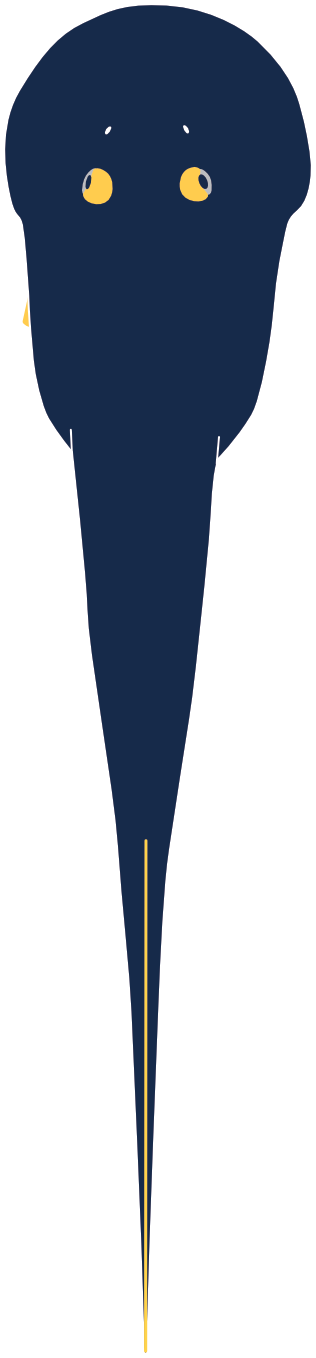
Tail musculature strong, nearly as high as the trunk at the trunk-tail junction in lateral view. Dorsal tail fin begins at approximately 50% of tail length. Dorsal and ventral fins of roughly equal height; maximum tail height at mid-tail. Fin margins only slightly convex in lateral view. Tail spear-shaped, tapering to a narrowly rounded tip; sharp flagellum absent.
Similar Species
The presence of an oral sucker, absence of a gastric sucker (cf. Meristogenys and Huia), and a droplet-shaped body outline restrict confusion mainly to other sucker-mouthed Ansonia. Tail fin shape and coloration allow reliable identification. Tadpoles of the closely related A. hanitschi and A. platysoma may appear similar but differ in elevational range, size, and oral disc characters. Ansonia spinulifer differs most notably in tail shape and microhabitat preference, occurring in slower currents.
Literature
Little is known about the reproductive habits of this species. Males call along suitable, clear and rocky hillside streams. Locally males occur in numbers. Males perch on low vegetation on the river bank or on boulders in the river. Females produce clutches of 40–223 eggs, with mean egg diameter 1.54 mm.
Haas, A., Wolter, J., Hertwig, S.T., Das, I. (2009) Larval morphologies of three species of stream toads, genus Ansonia (Amphibia: Bufonidae) from East Malaysia (Borneo), with a key to known Bornean Ansonia tadpoles. Zootaxa 2302: 1–18.
Direp, Y., Das, I., Haas, A. (2009) Reproductive and trophic ecology of Ansonia minuta (Amphibia: Bufonidae). Malayan Nature Journal 61: 307–314.