Zum Hauptinhalt springen

Frogs of Borneo

Frogs of Borneo

Frogs of Borneo

Frogs of Borneo

Frogs of Borneo

Frogs of Borneo

Frogs of Borneo

Frogs of Borneo

Frogs of Borneo

Frogs of Borneo

Frogs of Borneo

Ansonia guibei

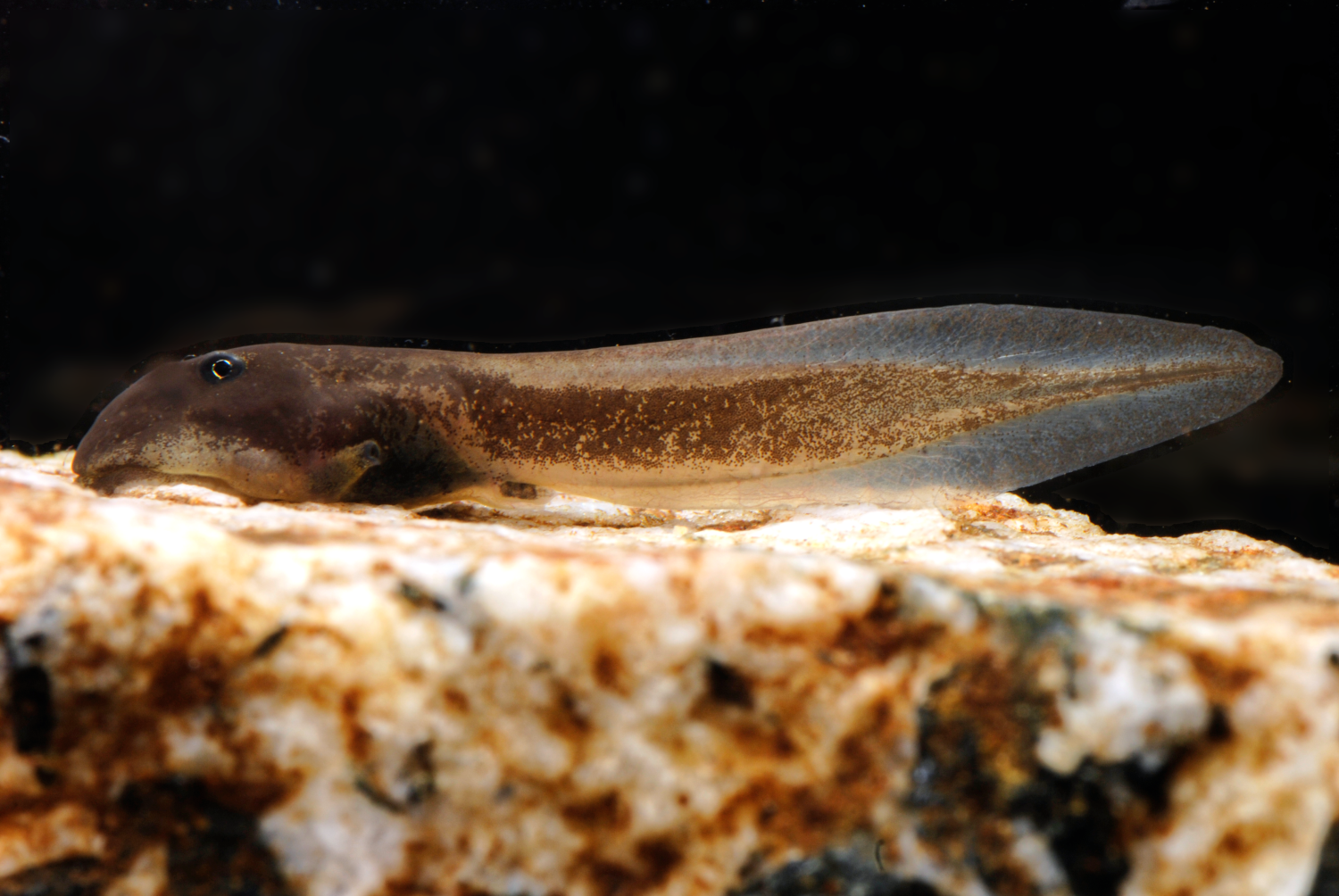
Tadpoles are active diurnally and nocturnally on and among rocks in cold montane streams on Gunung Kinabalu at elevations of 1300–2000 m a.s.l. They adhere to rock substrates using their suctorial oral discs and graze on algal overgrowth. Tadpoles of Ansonia guibei preferentially inhabit sections of streams with moderate, non-foaming current.
  • Family:
    Bufonidae
  • Genus:
    Ansonia
  • Ecomorph:
    exotrophic, lotic, rheophilous, suctorial
  • Waterbody Type:
    flowing
  • Water Column:
    rock surface
  • Feeding Type:
    feeding, hard surface grazer, omnivorous, rasping
  • Size:
    32 mm
  • Development:
    larva, tadpole
  • Adult:
    Ansonia

Coloration

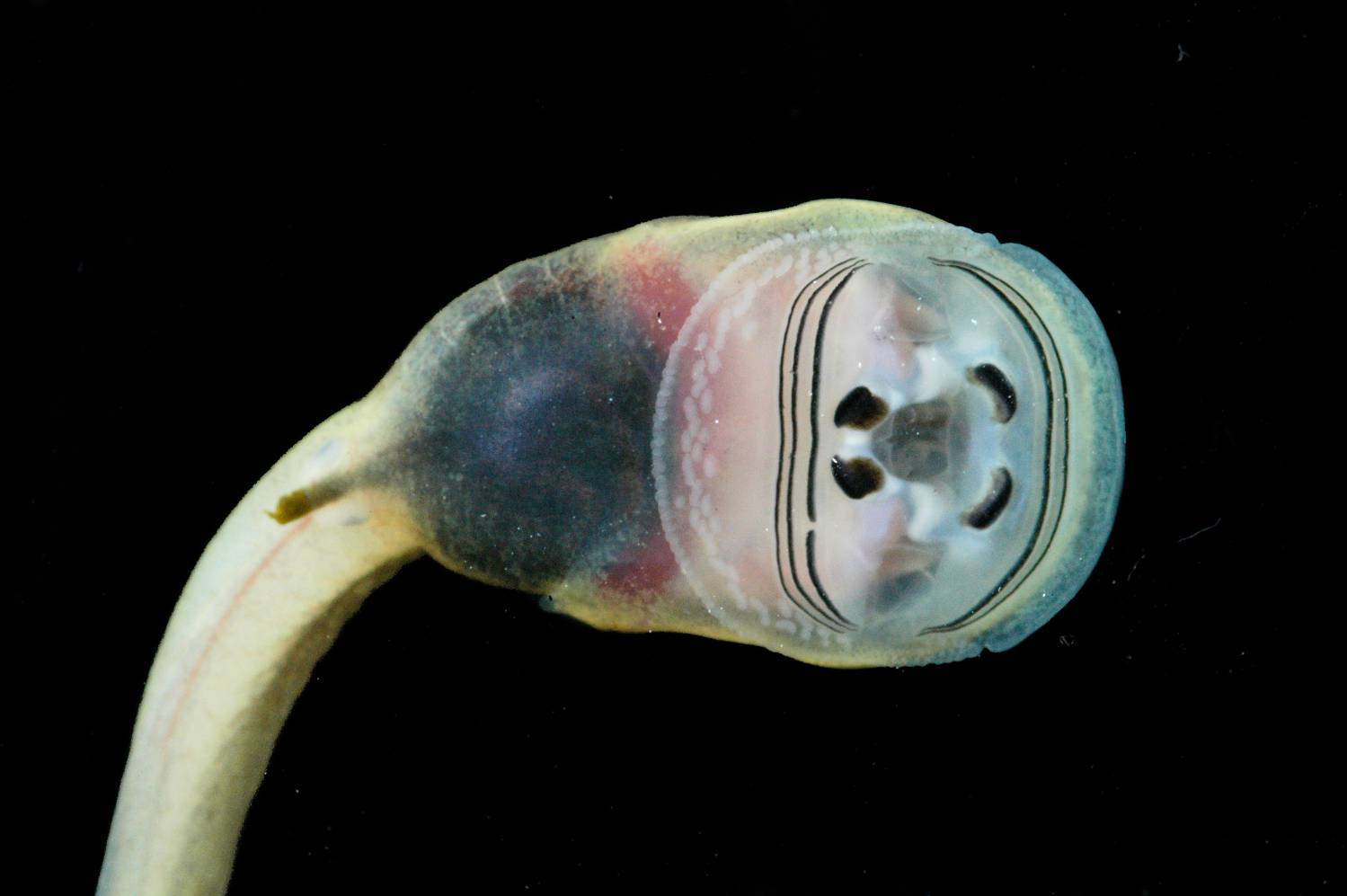
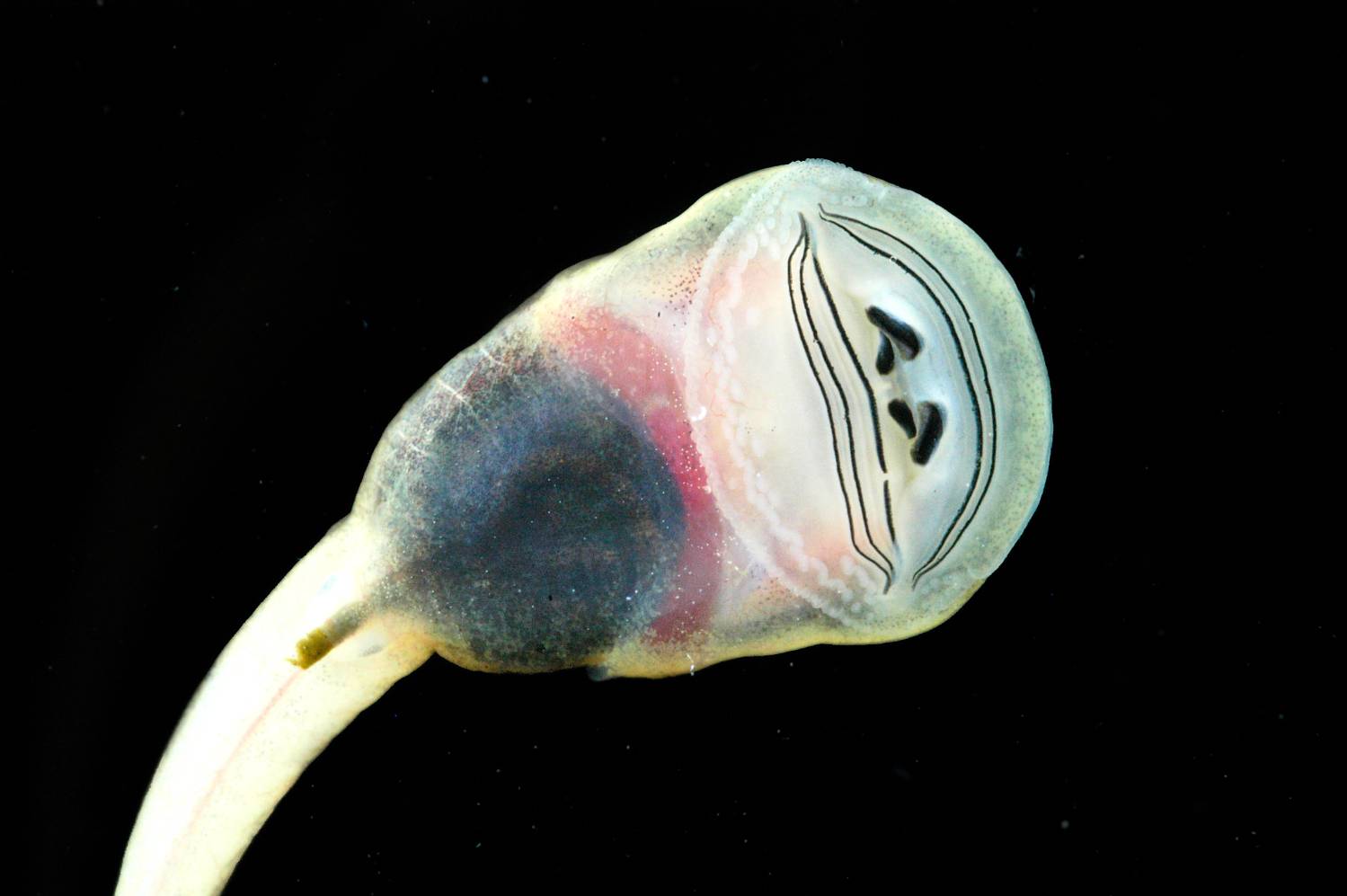
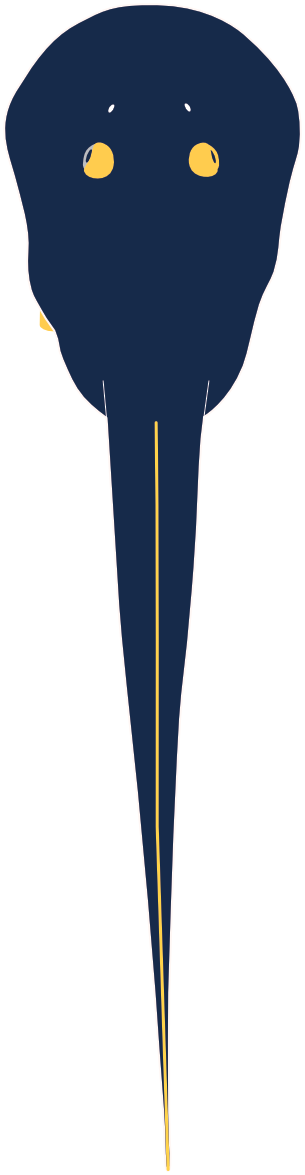
Dorsally, tadpoles are uniformly dark brown, appearing nearly black under daylight conditions. In individuals approaching metamorphosis (beyond Gosner Stage 40), the characteristic brown dorsal pattern of the toadlet becomes apparent. Dark pigmentation of the body extends onto the muscular portion of the tail as a distinct dark band. Tail fins are pigmented along their margins, becoming progressively lighter toward the junction with the tail musculature. In ventral view, the skin is pale; however, internal organs are enveloped by a dense, dark layer of pigment cells, and gut coils are usually not visible. Gills are bright red. The oral disc is pale ventrally, with slight pigmentation on surfaces oriented dorsally or laterally.

Snout

Broadly expanded; long and sloping in lateral profile. In dorsal view, the snout is very broad, appearing slightly truncated or less convex medially. The widest portion of the snout is weakly angular in dorsal view, giving the head outline a slightly rectangular appearance.

Oral Disc

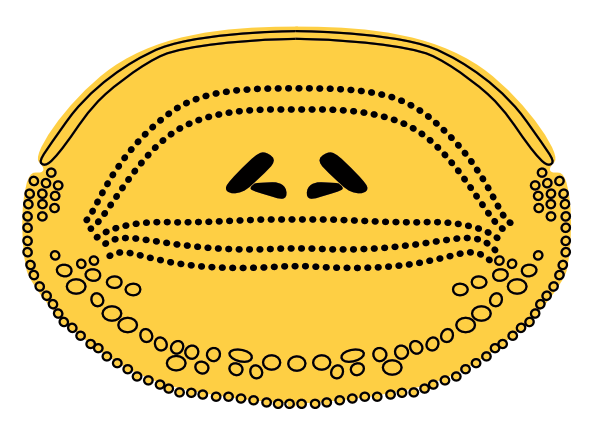
Oral disc forming a large ventral sucker, as wide as the maximum body width. Lower lip and lateral portions of the upper lip bearing fine, uniserial marginal papillae; approximately 80% of the upper lip lacks papillae and instead forms a bulging rim. One to two rows of irregular submarginal papillae present on the lower lip. LTRF 2/3, i.e., with all rows undivided, two on the upper, three on the lower lip; upper rows not extending around the lateral ends of the lower rows. Upper and lower beaks divided.

Body

Body very broad relative to length, dorsoventrally depressed. In dorsal view, body inverted pear-shaped with angular lateral corners at the level of the oral disc, narrowing moderately but distinctly posterior to the eyes. Spiracle sinistral, attached to the body wall, and positioned well below the mid-body level in lateral view.

Eyes & Nostrils

Eyes dorsolateral, positioned far from the body margin in dorsal view. Iris with a thin silvery-golden ring bordering the pupil. Nostrils small and oval, situated much closer to the eye than to the tip of the snout.

Tail

Fins originate at the trunk-tail junction and rise gradually over the anterior third of the tail. Fins remain relatively low throughout, tapering gradually in the posterior half of the tail and terminating in a narrowly rounded tip, not forming a terminal filament.

Similar Species

Within Ansonia, species can be distinguished by combinations of oral disc morphology, body shape and size, coloration, and tail characters. Ansonia guibei is a montane species, allowing many congeners to be excluded based on elevational distribution. Tadpoles of A. hanitschi and A. platysoma are less angular and exhibit a more pronounced pear-shaped body outline in dorsal view. Tadpoles of A. guibei are further distinguished by an undivided lower jaw, unlike those of most other Ansonia species. The tadpoles of the other highland Ansonia species occurring on Mount Kinabalu, A. fuliginea, remain unknown.

Literature

Details unknown.
Malkmus, R., Kosuch, J. (2000) Beschreibung einer neuen AnsoniaLarve (Ansonia guibei) von Borneo. Salamandra 36: 121–124.